

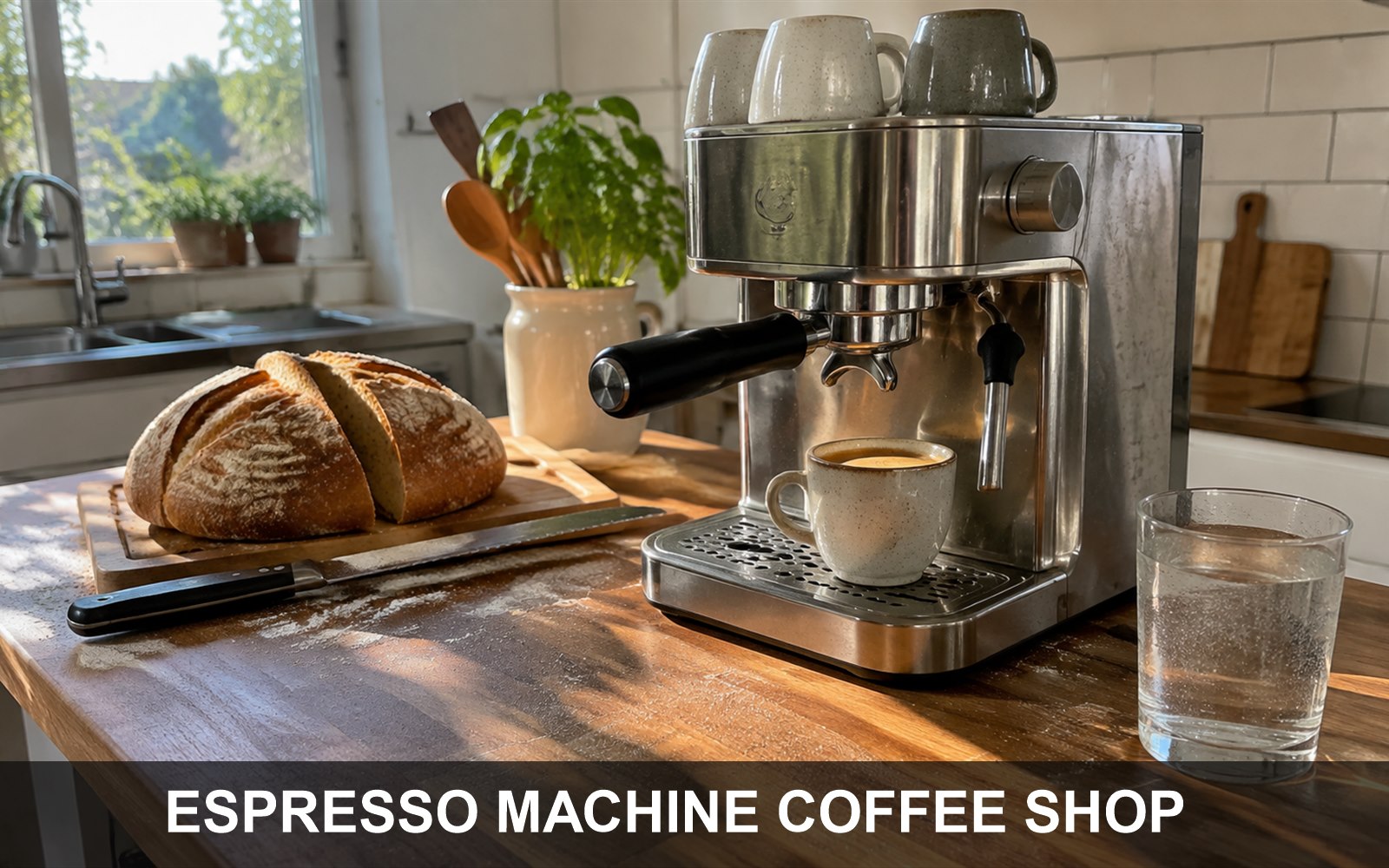
TL;DR — The best espresso machine for small coffee shop is the option that balances reliable construction, realistic capacity, easy cleanup, and a price that matches how often you will use it. HomeWhisk prioritizes documented specifications, material choices, and repeated owner-review patterns rather than marketing claims. If you are still comparing nearby categories, start with best 1 cup coffee machines and best 1 cup coffee maker before narrowing your final pick.
The HomeWhisk editorial team researches kitchen equipment by comparing manufacturer specifications, material details, dimensions, warranty language, retailer listings, and aggregated owner reviews. For best espresso machine for small coffee shop, we looked for patterns that matter after the return window closes: repeated complaints, praised design details, compatibility limits, and maintenance habits that determine whether a product stays useful.
This is a commercial buying guide, so the goal is practical selection rather than a broad encyclopedia entry. Use this page alongside best 12 cup coffee maker and best 4 cup coffee maker if your purchase overlaps adjacent tools or a larger kitchen setup.
Editor’s Picks
| Category | Pick Type | Why It Makes Sense |
|---|---|---|
| Best Overall | Balanced espresso machine | Strongest mix of construction, usability, cleanup, and owner satisfaction |
| Best Value | Practical espresso machine | Keeps the core performance features while avoiding unnecessary upgrades |
| Best for Small Coffee Shop | Use-case focused option | Prioritizes the size, controls, material, or workflow that matters most for this search |
At a Glance: Comparison Table
| Pick Type | Brew Workflow | Capacity | Best For | Trade-Off |
|---|---|---|---|---|
| Best Overall | Consistent daily workflow | Household size | Most users | Costs more |
| Best Value | Simple controls | Small to medium | Budget buyers | Fewer extras |
| Best Upgrade | More control | Frequent use | Coffee-focused homes | More maintenance |
| Best Compact | Small footprint | One to two users | Apartments | Lower capacity |
| Best Specialty | Niche drink workflow | Specific use | Targeted needs | Less versatile |
How We Evaluated These Products
We evaluated espresso machine options by starting with the product job: what the item must do well for small coffee shop, what trade-offs buyers usually accept, and which features are often overstated. From there, we compared visible specifications such as materials, dimensions, capacity, heat or power ratings where relevant, included accessories, warranty terms, and care instructions.
Aggregated owner feedback was used to identify repeated patterns rather than isolated anecdotes. A single dramatic review can be misleading, but repeated comments about temperature inconsistency, leaking, scale buildup, messy cleanup, grinder jams, weak extraction, or confusing controls are useful signals. We gave more weight to recent reviews because product lines, coatings, accessories, and manufacturing details can change over time.
We also considered how the product fits into a full kitchen workflow. An Espresso Machine can look excellent on a spec sheet and still be frustrating if it is too large to store, too slow to clean, incompatible with common accessories, or poorly matched to the buyer’s cooking habits. That is why this guide connects the main recommendation to related guides like best 1 cup coffee machines, best 1 cup coffee maker, and best 12 cup coffee maker.
What Actually Matters:
Brewing consistency and temperature control
Brew consistency comes down to how tightly the machine holds temperature and contact time from the first cup to the tenth. Watch for stable water temperature, even saturation, and steady pressure or a controlled pour rather than a headline feature. A brewer that drifts cool or channels water will taste different every morning, which is the opposite of what you want from an espresso machine. For a related option, compare best 1 cup coffee machines before you commit.
Grinder or accessory workflow
Grind and accessory workflow decides how much friction stands between beans and a cup. If the espresso machine pairs with a grinder, check the burr type, retention, and how easily you can dial in a setting; if it takes pods or filters, factor their ongoing cost and availability. Fussy dosing and messy transfers add up over a daily routine, so favor a setup where the steps stay quick and repeatable. For a related option, compare best 1 cup coffee maker before you commit.
Cleaning, scale, and daily maintenance
Cleaning and scale management quietly determine whether you keep using the machine. Look at how easily the brew path, basket, and reservoir come apart, and how often the manufacturer expects descaling in your water. Coffee gear that hides its cleaning access or demands frequent teardown tends to get neglected, and neglect shows up fast in the cup. For a related option, compare best 12 cup coffee maker before you commit.
Counter space, capacity, and speed
Counter space, capacity, and speed have to match your household rhythm. A large-reservoir machine saves refills for a busy kitchen but eats real estate; a compact one frees the counter but needs topping up. For small coffee shop, size the capacity to how many cups you pull before the day settles, and check warm-up and brew time if mornings are rushed. For a related option, compare best 4 cup coffee maker before you commit.
Value, warranty, and upgrade path
Value on an espresso machine is about the whole ownership arc, not the sticker. Weigh the warranty, the price and availability of gaskets, filters, and carafes, and whether there is a sensible upgrade path if your tastes grow. For small coffee shop, the smart pick is the one whose running costs and repairs stay reasonable long after the box is recycled. For a related option, compare best 5 cup coffee maker before you commit.
Frequently Asked Questions
What should I look for in the best espresso machine?
Start with fit for your routine: capacity, materials, cleaning, storage, and compatibility. Then compare owner-review patterns for repeated praise or complaints. For best espresso machine for small coffee shop, avoid buying only by star rating; the right espresso machine should match small coffee shop and the way you actually cook.
Is a more expensive espresso machine worth it?
It can be, but only when the upgrade improves something you will notice often: durability, control, cleaning, capacity, or comfort. If the higher price only adds accessories or cosmetic finish, a value pick may be smarter. Spend more when the category is used weekly or daily.
What size espresso machine is best for small coffee shop?
The best size is the one that handles your normal use without making storage and cleanup annoying. Product photos can hide scale, so check exterior dimensions as well as usable capacity. For small kitchens or occasional use, a slightly smaller espresso machine is often the better long-term choice.
How long should a good espresso machine last?
A good espresso machine should last long enough to justify its price when cared for according to the manufacturer instructions. Lifespan depends on materials, heat exposure, cleaning habits, moving parts, coatings, and storage. Repeated owner complaints about early failure are more important than one isolated review.
What mistakes should I avoid when buying espresso machine?
The biggest mistake is buying the most feature-heavy option without checking whether those features solve your actual problem. Also avoid ignoring dimensions, care requirements, replacement parts, and compatibility. If maintenance sounds unrealistic for your household, choose a simpler product.
How does best espresso machine for small coffee shop compare with nearby options?
Nearby options can overlap, so use intent to decide. If your need is broad, start with the main espresso machine category. If your need is specific, compare related guides such as best aeropress coffee and best 1 cup coffee machines to avoid buying a product that is good generally but wrong for your setup.
Our Top Pick
For most shoppers, the best espresso machine is the balanced option that gets the fundamentals right before adding extras. Prioritize the product with clear specifications, enough capacity for your normal routine, materials that match your maintenance habits, and repeated owner feedback showing reliable everyday use. The shortcode above contains the product set for this page; use the decision tree below to choose the right type within that set.
- Choose the Best Overall type if you want one safe espresso machine for regular use.
- Choose the Best Value type if price matters more than premium finish.
- Choose the Best for Small Coffee Shop type if your use case is specific and frequent.
- Choose an upgrade only if better materials, controls, capacity, or durability will matter every week.
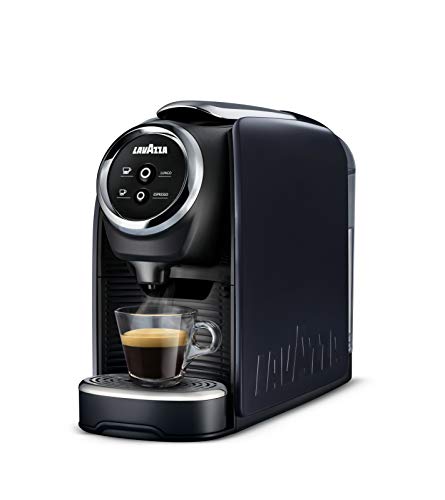
Lavazza
Compact Single-Serve Espresso Brewing: Lavazza BLUE Classy Mini LB 300
The Lavazza BLUE Classy Mini LB 300 prepares single-serve espresso with simple touch controls, and its compact 5.3-inch width saves valuable counter space. It suits espresso drinkers with small kitchens who want a choice between a preset serving and a programmable free dose.
Pros and Cons
Pros
- The narrow 5.3-inch footprint fits where many wider coffee machines cannot.
- Two touch-controlled selections provide both preset and programmable serving options.
- The compact 5.3 by 13 by 10.2-inch design is practical for limited countertop space.
- The dedicated single-serve design supports quick preparation for one coffee drinker.
Cons
- Only two coffee selections are listed, so buyers seeking a wide menu of automated drinks may find it limited.
- The supplied product data does not specify materials, weight, water capacity, or included accessories.

TOYANDONA
Dollhouse Kitchen Coffee Shop Decor: TOYANDONA Miniature Coffee Maker
The TOYANDONA miniature coffee maker adds realistic espresso-machine detail to dollhouse kitchens and cafes, with its strongest advantage being its authentic scaled design. Dollhouse enthusiasts, collectors, and children should buy it to create more detailed imaginative scenes and storytelling setups.
Pros and Cons
Pros
- Detailed design closely mimics a real coffee machine in miniature form.
- Versatile enough for children’s imaginative play or collectors’ displays.
- Sturdy construction is designed to handle regular handling.
- Works with dollhouse kitchens, miniature cafes, and custom projects.
Cons
- This is a decorative miniature model, not a functional coffee maker.
- Exact dimensions, weight, and plastic specifications are not provided.
Lavazza Compact Single-Serve Espresso Brewing: Lavazza BLUE Classy Mini LB 300
Lavazza
Compact Single-Serve Espresso Brewing: Lavazza BLUE Classy Mini LB 300
The Lavazza BLUE Classy Mini LB 300 prepares single-serve espresso with simple touch controls, and its compact 5.3-inch width saves valuable counter space. It suits espresso drinkers with small kitchens who want a choice between a preset serving and a programmable free dose.
Check price on AmazonThe Lavazza BLUE Classy Mini LB 300 is a compact single-serve espresso machine that solves the problem of preparing one cup without dedicating substantial kitchen counter space.
Its simple touch interface offers two selections: one programmable free dose for customization and one preset option for repeatable serving.
The machine measures 5.3 by 13 by 10.2 inches, making its narrow width useful in small kitchens. Materials and weight are not specified in the supplied product data.
Its two-selection setup is streamlined, but it may not satisfy buyers who want multiple automatic beverage styles.
Best for space-conscious espresso drinkers who value simple controls and adjustable single-serve dosing.
TOYANDONA Dollhouse Kitchen Coffee Shop Decor: TOYANDONA Miniature Coffee Maker
TOYANDONA
Dollhouse Kitchen Coffee Shop Decor: TOYANDONA Miniature Coffee Maker
The TOYANDONA miniature coffee maker adds realistic espresso-machine detail to dollhouse kitchens and cafes, with its strongest advantage being its authentic scaled design. Dollhouse enthusiasts, collectors, and children should buy it to create more detailed imaginative scenes and storytelling setups.
Check price on AmazonThis miniature coffee maker adds a realistic appliance to dollhouse kitchens and cafes, solving the problem of sparse or unfinished miniature scenes.
Its scaled espresso-machine appearance and detailed craftsmanship give play areas and displays a more authentic everyday-kitchen feel.
The product is described as sturdy plastic construction, but exact dimensions and weight are not specified for precise scale matching.
It does not brew coffee or perform any real kitchen function because it is a decorative model.
Best for dollhouse owners, miniaturists, collectors, and children creating imaginative kitchen scenes.
Place it on a dollhouse kitchen counter or inside a miniature cafe to create a recognizable coffee-service area.
Pair it with other scale accessories, furniture, and DIY kit components to build a more complete miniature environment.
Use it as a storytelling prop for children or as a display detail in a collector’s custom scene.



Write Your Review
No reviews yet. Be the first to share your experience!