

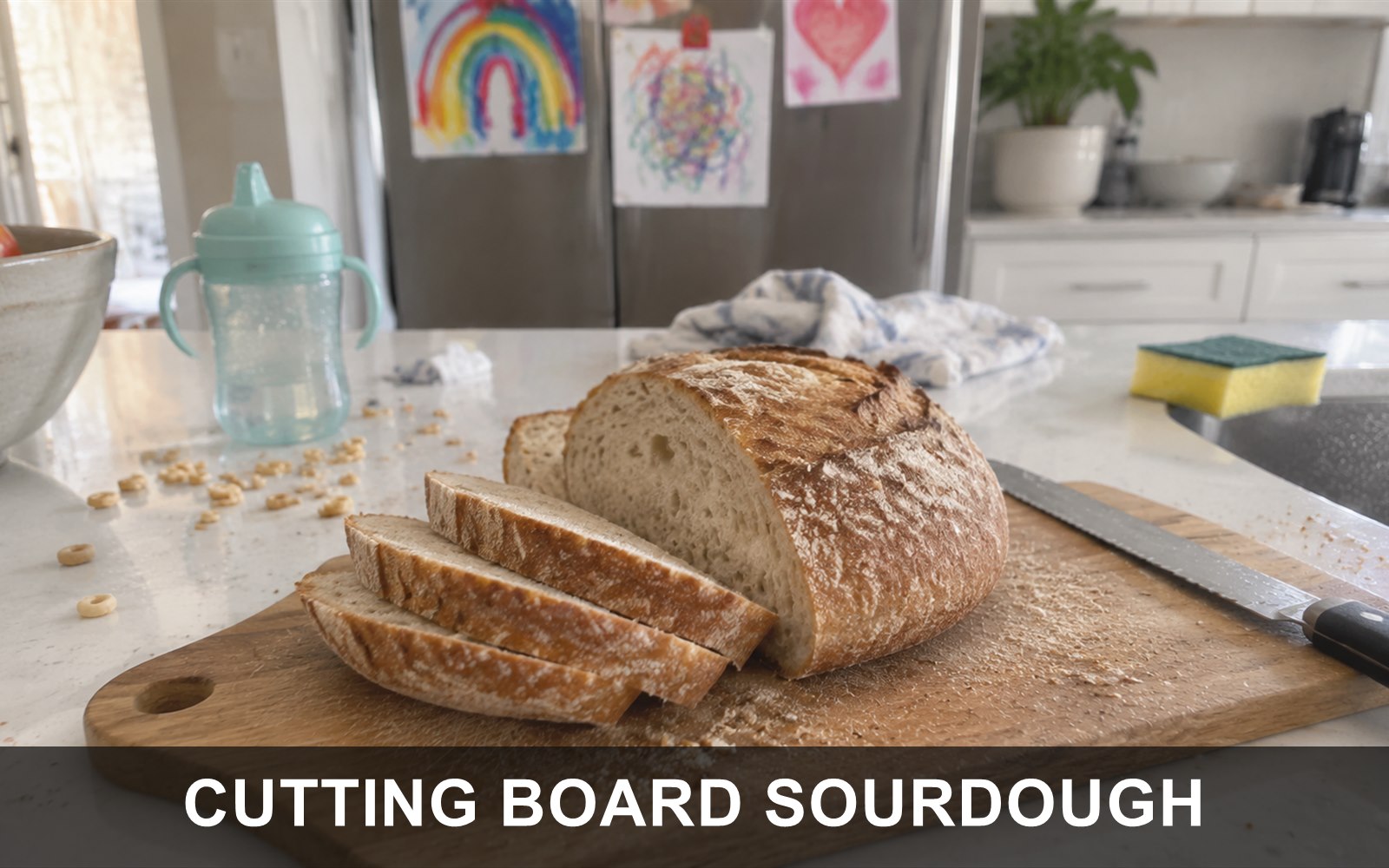
A warped cutting board will ruin your sourdough transfer before you ever reach the oven. The dough sticks to the cupped surface, tears as you try to slide it onto the peel, and what should have been a perfect boule turns into a deflated mess. Wood splits from moisture cycles, plastic develops grooves that trap flour and starter, and composite boards bow under their own weight after a few months of heavy use.
Sourdough work demands more from a cutting board than typical kitchen tasks. You’re shaping wet dough that weighs two pounds or more, dusting flour across a wide surface, and making precise scoring cuts that require a stable base. The board needs to handle moisture without warping, provide enough space for a full boule or batard, and resist the kind of wear that comes from daily starter feeds and dough manipulation.
Why Most Boards Fail for Sourdough
Standard cutting boards are built for chopping vegetables, not managing hydrated dough. Thin boards flex when you press down to score, causing your lame to skip or dig too deep. Small boards force you to work dough over the edge, where flour spills onto the counter and you lose control of the shaping process. Bamboo boards look appealing but their laminated construction separates when exposed to the moisture levels typical in sourdough work.
Glass and marble boards solve the warping problem but create new ones. They’re too hard for comfortable kneading and offer no give when you’re building tension during shaping. The slick surface means flour doesn’t distribute evenly, leading to patchy dusting that lets dough stick in random spots. They’re also heavy enough that moving them in and out of storage becomes a workout.
Plastic boards start out fine but degrade quickly under sourdough conditions. Bench scrapers carve grooves into the surface, which fill with flour and dried starter that never fully wash out. The boards stain from whole grain doughs and develop a tacky texture that makes dough handling unpredictable. After six months, what was a smooth working surface becomes something you’d rather replace than clean again.
Size Requirements for Dough Handling
A sourdough boule needs room to move during shaping. You’re folding edges toward the center, rotating the mass, and building surface tension through repeated manipulation. This requires at least 18 inches of clear workspace, preferably 20 to 24 inches if you’re working with high-hydration doughs that spread wider. Anything smaller forces you to work in cramped conditions where your hands bump the edges and dough creeps off the side.
Batards and oval loaves need length rather than width. A 24-by-18-inch board gives you the runway to shape a full baguette-length piece without the ends hanging off. When you’re ready to score, the extra length means you can make confident cuts from end to end without worrying about running out of surface or needing to reposition the dough.
Thickness matters for stability. Boards under three-quarters of an inch will flex when you lean into a shaping motion or press down to score a tight pattern. A full inch of thickness eliminates flex entirely and adds enough weight to keep the board planted while you work. The tradeoff is storage space and the effort required to move it, but the stability gain is worth both costs.
Material Choices That Handle Moisture
Edge-grain hardwood boards balance durability with moisture resistance. Maple, walnut, and cherry all perform well as long as the board is properly sealed and maintained with mineral oil. Edge grain construction means the wood fibers run vertically through the thickness, which resists warping better than face grain boards where the fibers lay flat. The surface has enough texture to hold a light flour dusting without letting dough stick.
End-grain boards offer superior durability but require more maintenance. The checkerboard pattern of exposed wood fibers self-heals from knife marks and bench scraper use, making these boards last longer under heavy sourdough work. They’re also heavier and more expensive, which matters if you’re working within a budget or have limited counter space. End grain soaks up more moisture than edge grain, so you’ll need to oil these boards more frequently to prevent cracking.
High-density polyethylene boards avoid the maintenance demands of wood entirely. They don’t warp, crack, or need oiling, and they survive dishwasher cycles without damage. The surface is smooth enough for easy dough release when properly floured but textured enough to prevent sliding. Restaurant kitchens use these boards for a reason—they tolerate abuse and keep performing. The downside is aesthetics and the fact that deep scratches eventually accumulate no matter how careful you are.
Features That Improve Workflow
Juice grooves are useful for bread work even though they’re designed for meat. When you’re working with wet dough or rinsing flour off the board, the groove catches runoff and prevents it from spilling onto the counter or your clothes. Some bakers use the groove to corral loose flour during dusting, keeping it contained for easy cleanup rather than scattered across the work surface.
Rubber feet or a non-slip backing keep the board stationary during aggressive shaping. When you’re pulling dough toward you to build tension, a board that slides ruins the motion and forces you to chase it across the counter. Four small rubber pads on the corners are enough to lock the board in place without adding bulk or making it difficult to flip over for cleaning.
Maintenance That Prevents Failure
Wood boards need regular oiling to maintain their moisture resistance. Apply food-grade mineral oil once a month, or more often if you bake daily. Let the oil soak in overnight, then wipe off the excess before using the board again. This prevents the wood from drying out and cracking, especially around the edges where moisture exposure is highest during washing.
Never soak a wood board or leave it standing in water. Wash it quickly with warm soapy water, scrub off any stuck flour or dough, and dry it immediately with a towel. Store the board flat or standing on its edge—never leaning at an angle, which can cause warping over time. If you notice the board developing a cup or twist, it’s already too late to reverse the damage.
Plastic boards can go in the dishwasher but hand washing extends their life. Hot water and soap remove flour residue without subjecting the board to the harsh detergents and heat cycles that cause brittleness over time. Inspect the surface every few months for deep grooves or rough patches that might trap dough. When the board starts looking worn, replace it rather than trying to sand or refinish it.
Can I use the same board for raw dough and baked bread?
You can, but it’s better to designate separate surfaces if possible. Raw sourdough doesn’t carry the same contamination risks as raw meat, so cross-contamination isn’t a major concern. However, using one side exclusively for dough keeps that surface smooth and free from knife marks, which makes shaping and scoring easier. Flip the board over or use a separate board for slicing baked loaves, allowing that side to accumulate cuts without affecting your dough work.
How do I stop dough from sticking to the board during shaping?
Use a light, even coating of flour on the board surface before placing dough down. Too much flour dries out the dough skin and prevents proper sealing during shaping, while too little lets the dough grab the board and tear. Rice flour works better than wheat flour for preventing sticking because it doesn’t absorb into the dough as quickly. Keep a small bowl of flour nearby and dust lightly as needed during the shaping process, brushing off any excess before scoring.
What thickness prevents the board from flexing during scoring?
Three-quarters of an inch is the minimum thickness for a stable scoring surface, but one full inch is better if you’re working with large loaves or high-hydration doughs. Thinner boards flex when you press down with the lame, causing the blade to skip or dig unevenly into the dough. The flex also makes it harder to execute controlled cuts for decorative scoring patterns. A thick board adds weight, which helps it stay planted on the counter when you’re applying pressure, and the extra mass dampens any vibration that might affect cut precision.
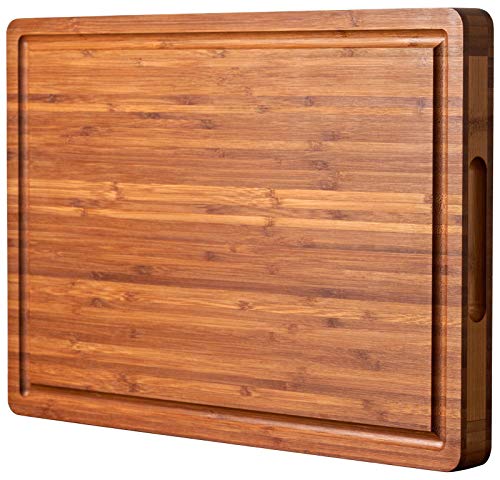
Allsum Extra Thick Wood Cutting Board for Kitchen, Reversible and Durable
Editors' Favorite
Color: Carbonized Size: 16"L x 11"W Dimensions: 15.99999998368 x 10.99999998878 x 0.99999999898 inches Weight: 3.9 pounds Product Group: Kitchen Binding: Kitchen
Shop NowQuirvanora Double-Sided Bread Bow Knife and Board Set with Spare Stainless Blade

Great Value
Color: Walnut Size: 7.5" Dimensions: 15.7 x 7.5 x 1 inches Product Group: Kitchen
Shop Now





Write Your Review
No reviews yet. Be the first to share your experience!