

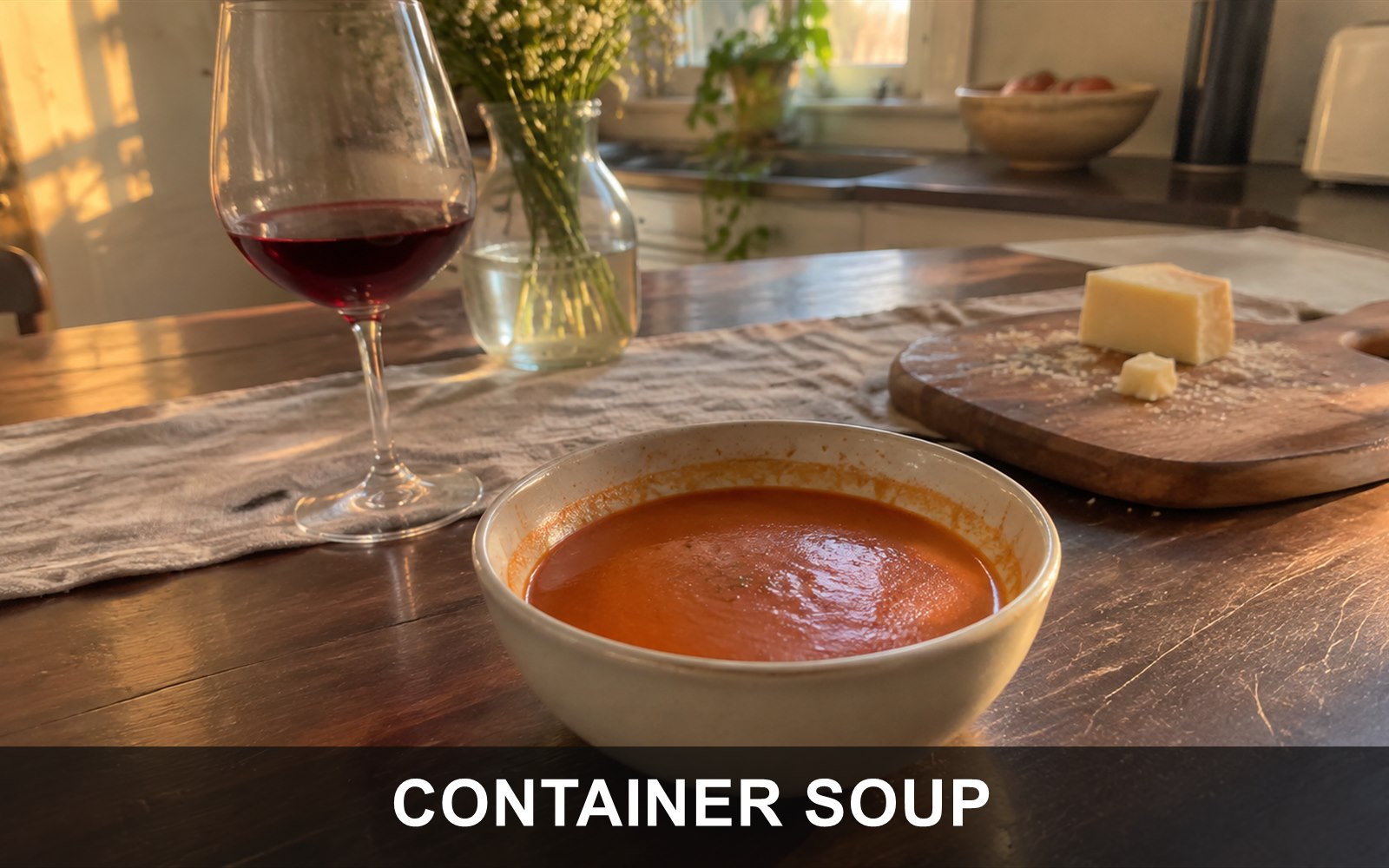
TL;DR — The best container for soup is the option that balances reliable construction, realistic capacity, easy cleanup, and a price that matches how often you will use it. HomeWhisk prioritizes documented specifications, material choices, and repeated owner-review patterns rather than marketing claims. If you are still comparing nearby categories, start with best 4 qt air fryer and best 6 qt air fryer before narrowing your final pick.
The HomeWhisk editorial team researches kitchen equipment by comparing manufacturer specifications, material details, dimensions, warranty language, retailer listings, and aggregated owner reviews. For best container for soup, we looked for patterns that matter after the return window closes: repeated complaints, praised design details, compatibility limits, and maintenance habits that determine whether a product stays useful.
This is a commercial buying guide, so the goal is practical selection rather than a broad encyclopedia entry. Use this page alongside best affordable air fryer and best affordable air fryer toaster oven if your purchase overlaps adjacent tools or a larger kitchen setup.
Editor’s Picks
| Category | Pick Type | Why It Makes Sense |
|---|---|---|
| Best Overall | Balanced container | Strongest mix of construction, usability, cleanup, and owner satisfaction |
| Best Value | Practical container | Keeps the core performance features while avoiding unnecessary upgrades |
| Best for Soup | Use-case focused option | Prioritizes the size, controls, material, or workflow that matters most for this search |
At a Glance: Comparison Table
| Pick Type | Capacity | Controls | Best For | Trade-Off |
|---|---|---|---|---|
| Best Overall | Balanced build | Everyday size | Most homes | Not the lowest price |
| Best Value | Core materials | Practical capacity | Budget buyers | Fewer premium details |
| Best Upgrade | Heavier construction | Frequent use | Serious cooks | Higher cost |
| Best Compact | Space-saving design | Smaller batches | Small kitchens | Less capacity |
| Best Specialty | Focused feature set | Niche use | Specific needs | Less universal |
How We Evaluated These Products
We evaluated container options by starting with the product job: what the item must do well for soup, what trade-offs buyers usually accept, and which features are often overstated. From there, we compared visible specifications such as materials, dimensions, capacity, heat or power ratings where relevant, included accessories, warranty terms, and care instructions.
Aggregated owner feedback was used to identify repeated patterns rather than isolated anecdotes. A single dramatic review can be misleading, but repeated comments about weak motors, noisy operation, cracked plastic, confusing controls, awkward cleaning, overheating, or capacity claims that feel inflated are useful signals. We gave more weight to recent reviews because product lines, coatings, accessories, and manufacturing details can change over time.
We also considered how the product fits into a full kitchen workflow. A Container can look excellent on a spec sheet and still be frustrating if it is too large to store, too slow to clean, incompatible with common accessories, or poorly matched to the buyer’s cooking habits. That is why this guide connects the main recommendation to related guides like best 4 qt air fryer, best 6 qt air fryer, and best affordable air fryer.
What Actually Matters:
Capacity, wattage, and real counter footprint
Usable capacity and footprint rarely match the marketing number, so read the real dimensions. A model rated for a large batch can still cook unevenly if the basket or bowl is cramped, and a “compact” unit can still hog the counter once you account for lid clearance and cord. For soup, compare interior usable space and the space it claims when open, not just the headline quarts or watts. For a related option, compare best 4 qt air fryer before you commit.
Controls, presets, and repeatability
Controls and repeatability separate an appliance you trust from one you fight. Check whether presets map to things you actually cook, whether the dial or panel gives fine control, and whether it remembers or resets between uses. A machine that hits the same result every time is worth more than one with a long feature list you set once and never touch again. For a related option, compare best 6 qt air fryer before you commit.
Cleaning design and removable parts
Cleaning design makes or breaks how often the container earns its counter space. Look for removable, dishwasher-safe parts, smooth interiors without food traps, and a lid or basket that rinses without disassembly gymnastics. A powerful appliance that is a chore to wash gets used less, so treat easy teardown as a core spec rather than a bonus. For a related option, compare best affordable air fryer before you commit.
Noise, heat, and everyday usability
Noise, heat, and everyday usability are the frictions you only notice after purchase. A loud motor or a unit that vents heat across the counter changes when and where you are willing to run it. Check cord length, how far controls sit from a wall, and whether the exterior stays touch-safe — small ergonomics decide whether a container lives on the counter or in a cupboard. For a related option, compare best affordable air fryer toaster oven before you commit.
Durability, warranty, and value
Durability and value show up in the parts you cannot see on the box. Weigh the warranty length, the reputation of the motor or heating element, and whether replacement baskets and seals are sold at all. For soup, the better buy is often the model with a proven track record and available parts over a cheaper one that fails just past the return window. For a related option, compare best affordable blender before you commit.

Frequently Asked Questions
What should I look for in the best container?
Start with fit for your routine: capacity, materials, cleaning, storage, and compatibility. Then compare owner-review patterns for repeated praise or complaints. For best container for soup, avoid buying only by star rating; the right container should match soup and the way you actually cook.
Is a more expensive container worth it?
It can be, but only when the upgrade improves something you will notice often: durability, control, cleaning, capacity, or comfort. If the higher price only adds accessories or cosmetic finish, a value pick may be smarter. Spend more when the category is used weekly or daily.
What size container is best for soup?
The best size is the one that handles your normal use without making storage and cleanup annoying. Product photos can hide scale, so check exterior dimensions as well as usable capacity. For small kitchens or occasional use, a slightly smaller container is often the better long-term choice.
How long should a good container last?
A good container should last long enough to justify its price when cared for according to the manufacturer instructions. Lifespan depends on materials, heat exposure, cleaning habits, moving parts, coatings, and storage. Repeated owner complaints about early failure are more important than one isolated review.
What mistakes should I avoid when buying container?
The biggest mistake is buying the most feature-heavy option without checking whether those features solve your actual problem. Also avoid ignoring dimensions, care requirements, replacement parts, and compatibility. If maintenance sounds unrealistic for your household, choose a simpler product.
How does best container for soup compare with nearby options?
Nearby options can overlap, so use intent to decide. If your need is broad, start with the main container category. If your need is specific, compare related guides such as best affordable blender for smoothies and best 4 qt air fryer to avoid buying a product that is good generally but wrong for your setup.
Our Top Pick
For most shoppers, the best container is the balanced option that gets the fundamentals right before adding extras. Prioritize the product with clear specifications, enough capacity for your normal routine, materials that match your maintenance habits, and repeated owner feedback showing reliable everyday use. The shortcode above contains the product set for this page; use the decision tree below to choose the right type within that set.
- Choose the Best Overall type if you want one safe container for regular use.
- Choose the Best Value type if price matters more than premium finish.
- Choose the Best for Soup type if your use case is specific and frequent.
- Choose an upgrade only if better materials, controls, capacity, or durability will matter every week.

Hydrapeak
Insulated Soup Jar for Hot Lunches: Hydrapeak 25oz Stainless Steel Food Container
The Hydrapeak 25oz food jar keeps soups and other meals hot for up to 10 hours or cold for up to 16 hours, with leak-proof vacuum insulation for dependable meal transport. It suits adults who carry homemade lunches and want wide-mouth access, a folding handle, and odor-free stainless steel construction.
Pros and Cons
Pros
- Double-wall vacuum insulation maintains hot food for 10 hours and cold food for 16 hours.
- The wide mouth provides convenient access to soups, stews, and other meals.
- The jar is designed not to retain food odors, simplifying cleanup between uses.
- A limited lifetime warranty covers manufacturer defects under normal wear and use.
Cons
- Hand-washing is recommended, which adds cleanup time compared with dishwasher-safe containers.
- The 25oz capacity may be limiting for buyers who need a larger meal container.

Dipoo
Meal Prep and Leftover Storage: Dipoo 120-Piece Deli Container Set with 32, 16, and 8 Ounce Sizes
Dipoo deli containers organize soups, leftovers, snacks, and meal prep in three useful sizes, with tight-sealed lids and freezer, microwave, and top-rack dishwasher compatibility. They suit busy households, meal preppers, and takeout users who need a large supply of disposable food containers.
Pros and Cons
Pros
- The set includes 20 each of 32-ounce, 16-ounce, and 8-ounce containers for flexible food portions.
- BPA-free, food-grade polystyrene is designed for food storage use.
- The containers are suitable for soups, fruits, snacks, lunches, leftovers, and meal preparation.
- The lids use a tight-sealed design intended to provide leak-proof performance.
Cons
- The stated temperature range applies to the cup only, so buyers should avoid assuming the lids share the same heat tolerance.
- Polystyrene construction is suited to disposable food storage and may not offer the durability of heavier reusable containers.
YW Plastic Soup Food Container with Lids (12), 32 oz, 12 Pack, Clear

Hydrapeak Insulated Soup Jar for Hot Lunches: Hydrapeak 25oz Stainless Steel Food Container
Hydrapeak
Insulated Soup Jar for Hot Lunches: Hydrapeak 25oz Stainless Steel Food Container
The Hydrapeak 25oz food jar keeps soups and other meals hot for up to 10 hours or cold for up to 16 hours, with leak-proof vacuum insulation for dependable meal transport. It suits adults who carry homemade lunches and want wide-mouth access, a folding handle, and odor-free stainless steel construction.
Check price on AmazonGreat Value
The Hydrapeak 25oz food jar stores hot or cold meals for transport, solving the problem of carrying soups and prepared foods without relying on reheating or refrigeration.
Double-wall vacuum insulation keeps contents hot for up to 10 hours and cold for up to 16 hours, supporting meals prepared well before lunchtime.
Made from 18/8 stainless steel with a durable powder coating, it includes a wide mouth and folding handle for easier eating and carrying.
Hand-washing is recommended, and the 25oz capacity may not suit especially large meals.
Best for adults who carry homemade soups, stews, or cold meals to work or school.
Dipoo Meal Prep and Leftover Storage: Dipoo 120-Piece Deli Container Set with 32, 16, and 8 Ounce Sizes
Dipoo
Meal Prep and Leftover Storage: Dipoo 120-Piece Deli Container Set with 32, 16, and 8 Ounce Sizes
Dipoo deli containers organize soups, leftovers, snacks, and meal prep in three useful sizes, with tight-sealed lids and freezer, microwave, and top-rack dishwasher compatibility. They suit busy households, meal preppers, and takeout users who need a large supply of disposable food containers.
Check price on AmazonDipoo's 60 complete deli-container sets solve the everyday need for portioning, transporting, and storing meals, snacks, soups, and leftovers.
Tight-sealed lids help contain liquids, while freezer, microwave, and top-rack dishwasher compatibility supports storage, reheating, and cleanup.
Each set includes 32-, 16-, and 8-ounce food-grade polystyrene containers, with 20 sets of each size for varied kitchen tasks.
The listed -4°F to 248°F temperature range applies to the cups only, so lid heat tolerance requires care.
Best for meal preppers, busy households, and takeout users needing many portion-sized containers.



Write Your Review
No reviews yet. Be the first to share your experience!