

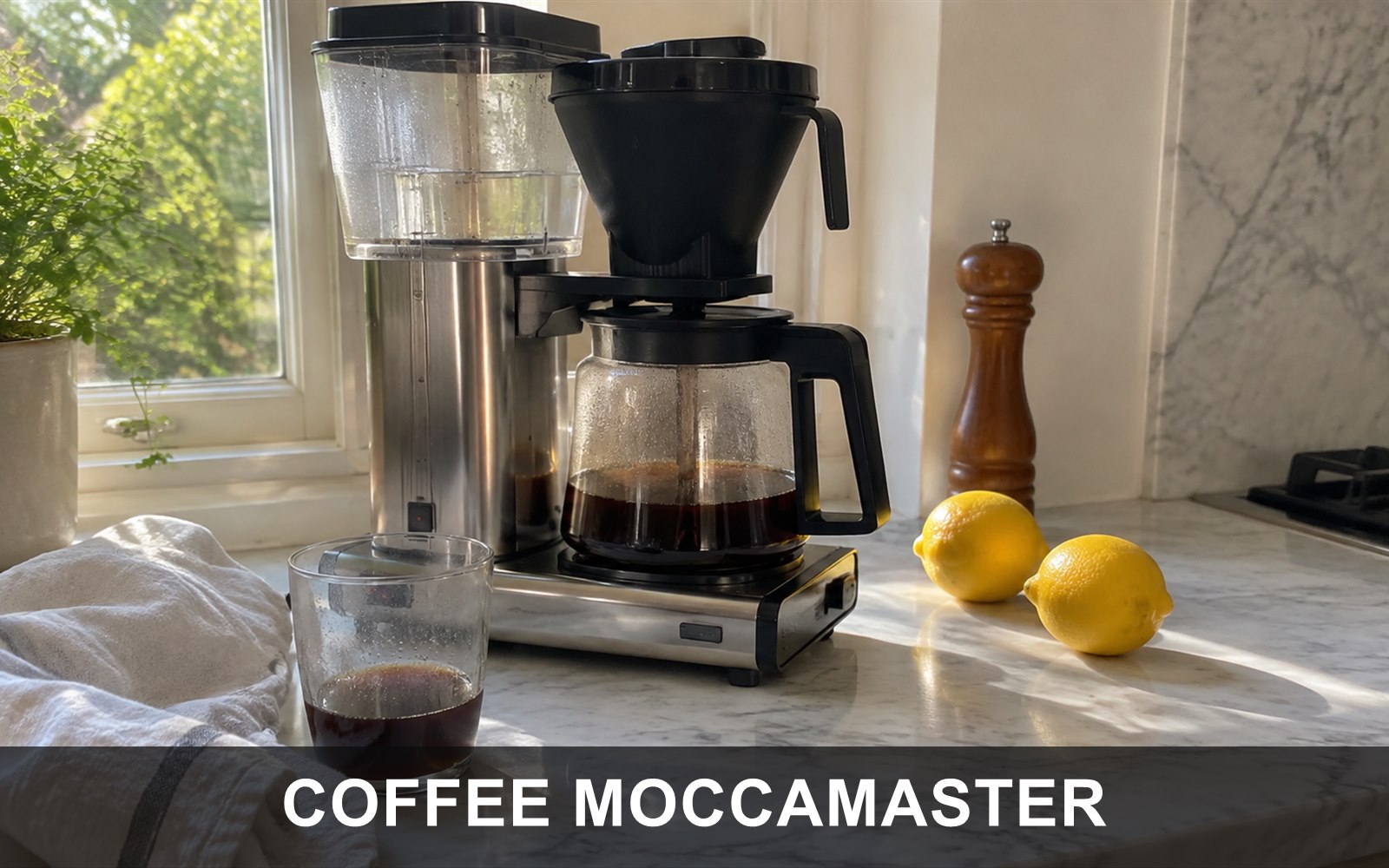
The Moccamaster is a fixed-recipe machine. It heats water to roughly 196 to 205 degrees Fahrenheit, pushes the full reservoir through the grounds in about four to six minutes, and drips that water onto the bed through a spray arm rather than a single stream. None of those numbers change from one brew to the next, which means the only variables left in your hands are the beans themselves: how coarsely you grind them, how dark they were roasted, and how many days ago they left the roaster. Match those three to what the machine already does, and the pour tastes balanced. Ignore them, and you get sour thin cups or muddy over-extracted ones no matter how good the coffee looked in the bag.
That is the frame for this guide. Instead of ranking bags by star rating, we look at why certain coffees suit a Moccamaster’s brew physics and others fight it. The machine has strong opinions about temperature and contact time; the smart move is to buy beans and set a grind that agree with those opinions rather than argue.
Brew temperature, and why roast level does the heavy lifting
A Moccamaster’s copper heating element holds the water near the top of the SCA-recommended range, close to 200 degrees. Hot water is an aggressive solvent. It strips soluble compounds out of the grounds quickly, which is fine for a dense, lightly developed bean but punishing for a dark, brittle one. This is the single reason roast level matters more on this machine than on a cooler brewer. A dark French or Italian roast has already had much of its structure broken down by fire; hit it with 200-degree water for five minutes and the cup turns ashy and bitter, with that scorched-rubber note people blame on the machine when the beans were the problem.
Medium and medium-light roasts are the sweet spot. They still hold enough acidity and sugar to reward the heat, and their cell structure resists over-extraction long enough to survive the full brew cycle. If you love dark coffee, you are not out of luck, but you will want to coarsen the grind a notch to shorten contact and pull back the intensity. Single-origin washed coffees from Ethiopia, Colombia, or Kenya tend to sing here because their clarity survives the high temperature; a well-made medium blend built for filter brewing is the safest everyday choice.
Flow rate, grind size, and the four-minute clock
Here is the part most owners never think about. The Moccamaster’s pump dumps water fast, so a full 40-ounce carafe drains through the basket in four to six minutes whether you like it or not. You cannot slow the water down; you can only change how long each drop lingers by adjusting the grind. Grind too fine and the bed clogs, water pools above it, and you get a sour, over-steeped brew plus an overflow risk. Grind too coarse and the water rushes straight through, barely touching the grounds, and the cup comes out weak and papery.
Aim for a medium grind, roughly the texture of coarse sand or granulated sugar. That gives the fast-moving water enough surface area to extract properly without choking the flow. If your cup tastes thin or sharp, go one step finer; if it tastes harsh and drying, go coarser. A burr grinder matters far more than the coffee’s price tag, because blade grinders produce a mix of dust and boulders. The dust over-extracts into bitterness while the boulders barely give anything up, and the Moccamaster’s rigid flow rate has no way to compensate for that mess. Buying excellent beans and grinding them unevenly wastes most of what you paid for.
Bloom behavior and the spray-arm limitation
Pour-over devotees swear by the bloom, that first 30-second wetting where fresh grounds release trapped carbon dioxide and swell. The Moccamaster does not really bloom on its own. Its spray arm wets the bed unevenly at first and then commits to the full pour, so there is no built-in pause for degassing. On the KBGV Select and similar models, the nine-hole outlet spreads water better than older single-spout units, but it still cannot replicate a careful gooseneck pour. This matters most with very fresh, gas-heavy coffee.
You have two levers. First, use the manual drip-stop: slide it closed for about 30 seconds after the first water hits the grounds, let the bed swell and off-gas, then open it and let the machine finish. That crude pre-infusion evens out extraction noticeably. Second, give the beans a rest so they are not violently fresh. Coffee brewed one or two days off roast produces so much CO2 that gas pockets push water around the grounds instead of through them, leaving channels and an under-extracted cup. A week to three weeks past roast is the practical window where degassing has calmed down but the coffee is still lively.
Freshness, storage, and grinding at the last minute
Buy whole beans with a visible roast date, not a distant best-by stamp. A roast date tells you where you sit in that degassing window; a best-by stamp usually hides beans that have been on a shelf for months. Once coffee is ground, it stales in minutes, not days, because you have exposed all that surface area to oxygen at once. On a fixed-recipe machine like the Moccamaster, stale pre-ground coffee is doubly punishing: the flavors are already flat, and there is no brewing adjustment that can revive them. Grinding right before you brew is the highest-return habit you can build.
Store beans in an opaque, airtight container at room temperature, away from heat and light. Skip the freezer for daily coffee; condensation from repeated in-and-out trips does more harm than the cold prevents. Buy in quantities you will finish within two or three weeks so the beans stay inside their prime window. Between brews, descale the machine on schedule, because scale insulates the heating element and drags the brew temperature down below that 196-degree floor, quietly turning your careful bean choice into a sour disappointment. The Moccamaster rewards consistency, and consistency starts with fresh, evenly ground, medium-roasted coffee that suits the heat and speed the machine brings every single morning.
Frequently Asked Questions
What grind size works best in a Moccamaster?
Aim for a medium grind about the texture of coarse sand. The machine’s fast flow rate needs enough surface area to extract in four to six minutes, but a fine espresso grind clogs the bed and turns sour. If your cup tastes thin, grind slightly finer; if it tastes harsh, go coarser. A burr grinder matters more than an expensive bag, since even particle size is what keeps the brew balanced.
Should I use light or dark roast in a Moccamaster?
Medium to medium-light roasts suit it best because the machine brews near 200 degrees, which extracts aggressively. That heat brings out clarity in lighter roasts but can scorch dark ones into bitterness. If you prefer dark coffee, coarsen the grind a step to shorten contact time and tame the intensity, or accept that a cooler brewer may flatter those beans more.
How fresh should my coffee be for a Moccamaster?
Look for beans roughly one to three weeks past their roast date. Coffee that is only a day or two old off-gasses so much carbon dioxide that water channels around the grounds instead of soaking through, since the machine offers no proper bloom. Beyond a month, the coffee flattens. Buy whole beans with a visible roast date and grind them right before brewing for the most consistent cup.
The Best Deals This Week*
-
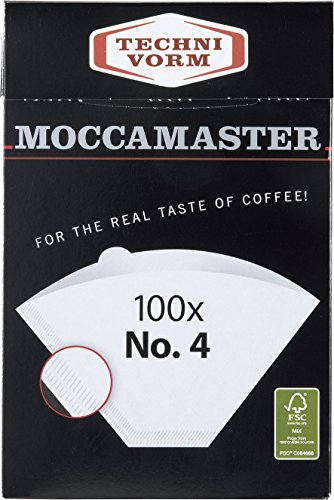
Technivorm Moccamaster #4 White Paper Filters
$7.99
($10.50)Save $2.51 -
HEXNUB Reusable #4 Coffee Filter for Technivorm
$27.54
($28.99)Save $1.45
*Deals are selected by our commerce team
Moccamaster Technivorm Moccamaster #4 White Paper Filters, 100-count per box
HEXNUB Reusable #4 Coffee Filter for Technivorm Moccamaster KBGV and KBT

Apace Living Reusable #4 Coffee Filter for Technivorm Moccamaster KBGV and KBT Coffee Machines - Stainless Steel Mesh, Durable Metal Filter for Sustainable Brewing

Apace Living
Reusable #4 Coffee Filter for Technivorm Moccamaster KBGV and KBT Coffee Machines - Stainless Steel Mesh, Durable Metal Filter for Sustainable Brewing
Check price on Amazon







Write Your Review
No reviews yet. Be the first to share your experience!