

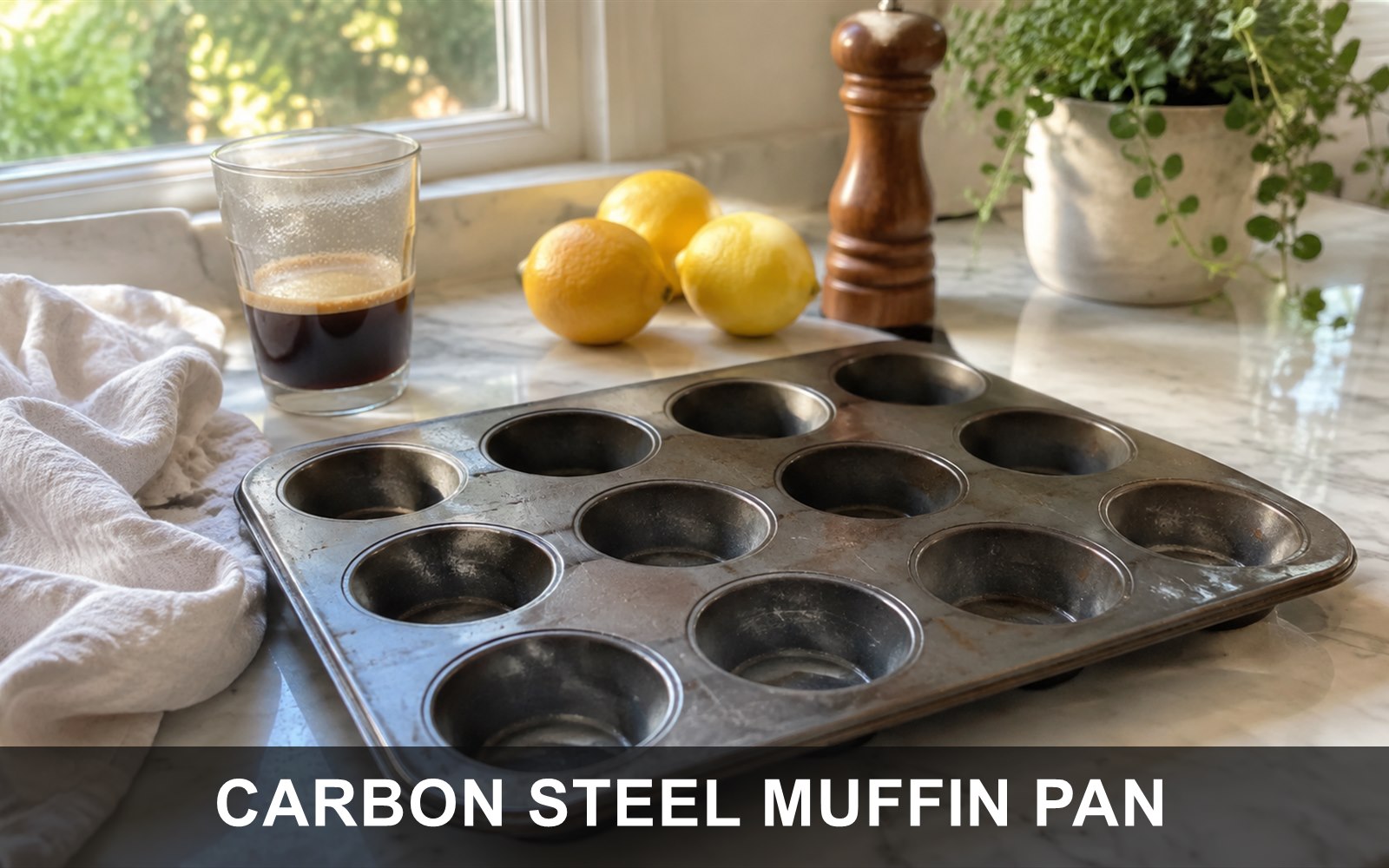
Most muffin pans die from neglect long before they wear out. A batch of blueberry muffins fuses to the cups because the fat film broke down. The edges scorch while the centers stay pale because the metal is too thin to hold heat evenly. The pan bows in a 425°F oven and never sits flat again. And on carbon steel specifically, an orange bloom of rust creeps across the surface after someone left it wet in the drying rack overnight. None of these are freak accidents. They trace back to a handful of predictable causes, and once you understand them, choosing a pan gets a lot simpler.
Why Muffin Pans Actually Fail
Sticking is the complaint I hear most, and it usually has nothing to do with the pan being “bad.” Batter grabs bare metal because there is no barrier between the sugar-and-egg matrix and the steel. Sugar caramelizes, proteins bond, and you end up excavating muffin bottoms with a butter knife. On a properly seasoned carbon steel pan, that barrier is a thin polymerized layer of oil baked into the surface. On nonstick, it is a PTFE coating. Skip the seasoning or scratch the coating, and you are baking directly on metal.
Uneven browning is a heat problem. Thin pans, roughly 0.5mm to 0.6mm stock, heat fast but also cool fast and develop hot spots wherever the burner or heating element concentrates energy. The muffins nearest the oven wall brown two shades darker than the ones in the middle. Thicker gauge steel, in the 0.8mm to 1.2mm range, evens things out because the metal itself buffers the temperature swings. It takes longer to preheat but bakes far more predictably.
Warping happens when thin metal expands unevenly and has nowhere to go. Drop a hot pan into cold water, or run a light-gauge pan through a fierce oven cycle, and the sheet distorts. A warped pan rocks on the counter, pools batter to one side, and bakes lopsided muffins forever after. Rolled or wired rims and heavier stock both fight this.
Rust is the failure unique to carbon steel, and it is entirely about moisture plus bare iron. Carbon steel is roughly 99% iron. Leave it wet, wash it with harsh detergent that strips the seasoning, or store it in a humid cabinet, and oxidation starts. This scares people off carbon steel, but rust is preventable with a two-minute habit, and it is reversible even when it happens. That is a very different situation from a flaked nonstick coating, which is simply gone.
Carbon Steel vs Aluminized Steel vs Nonstick
These three materials solve different problems, and the marketing tends to blur the lines. Carbon steel bakes like professional bread and pastry gear because it does: it takes high heat without complaint, browns beautifully once seasoned, and lasts for decades. The tradeoff is maintenance. You season it, you keep it dry, you do not put it in the dishwasher. In exchange you get a pan that outlives every nonstick model you would otherwise burn through.
Aluminized steel, the material behind most commercial-style light-gold pans, is a steel core clad in aluminum-silicon alloy. It resists rust far better than bare carbon steel, distributes heat quickly thanks to the aluminum layer, and browns evenly. It is the sensible middle ground: less finicky than carbon steel, more durable than nonstick. Most of these pans still want a liner or a grease-and-flour treatment because the surface is not truly nonstick.
Nonstick is the convenience option. Release is effortless on day one, cleanup is trivial, and for a casual baker who makes muffins twice a month, that is a real benefit. The catch is lifespan. Consumer nonstick coatings degrade with heat above roughly 450°F, scratch under metal tools, and typically give you three to five years of honest service before release falls off. If you bake often, you are buying a new pan on a schedule.
My honest read: carbon steel is the choice for someone who bakes regularly and does not mind a small ritual. If you want most of the performance with a fraction of the fuss, aluminized steel is the smarter buy. Nonstick earns its place only for low-frequency, low-maintenance kitchens.
What to Look for in Carbon Steel Specifically
Gauge is the first spec I check. Anything thinner than 0.6mm will heat unevenly and warp under stress. Aim for 0.8mm or heavier if you can find the number listed. Manufacturers rarely print it, so weight in the hand is a decent proxy: a standard 12-cup carbon steel pan that feels reassuringly heavy, in the range of two to three pounds, is usually built from thicker stock.
Cup capacity matters more than people expect. A standard muffin cup holds about 1/2 cup, roughly 100ml, filled to the brim, though you fill to two-thirds for a proper domed top. Some “muffin” pans are actually cupcake pans with shallower 60ml to 80ml cups, which is fine for cupcakes but frustrating when you want a bakery-style muffin. Check the stated cup volume, not just the number of cups.
Look at the rim and the wells. A rolled or wire-reinforced rim resists warping and gives you something to grip with a mitt. Wells that are welded or pressed from a single sheet clean up better than riveted assemblies where batter creeps into the joints. And confirm whether the pan ships pre-seasoned or bare. Pre-seasoned pans still benefit from a round or two of your own seasoning; bare pans require it before first use, full stop.
Seasoning a Carbon Steel Muffin Pan Properly
Seasoning intimidates people, but the process is boring in the best way. Wash the new pan with warm soapy water to strip the factory anti-rust coating, then dry it completely, over low heat on the stovetop if you want to be thorough. Rub a very thin film of high-smoke-point oil, grapeseed or refined flaxseed, into every cup and across the whole surface. The key word is thin: wipe it back until the metal looks barely damp, not glistening.
Bake it upside down at 450°F for one hour, with foil or a sheet pan below to catch drips. Let it cool in the oven. That is one layer. Two or three passes build a durable base that only improves with use. Every time you bake muffins with a little fat in the batter or a greased cup, you reinforce the seasoning. Puddled oil is the classic beginner mistake: it bakes into sticky, uneven splotches instead of a smooth bronze finish. When in doubt, less oil and more coats.
Keeping It Alive: Cleaning and Storage
Care is where carbon steel wins or loses. After baking, let the pan cool, then wipe it out or rinse with hot water and a soft brush. A quick pass of mild soap is fine on a well-established seasoning despite the old myths, but skip abrasive scrubbers and never use the dishwasher. The one non-negotiable rule: dry it immediately and completely. I put mine back over a warm burner for a minute to drive off the last moisture, then wipe a whisper of oil across the surface before storing.
Store it dry and with airflow. Stacking a damp pan under other cookware traps moisture and invites rust in exactly the spots you cannot see. If a little orange does appear, it is not a death sentence: scrub the rust off with steel wool, wash, dry, and re-season the bare patch. A carbon steel pan treated this way will still be turning out muffins when the nonstick pans you bought alongside it are long gone.
Who Should Actually Buy Carbon Steel
Be honest about how you bake. If muffins are a weekly event and you value browning, heat retention, and a pan that lasts twenty years, carbon steel rewards the small effort. If you bake occasionally and resent maintenance, buy aluminized steel and use liners, or accept that a nonstick pan is a consumable you will replace. There is no shame in matching the tool to the habit. What frustrates people is buying carbon steel expecting nonstick behavior, skipping the seasoning, and then blaming the pan when the muffins weld themselves in place.
Do you need to grease a seasoned carbon steel muffin pan?
Yes, at least lightly, especially for the first several bakes. A fresh seasoning is not as slick as a factory nonstick coating, and muffin batter is sugary and sticky enough to grab. Brush each cup with a thin film of oil or butter, or use paper liners while the seasoning matures. As the pan builds up seasoning over months of use, you can often get away with less grease, but I still give sticky recipes a quick swipe.
Can a carbon steel muffin pan go in the dishwasher?
No, and this is the fastest way to ruin one. Dishwasher detergent is aggressive and formulated to strip fats, which is exactly what your seasoning is made of. The prolonged wet cycle and heated dry also promote rust on the bare iron. Hand wash with hot water and a soft brush, dry the pan immediately and completely, and wipe on a little oil before storing. It sounds like a chore, but the whole routine takes under two minutes and it is the difference between a pan that lasts three years and one that lasts thirty.
What gauge of carbon steel is thick enough for even muffins?
Look for 0.8mm or thicker if the manufacturer lists a number. That thickness holds heat well enough to brown muffins evenly and resists the warping that plagues flimsy pans. Anything under 0.6mm heats fast but develops hot spots and can bow in a hot oven. Since gauge is rarely printed on packaging, use weight as a stand-in: a heavier 12-cup pan, around two to three pounds, is almost always built from thicker stock.

USA Pan
Professional Nonstick Muffin Pan for Even Baking | USA Pan 12-Cup Aluminized Steel
This 12-well aluminized steel muffin pan uses a patented silicone coating that releases baked goods without sticking and cleans up with minimal scrubbing. Buy it if you bake muffins or cupcakes weekly and want consistent browning with less cleanup than traditional pans.
Pros and Cons
Pros
- Patented Americoat releases baked goods cleanly without heavy greasing or parchment liners.
- Aluminized steel heats uniformly so all 12 muffins finish baking at the same time.
- Free of PTFE, PFOA, and BPA, meeting safety standards for regular home baking.
Cons
- Hand washing required as dishwasher detergent can degrade the nonstick coating over time.
- Higher price point than basic aluminum pans, though coating durability offsets replacement costs.
Martha Stewart Gallen 12 Cup Nonstick Carbon Steel Muffin and Cupcake Pan – Cool Grey, Durable Bakeware for Even Baking and Easy Release

Martha Stewart
Gallen 12 Cup Nonstick Carbon Steel Muffin and Cupcake Pan – Cool Grey, Durable Bakeware for Even Baking and Easy Release
$15.23 at AmazonEditors' Favorite
Color: Cool Gray Size: 12 Cup Muffin Pan Dimensions: 0 x 0 x 0 Inches Weight: 1.54984970186 pounds Product Group: Kitchen Binding: Kitchen
Shop NowGoodCook BestBake Nonstick Textured Carbon Steel Muffin Pan, 12cp, Bronze

Great Value
Color: Bronze Size: 12 Cup Muffin Pan Dimensions: 16.2 x 11 x 1.5 inches Product Group: Kitchen Binding: Kitchen
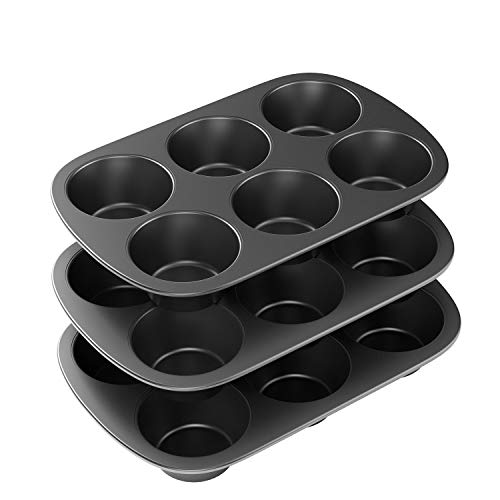
Shop NowTiawudi 3 Pack Nonstick Muffin Pan, Carbon Steel Cupcake Pan, Easy to Clean and Perfect for Making Muffins or Cupcakes, 6 Cup Jumbo
Tiawudi
3 Pack Nonstick Muffin Pan, Carbon Steel Cupcake Pan, Easy to Clean and Perfect for Making Muffins or Cupcakes, 6 Cup Jumbo
$23.99 at AmazonColor: Black Size: Jumbo Dimensions: 4.7244094391811 x 5.511811012378 x 4.7244094391811 inches Weight: 1.54984970186 Pounds Product Group: Kitchen Binding: Kitchen
Shop NowUSA Pan Professional Nonstick Muffin Pan for Even Baking | USA Pan 12-Cup Aluminized Steel
USA Pan
Professional Nonstick Muffin Pan for Even Baking | USA Pan 12-Cup Aluminized Steel
This 12-well aluminized steel muffin pan uses a patented silicone coating that releases baked goods without sticking and cleans up with minimal scrubbing. Buy it if you bake muffins or cupcakes weekly and want consistent browning with less cleanup than traditional pans.
$32.54 at AmazonColor: Aluminized Steel Size: 12 Cup Dimensions: 1.3 x 15.75 x 1.33 Inches Weight: 0.0625 pounds Product Group: Kitchen Binding: Kitchen
Shop Now



Write Your Review
No reviews yet. Be the first to share your experience!