

A brownie is a heat-transfer problem wearing a dessert costume. You are asking a dense, sugar-heavy slab an inch and a half thick to set at the edges without drying, hold a fudgy middle, and grow a papery crust on top, all inside twenty-five to forty minutes. The pan does most of that work, and it is engineered sheet metal with published specs almost nobody checks.
Two aluminum pans that look identical on a shelf can change the result more than two different recipes will. What decides it is conductivity, gauge, surface finish, reactivity, and geometry, in roughly that order.
Aluminum Moves Heat Thirteen Times Faster Than Stainless
Thermal conductivity explains most of the behavior. Aluminum sits around 205 watts per meter-kelvin. Stainless steel manages roughly 15. Cast iron lands near 80, and dark carbon steel falls in that same range. Aluminum therefore pushes heat into cold batter more than thirteen times faster than a stainless-clad pan of the same shape.
That speed narrows the gap between edge and center. Heat spreads sideways through the metal instead of piling up wherever the oven happens to be hottest, so the perimeter sets while the middle is still climbing. In slow metal the outer inch runs far ahead, and the edge strip is hard by the time the center reads done.
Radiant absorption is a separate mechanism, and dark steel muddles the two. Black steel grabs oven radiation fast at the surface but moves it inward slowly, giving an over-caramelized edge band around an underdone interior.
Gauge Is the Spec Nobody Checks
Commercial aluminum bakeware is sold by gauge, and the useful band runs 12 to 18. Twelve gauge is about 2.0mm of metal, 14 is roughly 1.6mm, 16 sits near 1.3mm, and 18 lands between 1.0 and 1.2mm depending on the sheet standard quoted. Plenty of consumer pans drop to 20 gauge, around 0.8mm, and that is where trouble starts.
Thickness buys thermal mass and stiffness. When a pound and a half of 65°F batter hits a preheated pan, a 2mm base barely flinches while a thin one crashes in temperature and stalls the bake. Aluminum expands about twice as much as stainless per degree, so every preheat loads stress into the sheet, and a 0.8mm base buckles, often on its first run to 425°F. A dished base no longer sits flat, which is the real cause of the one-corner-baked, opposite-diagonal-underdone slab people blame on their oven.
Weight is the proxy you can use in a store without a micrometer. A 9×13 in 12 to 14 gauge stock weighs 1.5 to 2.2 pounds empty; the same footprint in thin stock comes in under a pound. An 8×8 in honest gauge runs 0.8 to 1.2 pounds. Press a thumb into the base, and if it flexes, it will warp.
Surface Finish Shifts Browning by 15 to 25 Degrees
Identical gauge and identical dimensions still will not produce identical brownies if one pan is bare and the other dark. Untreated natural aluminum is reflective and sends radiant energy back into the oven cavity, so it browns conservatively. Anodized and dark-coated surfaces absorb it instead, running the pan wall 15 to 25°F hotter at the crust with the thermostat untouched.
Converted into time, that is four to six minutes of overbake for a recipe timed on a light pan, and it is the most common reason a formula someone has made twenty times fails on the first attempt in new bakeware. Drop the oven 25°F, check eight minutes early, or both.
Anodizing gets marketed vaguely, so it is worth describing plainly. An electrochemical process grows an oxide layer 20 to 25 microns thick into the aluminum surface, so there is no film to chip and the face is harder than the metal beneath. It is not nonstick, whatever the box implies, and it keeps darkening across a few hundred cycles, so an old anodized pan bakes a hotter crust than it did new.
Why Bare Aluminum Goes Grey
Bare aluminum is chemically active. Acidic batter attacks the thin natural oxide film and leaves grey mottling, which is why a pan that also sees lemon bars ages faster than one that only holds chocolate. Alkaline dish detergent does worse, etching the surface chalky inside a handful of dishwasher cycles.
At bakeware exposure levels this is cosmetic rather than a health question, and it mostly decides which version to buy. Anodized or coated aluminum still looks presentable in year three even after the machine, while bare aluminum stays fine indefinitely on hand-washing and browns a shade more gently.
Walls, Corners, and the Square-Inch Math
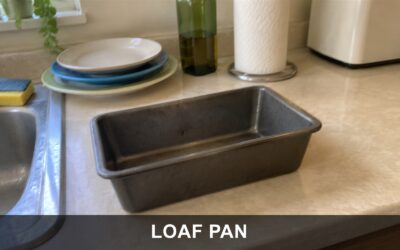
Walls should be straight, about 2 inches tall, and meet the base with a tight radius. That radius decides whether a corner piece is a square with two crusted faces or a rounded lump that portions unevenly; a generous 10mm curve photographs nicely and costs you clean cuts. A 1-inch-deep pan cannot hold batter formulated for a 2-inch wall and will crest the rim inside fifteen minutes.
The area arithmetic causes most substitution failures, and it takes ten seconds at the counter. An 8×8 pan is 64 square inches. A 9×9 is 81, which is 27 percent more floor for the same batter, so the slab bakes roughly 20 to 25 percent thinner and finishes eight to twelve minutes sooner. A 9×13 is 117 square inches, nearly double the 8×8, which is why an 8×8 batter poured into one yields something closer to a cookie bar and why the honest conversion is 1.5 to 2 times the recipe.
Divided Grids and Edge-Maximizing Channels
Grid inserts and channel pans exist because a real share of people only want edges. An insert drops into a standard 9×13 and partitions it into cells, so every piece gets two or three crusted faces instead of one soft-sided middle square; channel designs build the same serpentine wall into the pan.
The trades are concrete. Those dividers are aluminum too, so a 1.2mm partition standing in the batter behaves like an extra oven wall and cells beside it overbake their sides before the centers set, which is why these pans want 15 to 25°F less heat. Cleanup goes from one flat rectangle to thirty inside corners, and portion size is fixed by the mold.
Slings, Coating Limits, and the Cooling Window
Parchment beats greasing for anything you plan to cut cleanly. Two crosswise strips with overhang, or one wide sheet pressed into the corners, gives you a sling that lifts the whole slab out so a knife can pass all the way through on a board. Cutting inside the pan drags the blade against the wall on every stroke, which is why the first row always looks mangled.
Coating limits are worth stating flatly. The aluminum substrate is unbothered by anything a home oven produces, since it does not soften until well past 600°F. The nonstick film is the fragile layer, and PTFE-based coatings begin degrading above roughly 500°F. Brownies bake at 325 to 350°F, so this only matters under a broiler or in an empty oven left preheating at 500.
Cooling is the last spec-driven technique and the one most often skipped. A 2mm pan pulled from a 350°F oven keeps radiating into its contents, and the egg and starch structure at the center goes on setting for 20 to 30 minutes after it leaves the rack. Cut at ten minutes and you get a gummy smear that reads as underbaked, which sends people back to add time the recipe never needed. Forty-five minutes on a wire rack, raised so air reaches the base, gives clean squares.
Does a hard-anodized pan really bake brownies differently than a bare aluminum one?
Yes, and the difference is large enough to change your timer. The dark anodized surface absorbs radiant heat that bare aluminum reflects, running the pan wall 15 to 25°F hotter at the crust with no change at the thermostat. A recipe developed on a light pan is usually done four to six minutes earlier in the anodized version, with a firmer edge band. Take the oven down 25°F and check early the first two times. The anodized layer also will not react with acidic batter, so it holds its looks longer.
How thick should an aluminum brownie pan be?
Aim for 12 to 14 gauge, roughly 2.0mm down to 1.6mm of aluminum. Sixteen gauge near 1.3mm is fine for an 8×8, where the shorter unsupported span keeps the base stiff. Below about 1mm you are in warping territory, and a warped base tilts the batter so one corner overbakes while the diagonal stays wet. When no gauge is published, weigh the pan instead. An empty 9×13 at 1.5 to 2.2 pounds indicates real stock; under a pound indicates the opposite.
Is it a problem that my aluminum pan has turned dull and grey?
That is a cosmetic change, not a safety one. Grey mottling comes from acidic batter and alkaline detergent stripping the thin natural oxide film off the surface, and dishwasher cycles account for most of it. Migration from bakeware at these exposures is trivial next to the aluminum already in ordinary food. The pan bakes about the way it always did, though a darkened surface absorbs slightly more radiant heat than it did new, so watch the final minutes. Hand-wash it from here on and the discoloration stops spreading.

Nordic Ware
8-Inch Square Cake Pan for Even Baking, Nordic Ware Naturals Aluminum Commercial 47500
The Nordic Ware Naturals 8-inch square cake pan delivers evenly baked cakes and other baked goods through pure aluminum's strong heat conductivity, while its steel rim resists warping. Buy it if you want a durable USA-made pan for square cakes and bars and do not mind hand washing.
Pros and Cons
Pros
- Pure aluminum construction offers strong heat conductivity for more even baking.
- The reinforced encapsulated steel rim helps maintain the pan's shape.
- The pan is designed for lifetime durability because aluminum will not rust.
- Its 8-by-8-inch square format fits common cake and bar recipes.
Cons
- Hand washing is required, so cleanup takes more effort than with dishwasher-safe bakeware.
- The product data does not specify the pan's weight.

GoodCook
MegaGrip 8x8 Non-Stick Square Baking Pan with Silicone Handles for Brownies, Cakes & Bread
The GoodCook MegaGrip delivers even heat across its heavy-gauge steel base with a scratch-resistant nonstick coating that releases baked goods cleanly every time. Home bakers who want a reliable, easy-to-handle 8x8 pan for brownies, cakes, and quick breads will appreciate the secure silicone grip handles and dishwasher-safe construction.
Pros and Cons
Pros
- Heavy-gauge steel construction resists warping and promotes consistent, even baking results across the entire pan surface.
- The scratch-resistant nonstick coating provides mess-free food release without requiring extra greasing before each use.
- Silicone grip handles on both sides make safe oven transfers easier compared to standard pans with bare metal handles.
- Dishwasher-safe construction simplifies cleanup for everyday bakers who want low-maintenance kitchenware.
Cons
- Hand washing is recommended over dishwasher use if you want the nonstick coating to hold up over years of regular baking.
- At 8x8 inches, this pan is sized for standard bar and brownie recipes only and won't substitute for a 9x13 sheet pan.

Waytiffer
8x8 Foil Baking Pans with Lids for Meal Prep and Potlucks, Waytiffer 20 Pack Disposable Aluminum Pans
This 20 pack of 8x8 aluminum foil pans bakes, chills, and travels with matching clear plastic lids, so food goes from oven to fridge to car without transferring dishes. Buy it if you cook for potlucks, meal prep in batches, or send leftovers home with guests and would rather not chase down your own bakeware.
Pros and Cons
Pros
- Lidded design makes these usable for transporting food, not just baking.
- Standard 8x8 footprint fits common recipes and stacks neatly in fridge and freezer.
- Bulk quantity keeps a ready supply on hand for gatherings, gifts, and freezer meals.
- Disposable construction eliminates cleanup after sticky or greasy dishes.
Cons
- The 1.8 inch depth is shallow for deep-dish casseroles or anything that rises significantly.
- Thin foil walls flex when carried by the rim, so a baking sheet underneath is needed for full pans.
Nordic Ware 8-Inch Square Cake Pan for Even Baking, Nordic Ware Naturals Aluminum Commercial 47500
Nordic Ware
8-Inch Square Cake Pan for Even Baking, Nordic Ware Naturals Aluminum Commercial 47500
The Nordic Ware Naturals 8-inch square cake pan delivers evenly baked cakes and other baked goods through pure aluminum's strong heat conductivity, while its steel rim resists warping. Buy it if you want a durable USA-made pan for square cakes and bars and do not mind hand washing.
$15.50 at AmazonEditors' Favorite
Color: Silver Size: 8 by 8 inches Dimensions: 2.2047244072 x 7.9921259761 x 2.2047244072 inches Weight: 0.771617917 pounds Product Group: Kitchen Binding: Kitchen
Shop NowGoodCook MegaGrip 8x8 Non-Stick Square Baking Pan with Silicone Handles for Brownies, Cakes & Bread
GoodCook
MegaGrip 8x8 Non-Stick Square Baking Pan with Silicone Handles for Brownies, Cakes & Bread
The GoodCook MegaGrip delivers even heat across its heavy-gauge steel base with a scratch-resistant nonstick coating that releases baked goods cleanly every time. Home bakers who want a reliable, easy-to-handle 8x8 pan for brownies, cakes, and quick breads will appreciate the secure silicone grip handles and dishwasher-safe construction.
$10.99 at AmazonGreat Value
Color: Gray Size: 8" x 8" (Rectangle) Dimensions: 8 x 8 x 1.93 Inches Weight: 0.683433 pounds Product Group: Kitchen Binding: Kitchen
Shop NowWaytiffer 8x8 Foil Baking Pans with Lids for Meal Prep and Potlucks, Waytiffer 20 Pack Disposable Aluminum Pans
Waytiffer
8x8 Foil Baking Pans with Lids for Meal Prep and Potlucks, Waytiffer 20 Pack Disposable Aluminum Pans
This 20 pack of 8x8 aluminum foil pans bakes, chills, and travels with matching clear plastic lids, so food goes from oven to fridge to car without transferring dishes. Buy it if you cook for potlucks, meal prep in batches, or send leftovers home with guests and would rather not chase down your own bakeware.
$14.99 at AmazonColor: Silver Size: 20 Pack+Lids Dimensions: 8 x 8 x 2 inches Weight: 1.1904962148 pounds Product Group: Kitchen Binding: Kitchen
Shop Now



Write Your Review
No reviews yet. Be the first to share your experience!