

TL;DR — The useful way to compare air fryer vs pressure cooker is to look at daily workflow, upkeep, and what each option does better. For product picks, the closest next steps are best air fryer, best pressure cooker, and best deep fryer.
Our view is based on product specs, material trade-offs, and repeated owner feedback — not one-off kitchen anecdotes or brand claims. For appliance topics, we pay close attention to capacity, controls, cleanup, storage, reliability complaints, and whether the machine saves enough effort to justify the space.


Pros & Cons
Pros
- EvenCrisp technology delivers consistently crunchy results from frozen fries to homemade kale chips without hot spots.
- 11 one-touch programs remove guesswork for beginners while manual controls let experienced cooks fine-tune temperatures from 70°F to 450°F.
- 10+ built-in safety features including overheat protection and auto-lock lid address common pressure cooker safety concerns.
Cons
- 8-quart base takes up 15 inches of counter depth and weighs 22 pounds, requiring permanent counter space or heavy lifting for storage.
- Switching between air fryer and pressure cooker lids mid-recipe adds steps compared to dedicated single-function appliances.
Details
The Instant Pot Duo Crisp replaces both a pressure cooker and air fryer by pairing two interchangeable lids with one 8-quart stainless steel pot. It solves the problem of needing multiple bulky appliances to both speed-cook tough cuts and crisp foods without deep frying.
The pressure lid cooks dried beans in 30 minutes and whole chickens in 25 minutes using steam under pressure. The air fryer lid circulates superheated air up to 450°F to crisp breaded cutlets, roast Brussels sprouts, or dehydrate apple chips with minimal oil.
Construction uses 18/8 stainless steel for the 8-quart inner pot with a tri-ply bottom that distributes heat evenly and works on gas or electric stovetops. The unit measures 15 x 13.4 x 14.3 inches, requires dedicated counter or storage space, and includes silicone-grip handles for moving the hot pot.
Switching lids between cooking modes requires removing one lid, cooling if necessary, and securing the other, which adds time compared to dedicated appliances that stay ready.
Best for families of 4-8 or meal preppers who cook large batches and value consolidating two major appliances into one footprint.
How to Use
For pressure cooking, add ingredients and at least 1 cup of liquid, lock the pressure lid with the steam valve in sealing position, select a program or set manual time, and let it build pressure automatically. Natural release takes 10-30 minutes after cooking; quick release vents steam in under 2 minutes by turning the valve.
For air frying, swap to the air fryer lid, place food in the included basket, select air fry mode and temperature up to 450°F, then set the timer. Shake or flip food halfway through for even browning. The basket holds about 3 pounds of fries or 8 chicken thighs in a single layer.
Clean the stainless pot and both lids in the dishwasher after each use. Wipe the heating element under the air fryer lid with a damp cloth weekly to prevent oil buildup that can smoke during cooking.

Pros & Cons
Pros
- The Combo Cook function genuinely eliminates the need for a separate air fryer and pressure cooker, handling both in a single uninterrupted cycle.
- The uncoated 18/10 stainless steel pot removes concerns about scratched non-stick coatings leaching into food over time.
- At 6 quarts, it fits a whole 5 lb chicken or a 6 lb roast, making it practical for family meals rather than just small-batch cooking.
- The 13-piece accessory bundle including a rib rack, skewers, dehydrator rack, and bundt pan adds real cooking versatility without extra purchases.
Cons
- Three separate lids for different cooking modes means more components to store and keep track of in smaller kitchens.
- The 540 preset options and 5-stage cooking customization create a learning curve that may take several sessions to navigate confidently.
Details
The Nuwave Duet is a 6-quart multicooker that replaces an air fryer, pressure cooker, slow cooker, grill, and dehydrator, solving countertop clutter for cooks who need versatility without owning five appliances.
Its standout feature is Combo Cook, which sequences pressure cooking and air frying in one program, producing food that is simultaneously tender inside and crispy outside without added oil or manual switching between devices.
The inner pot is triple-thick 18/10 stainless steel with no non-stick coating, rated for 6,000 wear cycles. The unit handles up to a 6 lb roast and serves 4-6 people per batch.
Managing three separate lids adds storage complexity, and the depth of the preset library takes time to learn before it becomes intuitive.
Best for home cooks who regularly batch-cook proteins, want one appliance to handle both pressure and air-fry results, and have counter space for a full-size 6-quart unit.
How to Use
For Combo Cook, select the mode on the digital dial, set your pressure time first, then program the air fry finish time. The unit transitions automatically, no lid swap needed mid-cycle.
Use the 240 memory slots to save custom time and pressure settings for meals you repeat. This bypasses the preset library once you dial in your preferred parameters for chicken, ribs, or roasts.
The detachable drip tray sits beneath the air fryer lid and should be emptied after every air fry session. All accessories including the basket, rack, and griddle plate go straight into the dishwasher.
Pros & Cons
Pros
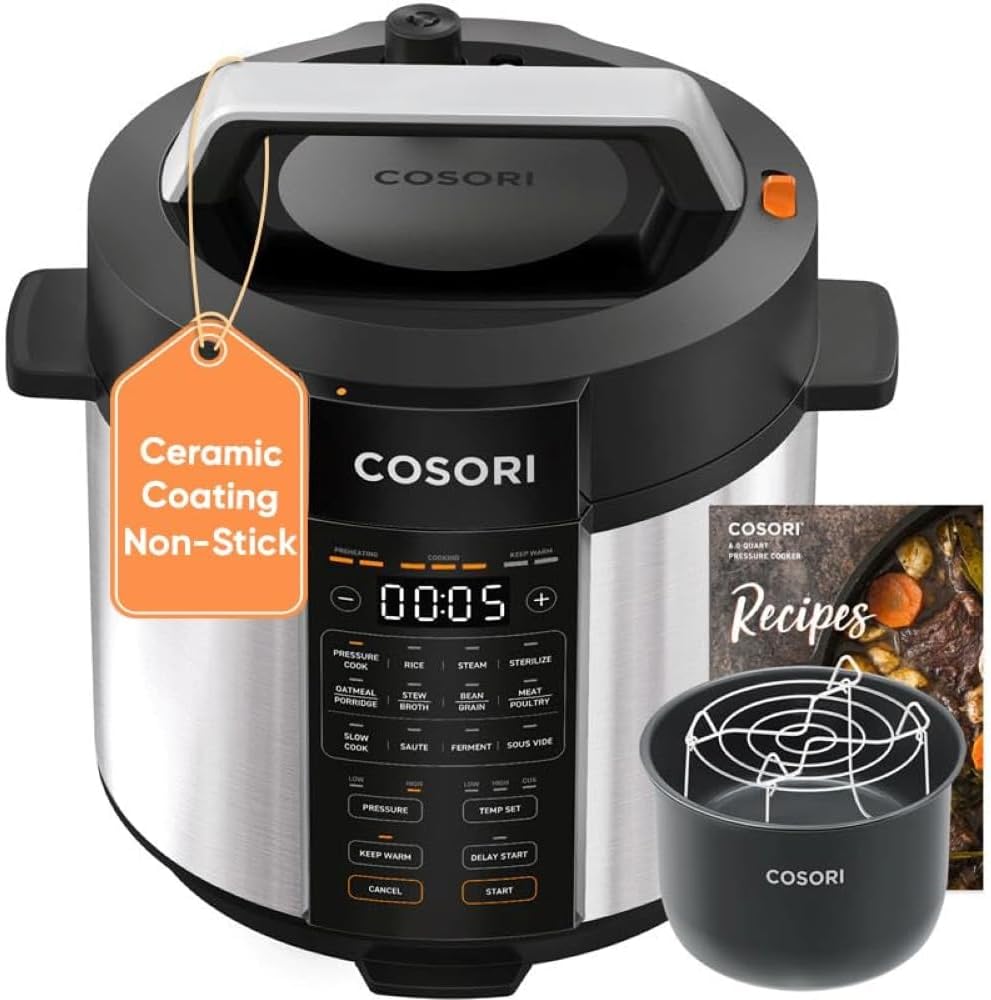
- Ceramic pot does not chip or flake like nonstick coatings and tolerates metal utensils.
- The angled steam release and seal button placement keep your hands clear of hot vapor during venting.
- Sous vide and ferment modes expand cooking options beyond standard pressure cooker functions.
Cons
- Slow cook mode runs cooler than standalone slow cookers to preserve nutrients, so recipes may need longer times or temperature adjustments.
- Soup and stew recipes can splatter during quick release due to high liquid content; natural release is safer but adds wait time.
Details
The Cosori 6QT is a multifunction electric pressure cooker that replaces rice cookers, slow cookers, steamers, and yogurt makers with one countertop appliance.
It reaches pressure in under 10 minutes and cooks brown rice in 22 minutes versus 45 on the stovetop. The sous vide function holds precise low temps for restaurant-style steak and salmon.
The ceramic inner pot is 8.66 inches wide and 6.18 inches deep, with a BPA-free coating that resists staining and scratching. The unit weighs 11.9 pounds and draws 1100 watts on standard 120V outlets.
High-liquid recipes like soups can splatter during quick steam release, and slow cook mode runs cooler than dedicated slow cookers to retain nutrients.
Best for home cooks who want healthier pressure cooking without metal pot reactivity and value built-in safety features like overheat protection and anti-scald lids.
How to Use
Add ingredients and liquid to the ceramic pot, close the lid by aligning the orange dots and twisting clockwise, then turn the valve to Seal. Select a preset mode or set time manually.
After cooking, let pressure drop naturally for 5 to 10 minutes before switching the valve to Vent for quick release. The float valve must drop completely before the lid will unlock.
For sauté mode, leave the lid off and stir frequently to brown meat or soften onions before pressure cooking. Clean the pot, lid, and steam rack in the dishwasher after each use.
Pros & Cons
Pros
- Combines an air fryer and pressure cooker in one 6-quart appliance.
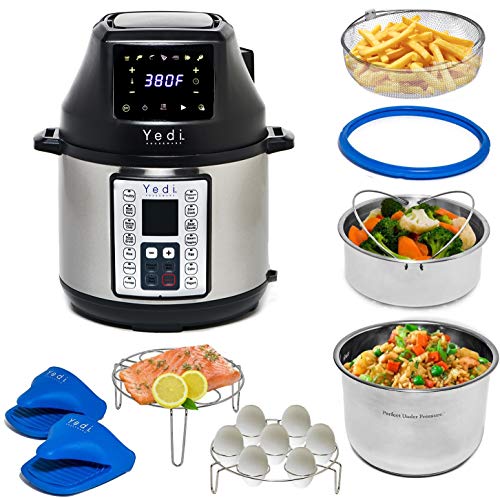
- Includes a broad accessory kit with racks, baskets, mitts, utensils, and a measuring cup.
- Offers specialized functions including dehydration, pasteurization, yogurt making, and cake baking.
- Provides recipe resources through the included book, cheat sheets, website, and social media content.
Cons
- The 6-quart capacity may be limiting when preparing especially large batches.
- Its many cooking functions may require learning which mode and accessory best fit each recipe.
Details
The Yedi Tango combines an air fryer and pressure cooker to reduce appliance clutter while covering everyday cooking tasks in a 6-quart format.
Pressure cooking targets faster meal preparation, while air frying, slow cooking, steaming, sautéing, and reheating expand the available meal options.
The stainless steel inner pot and steaming basket support regular cooking, and the accessory kit adds racks, a frying basket, mitts, utensils, and a spare sealing ring.
The 6-quart size may not accommodate especially large batches, and the wide range of functions may take some practice to use efficiently.
Best for home cooks who want pressure cooking and air frying alongside multiple additional functions in one appliance.
How to Use
Choose pressure-cook mode for faster meal preparation, or use air-fry mode with the included frying basket when you want air-fried foods.
Use the stainless steel inner pot for pressure cooking, rice, yogurt, slow cooking, sautéing, and warming; use the racks or steaming basket for steaming tasks.
Keep the recipe book and cheat sheets nearby while learning the remaining functions, including dehydration, cake baking, and pasteurization.
Air fryer vs Pressure cooker: The Core Difference
Choosing between air fryer and pressure cooker is less about one being universally better and more about which one fits how much cleanup you tolerate. Air fryer is the more focused choice; pressure cooker is usually easier to live with day to day. For product picks, compare best air fryer, best pressure cooker, and best deep fryer.
Head To Head
Best fit: Air fryer makes sense when its specific strengths match the work you do most; pressure cooker is better when you want broader everyday use.
Daily effort: compare cleaning, storage, and maintenance before you compare minor feature differences.
Value: paying more only helps if the difference shows up in your normal routine.
Risk: the wrong pick usually becomes annoying later — harder cleanup, awkward handling, or a tool that sits unused.
When Air fryer Wins
Choose air fryer when its main job lines up with your normal prep. Used for the right work, it feels more purposeful than the more general option. If you are shopping, our best air fryer and best pressure cooker guides are the fastest way in.
When Pressure cooker Wins
Pressure cooker makes more sense when you value versatility and simpler upkeep. If pressure cooker covers most of your cooking without fuss, the specialized option may be overkill.
The Core Difference
Air fryer vs pressure cooker is less about one option being universally better and more about fit. The split usually comes down to storage bulk, and motor or heating-element power versus convenience and cost. For product picks, compare best air fryer, best pressure cooker, and best deep fryer.
Related Product Guides
If this topic is part of a buying decision, these are the HomeWhisk guides most closely tied to it:
- best air fryer
- best pressure cooker
- best deep fryer
- best rice cooker
- best slow cooker
- best blender
- best instant pot
Frequently Asked Questions
Should I choose air fryer or pressure cooker?
Neither wins outright — pick air fryer for a more focused job, pressure cooker for easier everyday versatility. Compare best air fryer and best pressure cooker for real models.
What is the main difference between air fryer and pressure cooker?
It comes down to capacity and footprint versus convenience and cost. Match the winner to how often you cook and the lingering odors you most want to avoid.
Is a premium appliance worth it?
Only if you use it enough to notice better control, durability, or cleanup regularly. Occasional users are well served by a mid-range pick like those in best deep fryer.
Who is this most useful for?
Mainly gadget-minimalists who want one do-it-all unit, and busy weeknight cooks. If that is you, treat speed under load as a requirement rather than a nice-to-have.
What is the bottom line?
Match the appliance to your real habits: buy for durability if it is daily, for value and storage if it is occasional.
The Bottom Line
The simplest takeaway: buy for your real routine, not the most impressive feature list. Match the air fryer to your cooking frequency, cleanup habits, and storage, then use best air fryer, best pressure cooker, and best deep fryer to compare actual products.




Write Your Review
No reviews yet. Be the first to share your experience!