

TL;DR — A good blender sizes buying decision starts with how you cook, how much space you have, and which trade-offs you will actually notice. When this turns into a purchase decision, compare best blender, best immersion blender, and best air fryer before narrowing your shortlist.
The HomeWhisk approach is research-first: compare construction, usability, cleaning, and long-term complaints before recommending a direction. For appliance topics, we pay close attention to capacity, controls, cleanup, storage, reliability complaints, and whether the machine saves enough effort to justify the space.
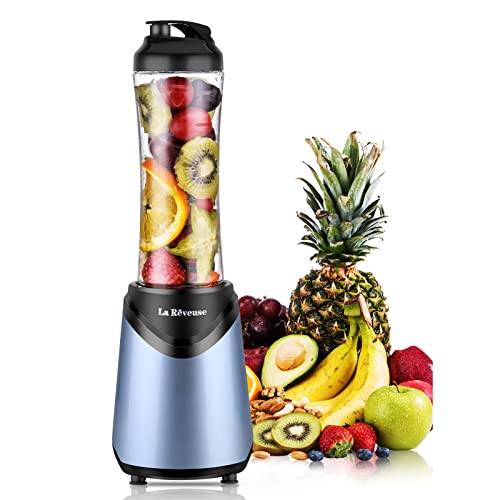
Pros & Cons
Pros
- One-bottle workflow eliminates the extra glass and pitcher that normally follow a smoothie session.
- Two-mode operation gives you pulse control for chunky textures and locked continuous blending for smooth ones.
- Compact 3 lb body and 9-inch bottle height fit dorm rooms, offices, and apartment kitchens without dedicated counter space.
- BPA-free food-grade bottle means the container you blend in is the one you can safely drink from all day.
Cons
- The bottle is not dishwasher safe and must not be washed in hot water, so every cleanup is a hand wash.
- At 300 watts and 18 oz capacity, it handles single servings rather than frozen-heavy batches or family-size portions.
Details
A 300-watt personal blender built for people who make one drink at a time and do not want to clean a full-size pitcher afterward.
The 4-leaf stainless steel blade handles fruit, vegetables, protein powder, and baby formula, and the 18 oz bottle goes straight from the base to your bag.
Food-grade BPA-free bottle, 3 inches wide by 9 inches tall, with the whole unit weighing 3 lbs and a sports lid sized for most car cup holders.
The bottle cannot go in the dishwasher or take hot water, and the motor only runs when the bottle is pressed down or twisted into LOCK.
Best for commuters, students, and gym-goers who want a daily single-serve smoothie without a counter appliance.
How to Use
Load softer ingredients and liquid first, then fruit or vegetables, keeping the total under the 18 oz line. Screw the blade assembly on and invert the bottle onto the base.
Press the bottle down for short pulses when you want texture. Twist it into the LOCK position for continuous blending on tougher produce and protein powder.
Rinse the bottle, lid, and blade in cool or warm water right after use. Skip the dishwasher and hot water, then swap in the sports lid to take the drink with you.

Pros & Cons
Pros
- Enough motor power to grind coffee beans and process tough vegetables, not just soft fruit.
- Drop-resistant cups with printed measurement lines make portioning protein shakes straightforward.
- Side and bottom ventilation windows help the motor shed heat during back-to-back blends.
- Twist-to-start action with no dial or program menu keeps daily use simple.
Cons
- The motor can cut out under heavy or dense loads, and the manual calls for a 10 to 20 minute cooldown before restarting.
- The base cannot get wet, so cleanup requires careful wiping rather than a quick rinse of the whole unit.
Details
A personal-size countertop blender built for people who make smoothies and shakes daily but do not want a large pitcher blender occupying counter space.
The 1200-watt motor reaches 25,000 RPM, and the two 304 stainless 6-leaf blade assemblies are wider and thicker than standard, so ice and frozen berries break down instead of spinning above the blades.
Three drop-resistant cups measure 23, 32, and 37 ounces at full capacity with clear measurement lines, plus two flat lids and one to-go lid. Four silicone feet keep the base steady during operation.
Overloading triggers motor protection, requiring an unplug and a 10 to 20 minute cooldown, so dense nut butters and thick doughs are outside its range.
Best for smoothie and protein-shake drinkers who blend single or double servings and want to drink straight from the cup.
How to Use
Load liquid first, then soft ingredients, then ice or frozen fruit on top. Fill to the measurement lines rather than the rim so the blades have room to circulate.
Screw the blade assembly on, invert the cup onto the base, then push and twist to start. Release to stop, and pulse in short bursts for ice rather than running continuously.
Swap to the second blade assembly for dry work like coffee beans. Clean by running water and dish soap through the cup, and wipe the base rather than rinsing it.

Save $6.47
Pros & Cons
Pros
- Heavyweight 13oz construction is the specific reason this line is bought over cheaper fleece.
- Reinforced double-needle seams at the highest-stress points extend usable life.
- Relaxed cut leaves room for a shirt or thermal layer underneath.
- Available in a true 4X-Large for buyers poorly served by standard size runs.
Cons
- At 13oz it runs hot and bulky, making it impractical for mild weather or anything worn under a jacket.
- Snow white in a cotton-blend fleece shows stains readily and needs careful separate washing.
Details
A full zip hooded fleece sweatshirt in 4X-Large, aimed at buyers who find standard hoodies too thin and too short-lived.
The 13oz fabric weight is the core feature: it retains heat as a standalone outer layer in cold conditions instead of needing a shell over it.
Built from 60 percent ring-spun cotton and 40 percent polyester, with double-needle coverseamed neck, armholes, and waistband, plus Lycra-blend rib cuffs and a double-ply lined hood.
The tradeoff is bulk and heat retention, so it is not a year-round or under-jacket layer.
Best for larger-framed buyers who want one thick, hard-wearing cold weather hoodie over several thin ones.
Best Uses
Outdoor cold weather work and standing around in the cold, where the 13oz fleece replaces a light jacket entirely.
Everyday casual wear for buyers who want a relaxed, non-tapered fit with room for a shirt underneath.
Skip it for running, gym sessions, or layering under a coat, where the weight and bulk work against you.
Sizing It Right
Size is the make-or-break spec for a blender sizes: too big and it wastes space or heats unevenly, too small and you work in frustrating batches. Match capacity to your household and your storage, and check it against storage bulk before committing. For product picks, compare best blender, best immersion blender, and best air fryer.
How To Avoid The Wrong Pick
Do not buy a blender sizes by brand alone — the same name spans premium and budget lines. Watch for repeated complaints in reviews, then match size, material, and care needs to your actual habits. We cover specific models in best blender, best immersion blender, and best air fryer.
Care And Longevity
The best-value blender sizes is one you maintain. Plan for wiping the interior after use, letting the motor rest between heavy loads, and checking the seals and gaskets from day one, and you avoid the gaskets that stop sealing that sends cheaper gear to landfill early.
Sizing And Fit
The right blender sizes is the one that fits your counter, your storage, and your typical quantities. Oversized gear that stores badly is a false economy, and undersized gear forces extra batches. Consider the way it fits your real kitchen, not an ideal one.
Features Worth Paying For
The upgrades worth their price on a blender sizes are the ones you feel every day — better motor or heating-element power, and preset controls, and easier checking the seals and gaskets. Be skeptical of bundled extras that solve no real problem. For most buyers the sweet spot sits in the middle of the market. If you are shopping, our best blender and best immersion blender guides are the fastest way in.
Budget Tiers
Entry appliances cover the basics; mid-range usually improves materials, control, and durability; premium buys refinement you only notice with heavy use. Decide which tier your cooking frequency justifies before you compare specific blender sizes models.
Related Product Guides
If this topic is part of a buying decision, these are the HomeWhisk guides most closely tied to it:
- best blender
- best immersion blender
- best air fryer
- best instant pot
- best stand mixer
- best toaster oven
Frequently Asked Questions
What size blender sizes should I get?
Match it to your household and storage, not the biggest option. Weigh it against noise level; best blender covers the common sizes.
What should I avoid?
Avoid buying by brand alone, ignoring descaling water-based units, and oversizing for your space. Each invites trapped residue in seams down the line.
What matters most for blender sizes?
Focus on digital versus dial controls, storage bulk, and motor or heating-element power first. Those decide real performance; the rest is secondary. Compare best blender and best immersion blender for options that get the basics right.
Is a premium appliance worth it?
Only if you use it enough to notice better control, durability, or cleanup regularly. Occasional users are well served by a mid-range pick like those in best air fryer.
What is the bottom line?
Match the appliance to your real habits: buy for durability if it is daily, for value and storage if it is occasional.
The Bottom Line
For most home cooks, the best choice is the one that removes friction without adding maintenance you will ignore. Start with your use case, then cross-check best blender, best immersion blender, and best air fryer.


Write Your Review
No reviews yet. Be the first to share your experience!