

A kitchen dehydrator is a countertop appliance that dries food with low, steady heat and constant airflow, so you can turn fruit, vegetables, herbs and meat into shelf-stable snacks. Most home models run somewhere between about 95°F and 176°F, and drying takes anywhere from two hours for herbs to 12 hours or more for jerky.
This guide explains how a kitchen dehydrator works, what to look for before you buy, how much tray space you really need, and how to avoid the mistakes that ruin a first batch. We’ve also pulled two real models from the HomeWhisk product database so you can see how the numbers play out.
How a kitchen dehydrator works
Drying food is mostly about removing water without cooking it. A heating element warms the air, and a fan pushes that air across stacked trays. Moisture leaves the food, the air carries it out through vents, and the food shrinks, hardens and becomes far harder for bacteria and mold to grow on.
That’s the whole trick. Temperature and airflow do the work, and the timer just keeps you from over-drying. Herbs want the low end of the range, fruit and vegetables sit in the middle, and meat needs the highest setting so it dries safely.
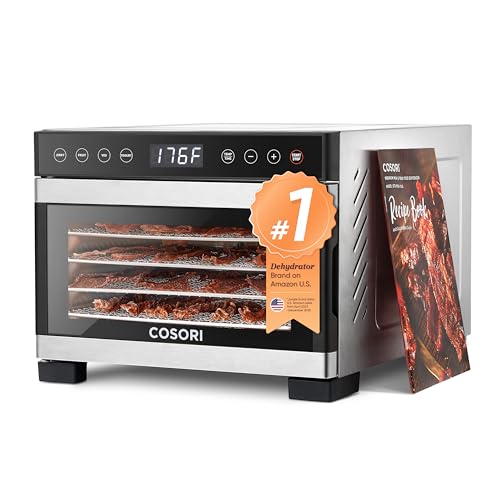
If you want a model built around meat and pet treats, the Cosori food dehydrator for jerky is a good example. It’s listed with a 176°F maximum temperature, 5 stainless steel trays with 3.1 ft² of drying space, 4 presets and a 48-hour timer. The listing also mentions dog treats, meat, fruit, veggies and snacks.
Cosori
Best Food Dehydrator for Jerky & Snacks: Cosori 5-Tray Stainless Steel with 176°F Max Temp
The Cosori food dehydrator reaches 176°F with precise 1°F increments across 5 stainless steel trays, hitting the USDA-recommended 165°F threshold for safe beef jerky every time. Home cooks who regularly make jerky, dried fruit, or dog treats will appreciate the 48-hour timer and four dedicated presets that remove the guesswork from drying times.
Pros and Cons
Pros
- Temperature adjusts in 1°F increments from 95 to 176°F, giving precise control that cheaper dehydrators with fixed settings cannot match.
- Stainless steel trays are more durable and odor-resistant than plastic alternatives, which matters when drying strongly flavored foods like fish or garlic.
- Includes a mesh screen and fruit roll sheet out of the box, so you can dehydrate small or liquid-based foods without buying accessories separately.
- Four customizable presets store your preferred time and temperature combinations, saving setup time on repeat recipes.
Cons
- Five trays provide 3.1 square feet of total drying space, which may not be enough for large-batch processing without running multiple cycles.
- No review data is currently available to confirm real-world noise levels during extended overnight runs.
Cosori Best Food Dehydrator for Jerky & Snacks: Cosori 5-Tray Stainless Steel with 176°F Max Temp
Cosori
Best Food Dehydrator for Jerky & Snacks: Cosori 5-Tray Stainless Steel with 176°F Max Temp
The Cosori food dehydrator reaches 176°F with precise 1°F increments across 5 stainless steel trays, hitting the USDA-recommended 165°F threshold for safe beef jerky every time. Home cooks who regularly make jerky, dried fruit, or dog treats will appreciate the 48-hour timer and four dedicated presets that remove the guesswork from drying times.
$119.99 at AmazonEditors' Favorite
Color: Bright-Silver Size: 5 Trays (3.1ft² Drying Space) Dimensions: 13.9 x 11.3 x 8.9 inches Weight: 10.8 Pounds Product Group: Kitchen Binding: Kitchen
Shop NowWhat to look for in a kitchen dehydrator
Specs on the box matter less than how the machine fits the way you cook. Here are the points that change your results most.
Temperature range and control
Look for adjustable temperature rather than a single fixed heat. Delicate herbs can turn brown or lose flavor if they’re dried too hot, while jerky needs enough heat to dry safely. A digital thermostat with presets takes the guesswork out of it.
Tray material and count
Stainless steel trays don’t stain or hold odors the way some plastic trays can, and they’re easy to wash. More trays means more food per batch, but only if the machine can push air evenly through all of them.
Drying space
Manufacturers often quote total tray area in square feet. A figure like 3.1 ft² is plenty for a household snack habit. A figure like 16.2 ft² is closer to batch-processing a garden harvest.
Timer and shutoff
A long timer is handy for overnight jerky. A model that shuts itself off when the timer ends protects the food from over-drying while you sleep.
Choosing the right size for your kitchen
Start with how much you’ll dry at once. A small family making fruit leather, apple chips and the occasional batch of jerky rarely needs more than five trays. Someone with a vegetable garden, a hunting season or a big pet-treat habit will fill ten trays quickly.
Counter space
Larger units are taller and heavier. Measure the spot where you’ll use it, and check the cord reach, because most people run a dehydrator for hours at a time.
Noise and placement
Fans run the whole time, and drying meat can fill a room with a strong smell. A garage, utility room or spot near an open window often works better than a small kitchen.
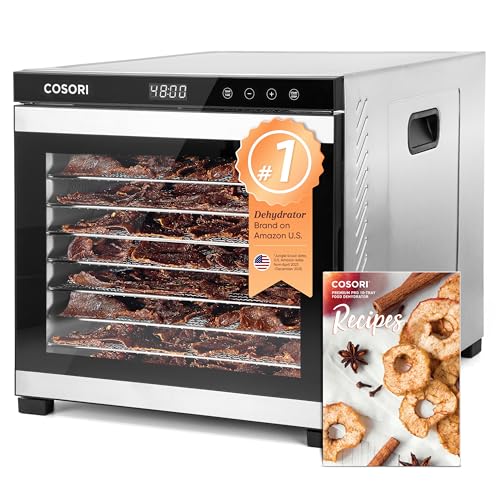
For bigger batches, the Cosori food dehydrator with 10 stainless steel trays and 16.2 ft² of drying space is the larger option in the database. It costs more, and it needs a lot of room. But it can dry far more food in a single run than a five-tray unit.
Cosori
Large-Batch Fruit, Vegetable and Jerky Drying: Cosori Food Dehydrator with 10 Stainless Steel Trays
The Cosori Food Dehydrator dries fruits, vegetables, and jerky across 10 stainless steel trays, with 16.2 square feet of space as its biggest advantage. Large families and batch snack makers should buy it for simultaneous drying, precise 1-degree temperature control, and a 48-hour timer.
Pros and Cons
Pros
- The 10 stainless steel trays provide substantial capacity for family-size snack batches.
- The 1-degree temperature increments support more precise drying control.
- The 165-degree maximum temperature follows the product's stated USDA jerky safety guidelines.
- The rear fan is designed to promote even dehydration across the trays.
Cons
- The 15.6-by-15-inch trays require substantial counter or storage space.
- Fruit rolls and mesh screens may require separate accessory purchases.
Cosori Large-Batch Fruit, Vegetable and Jerky Drying: Cosori Food Dehydrator with 10 Stainless Steel Trays
Cosori
Large-Batch Fruit, Vegetable and Jerky Drying: Cosori Food Dehydrator with 10 Stainless Steel Trays
The Cosori Food Dehydrator dries fruits, vegetables, and jerky across 10 stainless steel trays, with 16.2 square feet of space as its biggest advantage. Large families and batch snack makers should buy it for simultaneous drying, precise 1-degree temperature control, and a 48-hour timer.
$299.99 at AmazonEditors' Favorite
Color: Silver Size: 10 Trays(16.2ft² Drying Space) Dimensions: 16.9 x 21.3 x 16.4 inches Weight: 35.8 pounds Product Group: Kitchen Binding: Kitchen
Shop NowWhat you can dry, and at what temperature
Different foods behave differently, so use the machine’s presets or a trusted drying chart rather than guessing. As a general guide, herbs dry best at the lowest settings, fruit and vegetables at moderate heat, and meat at the top of the range.
Fruit and vegetables
Slice evenly, about a quarter inch thick, so every piece dries at the same rate. Apples, bananas, strawberries and tomatoes are common first projects. Pat very juicy slices dry before loading them.
Jerky and pet treats
Trim fat, slice against or with the grain depending on the chew you want, and use the highest heat setting your dehydrator offers. Food safety guidance for meat is stricter than for fruit, so follow a proven recipe.
Herbs and flowers
Spread them in a single layer on the lowest setting. They’re done when they crumble between your fingers.
Common mistakes with a kitchen dehydrator
Most failed batches come from the same few habits. Uneven slices are the biggest one. Thin pieces turn brittle while thick ones stay damp, and damp food can mold in storage.
Overloading the trays is next. Air needs gaps to move. If pieces touch or overlap, they steam instead of drying. Skipping the cool-down is another: let dried food rest for a bit before you jar it, then check the jar for condensation over the next day or two.
Finally, don’t judge doneness by time alone. Humidity, slice thickness and the machine itself all change how long a batch takes. Advice that works: slice evenly. Leave gaps. Check early.
Food safety basics before your first batch
Dehydrating is simple, but a few habits keep it safe. Start with clean hands, clean trays and fresh food. Wash produce well, and discard anything bruised or moldy, because drying doesn’t fix spoiled ingredients.
Meat and poultry
Raw meat carries bacteria that low heat alone may not handle. Many guides recommend marinating, heating the meat to a safe internal temperature first, and then drying it. Check current USDA guidance for exact numbers, and don’t skip that step.
Checking that food is dry enough
Fruit should feel leathery with no wet spots when you tear a piece open. Vegetables should snap. Jerky should bend and crack without breaking in two. If you’re unsure, give it another hour.
Conditioning dried fruit
Pack cooled fruit loosely into a jar for several days and shake it daily. If moisture beads up on the glass, the fruit needs more drying time. It’s a cheap check that prevents a ruined jar.
Cleaning and storing your dried food
Wash trays after each use, since sugary fruit residue and meat fat can build up fast. Stainless steel trays are usually easy to scrub, and many people soak them first. Keep the base unit dry and wipe it with a damp cloth.
Store finished food in airtight jars or vacuum bags, away from light and heat. Fruit and vegetables keep longer when fully dry, and meat is best stored cool and used sooner.
When to upgrade your dehydrator
If you’re running back-to-back batches to keep up, or you’re rotating trays constantly to get even results, a bigger model is worth a look. If you only dry now and then, a smaller machine is usually the better value. Our guides to the best dehydrator, the best food dehydrator and the best dehydrator for the money compare more models side by side.
Shopping on a budget? See the best cheap dehydrator and the best dehydrator under 100. Drying for a specific use? The best dehydrator for dog treats and the best dehydrator for herbs narrow it down.
FAQ
What is a kitchen dehydrator used for?
It dries fruit, vegetables, herbs, meat and pet treats by circulating warm air over trays of food. People use it to make snacks like jerky and fruit chips, preserve garden produce and cut down on food waste.
Is a kitchen dehydrator worth it?
It can be, if you’ll use it regularly. Homemade dried fruit and jerky often cost less per serving than store-bought versions, and you control the ingredients. If you’d use it once a year, it probably isn’t.
How long does it take to dehydrate food?
It varies widely. Herbs can take a few hours, fruit often takes 6 to 12 hours, and jerky commonly takes several hours depending on thickness and temperature. Check for texture rather than relying only on the clock.
Can I use an oven instead of a dehydrator?
Sometimes. An oven with a very low setting and the door propped open can work, but many ovens don’t go low enough and they use more energy. A dehydrator gives steadier heat and airflow.
How many trays do I need?
Five trays suit most households. Choose ten if you process large harvests or make big batches of jerky. More trays only help if the airflow reaches all of them evenly.










Write Your Review
No reviews yet. Be the first to share your experience!