

HomeWhisk earns commission from qualifying purchases made through links on this page. We research picks from specifications and owner reviews; we do not test products ourselves.
TL;DR — When people ask about french pie pan, they are usually trying to make a buying or care decision without wasting money. This guide keeps the focus on what changes day-to-day use. Use this as the practical background, then check best cookware sets, best stainless steel cookware set, and best cast iron skillet for beginners for specific product options.
We treated this as an editor’s note for home cooks: what matters, what is optional, and which related product guides are worth checking before you buy. For cookware topics, the big differences are heat behavior, material, cooktop fit, cleaning, weight, and how the pan or pot holds up after repeated use.


Pros
- Two-piece design makes slicing and serving simple because the ring lifts away before you cut.
- Carbon steel resists warping and bending, so the pan stays flat through repeated bakes.
- Nonstick surface plus the loose base cuts cleanup to a quick wipe instead of scraping baked-on crust.
- Shallow 1.1-inch depth and fluted edge produce the crisp, defined pastry rim tarts are judged on.
Cons
- The removable base can leak thin, liquid batters, so a sheet pan underneath is necessary for custard and quiche fillings.
- Carbon steel and nonstick coatings generally need hand washing and soft utensils, ruling out dishwashers and metal cutters.
A two-piece 8.6-inch fluted tart pan that solves the worst part of tart baking: getting a fragile crust out of the pan in one piece.
The base lifts out on the ring, so you push the tart free instead of inverting it. Nonstick coating handles sticky fruit glazes and cheese-set quiche.
High-grade carbon steel gives fast, even heat and resists warping, rust, and staining. At 8.6 inches wide and 1.1 inches deep, it fits standard tart, quiche, and pie recipes.
The loose bottom is not liquid-tight, so wet fillings can seep before the crust sets unless you bake on a tray.
Best for home bakers who care how the finished tart looks on the plate.
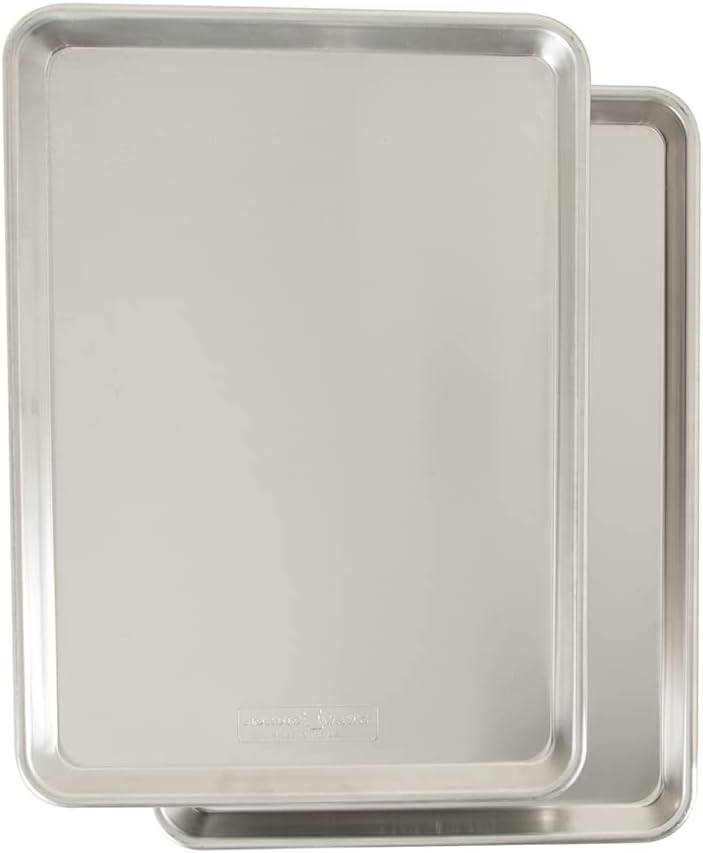
Set the pan on a rimmed baking sheet before filling. This catches any seepage from the removable base and gives you a handle for moving a wobbly custard tart.
Blind-bake the shell with weights for crisp fluted walls, then add wet fillings. The pan is freezer-safe, so chill the lined shell before baking to stop shrinkage.
Cool fully, then rest the pan on a can and let the ring drop away. Hand wash with a soft sponge to protect the nonstick coating.

Pros
- Removable bottom solves the single hardest part of tart baking: getting it out in one piece.
- 24cm diameter with a 3cm depth fits standard quiche and chocolate tart recipes without adjusting quantities.
- Ships as a two-piece set with a matching server, so nothing else is needed to serve.
- Carbon steel heats faster than glass or ceramic, which helps set bottom crusts.
Cons
- The loose-bottom design can leak thin, unbaked custard fillings unless the pan sits on a sheet tray.
- Non-stick coatings on carbon steel degrade if cut directly in the pan or scoured, so the surface needs some care.
A 9-inch fluted tart pan built to solve the classic failure point: tarts and quiches that shatter when you try to remove them from a solid dish.
The two-piece design lets you push the base up from underneath, freeing the crust cleanly. The three-layer non-stick coating on both sides handles egg-heavy quiche fillings that normally weld themselves to metal.
Measures 24 by 3cm in high carbon steel, so it is light enough to handle one-handed but rigid enough to resist warping across repeated bakes. Coating excludes PTFE, PFOA, and BPA.
Loose-bottom pans can seep runny filling before the crust sets, so place it on a baking sheet.
Best for home bakers who make quiche or fruit tarts often enough to care how the edges look.
Set the pan on a rimmed baking sheet before filling. This catches any seepage from the removable base and gives you a stable surface for moving a full quiche into the oven.
Blind bake the crust first for wet fillings. Carbon steel conducts heat quickly, so the base sets before custard soaks in, giving you a crisp bottom instead of a soggy one.
Cool for several minutes before unmolding, then push the base up while resting the pan on a can. Slice with the included server rather than cutting in the pan to protect the coating.
The Short Answer
The short version of french pie pan: fit the pan to your real cooking, not to a feature list. The practical takeaway is that sidewall height matters more day to day than headline features. For product picks, compare best cookware sets, best stainless steel cookware set, and best cast iron skillet for beginners.
What To Look For
Judge a pan by how it feels in normal use, how easy it is to clean, and whether it solves the job you bought it for. Those are the variables that decide whether it earns a spot in your kitchen or ends up unused. Ignore cosmetic upgrades until the fundamentals check out.
When It Is Worth Paying More
Spending up pays off when you use the pan often enough to notice better day-to-day handling every week. If it only comes out occasionally, a mid-range pick is the smarter call. Match the money to frequency of use, not marketing.
Who Benefits Most
This matters most for cooks who move pans from stovetop to oven, and weeknight cooks who want low upkeep. If that is you, treat cooktop compatibility, and oven-safe temperature as non-negotiable. Casual users can relax the requirements and prioritize price and storage instead.
Related Product Guides
If this topic is part of a buying decision, these are the HomeWhisk guides most closely tied to it:
- best cookware sets
- best stainless steel cookware set
- best cast iron skillet for beginners
- best non toxic cookware
- best dutch oven for bread baking
Frequently Asked Questions
What gear pairs well with it?
Start with a reliable core piece, then add as needs appear. Compare best cookware sets, best stainless steel cookware set, and best cast iron skillet for beginners for related choices.
What is the bottom line?
Match the pan to your real habits: buy for durability if it is daily, for value and storage if it is occasional.
What should I avoid?
Avoid buying by brand alone, ignoring using low-to-medium heat on coatings, and oversizing for your space. Each invites handles that loosen over time down the line.
Is a premium pan worth it?
Only if you use it enough to notice better control, durability, or cleanup regularly. Occasional users are well served by a mid-range pick like those in best cast iron skillet for beginners.
What matters most for french pie pan?
Focus on handle heat resistance, oven-safe temperature, and weight and maneuverability first. Those decide real performance; the rest is secondary. Compare best cookware sets and best stainless steel cookware set for options that get the basics right.
The Bottom Line
A good french pie pan decision should feel obvious after you line up size, material, cleaning, and durability. If it is still a purchase question, the next step is best cookware sets, best stainless steel cookware set, and best cast iron skillet for beginners.




Write Your Review
No reviews yet. Be the first to share your experience!