

TL;DR — When people ask about heavy bottom dutch oven, they are usually trying to make a buying or care decision without wasting money. This guide keeps the focus on what changes day-to-day use. Use this as the practical background, then check best cookware sets, best stainless steel cookware set, and best cast iron skillet for beginners for specific product options.
We treated this as an editor’s note for home cooks: what matters, what is optional, and which related product guides are worth checking before you buy. For cookware topics, the big differences are heat behavior, material, cooktop fit, cleaning, weight, and how the pan or pot holds up after repeated use.

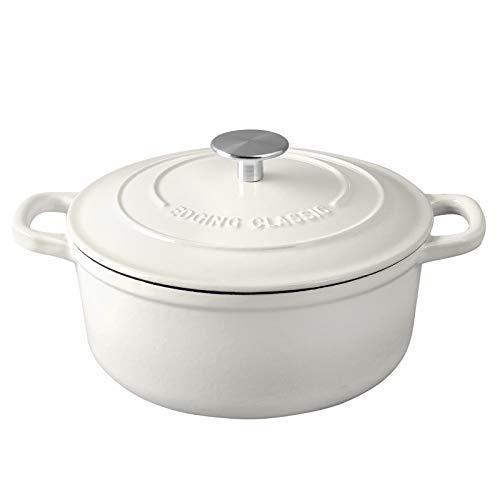
EDGING CASTING
7-Quart Enameled Cast Iron Dutch Oven for Bread Baking and Braising: EDGING CASTING Round Covered Pot, White
This 7-quart enameled cast iron Dutch oven handles no-knead bread, braises, and stews, with a heavy cast iron body that spreads heat evenly and holds it long after the burner drops. It suits cooks feeding six to eight people who want one pot that moves from induction or gas to the oven without swapping cookware.
Pros and Cons
Pros
- Heavy-duty cast iron construction delivers the heat retention that slow braises and Dutch oven bread depend on.
- Enamel coating means no seasoning maintenance and simple cleanup after sticky, acidic dishes like tomato sauces.
- The tight-sealing lid locks in moisture through hours of low, slow cooking.
- Compatible with every common cooktop type, including induction.
Cons
- A 7-quart cast iron pot is heavy when full, which makes lifting it in and out of the oven a two-hand job.
- Enamel chips if knocked against hard surfaces or scraped with metal utensils, so it needs gentler handling than bare cast iron.
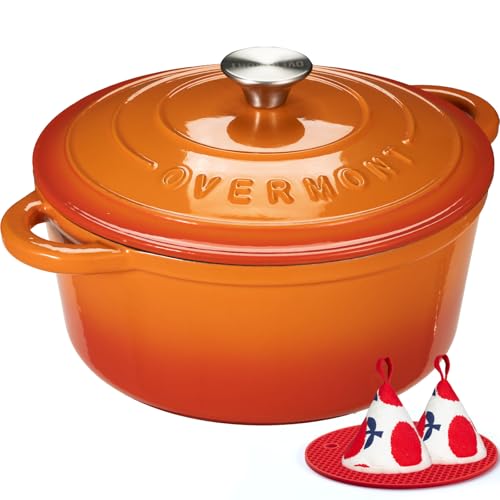
Overmont
Family-Size Braising & Baking: Overmont Enameled Cast Iron Dutch Oven 7QT
This 7QT Overmont Dutch oven handles family-size soups, stews, roasts, and sourdough while its self-basting lid helps retain moisture. It suits families, batch cooks, and hosts who need one versatile pot for stovetop-to-oven meals serving 5–8 people.
Pros and Cons
Pros
- The 7QT size accommodates meals for 5–8 people and large weekend batches.
- It works on multiple cooktops and in ovens up to 500°F.
- The self-basting lid supports moist results with brisket, pork shoulder, roasts, and stews.
- The included cookbook and cotton handle covers add practical convenience.
Cons
- Its large cast-iron construction can be cumbersome to lift, especially when filled.
- The 7QT capacity may be more cookware than needed for small households or single portions.
The Best Deals This Week*
-
7-Quart Enameled Cast Iron Dutch Oven for Bread
$39.99
($49.99)Save $10.00 -
Family-Size Braising & Baking
$39.99
($79.99)Save $40.00
*Deals are selected by our commerce team
EDGING CASTING 7-Quart Enameled Cast Iron Dutch Oven for Bread Baking and Braising: EDGING CASTING Round Covered Pot, White
EDGING CASTING
7-Quart Enameled Cast Iron Dutch Oven for Bread Baking and Braising: EDGING CASTING Round Covered Pot, White
This 7-quart enameled cast iron Dutch oven handles no-knead bread, braises, and stews, with a heavy cast iron body that spreads heat evenly and holds it long after the burner drops. It suits cooks feeding six to eight people who want one pot that moves from induction or gas to the oven without swapping cookware.
$39.99 at AmazonEditors' Favorite
Color: White Size: 7QT Dimensions: 14.2 x 14.2 x 6.7 Inches Weight: 16.53 pounds Product Group: Kitchen Binding: Kitchen
Shop NowOvermont Family-Size Braising & Baking: Overmont Enameled Cast Iron Dutch Oven 7QT
Overmont
Family-Size Braising & Baking: Overmont Enameled Cast Iron Dutch Oven 7QT
This 7QT Overmont Dutch oven handles family-size soups, stews, roasts, and sourdough while its self-basting lid helps retain moisture. It suits families, batch cooks, and hosts who need one versatile pot for stovetop-to-oven meals serving 5–8 people.
$39.99 at AmazonGreat Value
Color: Pumpkin Size: 7 Quart Dimensions: 13.385826758 x 13.385826758 x 6.692913379 Inches Weight: 13.22773572 pounds Product Group: Kitchen Binding: Kitchen
Shop NowWhen It Is Worth Paying More
Spending up pays off when you use the pan often enough to notice better cleaner results every week. If it only comes out occasionally, a mid-range pick is the smarter call. Match the money to frequency of use, not marketing.
How To Get It Right
Think through the whole workflow: drying fully to prevent rust, letting the pan cool before washing, and using low-to-medium heat on coatings. A pan that fits your routine and cleanup habits beats a technically superior one you fight with. We cover specific models in best cookware sets, best stainless steel cookware set, and best cast iron skillet for beginners.
Who Benefits Most
This matters most for cooks who move pans from stovetop to oven, and induction-stovetop owners. If that is you, treat heat distribution, and sidewall height as non-negotiable. Casual users can relax the requirements and prioritize price and storage instead.
The Short Answer
Heavy bottom dutch oven usually comes down to one thing: matching the pan to how you actually cook rather than to a spec sheet. The practical takeaway is that sidewall height matters more day to day than headline features. For product picks, compare best cookware sets, best stainless steel cookware set, and best cast iron skillet for beginners.
Related Product Guides
If this topic is part of a buying decision, these are the HomeWhisk guides most closely tied to it:
- best cookware sets
- best stainless steel cookware set
- best cast iron skillet for beginners
- best non toxic cookware
- best dutch oven for bread baking
Frequently Asked Questions
Who is this most useful for?
Mainly cooks who sear and sauté often, and cooks who move pans from stovetop to oven. If that is you, treat coating durability as a requirement rather than a nice-to-have.
What is the bottom line?
Match the pan to your real habits: buy for durability if it is daily, for value and storage if it is occasional.
What should I avoid?
Avoid buying by brand alone, ignoring letting the pan cool before washing, and oversizing for your space. Each invites food sticking to worn coatings down the line.
How do I keep it in good shape?
Build using low-to-medium heat on coatings, and letting the pan cool before washing into normal cleanup. Light, consistent care prevents warping on high heat far better than occasional deep effort.
What matters most for heavy bottom dutch oven?
Focus on sidewall height, handle heat resistance, and weight and maneuverability first. Those decide real performance; the rest is secondary. Compare best cookware sets and best stainless steel cookware set for options that get the basics right.
The Bottom Line
A good heavy bottom dutch oven decision should feel obvious after you line up size, material, cleaning, and durability. If it is still a purchase question, the next step is best cookware sets, best stainless steel cookware set, and best cast iron skillet for beginners.



Write Your Review
No reviews yet. Be the first to share your experience!