

TL;DR — A good answer to ceramic paella pan starts with real kitchen habits, not a perfect spec sheet. Most readers need a clear way to avoid the wrong tool, not another list of features. If you are comparing products, start with best cookware sets, best stainless steel cookware set, and best cast iron skillet for beginners; those guides give the model-level context behind this advice.
We looked at manufacturer details, material behavior, recurring owner-review patterns, and where this topic overlaps with related buying guides. For cookware topics, the big differences are heat behavior, material, cooktop fit, cleaning, weight, and how the pan or pot holds up after repeated use.
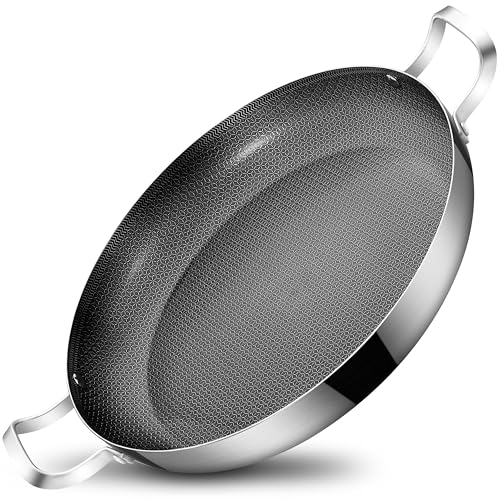
Bzayeat
14-Inch Induction-Ready Paella Pan for Authentic Socarrat: Bzayeat 5-Ply Ceramic Nonstick
This 14-inch shallow pan uses 5-ply construction with an aluminum core to spread heat evenly across the wide base, which is what produces the crisp socarrat layer paella is judged on. Buy it if you cook paella for a crowd on induction, gas, or a backyard burner and want a PFOA-free ceramic surface that rinses clean instead of soaking.
Pros and Cons
Pros
- Even heat distribution from the aluminum core is the single biggest factor in getting a uniform socarrat across a 14-inch base.
- Oven safe to 600°F, so you can finish a paella under high heat or move it straight from stovetop to oven.
- Induction compatibility is uncommon in traditional carbon steel paella pans and makes this usable on modern cooktops.
- Detachable handles solve the storage problem that makes most large paella pans awkward to keep in a home kitchen.
Cons
- The manufacturer specifies medium-low heat only, which conflicts with the high, aggressive heat many traditional paella recipes call for during the socarrat stage.
- Ceramic nonstick coatings wear down over years of use and cannot be re-seasoned like the carbon steel pans used in Spain.

Inqibee
14 Inch Paella Pan for 8-12 Servings: Inqibee Hybrid Nonstick Stainless Steel with Lid
This 14-inch elliptical pan cooks paella for 8 to 12 people on any heat source, and its encapsulated base holds steady heat long enough to build a real socarrat crust. Buy it if you cook large one-pan meals for family dinners or backyard gatherings and want nonstick convenience without seasoning a carbon steel pan.
Pros and Cons
Pros
- PFOA and PFOS free ceramic coating avoids the high-heat fume concerns of traditional Teflon cookware.
- Two solid welded side handles carry a fully loaded pan without plastic parts that melt or work loose.
- Stainless steel body resists warping and rust, and it weighs less than an equivalent cast iron pan.
- Includes a lid, which lets you steam mussels or rest rice covered without hunting for a separate cover.
Cons
- Metal handles conduct heat and will need mitts after oven use or long stovetop sessions.
- A 14-inch pan overhangs most standard burners, so you may need to rotate it for even browning on gas or electric.
- Ceramic nonstick coatings lose slickness faster than bare stainless or seasoned carbon steel over years of high-heat use.

Yeksum
14-Inch Paella Pan with Glass Lid for Family-Size Rice Dishes and Searing - Yeksum Ceramic Nonstick Induction Skillet
The Yeksum 14-inch paella pan pairs a PFOA-free ceramic nonstick surface with tri-ply aluminum-core construction, so rice, seafood, and seared proteins cook evenly across the full width without hot spots. Buy it if you regularly cook for a crowd of up to 12 and want one pan that moves from induction burner to a 550°F oven to an outdoor cooker.
Pros and Cons
Pros
- PFOA-free ceramic coating lets you cook with less oil and wipe the surface clean after shellfish.
- Induction-ready tri-ply construction heats fast and evenly, which matters on a pan this wide.
- Stainless steel handle is built to stay cool and secure for indoor and outdoor use.
- 550°F oven rating covers stovetop-to-oven finishes that most nonstick pans cannot handle.
Cons
- The glass lid is rated to 300°C, well below the pan's 550°F ceiling, so it must come off for high-heat oven work.
- A 14-inch tri-ply pan is heavy and wide, and it will overhang smaller burners and crowd standard sinks and dishwashers.
The Best Deals This Week*
-
14-Inch Induction-Ready Paella Pan for Authentic
$59.99
($69.99)Save $10.00 -
14-Inch Paella Pan with Glass Lid for Family-Size
$79.99
($99)Save $19.01
*Deals are selected by our commerce team
Bzayeat 14-Inch Induction-Ready Paella Pan for Authentic Socarrat: Bzayeat 5-Ply Ceramic Nonstick
Bzayeat
14-Inch Induction-Ready Paella Pan for Authentic Socarrat: Bzayeat 5-Ply Ceramic Nonstick
This 14-inch shallow pan uses 5-ply construction with an aluminum core to spread heat evenly across the wide base, which is what produces the crisp socarrat layer paella is judged on. Buy it if you cook paella for a crowd on induction, gas, or a backyard burner and want a PFOA-free ceramic surface that rinses clean instead of soaking.
$59.99 at AmazonEditors' Favorite
Color: Ceramic Coating Size: 14 Inch without Lid Dimensions: 10 x 10.25 x 2.25 Inches Weight: 4 Pounds Product Group: Kitchen
Shop NowInqibee 14 Inch Paella Pan for 8-12 Servings: Inqibee Hybrid Nonstick Stainless Steel with Lid
Inqibee
14 Inch Paella Pan for 8-12 Servings: Inqibee Hybrid Nonstick Stainless Steel with Lid
This 14-inch elliptical pan cooks paella for 8 to 12 people on any heat source, and its encapsulated base holds steady heat long enough to build a real socarrat crust. Buy it if you cook large one-pan meals for family dinners or backyard gatherings and want nonstick convenience without seasoning a carbon steel pan.
$79.99 at AmazonGreat Value
Color: Silver Size: 14 Inch with Lid Dimensions: 18 x 14 x 2 inches Weight: 7.3413933246 Pounds Product Group: Kitchen Binding: Kitchen
Shop NowYeksum 14-Inch Paella Pan with Glass Lid for Family-Size Rice Dishes and Searing - Yeksum Ceramic Nonstick Induction Skillet
Yeksum
14-Inch Paella Pan with Glass Lid for Family-Size Rice Dishes and Searing - Yeksum Ceramic Nonstick Induction Skillet
The Yeksum 14-inch paella pan pairs a PFOA-free ceramic nonstick surface with tri-ply aluminum-core construction, so rice, seafood, and seared proteins cook evenly across the full width without hot spots. Buy it if you regularly cook for a crowd of up to 12 and want one pan that moves from induction burner to a 550°F oven to an outdoor cooker.
$79.99 at AmazonColor: Black Size: 14'' Dimensions: 3.89 x 14 x 15.94 Inches Weight: 7.89916284746 pounds Product Group: Kitchen Binding: Kitchen
Shop NowMaterials That Matter
Material decides how a ceramic paella pan performs and lasts: it drives coating durability, and lid fit and how much letting the pan cool before washing it demands. There is rarely one best material — each trades cost against durability and upkeep, so pick for how you actually cook. If you are shopping, our best cookware sets and best stainless steel cookware set guides are the fastest way in.
When It Is Worth Paying More
Spending up pays off when you use the pan often enough to notice better cleaner results every week. If it only comes out occasionally, a mid-range pick is the smarter call. Match the money to frequency of use, not marketing.
The Short Answer
Cut through it and ceramic paella pan is a fit question — the pan has to match how you cook. The practical takeaway is that heat distribution matters more day to day than headline features. For product picks, compare best cookware sets, best stainless steel cookware set, and best cast iron skillet for beginners.
Common Misconceptions
The biggest myth is that the most expensive pan is automatically the best for you. In reality, the right choice depends on coating durability, and weight and maneuverability — plus your own habits. Another trap is buying by brand alone — the same maker sells both excellent and forgettable lines.
Related Product Guides
If this topic is part of a buying decision, these are the HomeWhisk guides most closely tied to it:
- best cookware sets
- best stainless steel cookware set
- best cast iron skillet for beginners
- best non toxic cookware
- best dutch oven for bread baking
Frequently Asked Questions
Which material is best for a ceramic paella pan?
It depends on your priorities around heat distribution, and weight and maneuverability. See best cookware sets and best stainless steel cookware set for how materials play out in real models.
How do I keep it in good shape?
Build letting the pan cool before washing, and seasoning bare iron or carbon steel into normal cleanup. Light, consistent care prevents warping on high heat far better than occasional deep effort.
What is the bottom line?
Match the pan to your real habits: buy for durability if it is daily, for value and storage if it is occasional.
Who is this most useful for?
Mainly cooks who sear and sauté often, and weeknight cooks who want low upkeep. If that is you, treat cooktop compatibility as a requirement rather than a nice-to-have.
What should I avoid?
Avoid buying by brand alone, ignoring drying fully to prevent rust, and oversizing for your space. Each invites handles that loosen over time down the line.
The Bottom Line
Ceramic paella pan comes down to fit: how often you use the tool, how much care it needs, and whether it solves a real kitchen problem. If you are buying, compare best cookware sets, best stainless steel cookware set, and best cast iron skillet for beginners before you spend.



Write Your Review
No reviews yet. Be the first to share your experience!