

TL;DR — Mini wood grill is one of those kitchen questions where the useful answer is usually more practical than complicated. The right move depends on how you cook, what you already own, and how much maintenance you are willing to do. If you are comparing products, start with best air fryer, best blender, and best instant pot; those guides give the model-level context behind this advice.
We looked at manufacturer details, material behavior, recurring owner-review patterns, and where this topic overlaps with related buying guides. For appliance topics, we pay close attention to capacity, controls, cleanup, storage, reliability complaints, and whether the machine saves enough effort to justify the space.


Save $2.02

Save $2.10
Pros & Cons
Pros
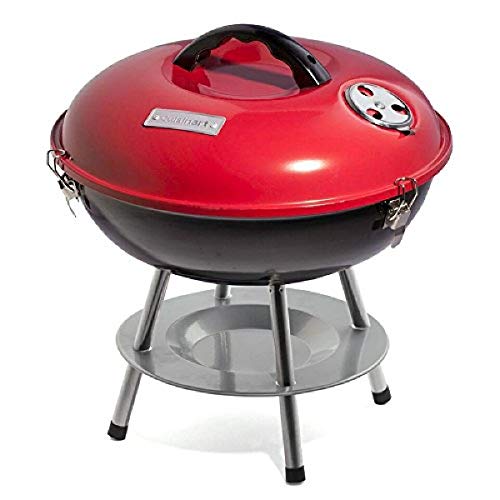
- At four pounds, this tabletop charcoal grill is easy to carry for camping and tailgating.
- Adjustable dual vents support more precise temperature management than a grill with fixed airflow.
- Three lid locks make transport more secure and help contain the grill between uses.
- The enamel-coated firebox, ash base, and chrome-plated grate make cleanup more manageable.
Cons
- Its 196-square-inch cooking area is better suited to compact meals than large group cooking.
- Charcoal grilling requires managing fuel, airflow, and ash after use.
Details
This compact charcoal grill solves the need for portable outdoor cooking when a full-size grill is impractical.
Dual vents help regulate airflow for low-and-slow cooking or higher-heat grilling, while the 196-square-inch grate accommodates compact meals.
The chrome-plated grate resists rust, and the enamel-coated firebox with ash base supports easier cleanup. Its four-pound weight improves portability.
The 196-square-inch surface limits how much food you can cook at once for larger groups.
Best for campers, tailgaters, and small-space grillers who value portability and vent control.
Best Uses
Use it for camping, tailgating, balcony-free patio cooking, and other settings where carrying a full-size grill is inconvenient.
Adjust the dual vents to manage airflow, using lower settings for slower cooking and greater airflow for higher heat.
Lock the lid before transport, then remove ash after cooking to keep cleanup and storage more manageable.

Pros & Cons
Pros
- It combines a wood-burning fire pit and charcoal barbecue grill in one compact design.
- The folding structure and carrying case make the grill easier to store and transport.
- A 304 stainless steel cooking rack is included for direct grilling and outdoor cookware.
- Assembly is designed to take only a few minutes using the enclosed manual.
Cons
- The compact rack fits only three to four skewers, so cooking capacity is limited for larger groups.
- Assembly is required before use, even though the design is described as simple.
Details
This portable campfire grill creates a compact outdoor cooking station for grilling food, heating cookware, or managing a small bonfire without packing separate equipment.
It burns either wood or charcoal, while the included 304 stainless steel rack supports direct grilling and compatible outdoor cookware.
The body uses heavy-duty, high-temperature-resistant coated iron and measures 11.4 by 11.6 by 8.1 inches when assembled. Its folding format and carrying case simplify transport.
The small cooking surface holds roughly three to four skewers, so it is better suited to individual meals or small groups than high-volume grilling.
Best for campers, backpackers, and patio cooks seeking a compact fire pit that also handles basic outdoor cooking.
Best Uses
Use the stainless steel rack for skewers, small portions, or outdoor cookware during camping, picnics, and backyard meals.
Choose charcoal for familiar barbecue cooking or burn available firewood when camping. The coated iron body also functions as a fire screen to help contain sparks and embers.
Pack it when space matters, particularly for small-group trips where a full-size grill would be unnecessarily bulky.
How To Get It Right
Think through the whole workflow: descaling water-based units, letting the motor rest between heavy loads, and wiping the interior after use. A appliance that fits your routine and cleanup habits beats a technically superior one you fight with. We cover specific models in best air fryer, best blender, and best instant pot.
Why It Matters
The variables that decide the outcome — digital versus dial controls, speed under load, and capacity and footprint — are the ones buyers most often overlook. That is why two appliances that look alike can feel completely different in use — one saves time, the other quietly adds friction to every task. If you are shopping, our best air fryer and best blender guides are the fastest way in.
When It Is Worth Paying More
Spending up pays off when you use the appliance often enough to notice better easier cleanup every week. If it only comes out occasionally, a mid-range pick is the smarter call. Match the money to frequency of use, not marketing.
Common Misconceptions
The biggest myth is that the most expensive appliance is automatically the best for you. In reality, the right choice depends on preset controls, and motor or heating-element power — plus your own habits. Another trap is buying by brand alone — the same maker sells both excellent and forgettable lines.
Related Product Guides
If this topic is part of a buying decision, these are the HomeWhisk guides most closely tied to it:
Frequently Asked Questions
What gear pairs well with it?
Start with a reliable core piece, then add as needs appear. Compare best air fryer, best blender, and best instant pot for related choices.
Who is this most useful for?
Mainly gadget-minimalists who want one do-it-all unit, and families cooking in volume. If that is you, treat storage bulk as a requirement rather than a nice-to-have.
What should I avoid?
Avoid buying by brand alone, ignoring letting the motor rest between heavy loads, and oversizing for your space. Each invites lingering odors down the line.
How do I keep it in good shape?
Build letting the motor rest between heavy loads, and cleaning removable parts by hand into normal cleanup. Light, consistent care prevents motors that bog down under load far better than occasional deep effort.
What matters most for mini wood grill?
Focus on capacity and footprint, build quality of seals, and speed under load first. Those decide real performance; the rest is secondary. Compare best air fryer and best blender for options that get the basics right.
The Bottom Line
Mini wood grill comes down to fit: how often you use the tool, how much care it needs, and whether it solves a real kitchen problem. If you are buying, compare best air fryer, best blender, and best instant pot before you spend.








Write Your Review
No reviews yet. Be the first to share your experience!