

TL;DR — White waffle maker is one of those kitchen questions where the useful answer is usually more practical than complicated. The right move depends on how you cook, what you already own, and how much maintenance you are willing to do. When this turns into a purchase decision, compare best air fryer, best blender, and best instant pot before narrowing your shortlist.
The HomeWhisk approach is research-first: compare construction, usability, cleaning, and long-term complaints before recommending a direction. For appliance topics, we pay close attention to capacity, controls, cleanup, storage, reliability complaints, and whether the machine saves enough effort to justify the space.
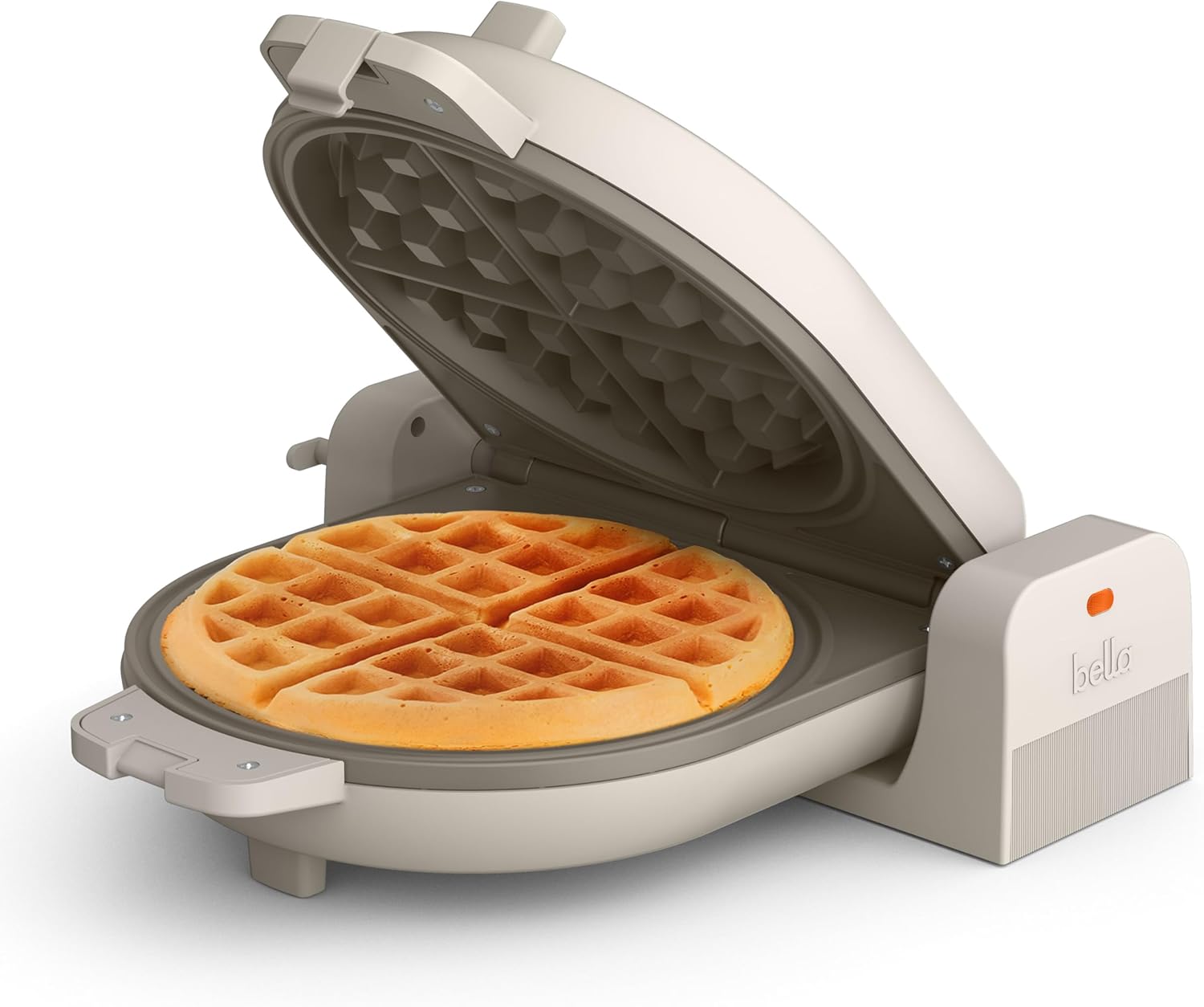
Pros & Cons
Pros
- Compact upright storage design fits in crowded cabinets and apartment kitchens where counter space is limited.
- Ceramic nonstick coating is free from PFAS, PFOA, PTFE, lead, and cadmium for safer cooking surfaces.
- Ready indicator light takes the guesswork out of timing so waffles come out golden without constant checking.
- Affordable price point under $25 delivers Belgian waffle quality without premium appliance cost.
Cons
- Plates are fixed and non-removable, so you have to clean them in place rather than soaking them in the sink.
- Single waffle capacity means cooking for a family requires multiple batches and extended prep time.
Details
The Bella Flip-n-Store is a compact Belgian waffle maker that solves the storage problem plaguing most waffle irons. It stands upright in cabinets and takes half the shelf space of traditional models.
The 180-degree flip mechanism distributes batter evenly across the 7-inch cooking surface, eliminating thin edges and doughy centers. The 1000-watt heating element brings plates to temperature quickly for consistent browning.
The unit weighs under 4 pounds and features a ceramic nonstick coating that releases waffles without butter or spray. The front-facing cool-touch handle stays safe to grip during operation, and the integrated cord wrap keeps storage tidy.
The plates are permanently attached, so cleanup requires wiping them down in place rather than removing and soaking them. This adds a minute or two to post-cooking cleanup.
Best for individuals, couples, or small families who want Belgian waffles without dedicating permanent counter space to a bulky appliance.
How to Use
Plug in the unit and wait for the ready light to signal the plates have reached cooking temperature, usually 3 to 4 minutes. Spray or brush a light coat of oil on the plates before the first waffle only.
Pour batter onto the center of the lower plate, close the lid, and flip the entire unit 180 degrees using the cool-touch handle. This distributes batter into every grid pocket. Cook for 4 to 6 minutes depending on your preferred crispness.
When the waffle is done, flip the unit back upright, open the lid, and use a silicone or wooden utensil to lift the waffle out. Wipe plates with a damp cloth while still warm, then store the unit vertically with the cord wrapped around the base.

Pros & Cons
Pros
- Four-slice capacity produces multiple Belgian waffles in one batch.
- Five browning settings provide useful control over waffle texture.
- The nonstick surface and damp-cloth cleaning method reduce cleanup effort.
- ETL approval and 24 months of after-sales service add support for long-term use.
Cons
- You may need to test a small amount of batter first to avoid overflow and dial in the right consistency.
- Cleaning requires wiping the cooking surface with a damp cloth rather than removing the plates.
Details
The Reemix Belgian waffle maker solves the slow, one-at-a-time breakfast problem by producing four thick waffles in a single batch.
Its 1200W heating element and five browning levels support faster cooking with control ranging from soft and fluffy to crisp.
The compact 11 x 13.1 x 5.3-inch design includes a cool-touch handle and cord organizer for safer handling and easier storage.
Because batter consistency affects overflow, start with a small amount until you learn the correct fill level.
Verdict: best for families wanting adjustable, restaurant-style Belgian waffles without a bulky countertop appliance.
How to Use
Plug in the waffle maker and wait for the red power light. Select one of five browning levels before adding batter.
Once the green light appears, the heating process is complete. Start with a small amount of batter to reduce overflow while learning the ideal fill level.
After cooking, remove the waffles from the nonstick surface and wipe the appliance with a damp cloth before storing the cord.


The Short Answer
The short version of white waffle maker: fit the appliance to your real cooking, not to a feature list. The practical takeaway is that noise level matters more day to day than headline features. For product picks, compare best air fryer, best blender, and best instant pot.
Common Misconceptions
The biggest myth is that the most expensive appliance is automatically the best for you. In reality, the right choice depends on noise level, and motor or heating-element power — plus your own habits. Another trap is buying by brand alone — the same maker sells both excellent and forgettable lines.
When It Is Worth Paying More
Spending up pays off when you use the appliance often enough to notice better day-to-day handling every week. If it only comes out occasionally, a mid-range pick is the smarter call. Match the money to frequency of use, not marketing.
Why It Matters
The variables that decide the outcome — noise level, digital versus dial controls, and cleaning access — are the ones buyers most often overlook. That is why two appliances that look alike can feel completely different in use — one saves time, the other quietly adds friction to every task. If you are shopping, our best air fryer and best blender guides are the fastest way in.
Who Benefits Most
This matters most for busy weeknight cooks, and meal-preppers batching food. If that is you, treat storage bulk, and cleaning access as non-negotiable. Casual users can relax the requirements and prioritize price and storage instead.
How To Get It Right
Think through the whole workflow: descaling water-based units, cleaning removable parts by hand, and checking the seals and gaskets. A appliance that fits your routine and cleanup habits beats a technically superior one you fight with. We cover specific models in best air fryer, best blender, and best instant pot.
Related Product Guides
If this topic is part of a buying decision, these are the HomeWhisk guides most closely tied to it:
Frequently Asked Questions
What should I avoid?
Avoid buying by brand alone, ignoring descaling water-based units, and oversizing for your space. Each invites motors that bog down under load down the line.
Is a premium appliance worth it?
Only if you use it enough to notice better control, durability, or cleanup regularly. Occasional users are well served by a mid-range pick like those in best instant pot.
Who is this most useful for?
Mainly meal-preppers batching food, and gadget-minimalists who want one do-it-all unit. If that is you, treat build quality of seals as a requirement rather than a nice-to-have.
What matters most for white waffle maker?
Focus on capacity and footprint, cleaning access, and build quality of seals first. Those decide real performance; the rest is secondary. Compare best air fryer and best blender for options that get the basics right.
How do I keep it in good shape?
Build not overfilling past the max line, and cleaning removable parts by hand into normal cleanup. Light, consistent care prevents gaskets that stop sealing far better than occasional deep effort.
The Bottom Line
For most home cooks, the best choice is the one that removes friction without adding maintenance you will ignore. Start with your use case, then cross-check best air fryer, best blender, and best instant pot.




Write Your Review
No reviews yet. Be the first to share your experience!