

TL;DR — A good answer to grill sandwich press starts with real kitchen habits, not a perfect spec sheet. Most readers need a clear way to avoid the wrong tool, not another list of features. If you are comparing products, start with best air fryer, best blender, and best instant pot; those guides give the model-level context behind this advice.
We looked at manufacturer details, material behavior, recurring owner-review patterns, and where this topic overlaps with related buying guides. For appliance topics, we pay close attention to capacity, controls, cleanup, storage, reliability complaints, and whether the machine saves enough effort to justify the space.

Save $1.11
Pros & Cons
Pros
- Heats to cooking temperature quickly, so breakfast sandwiches do not require a long preheat.
- Handles more than sandwiches, including waffles, steak, and grilled items over a campfire.
- Insulated handle stays manageable while you flip the pan mid-cook.
- At 5.9 inches long, it stores in a drawer or hangs on a hook instead of occupying counter space.
Cons
- Not compatible with induction cooktops, which rules it out for a growing share of kitchens.
- The 5.9 by 5.3 inch plate area limits you to standard sandwich bread, not large deli rolls or sourdough slices.
Details
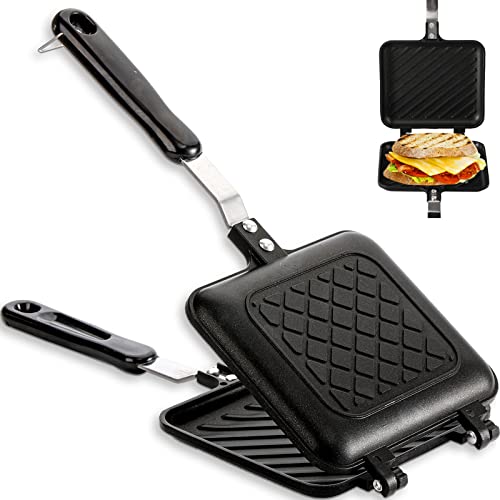
A hinged two-sided stovetop pan that presses and toasts sandwiches without an electric panini press taking up counter space.
Plates reach temperature fast and cook two minutes per side, so a melted, pressed sandwich takes about four minutes start to finish.
Aluminum alloy construction with double screws at the joints, non-stick coating, and a heat-insulated handle measuring 5.9 by 5.3 by 14.2 inches with the handle included.
It will not work on an induction cooktop, so confirm your burner type before buying.
Best for small-kitchen cooks, dorm residents, and campers who want pressed sandwiches without another plug-in appliance.
Cooking Tips
Butter the outside of each bread slice before clamping. The fat contacts the non-stick plates directly and produces an even golden crust rather than dry toast.
Keep the burner at medium. High heat browns the bread before the interior cheese melts, and the thin aluminum transfers heat faster than a cast iron press.
Beyond sandwiches, use it for waffles, steak, and campfire bread. Let the pan cool fully before wiping, since sudden temperature changes shorten non-stick coating life.


Pros & Cons
Pros
- The floating lid handles varied sandwich thicknesses without forcing you to trim fillings.
- Ceramic nonstick plates and a dishwasher safe drip tray keep post cooking cleanup to a few minutes.
- Upright storage with a locking lid suits kitchens with limited counter and cabinet room.
- Doubles as an indoor grill for burgers, chicken, and vegetables year round.
Cons
- The plates are fixed rather than removable, so you clean them in place instead of putting them in the sink.
- There are no adjustable heat settings, which limits control when you want a lighter toast or a slower cook on thicker meat.
Details
An electric countertop press that handles hot pressed sandwiches and small grilling jobs in one unit, so you skip heating a skillet or the oven for a couple of paninis.
The floating lid adjusts to sandwich height, so a piled high Reuben gets pressed and browned on both sides as evenly as a thin grilled cheese.
Nonstick ceramic plates give a 70 square inch cooking area that fits two thick sandwiches or one long sandwich, with a slide out drip tray for grease.
The plates do not detach, so cleaning means wiping the cooled surface rather than dropping panels into the sink.
Best for small households that want fast pressed sandwiches and occasional indoor grilling without a bulky appliance on the counter.
How to Use
Close the lid, plug in, and let the plates preheat before the first sandwich. A fully hot surface is what produces grill marks instead of pale bread.
Brush the outside of the bread with butter or oil, set sandwiches on the lower plate, then lower the floating lid and let its weight press them.
Unplug and let the plates cool, wipe them with a damp cloth, then slide out the drip tray and run it through the dishwasher.
When It Is Worth Paying More
Spending up pays off when you use the appliance often enough to notice better less frustration during prep every week. If it only comes out occasionally, a mid-range pick is the smarter call. Match the money to frequency of use, not marketing.
Common Misconceptions
The biggest myth is that the most expensive appliance is automatically the best for you. In reality, the right choice depends on speed under load, and motor or heating-element power — plus your own habits. Another trap is buying by brand alone — the same maker sells both excellent and forgettable lines.
What To Look For
Judge a appliance by how it feels in normal use, how easy it is to clean, and whether it solves the job you bought it for. Those are the variables that decide whether it earns a spot in your kitchen or ends up unused. Ignore cosmetic upgrades until the fundamentals check out.
The Short Answer
Grill sandwich press usually comes down to one thing: matching the appliance to how you actually cook rather than to a spec sheet. The practical takeaway is that cleaning access matters more day to day than headline features. For product picks, compare best air fryer, best blender, and best instant pot.
Who Benefits Most
This matters most for gadget-minimalists who want one do-it-all unit, and families cooking in volume. If that is you, treat noise level, and preset controls as non-negotiable. Casual users can relax the requirements and prioritize price and storage instead.
How To Get It Right
Think through the whole workflow: letting the motor rest between heavy loads, cleaning removable parts by hand, and wiping the interior after use. A appliance that fits your routine and cleanup habits beats a technically superior one you fight with. We cover specific models in best air fryer, best blender, and best instant pot.
Related Product Guides
If this topic is part of a buying decision, these are the HomeWhisk guides most closely tied to it:
Frequently Asked Questions
What matters most for grill sandwich press?
Focus on cleaning access, noise level, and preset controls first. Those decide real performance; the rest is secondary. Compare best air fryer and best blender for options that get the basics right.
What is the bottom line?
Match the appliance to your real habits: buy for durability if it is daily, for value and storage if it is occasional.
How do I keep it in good shape?
Build wiping the interior after use, and letting the motor rest between heavy loads into normal cleanup. Light, consistent care prevents uneven cooking or heating far better than occasional deep effort.
Is a premium appliance worth it?
Only if you use it enough to notice better control, durability, or cleanup regularly. Occasional users are well served by a mid-range pick like those in best instant pot.
Who is this most useful for?
Mainly gadget-minimalists who want one do-it-all unit, and small-kitchen owners. If that is you, treat motor or heating-element power as a requirement rather than a nice-to-have.
The Bottom Line
Grill sandwich press comes down to fit: how often you use the tool, how much care it needs, and whether it solves a real kitchen problem. If you are buying, compare best air fryer, best blender, and best instant pot before you spend.









Write Your Review
No reviews yet. Be the first to share your experience!