

TL;DR — A good answer to caraway meal prep starts with real kitchen habits, not a perfect spec sheet. Most readers need a clear way to avoid the wrong tool, not another list of features. When this turns into a purchase decision, compare best air fryer, best blender, and best instant pot before narrowing your shortlist.
The HomeWhisk approach is research-first: compare construction, usability, cleaning, and long-term complaints before recommending a direction. For appliance topics, we pay close attention to capacity, controls, cleanup, storage, reliability complaints, and whether the machine saves enough effort to justify the space.

Pros & Cons
Pros
- Non-toxic ceramic coating avoids the chemical concerns associated with traditional plastic or PTFE-lined containers.
- Oven-safe to 450°F means you can reheat directly in the container rather than dirtying an extra dish.
- The included storage rack and stackable profile make this one of the few container sets that solves cabinet clutter out of the box.
- Silicone-sealed lids with a removable gasket contain odors effectively, making the containers suitable for strong-smelling foods like garlic or onion.
Cons
- Lids are neither dishwasher-safe nor microwave or oven-safe, requiring hand-washing and removal before any heat application.
- At nine pieces focused on small portions, the set does not cover larger batch-cooking needs and would require a supplemental full-size set.
Details
The Caraway Mini 9-piece set provides ceramic-coated glass containers sized for snacks, dips, and single-serve meals, solving the clutter and chemical-exposure problems common with plastic storage.
Air Release Technology in the silicone lids creates a near-airtight seal that slows spoilage and contains strong food odors better than basic snap-lock lids.
Glass construction with a smooth ceramic interior resists staining and absorbs no odors; the included rack keeps all nine pieces accessible without stacking chaos.
Lids must be removed before microwaving or oven use and cannot go in the dishwasher, adding a small but consistent hand-wash step to the routine.
Best for meal-preppers and health-focused households who prioritize non-toxic materials and want a compact, organized solution for small-portion storage.
What Fits
The mini containers are sized for single servings: think hummus, cut fruit, overnight oats, salad dressings, or portioned nuts. They are not intended for full dinner leftovers or large batch meals.
The modular footprint means the containers align on the included rack inside a standard cabinet shelf or refrigerator door without wasted gaps, keeping small items from getting buried.
Freezer-to-oven range covers ice cubes, frozen sauces, and individual meal preps that need direct oven reheating, as long as lids are removed before any heat exposure.

Pros & Cons
Pros
- Three compartment configurations in one purchase handle everything from overnight oats to a divided chicken-rice-veggie plate.
- Embossed portion volumes make calorie and macro tracking faster during batch cooking.
- Freezer, microwave, and dishwasher compatibility eliminates transferring food between dishes.
- Lightweight, stackable trays travel well to the office or gym without adding bulk.
Cons
- Bentgo recommends hand washing to extend container life, which undercuts the convenience of the dishwasher-safe rating for a 30-piece set.
- Lids must be vented at the corner before microwaving, an extra step that is easy to forget when reheating in a hurry.
Details
A 60-piece meal prep system: 10 one-compartment, 10 two-compartment, and 10 three-compartment trays plus 30 matching lids, sized for a full week of cooked-ahead meals.
Portion volumes are embossed into the trays themselves, so you fill to the line instead of measuring. Trays move from freezer to microwave directly, no dish transfer needed.
Built from PFAS-free and BPA-free plastic that stays lightweight enough for a gym bag or commuter tote, with lids that stack flat to control pantry clutter.
The catch: Bentgo advises hand washing for longevity despite the top-shelf dishwasher rating, so a full week’s set means real sink time.
Best for batch cookers and macro trackers feeding themselves or a family across breakfast, lunch, and dinner.
What Fits
One-compartment trays suit soups, chili, pasta, overnight oats, and grain bowls where nothing needs separating. Use these for anything saucy that would leak past divider walls.
Two-compartment trays handle a protein-and-side pairing: salmon with rice, or eggs with breakfast potatoes. Three-compartment trays fit the standard protein, starch, and vegetable plate.
All three sizes share stackable lids and flat profiles, so mixed configurations still nest together in the fridge, freezer, or a packed lunch bag.

Save $8.76
Pros & Cons
Pros
- The 30-container count covers extended batch cooking or family meal prep in a single purchase.
- Rated microwave, freezer, and dishwasher safe, so the same container handles storage, reheating, and cleanup.
- Built-in volume measurements support calorie tracking and consistent portion sizes across every meal.
- Rectangular footprint stacks and stores more efficiently than round containers.
Cons
- A single compartment means wet and dry foods share space, so saucy items will soak anything packed alongside them.
- Lightweight disposable-grade plastic is built for repeated reuse rather than years of heavy daily service, and lids can loosen over many wash cycles.
Details
A 30-piece set of rectangular single-compartment food containers with matching lids, aimed at people who cook once and eat from the fridge or freezer all week.
Each base is embossed with 4-cup volume markings, so you portion rice, chili, or pasta directly in the container. Domed lids sit above the food line to protect greens and sandwiches from crushing.
BPA-free plastic, microwave and freezer safe, dishwasher safe. The rectangular shape stacks in rows and fits standard fridge shelves and lunch bags better than round tubs.
One compartment means no separation between sauce and sides, so pack dressings and wet items in a separate cup.
Best for batch cookers, calorie trackers, and anyone packing lunches for multiple people daily.
What Fits
The 4-cup capacity holds a standard entree portion: a chicken breast with rice and vegetables, a large salad, a pasta serving, or a full soup portion with headroom.
Use the embossed markings to hit consistent 1, 2, or 3 cup servings for macro tracking, or split the 30 units between fridge meals and freezer overflow.
Stack filled containers two or three high on a fridge shelf. The domed lid leaves clearance for taller items like burritos, wraps, and stacked sandwiches.
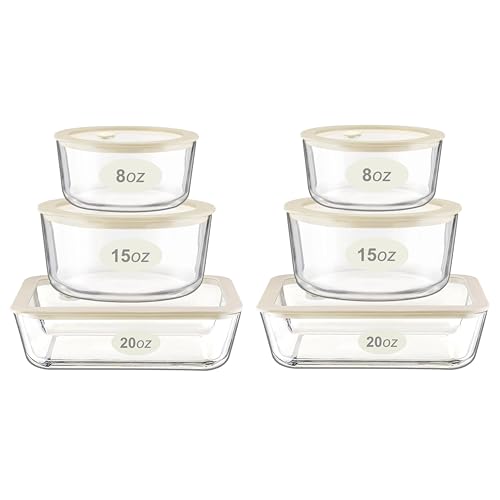
Save $7.00
Pros & Cons
Pros
- Glass lids stay clear and stain-free instead of clouding and absorbing tomato or curry odors the way plastic lids do.
- The air vent system means one lid handles both airtight storage and venting for microwave reheating.
- The square 20oz shape stacks flat and uses shelf space more efficiently than round-only sets.
- Silicone-framed lids replace the flimsy plastic clips that typically fail first on glass storage sets.
Cons
- The glass lids are semi-tempered and not oven safe, so you must remove them before baking, unlike the containers themselves.
- A full glass set is noticeably heavier than plastic and more likely to chip if dropped, which matters for daily commutes and lunch bags.
Details
A 6-piece food storage set built entirely from borosilicate glass and silicone, aimed at cooks who want leftovers reheated without plastic contact.
The air vent lid locks shut for transport, then opens to vent steam so the same lid stays on in the microwave.
Containers are borosilicate glass rated for oven use; lids are semi-tempered glass in a silicone frame. Sizes run 20oz square, 15oz round, and 8oz round.
The glass lids cannot go in the oven, so baking means covering with foil or cooking uncovered.
Best for meal preppers and parents reducing plastic in daily reheating and lunch packing.
What Fits
The 20oz square holds a full lunch portion: a grain base, protein, and vegetables side by side without stacking layers.
The 15oz round suits soups, chili, overnight oats, and cut fruit. The 8oz round handles dressings, dips, nuts, and baby portions.
Square bases sit flush against each other in the fridge, while the round pieces nest better inside a lunch bag or backpack.
When It Is Worth Paying More
Spending up pays off when you use the appliance often enough to notice better more predictable performance every week. If it only comes out occasionally, a mid-range pick is the smarter call. Match the money to frequency of use, not marketing.
The Short Answer
The short version of caraway meal prep: fit the appliance to your real cooking, not to a feature list. The practical takeaway is that digital versus dial controls matters more day to day than headline features. For product picks, compare best air fryer, best blender, and best instant pot.
Why It Matters
You feel capacity and footprint, motor or heating-element power, and digital versus dial controls in the results far more than the price tag suggests. That is why two appliances that look alike can feel completely different in use — one saves time, the other quietly adds friction to every task. If you are shopping, our best air fryer and best blender guides are the fastest way in.
Who Benefits Most
This matters most for small-kitchen owners, and meal-preppers batching food. If that is you, treat storage bulk, and noise level as non-negotiable. Casual users can relax the requirements and prioritize price and storage instead.
What To Look For
Hold a appliance to a short checklist: fit, control, cleanup, and durability. Those are the variables that decide whether it earns a spot in your kitchen or ends up unused. Ignore cosmetic upgrades until the fundamentals check out.
Common Misconceptions
The biggest myth is that the most expensive appliance is automatically the best for you. In reality, the right choice depends on motor or heating-element power, and preset controls — plus your own habits. Another trap is buying by brand alone — the same maker sells both excellent and forgettable lines.
Related Product Guides
If this topic is part of a buying decision, these are the HomeWhisk guides most closely tied to it:
Frequently Asked Questions
Is a premium appliance worth it?
Only if you use it enough to notice better control, durability, or cleanup regularly. Occasional users are well served by a mid-range pick like those in best instant pot.
What gear pairs well with it?
Start with a reliable core piece, then add as needs appear. Compare best air fryer, best blender, and best instant pot for related choices.
Who is this most useful for?
Mainly small-kitchen owners, and gadget-minimalists who want one do-it-all unit. If that is you, treat preset controls as a requirement rather than a nice-to-have.
What is the bottom line?
Match the appliance to your real habits: buy for durability if it is daily, for value and storage if it is occasional.
What should I avoid?
Avoid buying by brand alone, ignoring checking the seals and gaskets, and oversizing for your space. Each invites lingering odors down the line.
The Bottom Line
For most home cooks, the best choice is the one that removes friction without adding maintenance you will ignore. Start with your use case, then cross-check best air fryer, best blender, and best instant pot.








Write Your Review
No reviews yet. Be the first to share your experience!