

TL;DR — When people ask about gas mini grill, they are usually trying to make a buying or care decision without wasting money. This guide keeps the focus on what changes day-to-day use. When this turns into a purchase decision, compare best air fryer, best blender, and best instant pot before narrowing your shortlist.
The HomeWhisk approach is research-first: compare construction, usability, cleaning, and long-term complaints before recommending a direction. For appliance topics, we pay close attention to capacity, controls, cleanup, storage, reliability complaints, and whether the machine saves enough effort to justify the space.


Pros & Cons
Pros
- Stainless steel cooking grate resists rust and wipes down after greasy cooks.
- Separate knobs deliver genuine two-zone control rather than one shared flame across the grate.
- The locking lid and folding legs keep the grill closed and compact during transport and storage.
- The built-in thermometer removes guesswork on longer lid-down cooks.
Cons
- Heat output is listed inconsistently, at 22,000 BTU in the title and 20,000 BTU in the feature details, so the exact figure is unclear.
- No side shelves or prep surface are included, and the maker warns that a box this size can take damage in transit, so inspect the packaging on arrival.
Details
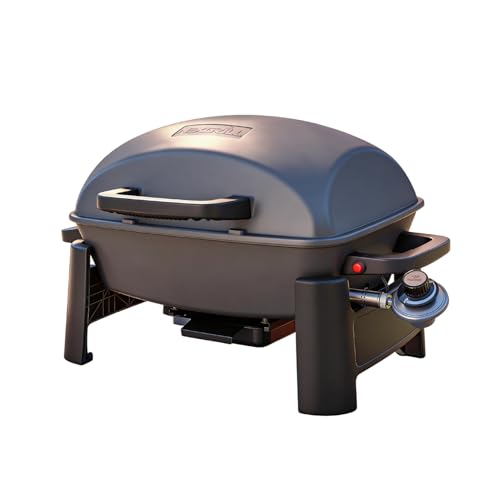
A two-burner tabletop propane grill for cooks who want real grilling without a full-size cart, whether on a balcony, a campsite table, or a tailgate.
Two knobs control the burners separately, so you can sear over high heat on one side and finish food gently on the other. A lid thermometer reads to 752 degrees Fahrenheit.
The stainless steel grate spans 212 square inches, cleans up with a wipe, and sits over folding legs. A locking lid and handle ring keep it shut and carryable.
Stated output conflicts across the listing, 22,000 BTU in the title against 20,000 BTU in the details, and the maker flags shipping damage as a risk on an item this size.
Best for campers, RV travelers, and apartment cooks who want two-zone grilling from a grill that stores on a shelf.
How to Use
Set the grill on flat, stable ground before connecting propane, since folding legs can tilt on soft or uneven surfaces. Push and turn a knob to trigger the ignition.
Preheat with the lid closed until the thermometer climbs, then run one burner high for searing and the other low. Keep the lid down for ribs, thick steaks, and bone-in chicken.
Burn off residue on high for a few minutes after cooking, then brush the stainless grate once it cools. Lock the lid before lifting by the handle ring.

Who Benefits Most
This matters most for small-kitchen owners, and families cooking in volume. If that is you, treat storage bulk, and build quality of seals as non-negotiable. Casual users can relax the requirements and prioritize price and storage instead.
What To Look For
Judge a appliance by how it feels in normal use, how easy it is to clean, and whether it solves the job you bought it for. Those are the variables that decide whether it earns a spot in your kitchen or ends up unused. Ignore cosmetic upgrades until the fundamentals check out.
How To Get It Right
Think through the whole workflow: checking the seals and gaskets, letting the motor rest between heavy loads, and wiping the interior after use. A appliance that fits your routine and cleanup habits beats a technically superior one you fight with. We cover specific models in best air fryer, best blender, and best instant pot.
Why It Matters
Small differences in noise level, build quality of seals, and capacity and footprint change the result more than most buyers expect. That is why two appliances that look alike can feel completely different in use — one saves time, the other quietly adds friction to every task. If you are shopping, our best air fryer and best blender guides are the fastest way in.
When It Is Worth Paying More
Spending up pays off when you use the appliance often enough to notice better less frustration during prep every week. If it only comes out occasionally, a mid-range pick is the smarter call. Match the money to frequency of use, not marketing.
The Short Answer
Cut through it and gas mini grill is a fit question — the appliance has to match how you cook. The practical takeaway is that capacity and footprint matters more day to day than headline features. For product picks, compare best air fryer, best blender, and best instant pot.
Related Product Guides
If this topic is part of a buying decision, these are the HomeWhisk guides most closely tied to it:
Frequently Asked Questions
What gear pairs well with it?
Start with a reliable core piece, then add as needs appear. Compare best air fryer, best blender, and best instant pot for related choices.
What matters most for gas mini grill?
Focus on cleaning access, digital versus dial controls, and capacity and footprint first. Those decide real performance; the rest is secondary. Compare best air fryer and best blender for options that get the basics right.
Is a premium appliance worth it?
Only if you use it enough to notice better control, durability, or cleanup regularly. Occasional users are well served by a mid-range pick like those in best instant pot.
How do I keep it in good shape?
Build descaling water-based units, and checking the seals and gaskets into normal cleanup. Light, consistent care prevents lingering odors far better than occasional deep effort.
What is the bottom line?
Match the appliance to your real habits: buy for durability if it is daily, for value and storage if it is occasional.
The Bottom Line
For most home cooks, the best choice is the one that removes friction without adding maintenance you will ignore. Start with your use case, then cross-check best air fryer, best blender, and best instant pot.









Write Your Review
No reviews yet. Be the first to share your experience!