

TL;DR — When people ask about kitchen scoops, they are usually trying to make a buying or care decision without wasting money. This guide keeps the focus on what changes day-to-day use. When this turns into a purchase decision, compare best air fryer, best blender, and best instant pot before narrowing your shortlist.
The HomeWhisk approach is research-first: compare construction, usability, cleaning, and long-term complaints before recommending a direction. For appliance topics, we pay close attention to capacity, controls, cleanup, storage, reliability complaints, and whether the machine saves enough effort to justify the space.

Pros & Cons
Pros
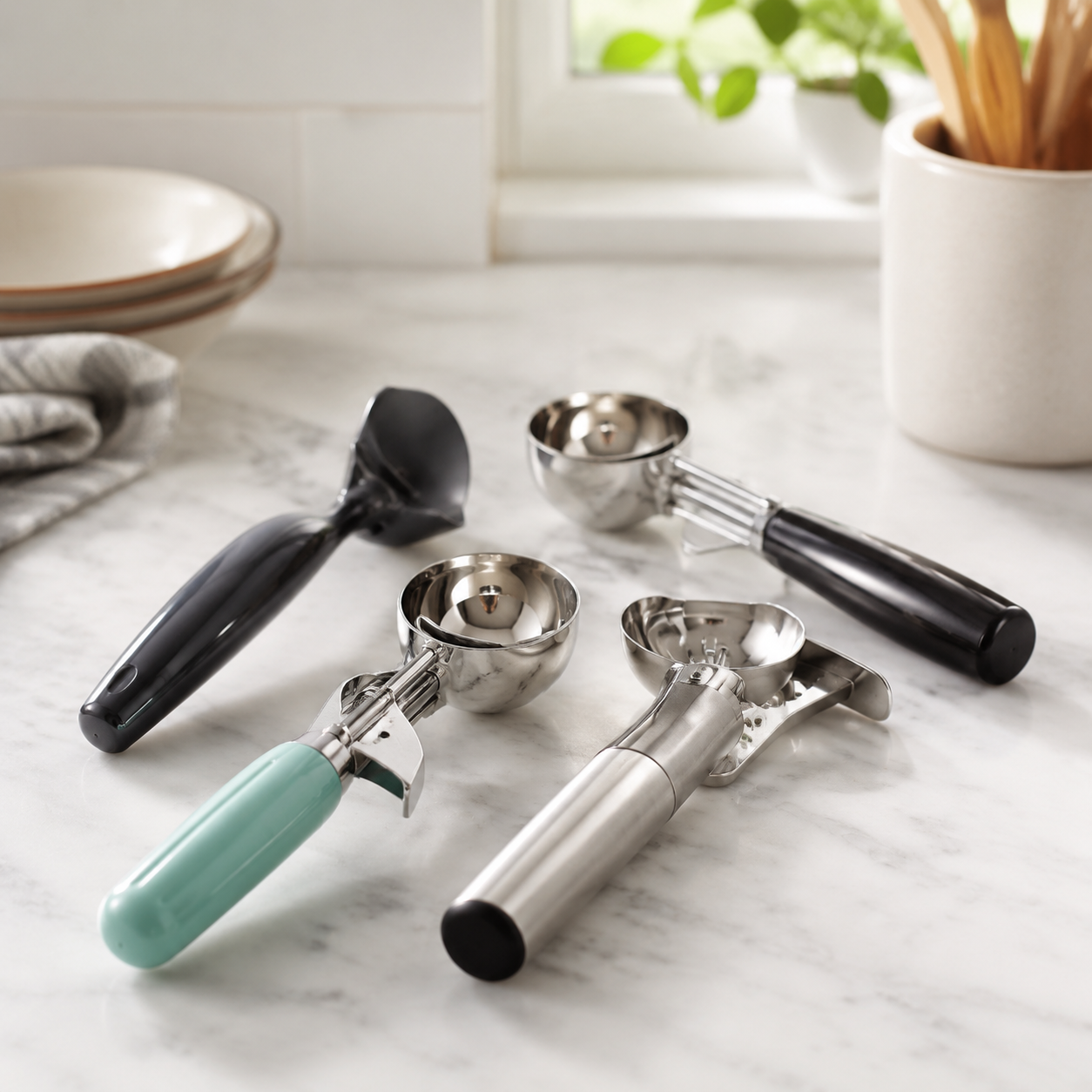
- The three capacities range from 1.5 tablespoons to about one-third cup for flexible portion control.
- The trigger release system is designed to remove food cleanly without requiring intense effort.
- Food-grade stainless steel and solid ABS plastic provide a practical combination for repeated kitchen use.
- The set is dishwasher safe and includes distinct handle colors for quick size recognition.
Cons
- The fixed three-size range may not cover portions smaller or larger than the listed capacities.
- The product data does not specify the scoops' weight, so handling balance cannot be assessed before purchase.
Details
This three-piece set solves inconsistent portioning when shaping cookies, scooping ice cream, or serving foods such as mashed potatoes.
Its cog-and-ratchet trigger releases contents with gentle pressure, while the three capacities support different cookie and serving sizes.
The bowls use 18/8 stainless steel, and the handles use solid ABS plastic. Diameters range from 1.6 to 2.5 inches; weight is not specified.
The set offers three fixed sizes, so it may be less suitable when recipes require portions outside its 1.5-tablespoon to one-third-cup range.
Best for home bakers and cooks who want repeatable portions across several foods.
Best Uses
Use the smallest scoop for compact cookies, melon balls, or smaller portions. The medium size suits standard cookie dough and cupcakes.
Use the large scoop for bigger cookies, ice cream, rice pudding, or mashed potatoes when a fuller serving is needed.
Match each colored handle to its size, then place the dishwasher-safe scoops in the dishwasher after use.


Pros & Cons
Pros
- The set includes clearly sized #60, #40, and #20 scoops for 1 tablespoon, 2 tablespoon, and 3 tablespoon portions.
- The ergonomic spring mechanism helps release dough without requiring great effort.
- Food-grade 18/8 stainless steel and thick rubber handles support durable, comfortable use.
- The scoops are dishwasher safe and designed to resist rust and corrosion.
Cons
- The largest scoop holds 3 tablespoons, so it does not cover oversized cookie portions.
- The product data does not list the scoop weight, which may matter to buyers comparing heft.
Details
The HOMURE H set solves uneven portioning by providing #60, #40, and #20 scoops for 1 tablespoon, 2 tablespoon, and 3 tablespoon servings.
A spring trigger releases cookie dough with less wrist pressure, while the rubber handle supports a steadier grip during batch baking.
Food-grade 18/8 stainless steel resists rust, corrosion, staining, and pitting. The set is built for cookies, batter, ice cream, and other portioning tasks.
The largest scoop holds 3 tablespoons, so buyers needing oversized cookie portions will need a larger disher.
Best for home bakers who want consistent portions and easier cleanup across several kitchen tasks.
Best Uses
Use the small scoop for compact cookies, melon balls, and smaller meatballs when consistent portions matter.
Choose the medium scoop for standard cookie dough, cupcake batter, and muffin portions, or use the large scoop for bigger cookies and ice cream servings.
Rinse after sticky ingredients, then hand wash or place the stainless steel scoops in the dishwasher.
Common Misconceptions
The biggest myth is that the most expensive appliance is automatically the best for you. In reality, the right choice depends on preset controls, and speed under load — plus your own habits. Another trap is buying by brand alone — the same maker sells both excellent and forgettable lines.
When It Is Worth Paying More
Spending up pays off when you use the appliance often enough to notice better day-to-day handling every week. If it only comes out occasionally, a mid-range pick is the smarter call. Match the money to frequency of use, not marketing.
How To Get It Right
Think through the whole workflow: cleaning removable parts by hand, checking the seals and gaskets, and wiping the interior after use. A appliance that fits your routine and cleanup habits beats a technically superior one you fight with. We cover specific models in best air fryer, best blender, and best instant pot.
The Short Answer
The short version of kitchen scoops: fit the appliance to your real cooking, not to a feature list. The practical takeaway is that capacity and footprint matters more day to day than headline features. For product picks, compare best air fryer, best blender, and best instant pot.
Why It Matters
Small differences in storage bulk, cleaning access, and motor or heating-element power change the result more than most buyers expect. That is why two appliances that look alike can feel completely different in use — one saves time, the other quietly adds friction to every task. If you are shopping, our best air fryer and best blender guides are the fastest way in.
Who Benefits Most
This matters most for busy weeknight cooks, and small-kitchen owners. If that is you, treat noise level, and capacity and footprint as non-negotiable. Casual users can relax the requirements and prioritize price and storage instead.

Related Product Guides
If this topic is part of a buying decision, these are the HomeWhisk guides most closely tied to it:
Frequently Asked Questions
What matters most for kitchen scoops?
Focus on cleaning access, capacity and footprint, and motor or heating-element power first. Those decide real performance; the rest is secondary. Compare best air fryer and best blender for options that get the basics right.
What is the bottom line?
Match the appliance to your real habits: buy for durability if it is daily, for value and storage if it is occasional.
How do I keep it in good shape?
Build not overfilling past the max line, and letting the motor rest between heavy loads into normal cleanup. Light, consistent care prevents lingering odors far better than occasional deep effort.
What should I avoid?
Avoid buying by brand alone, ignoring cleaning removable parts by hand, and oversizing for your space. Each invites gaskets that stop sealing down the line.
What gear pairs well with it?
Start with a reliable core piece, then add as needs appear. Compare best air fryer, best blender, and best instant pot for related choices.
The Bottom Line
For most home cooks, the best choice is the one that removes friction without adding maintenance you will ignore. Start with your use case, then cross-check best air fryer, best blender, and best instant pot.




Write Your Review
No reviews yet. Be the first to share your experience!