

TL;DR — Yes, a carbon steel santoku knife is safe to use and to eat from. “Carbon steel” refers to a high-carbon, low-chromium blade steel prized for taking an extremely sharp edge; it is not toxic. The real trade-off is maintenance, not safety: traditional carbon steel rusts, stains, and reacts with acidic foods if you leave it wet or dirty, so it needs to be washed and dried immediately and lightly oiled for storage. It also develops a dark patina, which is normal and protective. If you keep it dry, it will stay sharp, hygienic, and safe for decades. For picks, see our best santoku knife guide.
The HomeWhisk editorial team researches kitchen equipment by analyzing manufacturer specifications, metallurgy, and aggregated user reviews from major retailers and knife communities like Reddit r/chefknives and r/Cooking. “Is a carbon steel santoku knife safe?” usually mixes two worries — whether the steel is harmful to health, and whether rust or patina makes it unsafe to eat from. The short version: the steel is safe; the question is really about upkeep. Below we explain the metallurgy, the rust-and-patina distinction, care, and how carbon steel compares to stainless for a santoku.

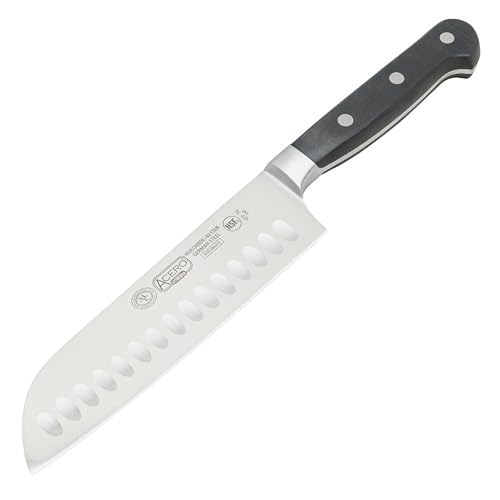
Winco
Santoku Kitchen Knife for Slicing and Dicing: Winco 7" Black High Carbon Steel
This 7-inch Santoku slices, dices, and minces through vegetables and proteins with a Granton-edged blade that keeps food from sticking. Buy it if you want an NSF-certified, full-tang knife for daily prep without paying premium-brand pricing.
Pros and Cons
Pros
- Granton scallops stop food from clinging to the blade for cleaner slicing.
- High carbon steel delivers strong, sharp edge retention for everyday use.
- Full tang and triple rivets give it professional-level balance and durability.
- NSF certified for commercial kitchen safety standards.
Cons
- High carbon steel can rust or stain if left wet, so it needs prompt hand-drying.
- At 7 inches, it is less suited to heavy tasks like breaking down large cuts of meat.
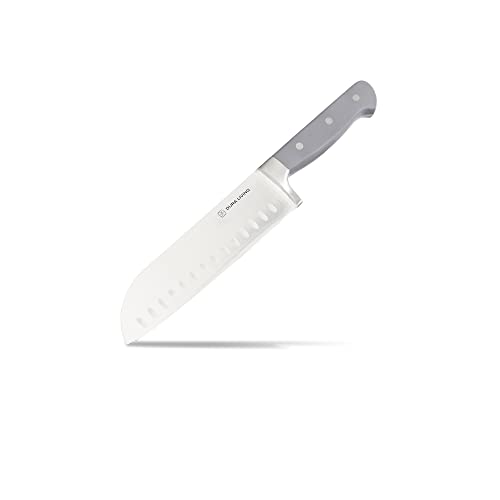
DURA LIVING
7-Inch Santoku Knife for Chopping, Slicing & Dicing - DURA LIVING High-Carbon Stainless Steel Chef Knife
This 7-inch Santoku handles vegetable chopping, meat slicing, and fruit dicing with a high-carbon stainless steel edge that holds its sharpness through repeated prep sessions. It suits home cooks who want one lightweight, full-tang blade to cover most daily cutting tasks without buying a full knife set.
Pros and Cons
Pros
- High-carbon stainless steel delivers a sharp working edge with solid edge retention.
- Full-tang, lightweight build gives balanced handling for chopping and slicing.
- Triple-riveted ergonomic handle stays comfortable and grippy through extended prep.
- One versatile blade covers vegetables, fruits, and meats for everyday cooking.
Cons
- Dishwasher use is permitted but will dull the edge faster, so handwashing is effectively required.
- High-carbon steel needs prompt drying to avoid spotting or corrosion over time.
The Best Deals This Week*
-
Santoku Kitchen Knife for Slicing and Dicing
$17.50
($21.29)Save $3.79 -
7-Inch Santoku Knife for Chopping
$9.49
($17.99)Save $8.50
*Deals are selected by our commerce team
Winco Santoku Kitchen Knife for Slicing and Dicing: Winco 7" Black High Carbon Steel
Winco
Santoku Kitchen Knife for Slicing and Dicing: Winco 7" Black High Carbon Steel
This 7-inch Santoku slices, dices, and minces through vegetables and proteins with a Granton-edged blade that keeps food from sticking. Buy it if you want an NSF-certified, full-tang knife for daily prep without paying premium-brand pricing.
Check price on AmazonThis is a 7-inch Santoku built for daily slicing, dicing, and mincing of vegetables, fish, and boneless meats.
The Granton-edged blade cuts air pockets along the edge, so wet or starchy foods release instead of sticking.
High carbon steel with full tang construction and a triple-riveted handle gives it a balanced, sharp, durable feel for repeat use.
One limitation: high carbon steel is prone to rust, so it must be dried right after washing.
Best for home cooks and line prep who want a sharp, NSF-certified daily driver on a budget.
DURA LIVING 7-Inch Santoku Knife for Chopping, Slicing & Dicing - DURA LIVING High-Carbon Stainless Steel Chef Knife
DURA LIVING
7-Inch Santoku Knife for Chopping, Slicing & Dicing - DURA LIVING High-Carbon Stainless Steel Chef Knife
This 7-inch Santoku handles vegetable chopping, meat slicing, and fruit dicing with a high-carbon stainless steel edge that holds its sharpness through repeated prep sessions. It suits home cooks who want one lightweight, full-tang blade to cover most daily cutting tasks without buying a full knife set.
Check price on AmazonA 7-inch Santoku built to replace several specialty blades for daily vegetable, fruit, and boneless meat prep.
The high-carbon stainless steel edge stays sharp through repeated chopping, and the flat Santoku profile suits push-cut slicing on a board.
Full-tang steel runs the length of a forged, triple-riveted handle, keeping the knife light and balanced rather than blade-heavy.
Despite the dishwasher-safe rating, detergent and heat will dull the edge, so handwashing is the realistic maintenance routine.
Best for home cooks who want one capable all-purpose knife instead of a full block set.
Carbon Steel vs. Stainless: What the Terms Actually Mean
The naming is genuinely confusing, so start here. All kitchen knife steels are iron alloyed with carbon; the differences come from how much carbon and chromium they contain.
- Carbon steel (traditional) is high in carbon and low in chromium (under about 10.5%). The high carbon lets it get very hard and take a keen, easily maintained edge. The low chromium is why it rusts and stains — chromium is the element that resists corrosion.
- Stainless steel contains enough chromium (over about 10.5%) to form a passive oxide layer that resists rust. It’s lower maintenance but historically harder to sharpen to the same fine edge.
- High-carbon stainless steel is the middle ground most modern Japanese santoku knives use: enough carbon for a hard, sharp edge, enough chromium to resist rust. Confusingly, “high-carbon” on a label often means this stainless type, not a rust-prone traditional carbon steel.
None of these is unsafe. The choice is about edge performance versus maintenance. A traditional carbon steel santoku rewards care with a sharper, easier-to-hone edge; a stainless or high-carbon-stainless santoku is more forgiving. Our best santoku knife guide covers both.
Is Carbon Steel Toxic or Unsafe to Eat From?
No. Carbon steel is iron and carbon, both food-safe. Two specific worries drive the question, and both have reassuring answers:
- Rust. Surface rust on a neglected carbon steel blade is iron oxide. A little is not poisonous, but you shouldn’t cook with a visibly rusty blade — scrub the rust off with a scouring pad, baking soda paste, or fine steel wool, dry it, and re-oil. Rust is a maintenance failure, not a health hazard once removed.
- Patina. The gray, blue, or brownish discoloration a carbon steel knife develops is patina — a stable layer of iron oxide that forms as the steel reacts with food and air. Patina is not rust and not dirty; it actually protects the underlying steel from further corrosion, which is why many owners deliberately “force” a patina. It’s completely safe to eat from a patinated blade.
The one genuine safety note has nothing to do with the metal: carbon steel santokus are sharp and often thin, so standard knife safety — a stable cutting board, a claw grip, and careful handling — matters. A sharp knife is safer than a dull one because it doesn’t slip.
The Reactivity Issue: Acids, Onions, and Metallic Taste
Because carbon steel is reactive, cutting acidic or strongly flavored foods can cause two cosmetic effects worth understanding:
- Discoloration. Onions, tomatoes, citrus, and other acidic foods speed patina formation and can leave dark marks on the blade. This is cosmetic, not harmful.
- Metallic taste. A brand-new or freshly cleaned carbon steel blade can impart a faint metallic taste to acidic foods before a patina develops. Once the patina forms, this largely stops. If it bothers you early on, rinse and wipe the blade between acidic cuts.
This reactivity is the same property that makes carbon steel cookware behave the way it does; if you like a carbon steel pan, you’ll understand the trade-off. See our best carbon steel pan for cooking guide for the cookware side of the same material.
How to Care for a Carbon Steel Santoku (So It Stays Safe and Sharp)
Carbon steel is low-drama once you build the habit. The rules:
1. Hand-wash only, immediately after use. Never leave it wet in the sink or soaking, and never put it in the dishwasher — heat, detergent, and prolonged moisture cause rust and can damage the edge and handle. 2. Dry it completely right away with a towel. Standing water is the main cause of rust spots. 3. Oil it for storage. Wipe on a very thin film of food-safe oil (mineral oil, or a neutral cooking oil) before putting it away, especially in humid kitchens. 4. Let the patina develop. Don’t scrub it back to bare metal; the patina protects the blade. 5. Deal with rust promptly. If orange rust appears, remove it with a baking-soda paste or fine abrasive, dry, and re-oil. 6. Store it safely in a block, on a magnetic strip, or with an edge guard — not loose in a drawer where the edge dulls and chips.
Maintain those habits and a carbon steel santoku stays hygienic, rust-free, and razor sharp for a lifetime.
Santoku Design and Where Carbon Steel Shines
The santoku (“three virtues”) is a Japanese general-purpose knife, typically 5 to 7 inches, with a flatter edge profile and a rounded, sheep’s-foot tip. That flat edge favors a push-cut and up-and-down chop rather than the rocking motion of a Western chef’s knife, which makes it excellent for slicing, dicing vegetables, and precise cuts. Many santokus have a Granton edge (the row of dimples) to reduce sticking.
Carbon steel suits the santoku’s precision role because it takes a thinner, sharper edge and is easy to touch up on a whetstone. The hardness that makes carbon steel hold a keen edge also makes it more brittle, so avoid bones, frozen food, and prying — a santoku is for produce, boneless proteins, and general prep, not heavy chopping. For that heavier work, a Western best chef knife or a dedicated best boning knife is the right tool. A santoku pairs naturally with a best bread knife and a starter best knife sets to cover the jobs it isn’t built for.
Frequently Asked Questions
Is it safe to eat food cut with a carbon steel knife?
Yes. Carbon steel is iron and carbon, both food-safe, and the patina that develops is a stable, protective layer of iron oxide that’s harmless to eat from. The only thing to avoid is cutting with a visibly rusty blade — surface rust isn’t poisonous, but you should scrub it off with a baking-soda paste or fine abrasive, dry, and re-oil before use. Kept clean and dry, a carbon steel santoku is completely safe for daily food prep. See our best santoku knife guide.
Will a carbon steel santoku knife rust?
Traditional carbon steel will rust if you leave it wet, soak it, or store it damp, because it lacks the chromium that makes stainless steel corrosion-resistant. The fix is simple habit: hand-wash immediately, dry completely, and wipe on a thin film of oil before storage. It also develops a protective patina that reduces further rusting. If you want the sharp carbon edge with less rust risk, choose a high-carbon stainless santoku instead — the common middle-ground steel in modern Japanese knives.
What’s the difference between the patina and rust on a carbon steel knife?
Patina is the gray, blue, or brown discoloration that forms as carbon steel reacts with food and air; it’s a stable oxide layer that protects the blade and is safe to eat from. Rust is the orange, flaky corrosion that forms from standing moisture; it’s a maintenance failure that should be removed. Patina is desirable and many owners encourage it; rust is not. Keeping the blade dry and lightly oiled prevents rust while letting the protective patina develop naturally.
Does a carbon steel knife make food taste metallic?
It can, but only briefly. A new or freshly scrubbed carbon steel blade may impart a faint metallic taste to acidic foods like tomatoes, onions, or citrus before it develops a patina. Once the patina forms — usually within the first few uses — the reaction slows and the taste largely disappears. If it bothers you early on, rinse and wipe the blade between acidic cuts, or force a patina. This is normal reactive-steel behavior, not a sign the knife is unsafe.
Is carbon steel or stainless steel better for a santoku?
Neither is universally better; it’s a maintenance-versus-forgiveness trade. Traditional carbon steel takes a sharper edge and is easy to hone but rusts without prompt drying and oiling. Stainless resists rust and is lower maintenance but historically harder to sharpen as fine. High-carbon stainless steel — common in modern Japanese santokus — splits the difference with a hard, sharp edge and good rust resistance. Choose carbon steel if you enjoy upkeep and want maximum sharpness; choose stainless if you want low fuss. See our best santoku knife guide.
How do I sharpen a carbon steel santoku knife?
Carbon steel sharpens beautifully on Japanese water stones, which is one of its advantages. Soak the stone, then work the edge on a coarse grit (around 1000) to set it, and refine on a finer grit (3000 to 6000). Santokus are often ground to a thinner, more acute edge angle (roughly 10 to 15 degrees per side) than Western knives, so match the existing angle. Hone lightly and often to keep it keen; carbon steel responds quickly and takes a very fine edge with modest effort.
The Bottom Line
A carbon steel santoku knife is safe — the steel is food-safe, the patina is protective and harmless, and even surface rust is a cleanup issue rather than a health risk. The genuine trade-off is maintenance: carbon steel rusts, stains, and reacts with acidic foods, so it needs immediate hand-washing, thorough drying, and a light coat of oil for storage. In return you get a harder, sharper, easier-to-hone edge than most stainless knives, ideal for the santoku’s precision slicing and dicing role. If you’d rather not fuss, a high-carbon stainless santoku gives most of the edge with far less upkeep. Either way, keep it dry, keep it sharp, and cut on a proper board. For picks, see our best santoku knife, best carbon steel pan for cooking, and best chef knife guides.




Write Your Review
No reviews yet. Be the first to share your experience!