

TL;DR — When people ask about hamburger pan, they are usually trying to make a buying or care decision without wasting money. This guide keeps the focus on what changes day-to-day use. For product picks, the closest next steps are best cookware sets, best stainless steel cookware set, and best cast iron skillet for beginners.
Our view is based on product specs, material trade-offs, and repeated owner feedback — not one-off kitchen anecdotes or brand claims. For cookware topics, the big differences are heat behavior, material, cooktop fit, cleaning, weight, and how the pan or pot holds up after repeated use.
BuleVina
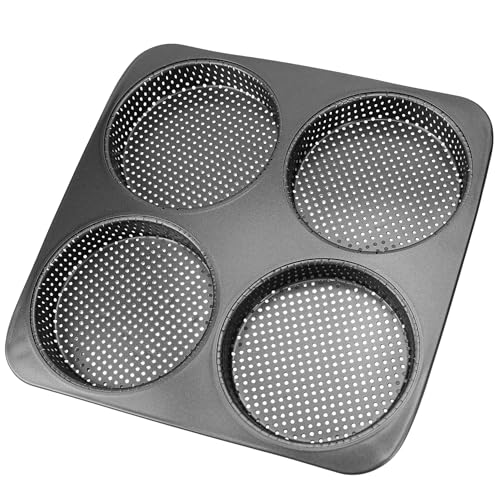
Bake 5-Inch Homemade Burger Buns at Home: BuleVina 4-Cavity Non-Stick Carbon Steel Bun Pan
This 4-cavity carbon steel pan shapes dough into uniform 5-inch hamburger buns, and its perforated three-dimensional base lets air circulate so bottoms brown evenly instead of turning pale and soggy. Buy it if you make burgers, sliders, or sandwich rolls from scratch and want bakery-shaped buns that actually fit your patties.
Pros and Cons
Pros
- Consistent bun diameter makes batches look bakery-made and stack cleanly on a burger.
- Non-stick surface rated for hundreds of bakes, so release quality holds up past the first few uses.
- Compact 11 by 11 inch footprint fits standard home ovens and most dishwasher racks or sink basins.
- Doubles as a mold for dinner rolls and small artisan loaves, not just hamburger buns.
Cons
- Four cavities per pan means larger families or batch bakers will need two pans to fill an oven rack in one go.
- Carbon steel with non-stick coating needs hand washing and soft utensils to protect the surface, and the 450F ceiling rules out very high-heat artisan bakes.

Webake
Bake 5-Inch Restaurant-Size Burger Buns at Home: Webake Nonstick Carbon Steel Hamburger Bun Pan, Set of 2
This set of two 11-inch carbon steel pans shapes dough into uniform 5-inch rounds so homemade buns rise up instead of spreading flat across a sheet tray. Buy it if you bake burger buns, sourdough rounds, or sweet rolls often enough that ragged, mismatched shapes have started to bother you.
Pros and Cons
Pros
- One-piece heavy-duty carbon steel build holds its shape through repeated high-heat bakes.
- Nonstick coating means fast release and a quick wipe-down instead of soaking.
- 5-inch cavities produce genuinely oversized buns that standard bun pans cannot match.
- Two pans in the set let you bake a full batch without waiting on a second round.
Cons
- The 11" x 11" footprint is wide, so measure your oven rack and cabinet storage before ordering.
- The cavities are fixed at 5" x 1", which is oversized for slider buns or standard dinner rolls.

Wrenbury
Bake Restaurant-Size Burger Buns at Home: Wrenbury 4-Cavity Carbon Steel Hamburger Bun Pan
This carbon steel pan holds four 4.75-inch cavities that shape and support dough as it rises, so homemade buns bake round and evenly sized instead of spreading flat on a sheet pan. It suits home bakers who make burger buns, English muffins, or breakfast sandwich bread often enough to want repeatable results and a pan that will not warp like silicone.
Pros and Cons
Pros
- Cavity walls contain the dough during proofing and baking, giving tall, uniform buns rather than flat discs.
- Carbon steel body heats consistently and holds its shape at bread-baking temperatures.
- Nonstick surface wipes clean with warm soapy water, so no scrubbing baked-on dough from corners.
- Handles multiple round bakes beyond buns, from English muffins to mini cakes.
Cons
- Hand wash only, so it cannot go in the dishwasher with the rest of your bakeware.
- Four cavities per pan means a batch of eight buns requires two pans or two bakes.
BuleVina Bake 5-Inch Homemade Burger Buns at Home: BuleVina 4-Cavity Non-Stick Carbon Steel Bun Pan
BuleVina
Bake 5-Inch Homemade Burger Buns at Home: BuleVina 4-Cavity Non-Stick Carbon Steel Bun Pan
This 4-cavity carbon steel pan shapes dough into uniform 5-inch hamburger buns, and its perforated three-dimensional base lets air circulate so bottoms brown evenly instead of turning pale and soggy. Buy it if you make burgers, sliders, or sandwich rolls from scratch and want bakery-shaped buns that actually fit your patties.
$16.58 at AmazonEditors' Favorite
Color: Black Size: one size Dimensions: 11 x 1.06 x 11 Inches Weight: 0.95019234922 Pounds Product Group: Kitchen Binding: Kitchen
Shop NowWebake Bake 5-Inch Restaurant-Size Burger Buns at Home: Webake Nonstick Carbon Steel Hamburger Bun Pan, Set of 2
Webake
Bake 5-Inch Restaurant-Size Burger Buns at Home: Webake Nonstick Carbon Steel Hamburger Bun Pan, Set of 2
This set of two 11-inch carbon steel pans shapes dough into uniform 5-inch rounds so homemade buns rise up instead of spreading flat across a sheet tray. Buy it if you bake burger buns, sourdough rounds, or sweet rolls often enough that ragged, mismatched shapes have started to bother you.
$19.99 at AmazonGreat Value
Color: Black Size: 5 Inch Dimensions: 11 x 11 x 1 inches Weight: 2.25091969502 Pounds Product Group: Kitchen Binding: Kitchen
Shop NowWrenbury Bake Restaurant-Size Burger Buns at Home: Wrenbury 4-Cavity Carbon Steel Hamburger Bun Pan
Wrenbury
Bake Restaurant-Size Burger Buns at Home: Wrenbury 4-Cavity Carbon Steel Hamburger Bun Pan
This carbon steel pan holds four 4.75-inch cavities that shape and support dough as it rises, so homemade buns bake round and evenly sized instead of spreading flat on a sheet pan. It suits home bakers who make burger buns, English muffins, or breakfast sandwich bread often enough to want repeatable results and a pan that will not warp like silicone.
$19.95 at AmazonColor: Gray Size: Burger Bun Pan 4 Cup Dimensions: 11 x 11 x 1 inches Product Group: Kitchen Binding: Kitchen
Shop NowThe Short Answer
The short version of hamburger pan: fit the pan to your real cooking, not to a feature list. The practical takeaway is that weight and maneuverability matters more day to day than headline features. For product picks, compare best cookware sets, best stainless steel cookware set, and best cast iron skillet for beginners.
When It Is Worth Paying More
Spending up pays off when you use the pan often enough to notice better cleaner results every week. If it only comes out occasionally, a mid-range pick is the smarter call. Match the money to frequency of use, not marketing.
Why It Matters
You feel heat distribution, oven-safe temperature, and sidewall height in the results far more than the price tag suggests. That is why two pans that look alike can feel completely different in use — one saves time, the other quietly adds friction to every task. If you are shopping, our best cookware sets and best stainless steel cookware set guides are the fastest way in.
What To Look For
Judge a pan by how it feels in normal use, how easy it is to clean, and whether it solves the job you bought it for. Those are the variables that decide whether it earns a spot in your kitchen or ends up unused. Ignore cosmetic upgrades until the fundamentals check out.
Related Product Guides
If this topic is part of a buying decision, these are the HomeWhisk guides most closely tied to it:
- best cookware sets
- best stainless steel cookware set
- best cast iron skillet for beginners
- best non toxic cookware
- best dutch oven for bread baking
Frequently Asked Questions
How do I keep it in good shape?
Build seasoning bare iron or carbon steel, and drying fully to prevent rust into normal cleanup. Light, consistent care prevents discoloration or pitting far better than occasional deep effort.
Who is this most useful for?
Mainly cooks who sear and sauté often, and anyone building a first cookware set. If that is you, treat lid fit as a requirement rather than a nice-to-have.
What is the bottom line?
Match the pan to your real habits: buy for durability if it is daily, for value and storage if it is occasional.
What gear pairs well with it?
Start with a reliable core piece, then add as needs appear. Compare best cookware sets, best stainless steel cookware set, and best cast iron skillet for beginners for related choices.
What should I avoid?
Avoid buying by brand alone, ignoring drying fully to prevent rust, and oversizing for your space. Each invites discoloration or pitting down the line.
The Bottom Line
The simplest takeaway: buy for your real routine, not the most impressive feature list. Match the hamburger pan to your cooking frequency, cleanup habits, and storage, then use best cookware sets, best stainless steel cookware set, and best cast iron skillet for beginners to compare actual products.





Write Your Review
No reviews yet. Be the first to share your experience!