

TL;DR — A good answer to induction cooktop reviews starts with real kitchen habits, not a perfect spec sheet. Most readers need a clear way to avoid the wrong tool, not another list of features. For product picks, the closest next steps are best air fryer, best blender, and best instant pot.
Our view is based on product specs, material trade-offs, and repeated owner feedback — not one-off kitchen anecdotes or brand claims. For appliance topics, we pay close attention to capacity, controls, cleanup, storage, reliability complaints, and whether the machine saves enough effort to justify the space.


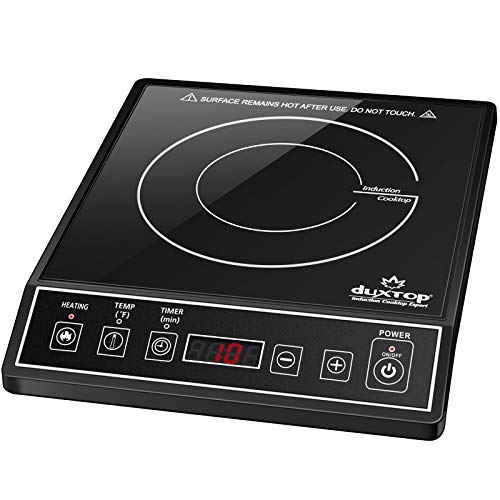
Pros & Cons
Pros
- The 1800W output provides quick heat-up for faster cooking.
- The large display and control panel make settings easier to view.
- The ETL-listed design uses a standard 120V, 15-amp North American outlet.
- The flameless glass cooktop simplifies cleanup after cooking.
Cons
- It requires magnetic-bottom cookware with a minimum diameter of 5 inches.
- The cooktop can remain hot after use and must cool before handling or cleaning.
Details
The Duxtop 9100MC is a portable induction burner for adding cooking capacity to a countertop or replacing a traditional stovetop in compact spaces.
Its 1800W output, 20 power levels, and 20 temperature settings help you heat food quickly while maintaining more controlled cooking conditions.
The oversized glass surface is easy to wipe clean, while the lightweight body supports convenient handling and storage.
Induction cooking requires magnetic-bottom cookware measuring at least 5 inches, and the surface may stay hot after use.
Verdict: best for cooks who need an efficient, portable burner with adjustable heat and straightforward cleanup.
How to Use
Place compatible magnetic cookware measuring at least 5 inches on the glass surface, then connect the burner to a standard 120V, 15-amp outlet.
Select one of 20 power levels or 20 temperature settings, and adjust the control panel based on the food you are cooking.
Remove cookware when finished, allow the surface to cool completely, and wipe it with a damp towel.

Pros & Cons
Pros
- The 94 temperature settings provide unusually fine control for warming, simmering, and searing.
- Its commercial-grade construction and NSF certification support demanding kitchen use.
- The insulated design positions the heating coils closer to cookware for faster, more even heating.
- A maximum temperature of 575°F supports strong steak searing and grill-style browning.
Cons
- It requires induction-compatible cookware, so some existing pots and pans may not work.
- As a single countertop burner, it cannot replace a full multi-burner stovetop for larger meals.
Details
The Nuwave Pro Chef is a portable induction burner for kitchens needing an additional cooking surface or a compact alternative to a full stovetop.
Its 94 temperature settings and 5°F increments help maintain gentle warmth or build heat for steak searing without restarting the cook cycle.
Shatter-proof ceramic glass, NSF certification, slim construction, and lightweight portability support frequent use in home, RV, dorm, and campsite kitchens.
It requires induction-compatible cookware and offers only one cooking zone, limiting simultaneous meal preparation.
Verdict: best for cooks who need precise, portable induction heating in a compact kitchen.
How to Use
Place induction-compatible cookware on the ceramic glass surface, select a preset, or choose a temperature from 100°F to 575°F in 5°F increments.
Adjust temperature or cooking time while cooking whenever your recipe needs more or less heat; use the 900W setting when electrical power is limited.
Choose 1500W or 1800W for faster heating and high-heat searing, then wipe the glass surface after it cools.
Who Benefits Most
This matters most for gadget-minimalists who want one do-it-all unit, and meal-preppers batching food. If that is you, treat motor or heating-element power, and digital versus dial controls as non-negotiable. Casual users can relax the requirements and prioritize price and storage instead.
When It Is Worth Paying More
Spending up pays off when you use the appliance often enough to notice better less frustration during prep every week. If it only comes out occasionally, a mid-range pick is the smarter call. Match the money to frequency of use, not marketing.
How To Get It Right
Think through the whole workflow: cleaning removable parts by hand, not overfilling past the max line, and checking the seals and gaskets. A appliance that fits your routine and cleanup habits beats a technically superior one you fight with. We cover specific models in best air fryer, best blender, and best instant pot.
Common Misconceptions
The biggest myth is that the most expensive appliance is automatically the best for you. In reality, the right choice depends on speed under load, and build quality of seals — plus your own habits. Another trap is buying by brand alone — the same maker sells both excellent and forgettable lines.
What To Look For
Hold a appliance to a short checklist: fit, control, cleanup, and durability. Those are the variables that decide whether it earns a spot in your kitchen or ends up unused. Ignore cosmetic upgrades until the fundamentals check out.
Why It Matters
You feel build quality of seals, capacity and footprint, and digital versus dial controls in the results far more than the price tag suggests. That is why two appliances that look alike can feel completely different in use — one saves time, the other quietly adds friction to every task. If you are shopping, our best air fryer and best blender guides are the fastest way in.
Related Product Guides
If this topic is part of a buying decision, these are the HomeWhisk guides most closely tied to it:
Frequently Asked Questions
What should I avoid?
Avoid buying by brand alone, ignoring wiping the interior after use, and oversizing for your space. Each invites uneven cooking or heating down the line.
Who is this most useful for?
Mainly gadget-minimalists who want one do-it-all unit, and small-kitchen owners. If that is you, treat cleaning access as a requirement rather than a nice-to-have.
What matters most for induction cooktop?
Focus on storage bulk, cleaning access, and preset controls first. Those decide real performance; the rest is secondary. Compare best air fryer and best blender for options that get the basics right.
How do I keep it in good shape?
Build not overfilling past the max line, and descaling water-based units into normal cleanup. Light, consistent care prevents unresponsive controls far better than occasional deep effort.
What is the bottom line?
Match the appliance to your real habits: buy for durability if it is daily, for value and storage if it is occasional.
The Bottom Line
The simplest takeaway: buy for your real routine, not the most impressive feature list. Match the induction cooktop to your cooking frequency, cleanup habits, and storage, then use best air fryer, best blender, and best instant pot to compare actual products.








Write Your Review
No reviews yet. Be the first to share your experience!