

TL;DR — A ceramic chef knife has a blade made from zirconium oxide (zirconia), a hardened ceramic that is extremely hard, holds a razor edge for far longer than steel, never rusts, and does not react with acidic foods. The catch is brittleness: ceramic chips or snaps if it hits bone, a hard cutting board, or the floor, and it cannot be honed or sharpened at home like steel. It is a superb specialist for thin, precise slicing of boneless produce and proteins, but a poor all-arounder. For a do-everything knife, a quality steel blade is the better buy. For picks, see our best chef knife guide.
The HomeWhisk editorial team researches kitchen equipment by analyzing manufacturer specifications, material properties, and aggregated user reviews from major retailers and knife communities such as Reddit r/chefknives. Our guidance reflects how these knives actually perform in home kitchens, not marketing claims.
Ceramic chef knives look futuristic and get recommended for their edge retention, but they behave nothing like the steel knives most cooks grew up with. Understanding what the material is — and what it physically can and cannot do — is the difference between loving a ceramic knife as a specialist and being frustrated by it as a main blade. Here is the full breakdown of the material, the trade-offs, and where it fits. For steel alternatives at every budget, see our best chef knife under 100 and best japanese chef knife guides.
What Ceramic Knife Blades Are Made Of
A ceramic knife blade is made from zirconium oxide, commonly called zirconia. The powder is pressed into a blade shape and fired in a kiln at very high temperature (a process similar to firing pottery), which fuses it into a dense, extremely hard solid. The best ceramic knives use a fine-grained, high-purity zirconia — sometimes tinted black through an additional heat treatment that some makers say further toughens the material. This is a genuine advanced ceramic, closer to industrial engineering ceramics than to dinnerware.
On the Mohs hardness scale, zirconia sits around 8.5, second only to diamond among common blade materials and far above hardened steel (roughly 6 to 6.5). That extreme hardness is the source of every ceramic knife’s strengths and weaknesses at once: it takes and keeps a very fine edge, but hard materials are also brittle, so what makes ceramic hold an edge also makes it prone to chipping.
Properties: What Ceramic Does Well
Ceramic’s material properties translate into a specific performance profile. Its standout trait is edge retention: because zirconia is so hard, the edge dulls far more slowly than steel — makers and users commonly report it staying sharp many times longer than a steel blade between sharpenings. It is also chemically inert, so it will not rust, corrode, or react with acidic foods like citrus, tomatoes, or onions, and it imparts no metallic taste or smell — a real advantage when slicing fruit that browns or discolors. Ceramic blades are very lightweight, which reduces hand fatigue during long prep sessions, and they are easy to wipe clean. For thin, precise slicing of boneless, non-frozen foods — tomatoes, apples, boneless chicken, sashimi-style fish, sandwich vegetables — a sharp ceramic knife glides with minimal effort. These are the tasks where it genuinely outperforms an average steel knife.
Properties: Where Ceramic Falls Short
The same hardness that gives ceramic its edge makes it fragile, and this is the decisive limitation. Ceramic is brittle: it does not flex or dent like steel — it chips or shatters. Lateral force (twisting, prying), impact against bone or frozen food, contact with hard cutting surfaces like glass, granite, or stone, and simply dropping it on a hard floor can chip the edge or snap the blade. You cannot use a ceramic knife to pry, scrape with the edge, cut through bone or joints, chop hard squash or frozen items, or crush garlic with the flat. It also cannot rock-chop effectively the way a curved steel chef’s knife does, because the technique stresses the tip and edge. And because the edge is fixed and unforgiving, a single hard knock can retire the knife. Reviewers testing ceramic knives consistently note chipping as the number-one failure mode, especially with twisting or bone contact.
Sharpening and Care: Not Like Steel
Ceramic changes how you maintain a knife. You cannot hone a ceramic edge on a honing steel or sharpen it on ordinary whetstones — the blade is harder than those tools, so they do nothing. Sharpening ceramic requires a diamond-abrasive sharpener (diamond is one of the few materials harder than zirconia), and even then it is slow and easy to get wrong; many owners send blades back to the manufacturer for professional sharpening rather than risk it at home. The upside is that you sharpen far less often. Care rules are strict: cut only on soft boards (wood or plastic, never glass or stone), store the knife in a sheath or slotted block so the edge never knocks against other utensils, hand-wash rather than trusting a dishwasher where it can bang against racks, and never use it on bone, frozen food, or as a pry bar. Treated as a delicate slicer, a ceramic knife lasts a long time; treated like a rugged steel chef’s knife, it will chip. A proper block also protects steel blades — see our best knife sets guide.
Ceramic vs. Steel: Which Should You Buy?
For most home cooks, a quality steel chef’s knife is the better primary knife, and ceramic is a useful specialist second. Steel is versatile and forgiving: it flexes instead of shattering, survives contact with bone and the occasional hard knock, can be honed in seconds and sharpened on affordable stones at home, and handles every technique from rock-chopping to smashing garlic. It dulls faster and can rust or react with acids, but those are manageable. Ceramic wins narrowly on edge retention, rust resistance, weight, and non-reactivity, and it is excellent for precise slicing of soft produce and boneless proteins — but its brittleness, inability to be home-sharpened, and unsuitability for heavy tasks make it a poor sole knife. The practical setup is a steel chef’s knife as the workhorse plus, if you slice a lot of fruit and vegetables, a ceramic paring or utility knife for those specific jobs. If you buy one knife, make it steel. Our best chef knife, best chef knife set, and best japanese chef knife guides cover the steel options.
Frequently Asked Questions
What is a ceramic chef knife made of?
A ceramic chef knife’s blade is made from zirconium oxide (zirconia), an advanced ceramic. Zirconia powder is pressed into a blade shape and fired at high temperature until it fuses into a dense, extremely hard solid, similar in principle to firing pottery. The result rates about 8.5 on the Mohs hardness scale — second only to diamond among common blade materials and much harder than steel. Some blades are black, having received an extra heat treatment that makers say adds toughness. The handle is typically plastic or composite.
Is a ceramic knife better than a steel knife?
Neither is universally better; they suit different roles. Ceramic holds its edge far longer, never rusts, weighs less, and does not react with acidic foods, making it excellent for precise slicing of soft produce and boneless proteins. Steel is far more versatile and durable — it flexes instead of chipping, handles bone and hard foods, and can be honed and sharpened at home in minutes. For a single do-everything knife, steel wins. Ceramic works best as a specialist second knife for slicing fruits, vegetables, and boneless meats. See our best chef knife guide.
Can you sharpen a ceramic knife?
Yes, but not with normal tools. Ordinary whetstones and honing steels are softer than zirconia and do nothing to the edge; you need a diamond-abrasive sharpener, since diamond is one of the few materials harder than ceramic. Even then, sharpening ceramic is slow and easy to botch because the edge is so hard and brittle. Many owners send blades to the manufacturer for professional sharpening instead. The upside is that ceramic dulls so slowly you rarely need to sharpen it in the first place.
Why do ceramic knives chip so easily?
Because the extreme hardness that lets ceramic hold an edge also makes it brittle. Unlike steel, which flexes and dents under stress, ceramic has almost no give — so lateral twisting, prying, impact against bone or frozen food, contact with hard surfaces like glass or stone, or a drop onto a hard floor causes it to chip or snap rather than bend. This is the material’s defining limitation. Using a ceramic knife only for straight downward slicing of soft, boneless foods on a wood or plastic board avoids nearly all chipping.
What should you not cut with a ceramic knife?
Avoid anything hard, bony, frozen, or requiring force. Do not use a ceramic knife on bone, joints, or frozen food; do not cut hard-shelled squash, and do not use it to pry, scrape, or crush garlic with the flat. Never cut on glass, granite, ceramic tile, or stone surfaces — use a soft wood or plastic board. Rock-chopping and twisting motions stress the brittle edge and should be avoided. Reserve ceramic for straight, downward slicing of soft produce and boneless proteins.
Is a ceramic chef knife worth it?
As a specialist, yes; as your only knife, no. If you frequently slice tomatoes, apples, boneless chicken, or fish and want an edge that stays razor-sharp for a long time without rusting or discoloring food, a ceramic knife is genuinely satisfying and low-maintenance for those tasks. But its brittleness, the need for a diamond sharpener, and its unsuitability for bone, frozen food, and heavy chopping make it a poor primary knife. Most cooks are best served by a steel chef’s knife plus, optionally, a ceramic knife for delicate slicing. See our best chef knife under 100 guide for versatile steel starters.
The Bottom Line
A ceramic chef knife is a zirconia-bladed specialist: exceptionally hard, with class-leading edge retention, no rust, no reactivity with acidic foods, and a light, fatigue-free feel that makes it a joy for thin, precise slicing of soft produce and boneless proteins. But the same hardness makes it brittle — it chips or snaps under twisting, impact, bone, frozen food, or a drop, and it can only be sharpened with diamond abrasives, not the honing steel and stones you would use on steel. That combination makes ceramic a superb second knife for slicing tasks and a frustrating sole knife for general cooking. If you want one versatile, forgiving, do-everything blade, buy steel; add a ceramic knife only if precise fruit-and-vegetable slicing is a big part of your prep. For picks, see our best chef knife, best japanese chef knife, and best bread knife guides.

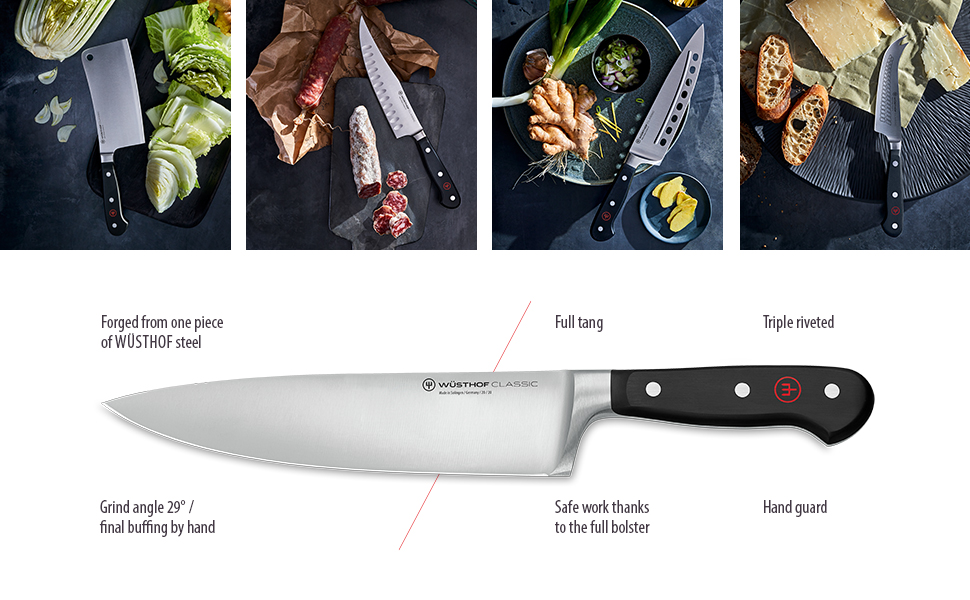
WÜSTHOF Classic 8-Inch Chef's Knife - Precision Forged German Steel for Professional Home Cooking
This precision-forged German chef's knife delivers 20% sharper cuts and twice the edge retention of previous models, making it ideal for daily chopping, mincing, and slicing tasks. Home cooks and professional chefs who want a reliable, balanced workhorse knife that holds its edge through heavy use should invest in this Classic series blade.
Pros and Cons
Pros
- German precision forging creates superior edge retention that stays sharp through months of regular kitchen use.
- The 8.5-ounce weight and ergonomic handle design reduce hand fatigue during extended meal prep.
- Backed by over 200 years of Solingen craftsmanship and strict German quality standards.
Cons
- The full bolster prevents sharpening the entire blade length on a standard whetstone without professional thinning.
- At 8.5 ounces, some cooks with smaller hands may find it heavier than Japanese-style chef's knives.

Zwilling
10-Inch Honing Steel for Kitchen Knife Maintenance and Edge Realignment
This honing steel uses an oval rod design that realigns knife edges with fewer strokes than traditional round rods, keeping your kitchen knives sharp between professional sharpening sessions. Home cooks who want to maintain their knife performance without learning complex sharpening techniques should consider this tool.
Pros and Cons
Pros
- Oval rod design requires fewer passes than traditional round honing steels to achieve the same edge realignment.
- Durable steel construction at 62 Rockwell hardness withstands regular contact with quality kitchen knives without deteriorating.
- Plastic handle with hanging hole makes storage simple in compact kitchens with limited drawer space.
Cons
- The product description contains a typo referring to the plastic handle, which may reflect less attention to quality control details.
- At this price point, some users may prefer a combination sharpening system that both hones and grinds rather than a honing-only tool.

Global Star Software
Mahjongg for Palm OS - Classic Tile Matching Game by Global Star Software for PC
This is a PC software product for installing Mahjongg solitaire on Palm OS handheld devices, not a kitchen product. It offers customizable tile sets and multiple difficulty levels for portable gaming on Palm-powered handhelds.
Pros and Cons
Pros
- Authentic mahjong solitaire experience optimized for Palm OS handhelds.
- Customizable graphics including tile sets and backgrounds for visual variety.
- Compatible with both color and grayscale Palm devices.
Cons
- Requires legacy Palm OS hardware that is no longer manufactured or widely supported.
- Not a kitchen product and provides no culinary functionality whatsoever.
WÜSTHOF Classic 8-Inch Chef's Knife - Precision Forged German Steel for Professional Home Cooking
WÜSTHOF Classic 8-Inch Chef's Knife - Precision Forged German Steel for Professional Home Cooking
This precision-forged German chef's knife delivers 20% sharper cuts and twice the edge retention of previous models, making it ideal for daily chopping, mincing, and slicing tasks. Home cooks and professional chefs who want a reliable, balanced workhorse knife that holds its edge through heavy use should invest in this Classic series blade.
$170.00 at AmazonEditors' Favorite
Brand Name: Wüsthof Set Name: Classic Manufacturer: Wüsthof UPC: 769194038526 670023145356 022934582438 Global Trade Identification Number: 00022934582438, 04002293158242, 40022931582422 Model Number: 4582-7/20 Manufacturer Part Number: 4582/20 Manufacturer Warranty Description: Lifetime warranty Item Type Name: Chef's Knives Unit Count: 16.0 Ounce Included Components: Cook's Knife Best Sellers Rank: #35,094 in Kitchen & Dining (See Top 100 in Kitchen & Dining) #103 in Chef's Knives ASIN: B00009ZK08 Blade Material Type: Stainless Steel Handle Material: Composite Is the item dishwasher safe?: No Material Type: Stainless Steel BladeLength: 8 Inches Item Weight: 0.24 Kilograms Item Length: 14 Inches Size: 8" Color: Black Blade Color: Silver Blade Edge: Chef's Knife Construction Type: Forged Blade Material: Stainless Steel Brand: Wüsthof
Shop NowZwilling 10-Inch Honing Steel for Kitchen Knife Maintenance and Edge Realignment
Zwilling
10-Inch Honing Steel for Kitchen Knife Maintenance and Edge Realignment
This honing steel uses an oval rod design that realigns knife edges with fewer strokes than traditional round rods, keeping your kitchen knives sharp between professional sharpening sessions. Home cooks who want to maintain their knife performance without learning complex sharpening techniques should consider this tool.
$59.95 at AmazonGreat Value
Material: Stainless Steel Brand: ZWILLING Color: Black/Stainless Steel Product Dimensions: 17"L x 9.8"W x 5.5"H Item Weight: 0.32 Kilograms Grit Type: Extra Fine Number of Items: 1 Manufacturer: ZWILLING J.A. HENCKELS Number of Packs: 1 Unit Count: 1.0 Count
Shop NowGlobal Star Software Mahjongg for Palm OS - Classic Tile Matching Game by Global Star Software for PC
Global Star Software
Mahjongg for Palm OS - Classic Tile Matching Game by Global Star Software for PC
This is a PC software product for installing Mahjongg solitaire on Palm OS handheld devices, not a kitchen product. It offers customizable tile sets and multiple difficulty levels for portable gaming on Palm-powered handhelds.
Check PriceASIN: B00005OL39 Customer Reviews: 4.0 4.0 out of 5 stars (6) 4.0 out of 5 stars Package Dimensions: 8.3 x 5.7 x 0.5 inches; 4.8 ounces Type of item: Video Game Rated: Everyone Item model number: GLS99509 Item Weight: 4.8 ounces Manufacturer: Global Star Software Date First Available: July 12, 2002
Shop Now



Write Your Review
No reviews yet. Be the first to share your experience!