

TL;DR — Most “dead” espresso machines aren’t broken. The usual culprits are a stuck or airlocked pump (no water reaching the group), scale buildup blocking flow and heat, a grind that’s too fine or too coarse causing gushing or choking shots, and a machine that simply needs descaling. Start with the simplest checks — water tank seated, machine primed, descaled recently, grind dialed in — before assuming a hardware failure. For pump and no-water problems, priming and descaling fix the majority of cases. For picks, see our best espresso machine under 200 guide.
The HomeWhisk editorial team researches kitchen equipment by analyzing manufacturer specifications, mechanism design, and aggregated user reviews from major retailers and coffee communities like Reddit r/espresso and manufacturer support forums. Espresso machines fail in predictable ways, and the same handful of issues — no water flow, weak pressure, lukewarm coffee, or a machine that won’t power up — account for the vast majority of “not working” complaints. This guide walks through each symptom and the real fix, in the order worth trying.
No Water Coming Out of the Portafilter or Group Head
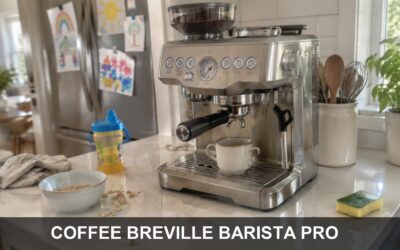
This is the single most common complaint, especially on pump machines like the Breville Barista Express. In most cases the pump has lost its prime — an air pocket in the water circuit stops it from drawing water.
Fix it in this order: 1. Refill and reseat the water tank. A tank that isn’t pushed fully onto its valve won’t feed water. Remove it, refill, and press it firmly back into place. 2. Prime the pump. Run water through the hot water/steam wand (not the group head) for 10–20 seconds. This pulls water through and purges the air pocket. Many machines need this after the tank runs dry. 3. Run water through the group head with no portafilter to confirm flow returns. 4. Check for scale. If flow is weak rather than absent, mineral buildup is throttling the lines — descale (below).
If the pump runs loudly but no water moves even after priming, air is trapped or the pump is failing. Persistent airlocks after descaling and repriming point to a worn pump. A capable grinder feeds a machine as much as the machine itself — see our best coffee grinder guide.
Espresso Flowing Too Fast or Too Slow
If water gushes through in a few seconds or barely drips, the machine is usually fine — the grind and dose are the problem.
- Shot pulls too fast (under ~20 seconds, watery, pale): grind is too coarse, the dose is too low, or the puck wasn’t tamped firmly. Grind finer and tamp level with firm, consistent pressure.
- Shot chokes or won’t flow (over ~40 seconds, or nothing): grind is too fine, the dose is too high, or you tamped too hard. Grind coarser.
Espresso needs a fine, uniform grind to build the roughly 9 bars of resistance a proper shot requires. A blade grinder can’t produce that consistency, which is why “my machine broke” is often really “my grind drifted.” Aim for a shot of about 25–30 seconds for a standard double. Dialing in is impossible without a quality grinder — see our best coffee grinder guide.
Channeling and Uneven Extraction
If your shots taste sour and bitter at once, or spray out at odd angles, the water is channeling — punching through a weak spot in the puck instead of flowing evenly. Uneven flow means part of the coffee over-extracts (bitter) while the rest under-extracts (sour).
Causes and fixes:
- Uneven distribution: grounds mounded unevenly in the basket. Distribute the grounds level before tamping (a distribution tool or a gentle tap helps).
- Uneven tamp: an angled tamp creates a low-resistance side. Tamp flat.
- Too-fine grind or old grounds: stale or clumpy coffee packs unpredictably.
Freshly ground beans, level distribution, and a flat tamp eliminate most channeling. For all-in-one convenience that grinds directly into the portafilter, see our best coffee maker with grinder and best coffee and espresso maker combo guides.
Low or Inconsistent Pressure
Weak crema and thin, underwhelming shots usually trace back to pressure loss. The likeliest causes:
- Scale buildup narrowing internal lines and valves — the number-one long-term killer of pressure. Descale.
- Worn group head gasket leaking pressure around the portafilter — you’ll often see water weeping from the edges. Replace the gasket (an inexpensive, common repair).
- Grind too coarse, so the puck offers too little resistance to build pressure.
- Clogged shower screen or portafilter basket restricting flow.
Descaling and a fresh gasket resolve the majority of pressure complaints on home machines. If pressure problems persist across a well-maintained machine, the pump itself may be weakening. Budget-friendly machines that hold pressure well are covered in our best espresso machine under 200 guide.
Not Heating, Lukewarm Coffee, or No Steam
Temperature and steam problems are usually scale or a thermostat issue.
- Lukewarm coffee: the group head and portafilter start cold. Always run a blank shot of hot water to preheat them, and leave the portafilter locked in while the machine warms up. If it’s still cool, scale is insulating the heating element — descale.
- No steam or weak steam: the steam wand tip is clogged with dried milk. Purge the wand, then soak the tip in warm water and clear the holes with a pin. Always purge and wipe the wand right after steaming.
- Machine heats but very slowly, or trips off: a failing thermostat/thermal cutout, which is a repair.
Single-boiler machines also need a moment to shift from brew temperature up to steam temperature — waiting for the ready light prevents “no steam” confusion. For milk-free brewing alternatives, see our best cold brew coffee maker and best grind and brew coffee maker guides.
Machine Won’t Turn On or Buttons Don’t Respond
If nothing lights up:
- Test the outlet with another device, and try a different socket — GFCI outlets in kitchens trip easily.
- Check the plug and any reset button. Some machines have a resettable thermal fuse.
- Look for an auto-off/standby mode — many machines sleep after a set time and wake with a button press.
- Power-cycle: unplug for a few minutes to reset the control board.
If the touchpad or buttons are unresponsive while the machine has power, a full power-cycle (unplugged for 5–10 minutes) clears most control-board glitches. Repeated no-power failures usually mean a blown thermal fuse or failed board.
Descaling and General Maintenance
Scale — hardened mineral deposits from water — is behind more espresso machine failures than any single part. It restricts flow, insulates heating elements, and clogs valves.
- Descale every 1–3 months, more often with hard water, using a descaling solution or citric acid, following your machine’s cycle.
- Backflush machines with a three-way solenoid valve weekly using a blind basket and espresso detergent.
- Wipe and purge the steam wand after every use.
- Use filtered or bottled spring water (not distilled, not hard tap) to slow scale dramatically.
- Replace the group gasket every year or two if you notice leaking.
Consistent descaling and clean water prevent the majority of the problems above. A machine that’s descaled, fed filtered water, and paired with a good grinder rarely “stops working.”
Frequently Asked Questions
Why is my espresso machine not pumping water after descaling?
This is almost always an airlock. After a descale, the water circuit has air in it, and the pump can’t draw water until it’s primed. Run water through the steam wand for 15–20 seconds to purge the air, then try the group head. Make sure the water tank is fully seated on its valve. If the pump runs loudly but nothing comes out after repeated priming, the pump may be worn — but priming resolves the overwhelming majority of post-descale no-water cases.
Why is my Breville espresso machine not pushing water through the portafilter?
On Breville machines like the Barista Express, this is typically a lost prime, a too-fine grind choking the puck, or scale buildup. First, run hot water from the wand to reprime the pump. Then try pulling a shot with the portafilter empty — if water flows, your grind is too fine or dose too high. If flow is still weak with an empty portafilter, descale the machine. A clogged shower screen can also block flow, so clean it periodically.
How often should I descale my espresso machine?
Every one to three months for most households, depending on water hardness and how often you brew. Hard-water areas need monthly descaling; soft or filtered water can stretch it to every three months. Many machines have a descale indicator light, but don’t rely solely on it — if shots slow down, temperature drops, or flow weakens, scale is the likely cause. Using filtered water dramatically reduces how often you’ll need to descale.
Why is my espresso lukewarm?
Cold coffee is usually a cold group head and portafilter, not a broken heater. Run a blank shot of hot water through the empty group head to preheat it, keep the portafilter locked in during warm-up, and preheat your cup. If the machine still runs cool after preheating, scale is insulating the heating element and you should descale. A genuinely failing thermostat is less common and would show as slow or no heating overall.
Why won’t my espresso machine turn on?
Start with the outlet — test it with another appliance and try a different socket, since kitchen GFCI outlets trip easily. Check the machine’s plug and any reset or thermal-fuse button. Unplug the machine for 5–10 minutes to reset the control board, then try again. Many machines also have a standby mode that looks like being off. If it repeatedly won’t power on after these steps, a blown thermal fuse or failed control board is likely and needs service.
Is it worth repairing an espresso machine or replacing it?
It depends on the fault and the machine’s value. Gaskets, shower screens, steam-wand tips, and descaling are cheap DIY fixes worth doing on any machine. A failed pump, boiler, or control board can cost a large share of the machine’s price to repair professionally — often not worth it on entry-level models, but reasonable on mid-range and premium machines. If your current machine is beyond economical repair, our best espresso machine under 200 guide covers solid replacements.
The Bottom Line
An espresso machine that “won’t work” is usually suffering from one of a few fixable issues: a pump that lost its prime, scale choking flow and heat, a grind that’s drifted too fine or coarse, or a clogged steam wand. Work from the simplest checks first — reseat the tank, reprime the pump, descale, and dial in the grind — before assuming the pump or board has failed. Regular descaling with filtered water and a quality grinder prevent most problems from ever appearing. If yours is genuinely beyond repair, see our best espresso machine under 200 and best coffee maker with grinder guides for replacements.

Repair Espresso Machines with Electrical Diagnostics, Hydraulic Service, and Boiler Restoration
This DIY blueprint helps diagnose electrical faults, service high-pressure hydraulics, and restore boiler systems in prosumer espresso machines and related appliances. It suits hands-on owners and repair professionals who need a focused reference for espresso machine servicing.
Pros and Cons
Pros
- Combines electrical, hydraulic, and boiler-system coverage in one repair-focused guide.
- Addresses the specialized systems found in prosumer espresso machines.
- Provides a DIY-oriented resource for hands-on servicing.
Cons
- The listing does not provide specifications such as format, size, or weight.
- Compatibility with specific espresso machine brands and models is not identified.
Espresso Machine Repair Made Simple: A Step-by-Step DIY Guide to Troubleshooting and Maintenance Without Calling a Technician

Espresso Machine Repair Made Simple: A Step-by-Step DIY Guide to Troubleshooting and Maintenance Without Calling a Technician
$4.99 at AmazonEditors' Favorite
Formats: Kindle eBook Product Group: Digital Ebook Purchas Binding: Kindle Edition
Shop NowRepair Espresso Machines with Electrical Diagnostics, Hydraulic Service, and Boiler Restoration
Repair Espresso Machines with Electrical Diagnostics, Hydraulic Service, and Boiler Restoration
This DIY blueprint helps diagnose electrical faults, service high-pressure hydraulics, and restore boiler systems in prosumer espresso machines and related appliances. It suits hands-on owners and repair professionals who need a focused reference for espresso machine servicing.
$6.99 at AmazonGreat Value
Formats: Kindle eBook Product Group: Digital Ebook Purchas Binding: Kindle Edition
Shop NowIndependently published The Dial-In: A Practical Guide to Better Espresso

Dimensions: 6 x 0.14 x 9 inches Product Group: Book Binding: Paperback
Shop NowIndependently published Espresso Machine Maintenance Log Book: Daily, Weekly & Monthly Coffee Equipment Care Tracker

Independently published
Espresso Machine Maintenance Log Book: Daily, Weekly & Monthly Coffee Equipment Care Tracker
$11.99 at AmazonDimensions: 8.5 x 0.28 x 11 inches Product Group: Book Binding: Paperback
Shop NowThe Home Espresso Machine Owner’s Handbook: A Practical User Guide for Setup, Grinding, Shot Timing, Pressure Troubleshooting, Milk Steaming, Cleaning, and Easy Café-Style Recipes

The Home Espresso Machine Owner’s Handbook: A Practical User Guide for Setup, Grinding, Shot Timing, Pressure Troubleshooting, Milk Steaming, Cleaning, and Easy Café-Style Recipes
$8.99 at AmazonFormats: Kindle eBook Product Group: Digital Ebook Purchas Binding: Kindle Edition
Shop Now






Write Your Review
No reviews yet. Be the first to share your experience!