

Why is my espresso machine smells bad? Almost always, the answer is old coffee oil, stale milk, or water that’s been sitting too long. Those three sources cover the vast majority of sour, musty, burnt or rotten-egg odors coming from a home espresso machine, and each one has a specific fix that takes between 5 minutes and an hour.
This guide walks through how to identify the smell, where it’s hiding, how to clean each part, and how to keep it from coming back. If the machine is beyond saving, there’s also a short look at what to consider in a replacement.
Match the smell to the source
Different odors point to different problems. Sniffing carefully around the machine before you start scrubbing saves a lot of wasted effort. Open the water tank, pull the drip tray, remove the portafilter and smell each part separately.
A sour or rancid smell usually means coffee oils have built up on the shower screen, inside the portafilter, or in the group head gasket. Coffee contains natural oils that go rancid within days once they’re exposed to air and heat. A sour-milk or cheesy smell almost always comes from the steam wand, where milk gets sucked back into the tip after frothing. A musty, damp or “basement” smell points to the water tank or drip tray, where standing water grows biofilm. A burnt or electrical smell is different. It can mean a scorched seal, a failing heating element, or coffee grounds baked onto a hot surface, and it deserves more caution than the others.
Rotten egg or sulfur odors usually trace back to the water itself. Well water and some municipal supplies carry sulfur compounds that concentrate as water heats and evaporates. If you notice that smell from your tap too, the machine isn’t the root cause.
Machines with a built-in grinder add one more possible source: old beans and fine coffee dust trapped in the burrs and chute. A unit like the Spacekey Espresso Machine with Grinder and Frother, which offers 30 grind settings and 20 bar pressure, puts grinding and brewing in one housing, so the grinder chute is worth checking whenever an odor shows up.
Spacekey Espresso Machine with Grinder and Frother, 30 Grind Settings, 20 Bar

Editors' Favorite
Color: Brushed Silver Size: Standard Home Size Dimensions: 12 x 10 x 14 inches Weight: 15 Pounds Product Group: Kitchen Binding: Unknown Binding
Shop NowDeep clean the parts that hold odors
Once you know where the smell lives, clean that part first, then do a full pass on everything else. Unplug the machine and let it cool before you take anything apart. Here’s the order that works for most semi-automatic machines.
Water tank and drip tray
Empty the tank completely. Wash it with warm water and a few drops of unscented dish soap, using a bottle brush to reach the corners. Rinse at least three times, since soap residue will flavor your next shot. For a stubborn musty smell, fill the tank with a 1:1 mix of white vinegar and water, let it sit for 30 minutes, then rinse well. The drip tray gets the same treatment. It’s the most neglected part on most machines and often the worst-smelling one.
Portafilter, basket and shower screen
Pop the basket out of the portafilter and soak both in hot water with an espresso-machine cleaning powder for 15 to 20 minutes. Scrub the spouts with a small brush. Then look up at the group head. The shower screen collects a brown film that you can wipe off with a damp cloth, and many machines let you unscrew it for a deeper scrub. If your machine supports backflushing with a blind basket, run a backflush cycle with cleaner, followed by several plain-water cycles. Check the manual first. Not every machine is built for it.
Steam wand
Wrap a damp cloth around the wand and run steam for 2 to 3 seconds to blow out milk trapped inside. Then soak the tip in a glass of hot water for 10 minutes and use a pin or the tool supplied with the machine to clear the holes. If the wand has a removable sleeve, take it off and wash it separately. Dried milk is the single most common cause of a sour smell, and it’s also the easiest one to prevent.
Grinder chute and burrs
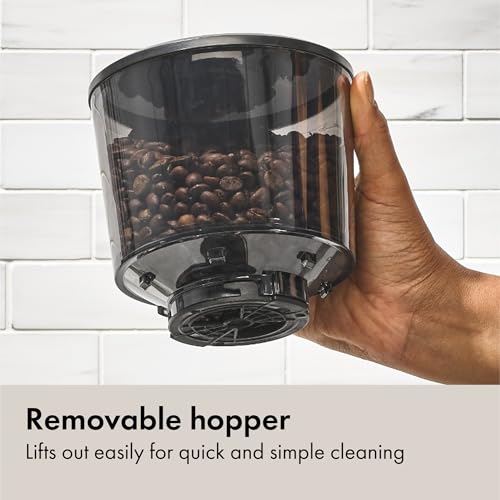
For machines with an integrated grinder, empty the hopper and run the grinder until no more grounds come out. Brush the chute with a dry, stiff brush. Don’t use water on burrs unless the manual says you can. Grinder cleaning tablets made from food-safe grain are another option for clearing old oils without disassembly.
Descale and refresh the water path
Scale doesn’t usually smell on its own, but it traps old coffee and gives bacteria a rough surface to cling to. Hard water also slows heating, which can lead to scorched spots. Most manufacturers suggest descaling every 1 to 3 months, depending on how hard your water is and how often you brew.
Use a descaler made for espresso machines, or a citric acid solution if the manual allows it. Run the solution through the group head and steam wand in short bursts, let it sit for 15 to 20 minutes, then flush with at least two full tanks of fresh water. Vinegar works in a pinch, though many brands advise against it because it can leave a lingering smell and may be hard on rubber seals. Ironic, given the goal.
A removable water tank makes this whole routine far easier. You can carry it to the sink, scrub it properly and let it air-dry overnight. The Garvee 20 Bar Pressure Stainless Steel Espresso Machine with Grinder, for example, has a 1.5L removable water tank along with a milk frother steam wand and adjustable shot volume. A stainless steel body also wipes clean without holding odors the way some plastics can.

Garvee
Bean-to-Cup Espresso and Latte Brewing at Home: Garvee 20 Bar Stainless Steel Espresso Machine with Built-In 30-Setting Grinder
This stainless steel machine grinds whole beans directly into the portafilter and pulls 20 bar shots with a 1350W Italian pump, so espresso goes from bean to crema without a separate grinder on the counter. It suits home or office users who want single and double shot control plus a steam wand for lattes and cappuccinos in one footprint.
Pros and Cons
Pros
- Grinder and brewer in one unit frees counter space and shortens the routine from beans to finished shot.
- 20 bar pressure from the 1350W pump extracts with visible crema on fresh grounds.
- Removable tank and drip tray make daily cleanup a rinse rather than a chore.
- Backed by a one-year limited warranty plus free lifetime tech support through authorized channels.
Cons
- The listing carries no customer reviews yet, so long-term grinder and pump reliability are unproven.
- Semi-automatic operation means tamping, dosing, and milk texturing are still on you, which takes practice before shots are consistent.
Garvee Bean-to-Cup Espresso and Latte Brewing at Home: Garvee 20 Bar Stainless Steel Espresso Machine with Built-In 30-Setting Grinder
Garvee
Bean-to-Cup Espresso and Latte Brewing at Home: Garvee 20 Bar Stainless Steel Espresso Machine with Built-In 30-Setting Grinder
This stainless steel machine grinds whole beans directly into the portafilter and pulls 20 bar shots with a 1350W Italian pump, so espresso goes from bean to crema without a separate grinder on the counter. It suits home or office users who want single and double shot control plus a steam wand for lattes and cappuccinos in one footprint.
$111.02 at AmazonEditors' Favorite
Color: SILVER,20Bar,With Grinder Size: 20Bar Dimensions: 12.44 x 13.78 x 16.32 Inches Weight: 24.03 Pounds Product Group: Kitchen Binding: Kitchen
Shop NowCommon mistakes that keep the smell coming back
Most odor problems return because of habits, not hardware. Fixing a few routines makes the deep clean last.
Leaving water in the tank for days is the biggest one. Water that sits at room temperature for more than 24 to 48 hours starts to taste flat and can grow a film. Empty the tank if you won’t brew again tomorrow, and refill with fresh, cold water each morning.
Skipping the post-shot flush is another. After you knock out the puck, run a 2-second blast of water through the group head with the portafilter off. That clears loose grounds before they bake onto the shower screen. It costs almost nothing and saves a lot of scrubbing later.
Forgetting to purge the steam wand ranks high too. Purge right after frothing, every time, then wipe the wand with a damp cloth. Waiting even 10 minutes lets milk proteins harden.
Storing the portafilter in the machine wet is a quieter mistake. Locking a damp portafilter into the group head overnight traps moisture against the gasket. Dry it and leave it on the counter or locked in loosely, depending on what your machine’s maker recommends.
Using scented soaps or strong cleaners can backfire as well. Lemon or floral dish soaps leave flavors behind, and harsh chemicals can damage seals. Stick to unscented soap and cleaners designed for espresso equipment.
Finally, people often ignore the beans themselves. Stale, oily beans left in a hopper for weeks smell rancid and leave that smell in the grinder. Buy smaller bags and keep beans in an airtight container away from heat. That’s not a machine fault at all.
When a smell means something is wrong
A burning plastic or electrical smell is not a cleaning issue. Unplug the machine and stop using it. Check the power cord for heat damage and look for melted spots around the base or heating area. If the smell persists after the machine cools, contact the manufacturer or a repair shop rather than troubleshooting further on your own.
A rubbery smell after a new gasket install usually fades within a few days of normal use. Running several water-only cycles helps. A rubbery smell from an older machine, though, can mean the gasket is cracking or overheating, and it’s worth replacing. Gaskets are cheap and typically last 6 to 12 months under daily use.
If your machine smells musty even after a thorough clean, mold may be growing somewhere you can’t reach, like inside internal tubing. Some machines allow partial disassembly. Many don’t. At that point, the cost of a repair can approach the price of a new entry-level unit.
When to replace your espresso machine
Replacement makes sense when odors return within days of a deep clean, when there’s visible mold you can’t access, or when the machine has electrical smells, leaks or inconsistent heating. An older machine with a non-removable tank is also harder to keep fresh over time.
When you shop, look for parts that are easy to clean: a removable water tank, a detachable drip tray, a steam wand you can wipe and purge easily, and a group head you can reach. If you want a straightforward option, our guides to the best basic espresso machine and the best small espresso machine cover simpler designs with fewer hidden spots. Short on counter space? See the best mini espresso machine and best compact espresso machine roundups. For pressure-focused picks, there’s our list of the best 20 bar espresso machine models, and the best espresso machine for espresso guide covers shot quality in more depth.
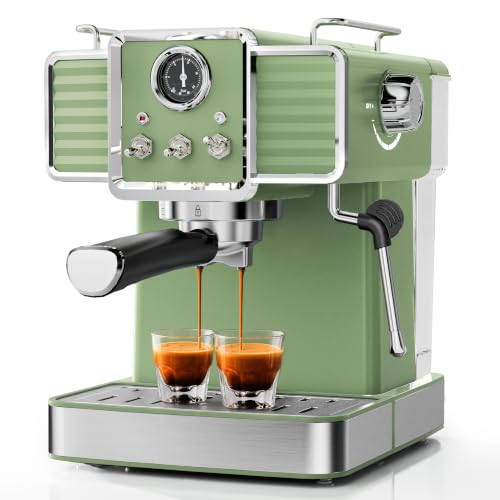
The SECPOEDR 20Bar Semi Automatic Retro Espresso Machine with Milk Frother is one option in that range. It’s a semi-automatic design with 20 bar pressure and a milk frother, so the same cleaning routine above applies: purge the wand, flush the group head and keep the tank fresh.
SECPOEDR
Home Espresso and Latte Brewing with the SECPOEDR 20 Bar Semi-Automatic Retro Espresso Machine and Steam Wand
This semi-automatic machine pulls espresso, lungo, and Americano shots through a 20-bar Italian ULKA pump with pre-infusion, then steams milk via a 360-degree wand for lattes and cappuccinos at home. It suits the home barista who wants manual control over shot volume and milk texture without stepping up to a commercial-size setup.
Pros and Cons
Pros
- Manual volume control lets you stop the shot where you want it for espresso, lungo, or Americano bases.
- Single and double baskets accommodate 7g and 14g doses, so you can brew one drink or two.
- Retro lever styling and green finish work as a visible countertop piece rather than something to hide away.
- Italian ULKA pump is a known component in home espresso machines rather than an unbranded substitute.
Cons
- Semi-automatic operation means results depend on your grind, dose, and tamp, so expect a learning curve before dialing in consistent shots.
- It requires a hot water priming cycle before the first brew and after long storage, an extra step some buyers overlook.
SECPOEDR Home Espresso and Latte Brewing with the SECPOEDR 20 Bar Semi-Automatic Retro Espresso Machine and Steam Wand
SECPOEDR
Home Espresso and Latte Brewing with the SECPOEDR 20 Bar Semi-Automatic Retro Espresso Machine and Steam Wand
This semi-automatic machine pulls espresso, lungo, and Americano shots through a 20-bar Italian ULKA pump with pre-infusion, then steams milk via a 360-degree wand for lattes and cappuccinos at home. It suits the home barista who wants manual control over shot volume and milk texture without stepping up to a commercial-size setup.
$135.99 at AmazonEditors' Favorite
Color: Green Size: 11.61*9.45*11.93inch Dimensions: 11.6 x 9.45 x 11.93 inches Weight: 7.28 pounds Product Group: Kitchen
Shop NowFAQ
Why does my espresso machine smell sour?
A sour smell usually comes from rancid coffee oils on the shower screen and portafilter, or from milk trapped in the steam wand. Soak the portafilter and basket in espresso cleaner, wipe the shower screen and purge the wand. Most sour smells clear after one thorough cleaning.
Why does my espresso machine smell like rotten eggs?
Sulfur odors typically come from the water supply, especially well water. Heating concentrates the sulfur compounds. Try filtered or bottled water for a week to see if the smell goes away.
How often should I clean my espresso machine to prevent odors?
Flush the group head and purge the steam wand after every use. Empty and rinse the drip tray and water tank daily, soak the portafilter weekly, and descale every 1 to 3 months depending on water hardness.
Can I use vinegar to remove smells from my espresso machine?
Vinegar can freshen a water tank or drip tray, but many manufacturers advise against running it through the internal system. It can leave a smell of its own and may wear down rubber seals. Use a dedicated descaler or citric acid if the manual allows it.
Is it safe to use an espresso machine that smells burnt?
No. A burning or electrical smell can signal a failing heating element, damaged wiring or a scorched seal. Unplug the machine, let it cool and contact the manufacturer or a qualified repair service before using it again.







Write Your Review
No reviews yet. Be the first to share your experience!