

TL;DR — Most espresso machine leaks come from three places: worn seals, loose or clogged fittings, and normal design behavior mistaken for a fault. Water in the drip tray is usually normal (the machine purges after brewing). Clear water pooling under or beside the machine points to a cracked reservoir, loose internal hose, or a failed O-ring or gasket. Brown, coffee-stained water at the group head almost always means a worn portafilter gasket or a puck of grounds blocking the seal. Descaling neglect and old silicone seals are the most common root causes. For picks, see our best espresso machine under 200 guide.
The HomeWhisk editorial team researches kitchen equipment by analyzing machine schematics, seal and gasket materials, manufacturer service guidance, and aggregated owner reports from communities like Reddit r/espresso covering De’Longhi, Breville, Philips, Krups, and Nespresso machines. The guidance below is based on how these machines are actually plumbed and where they fail.
A leaking espresso machine is alarming but rarely fatal; the vast majority of leaks trace to a handful of cheap, replaceable parts or to normal machine behavior that looks worse than it is. The key to fixing it is figuring out where the water is coming from and what color it is, because that narrows the cause immediately. This guide works through the three leak locations owners actually report, the common culprits behind each, and how to diagnose and fix them. For machines and grinders that pair well, see our best espresso machine under 200 and best coffee grinder guides.
First, Locate the Leak and Note the Color
Before opening anything, diagnose by observation, because location and color tell you almost everything.
- Where is the water appearing? The drip tray, underneath the machine, beside it, or at the group head / portafilter?
- What color is it? Clear water points to the fresh-water supply side (reservoir, hoses, boiler, pump). Brown or coffee-colored water points to the brew side (group head, portafilter, puck).
- When does it leak? During brewing, during steaming, at start-up, or constantly even when off (which suggests the reservoir or a boiler seal)?
Answer those three questions and you can jump straight to the relevant section below.
1. Water in the Drip Tray (Usually Normal)
The most-reported “leak” isn’t a leak at all, so rule this out first.
Espresso machines are designed to release water into the drip tray as part of normal operation. After you pull a shot, the machine relieves pressure in the group head by venting water and the spent puck’s moisture into the tray, and many machines run a rinse or flush cycle at start-up and shutdown that dumps clean water there. Automatic and super-automatic machines (De’Longhi, Philips) flush the brew unit every time they power on and off, which can be a surprising amount of water.
When it’s normal: A small-to-moderate amount of clean water in the tray after brewing, flushing, or power cycling. When it’s a problem: The tray fills far faster than usage explains, or water continues dripping long after brewing stops, which suggests a solenoid valve not sealing or a boiler over-pressure issue. If it’s just normal purge water, empty the tray more often and move on.
2. Clear Water Under or Beside the Machine
Clear water on the counter comes from the fresh-water side, and there’s a short list of usual suspects.
- Cracked or misseated water reservoir: The most common cause of a constant clear leak, even when the machine is off. Reservoirs crack at seams or stress points, and if the tank isn’t seated fully onto its valve, it dribbles. Inspect the tank for hairline cracks and make sure it clicks firmly into place.
- Loose or split internal hoses: Vibration from the pump can loosen hose clamps or crack aging silicone tubing over years of use. This shows as water pooling directly under the machine.
- Failed O-rings and gaskets on the boiler or pump: Silicone and rubber seals harden and shrink with heat cycling and age. A perished boiler or pump seal weeps clear water, often only when hot and pressurized.
- Overfilled reservoir or overflow: Some machines have an overflow that routes excess into the drip tray or out the bottom.
- Scale damage: Long-term mineral buildup from skipping descaling can crack seals and corrode fittings, causing leaks. This is a frequent root cause on Krups, De’Longhi, and Philips machines in hard-water areas.
For clear leaks, start by emptying and drying everything, then run the machine on a towel and watch exactly where the first drops form. Replacing an O-ring or reseating the tank fixes most cases; a cracked reservoir means a replacement tank. Regular descaling prevents a large share of these failures. Our best coffee maker with grinder guide covers lower-maintenance alternatives if seal upkeep isn’t for you.
3. Brown, Coffee-Stained Water at the Group Head
Brown water means it’s touched coffee, so the leak is on the brew side, and one part is almost always to blame.
- Worn portafilter (group head) gasket: This rubber or silicone ring seals the portafilter against the group head. It hardens, shrinks, and cracks over roughly 12 to 18 months of regular use, after which pressurized brew water sprays or dribbles from the edges of the portafilter instead of going through the puck. This is the single most common cause of brown leaks and a cheap, easy replacement.
- Coffee grounds on the seal: Grounds stuck to the rim of the portafilter or the gasket break the seal, letting water escape sideways. Wipe the rim clean before locking in.
- Not locking the portafilter tightly or a worn locking mechanism that no longer clamps firmly.
- Over-dosing the basket: Too much coffee leaves no headspace, so the puck presses against the shower screen and forces water out the sides. Reduce the dose.
- Too fine a grind or a clogged shower screen: Excess back-pressure forces water past the gasket. Coarsen the grind slightly and clean or backflush the group head.
Because dose and grind affect this directly, a consistent grinder helps; see our best coffee grinder guide. If your machine’s group head is chronically finicky, the best coffee and espresso maker combo and best grind and brew coffee maker guides cover simpler brewing paths.
Prevention: Descale, Reseal, and Clean
Most leaks are preventable with basic maintenance, so build these habits.
- Descale on schedule: Every one to three months depending on water hardness. Scale is the leading long-term cause of cracked seals and corroded valves. Use a commercial descaler or a vinegar-water solution, then rinse thoroughly.
- Replace the group gasket periodically: Every 12 to 18 months, or sooner if brown leaks start. It’s inexpensive and one of the highest-impact fixes.
- Use filtered or softened water to slow scale buildup.
- Clean the portafilter, basket, and shower screen regularly, and backflush machines that support it.
- Don’t over-tighten or force parts, which cracks plastic reservoirs and strips threads.
Frequently Asked Questions
Why is my coffee machine leaking water underneath?
Clear water pooling underneath almost always comes from the fresh-water side: a cracked or improperly seated reservoir, a loose or split internal hose, or a failed O-ring or gasket on the boiler or pump. Long-term scale buildup from skipped descaling is a frequent underlying cause, since it cracks seals and corrodes fittings. Dry everything, run the machine on a towel, and watch where the first drops appear. Reseating the tank or replacing a cheap seal fixes most cases; a cracked reservoir needs a new tank.
Why is my espresso machine leaking from the group head?
Leaks from the group head or portafilter are usually brown (coffee-stained) and point to a worn group gasket, the rubber seal between the portafilter and the machine. It hardens and cracks after 12 to 18 months, letting pressurized water escape around the edges. Other causes are coffee grounds on the sealing rim, not locking the portafilter tightly, over-dosing the basket, or too fine a grind creating excess back-pressure. Wipe the rim, check the dose and grind, and replace the gasket if it’s old and stiff.
Why is my espresso machine leaking from the portafilter?
Water escaping around the portafilter rather than flowing cleanly through the spout usually means the seal isn’t holding. The gasket may be worn, grounds may be caught on the rim breaking the seal, the portafilter may not be locked in firmly, or you may have overfilled the basket so the puck jams against the shower screen. Start by wiping the rim clean, reducing the dose slightly, and locking it in tightly. If leaks persist with a clean, correctly dosed basket, replace the group gasket.
Is it normal for water to run into the drip tray?
Yes, in most cases. Espresso machines vent water into the drip tray to relieve group-head pressure after brewing, and automatic and super-automatic machines run rinse cycles at power-on and power-off that dump clean water there by design. A modest amount of clean water after brewing or a power cycle is expected. It’s only a concern if the tray fills far faster than your usage explains or water keeps dripping long after brewing stops, which can indicate a solenoid valve failing to seal.
Why does my machine leak only when it’s hot or brewing?
Leaks that appear only under heat and pressure point to seals that have lost their elasticity. Silicone and rubber O-rings and gaskets shrink and harden with repeated heat cycling, so they seal when cold but weep once the boiler is hot and the pump is pressurized. This is typical of an aging boiler seal, pump gasket, or group gasket. Replacing the specific perished seal resolves it. If you’re not comfortable opening the machine, this is a reasonable point to seek service or consider a replacement.
Can hard water cause my espresso machine to leak?
Yes, indirectly and commonly. Hard water deposits mineral scale throughout the boiler, valves, and fittings. Over time, scale cracks seals, jams solenoid valves so they don’t close fully, and corrodes metal parts, all of which cause leaks. This is why descaling every one to three months matters and why owners in hard-water areas report more leaks. Using filtered or softened water and descaling on schedule prevents a large share of leaks and extends the machine’s life significantly.
The Bottom Line
Diagnose an espresso machine leak by location and color before touching a tool. Water in the drip tray is usually normal purge or rinse water. Clear water under or beside the machine points to the fresh-water side: a cracked or misseated reservoir, a loose hose, or a failed O-ring, often driven by scale. Brown water at the group head is almost always a worn portafilter gasket, grounds on the seal, or an over-dosed or over-fine puck. Most fixes are cheap seals and better habits, and regular descaling prevents the majority of leaks. When seals fail repeatedly on an old machine, replacement may make more sense than repair. For options, see our best espresso machine under 200, best coffee grinder, and best coffee maker with grinder guides.

Aerkana
20 Bar Espresso Machine with Milk Frother for Home
This 20-bar semi-automatic espresso maker brews café-quality espresso and froths milk with a powerful steam wand, delivering rich crema and silky microfoam in under 30 seconds of preheating. Buy it if you want barista-level coffee at home without the learning curve or if you need a compact machine for a small kitchen or office.
Pros and Cons
Pros
- 20-bar pump with pressure gauge delivers consistent extraction and café-quality espresso with visible crema.
- High-performance steam wand froths milk into velvety microfoam quickly, enabling latte art for beginners.
- Compact stainless steel design fits small kitchens and offices while looking modern on any counter.
Cons
- Machine requires cooldown between milk frothing and espresso brewing, or overheat protection activates.
- Preheating and priming procedures add 2–3 minutes to first-use setup and after storage.

Spacekey
Home Espresso and Milk Drinks: Spacekey CM5080 20-Bar Compact Espresso Machine
The Spacekey CM5080 brews espresso, Americanos, cappuccinos, lattes, and mochas, with 45-second preheating as its biggest time-saving advantage. It suits home coffee drinkers who want a compact semi-automatic machine with PID temperature control, pre-soaking, and an adjustable steam wand.
Pros and Cons
Pros
- A 20-bar pump, pre-soak function, and PID control support more controlled espresso extraction.
- Fast 45-second preheating reduces waiting before brewing.
- Americano mode provides an additional black coffee option alongside espresso.
- The 360-degree adjustable steam nozzle is removable for easier cleaning.
Cons
- The manual steam wand and control dial require more involvement than a one-touch automatic machine.
- The machine may need a 10-second hot-water priming cycle before first use or if excess pressure prevents brewing.
The Best Deals This Week*
-
Aerkana 20 Bar Espresso Machine with Milk Frother
$99.99
($159.99)Save $60.00 -
Home Espresso and Milk Drinks
$99.99
($159.99)Save $60.00
*Deals are selected by our commerce team
ROCKET ESPRESSO MILANO Rocket Espresso R58 Tune Espresso Machine (Black)

Editors' Favorite
Color: Black Size: Full-Size Dimensions: 19 x 16 x 16.8 inches Weight: 80 pounds Product Group: Kitchen
Shop NowCOWSAR 20 Bar Espresso Machine, Compact Espresso Maker with Steam Milk Frother, Stainless Steel Coffee Machine with 45oz Removable Water Tank, for Cappuccino,Latte&Cold Brew Home&Office
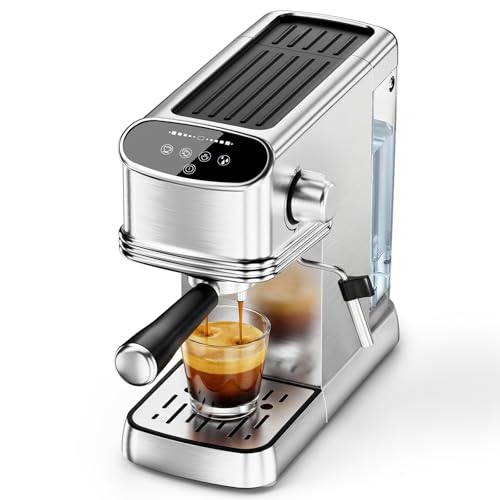
COWSAR
20 Bar Espresso Machine, Compact Espresso Maker with Steam Milk Frother, Stainless Steel Coffee Machine with 45oz Removable Water Tank, for Cappuccino,Latte&Cold Brew Home&Office
$89.99 at AmazonGreat Value
Color: Aluminum Steam Wand Size: Medium Dimensions: 11.89 x 6.06 x 11.97 inches Weight: 20.53 pounds Product Group: BISS Binding: Kitchen
Shop NowAerkana 20 Bar Espresso Machine with Milk Frother for Home
Aerkana
20 Bar Espresso Machine with Milk Frother for Home
This 20-bar semi-automatic espresso maker brews café-quality espresso and froths milk with a powerful steam wand, delivering rich crema and silky microfoam in under 30 seconds of preheating. Buy it if you want barista-level coffee at home without the learning curve or if you need a compact machine for a small kitchen or office.
$99.99 at AmazonOther Special Features of the Product: Auto Shut-Off, Cup Warmer, Hot Water Dispenser, Milk Frother, Removable Tank Coffee Maker Type: Espresso Machine Specific Uses For Product: Americano, Birthday Gft for Women, Men, Cappuccino, Espresso, Espresso, Cappuccino, latte machine for Home or Office Use, Fathers Day Gifts, Gift for Father, Mother, Family, Friends, Coffee Lovers, Latte Wattage: 1450 watts Coffee Input Type: Ground Capacity: 1 Liters Item Dimensions D x W x H: 12.2"D x 5.32"W x 11.5"H Color: Silver Brand Name: AERCANA Included Components: Filter, Milk Frother Model Name: ST-699B Model Number: ST-699B Manufacturer: AERCANA Warranty Description: 2 Part Number: ST-699B Best Sellers Rank: #245,695 in Home & Kitchen (See Top 100 in Home & Kitchen) #71 in Semi-Automatic Espresso Machines ASIN: B0GY74JMX3 Customer Reviews: 5.0 5.0 out of 5 stars (9) 5.0 out of 5 stars Brand: AERCANA Product Dimensions: 12.2"D x 5.32"W x 11.5"H Special Feature: Auto Shut-Off, Cup Warmer, Hot Water Dispenser, Milk Frother, Removable Tank
Shop NowEUHOMY Automatic Espresso Machine with Built-in Grinder and Milk Frother

Color: Black Size: Large Dimensions: 17.36 x 7.32 x 13.11 Inches Weight: 19.18 pounds Product Group: Kitchen Binding: Kitchen
Shop NowSpacekey Home Espresso and Milk Drinks: Spacekey CM5080 20-Bar Compact Espresso Machine
Spacekey
Home Espresso and Milk Drinks: Spacekey CM5080 20-Bar Compact Espresso Machine
The Spacekey CM5080 brews espresso, Americanos, cappuccinos, lattes, and mochas, with 45-second preheating as its biggest time-saving advantage. It suits home coffee drinkers who want a compact semi-automatic machine with PID temperature control, pre-soaking, and an adjustable steam wand.
$99.99 at AmazonColor: Silver Size: Silver Dimensions: 13.19 x 7.44 x 14.37 inches Product Group: Kitchen
Shop Now




Write Your Review
No reviews yet. Be the first to share your experience!