

TL;DR — An espresso machine that won’t heat is almost always one of three things: no power reaching the heating element, a tripped safety cutoff (usually caused by limescale or a dry boiler), or a failed thermostat or thermoblock. Start by confirming power, water in the tank, and that the machine isn’t stuck in standby or descale-lockout mode. The single most common root cause is scale buildup insulating the heating element or tripping the thermal fuse, so a thorough descale fixes a large share of “no heat” complaints. If the pump runs but water stays cold after descaling, a thermostat or element has likely failed and needs service. For picks if it’s beyond repair, see our best espresso machine under 200 guide.
The HomeWhisk editorial team researches kitchen equipment by analyzing manufacturer service documentation, component design, and aggregated owner reports from major retailers and communities like Reddit r/espresso. What follows is a mechanism-by-mechanism walkthrough of why an espresso machine stops heating, ordered from the cheapest, most likely fix to the ones that mean a repair.
Espresso machines heat water to roughly 195–205°F (90–96°C) for extraction, and hotter still for steam. They do it fast, inside a small metal boiler or a thermoblock, using an element that can draw 1,000–1,500 watts. That combination of high heat, hard water, and tight tolerances is exactly why “it won’t heat up” is one of the most common espresso failures. Here is how to diagnose it safely, in order.
Check the Basics First
Before assuming a dead element, rule out the simple stuff, because it accounts for a surprising share of no-heat reports.
- Power and outlet. Plug the machine directly into a known-good wall outlet, not a power strip or extension cord. High-wattage heaters trip weak circuits and overheat worn strips. If the machine shows no lights at all, test the outlet with another appliance.
- Water in the reservoir. Most machines have a low-water sensor that blocks heating to keep the element from firing dry. A tank seated slightly off its valve can read as empty.
- Standby and eco mode. Many modern machines drop into low-power sleep after 9–30 minutes. Indicator lights may glow while the boiler is cold. Press the power or brew button to wake it and wait for the ready light.
- Descale lockout. Some machines (notably Breville, De’Longhi, and Philips units) refuse to heat normally until a descale cycle runs, signaled by a flashing descale light. The machine isn’t broken; it’s demanding maintenance.
- An airlock. If the pump is loud and rattling but no water moves, the machine may be air-locked and holding off heating until the boiler fills. Run water through the group head or steam wand to prime it.
If none of these apply and the machine still won’t warm up, the fault is internal. While you troubleshoot, a no-heat brewer such as a best cold brew coffee maker is a genuinely useful stopgap, since cold brew needs no heating element at all.
Scale Buildup on the Heating Element
Limescale is the leading mechanical cause of heating failure, and it helps to understand why.
Hard water carries dissolved calcium and magnesium. Every time the machine heats, some of those minerals precipitate out and bond to the hottest surface, which is the heating element or the inner walls of the boiler or thermoblock. Scale is a thermal insulator. A layer as thin as a millimeter forces the element to run hotter and longer to push the same heat into the water, so the machine takes longer to reach temperature, then eventually can’t reach it at all.
Worse, that overheating is exactly what trips the safety cutoff described below. In many machines that “suddenly stopped heating,” the element is fine; it’s simply buried in scale.
The fix is descaling. Run a proper descaling solution (citric-acid based, or the manufacturer’s own) through both the brew path and the steam circuit, following the machine’s cycle. Heavy buildup can take two cycles. Afterward, switch to filtered or low-mineral water to slow re-scaling. Owners in hard-water regions who descale on schedule report far fewer heating failures. If you’re shopping for a lower-maintenance replacement, our best espresso machine under 200 and best coffee and espresso maker combo guides note which units cope better with hard water.
Thermostat and Thermoblock Issues
If descaling doesn’t restore heat, the fault is likely in the temperature-control components, and which one depends on your machine’s design.
Thermoblock machines (most single-boiler home espresso makers and many combo units) pass water through a metal block with an embedded element, heating it on demand as it flows. If that element burns out, or the internal channels scale shut, the machine won’t heat, or heats but passes no water. Thermoblocks are usually sealed units replaced whole.
Boiler machines hold a reservoir of water and heat it with an immersed or clamped element. A failed element here reads as an open circuit on a multimeter, while a healthy one shows a low resistance of roughly 10–50 ohms depending on wattage.
The thermostat is the switch that tells the element when to fire and when to stop, holding brew temperature. If it fails open, the element never turns on and the machine stays cold. If it fails closed, the element runs away and the safety cutoff trips. A drifted or stuck thermostat is a common mid-life failure and is often an inexpensive part for someone comfortable working inside the housing. If a repair quote approaches the price of a new machine, our best coffee maker with grinder and best grind and brew coffee maker guides cover all-in-one alternatives worth comparing.
The Safety Thermostat (Thermal Cutoff)
This component is behind many of the most alarming “it just died and won’t heat at all” cases, so it deserves its own section.
A thermal cutoff (also called a thermal fuse or safety thermostat) is a one-time or resettable device clamped to the boiler or thermoblock. Its job is to cut power to the element if temperature climbs past a safe limit, protecting against a runaway element, a dry boiler, or a stuck main thermostat.
Here is the trap: the cutoff is usually doing its job correctly. Scale buildup or a failing thermostat makes the element overheat, the cutoff trips to prevent damage, and the machine goes stone cold. So the cutoff is rarely the root cause; it’s the symptom of something upstream, almost always scale or a bad thermostat.
Some cutoffs are resettable (a small button you press once cooled); many are single-use fuses that must be replaced. Critically, if you replace a tripped cutoff without fixing what made it trip, it will trip again or, worse, the machine runs without protection. That is why the safe order is descale first, verify the thermostat, then address the cutoff. Because this involves mains-voltage wiring inside the housing, it’s the point where many owners hand the machine to a technician.
A Safe Step-by-Step Diagnosis
1. Confirm power. Wall outlet direct, machine on, lights present. No lights at all points to a power, fuse, or switch fault. 2. Confirm water. Fill the reservoir, reseat it firmly, and prime the pump until water flows from the group or wand. 3. Clear software states. Wake the machine from standby, and check for a flashing descale light, running the cycle if prompted. 4. Descale fully. Run a complete descaling cycle (or two for heavy scale) through both the brew and steam paths. This alone resolves a large share of no-heat cases. 5. Listen to the pump. If the pump runs but water stays cold after descaling, the heating side has failed. Move to component testing. 6. Test components (only if comfortable, and unplugged). With a multimeter, check the element for continuity and the thermal cutoff for a tripped or open state. An open element or open cutoff confirms the fault. 7. Stop at mains voltage. If testing means probing live wiring, or you’re unsure, this is the point to call a technician.
When to Call for Service
Weigh repair against replacement honestly. A tripped resettable cutoff or a cheap external thermostat can be a worthwhile fix on a mid- or high-end machine. But a burned-out sealed thermoblock, a failed control board, or a corroded boiler on an entry-level unit often costs more in parts and labor than the machine is worth. Anything involving opening a pressurized boiler or rewiring mains-voltage components is best left to a qualified repairer for safety.
If replacement makes more sense, buying whole beans and grinding fresh will do more for your cup than most machine upgrades, so see our best coffee grinder guide, and our best espresso machine under 200 guide for reliable budget picks.
Frequently Asked Questions
Why did my espresso machine suddenly stop heating?
The most common cause of a sudden, total loss of heat is a tripped thermal cutoff, usually triggered by limescale insulating the element or a failing thermostat letting it overheat. The cutoff kills power to protect the machine, so it goes completely cold. Start by descaling thoroughly and checking for a descale-lockout light, then confirm water is priming the pump. If it stays cold after a full descale, a thermostat or element has likely failed and needs testing or service.
Can limescale really stop an espresso machine from heating?
Yes. Scale is a thermal insulator, so buildup on the element or inside a thermoblock forces it to run hotter and longer to reach temperature. Eventually the machine can’t reach brew temperature at all, and the overheating often trips the safety cutoff, killing heat entirely. Descaling is the first thing to try for any heating problem, and using filtered or low-mineral water plus a regular descale schedule prevents most recurrences, especially in hard-water areas.
The pump runs but the water is cold — what does that mean?
If the pump moves water normally but it never gets hot, the heating circuit has failed while the pump circuit is fine. After ruling out scale with a full descale, the likely culprits are a burned-out element or thermoblock, a failed thermostat that never signals the element to fire, or a tripped thermal cutoff cutting power to the element. These require component testing with a multimeter and, in most cases, replacement parts or professional service.
Is it worth repairing an espresso machine that won’t heat?
It depends on the machine and the fault. Resettable cutoffs, external thermostats, and descaling are cheap fixes worth doing on any decent machine. But a sealed thermoblock, control board, or corroded boiler on an entry-level unit often costs more to repair than to replace. Compare the quote against our best coffee and espresso maker combo and best espresso machine under 200 picks before committing to a costly fix on an inexpensive machine.
How do I stop this from happening again?
Descale on a schedule matched to your water hardness — monthly in hard-water areas, every two to three months elsewhere — and use filtered or low-mineral water to slow scale formation. Empty and dry the machine before long idle periods, and never run it dry, which can trip or damage the cutoff. Consistent descaling is the single most effective habit for preventing repeat heating failures.
The Bottom Line
An espresso machine that won’t heat is a diagnosable problem, and the fix is usually cheaper than you fear. Work from the outside in: confirm power and water, clear standby and descale-lockout states, then run a full descaling cycle, which resolves the majority of no-heat cases caused by scale insulating the element or tripping the safety cutoff. If it stays cold after descaling and the pump still runs, a thermostat, element, or thermoblock has failed and needs testing or service, and once you’re into mains-voltage wiring, hand it to a professional. If the numbers favor replacement, prioritize a fresh grind and a reliable machine. For picks, see our best espresso machine under 200, best coffee and espresso maker combo, and best coffee maker with grinder guides.
Espresso Machine Repair Made Simple: A Step-by-Step DIY Guide to Troubleshooting and Maintenance Without Calling a Technician

Espresso Machine Repair Made Simple: A Step-by-Step DIY Guide to Troubleshooting and Maintenance Without Calling a Technician
$4.99 at AmazonEditors' Favorite
Formats: Kindle eBook Product Group: Digital Ebook Purchas Binding: Kindle Edition
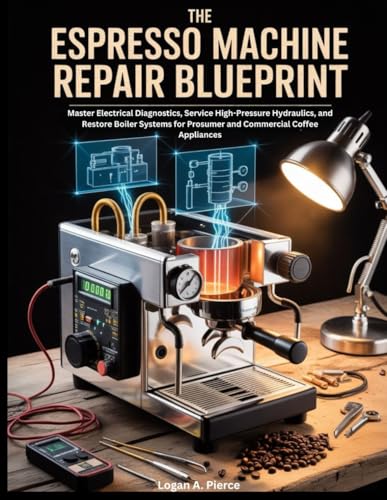
Shop NowIndependently published The Espresso Machine Repair Blueprint: Master Electrical Diagnostics, Service High-Pressure Hydraulics, and Restore Boiler Systems for Prosumer and ... Appliances (The DO-IT-YOURSELF Blueprint)
Independently published
The Espresso Machine Repair Blueprint: Master Electrical Diagnostics, Service High-Pressure Hydraulics, and Restore Boiler Systems for Prosumer and ... Appliances (The DO-IT-YOURSELF Blueprint)
$18.99 at AmazonGreat Value
Dimensions: 8.5 x 0.49 x 11 Inches Product Group: Book Binding: Paperback
Shop NowBrew Ratio LLC Coffee Under Pressure: A Guide to Espresso Machine Ownership

Dimensions: 6 x 0.72 x 9 inches Product Group: Book Binding: Paperback
Shop NowMajosta The Best Espresso Machine: What is The Best Espresso Machine for me?

Dimensions: 8.5 x 0.11 x 11 inches Weight: 0.39 Pounds Product Group: Book Binding: Paperback
Shop NowThe Home Espresso Machine Owner’s Handbook: A Practical User Guide for Setup, Grinding, Shot Timing, Pressure Troubleshooting, Milk Steaming, Cleaning, and Easy Café-Style Recipes

The Home Espresso Machine Owner’s Handbook: A Practical User Guide for Setup, Grinding, Shot Timing, Pressure Troubleshooting, Milk Steaming, Cleaning, and Easy Café-Style Recipes
$8.99 at AmazonFormats: Kindle eBook Product Group: Digital Ebook Purchas Binding: Kindle Edition
Shop Now



Write Your Review
No reviews yet. Be the first to share your experience!