

TL;DR — Your chef knife is rusting because iron in the blade steel is reacting with moisture and oxygen, and something is accelerating it: leaving the knife wet, running it through the dishwasher, prolonged contact with acidic or salty food, or storing it damp. “Stainless” steel resists rust but is not rustproof — it still contains iron and can develop pitting, especially high-carbon and Japanese blades. The fix is to dry the knife immediately after every use, hand wash only, and store it dry. Rust spots can be removed with baking soda, vinegar, or a rust eraser. For picks, see our best chef knife guide.
The HomeWhisk editorial team researches kitchen equipment by analyzing steel metallurgy, manufacturer specifications, and aggregated owner reports from major retailers and knife communities such as Reddit r/chefknives. This guide explains exactly why chef knives rust, whether a rusty knife is safe, how to remove rust, and how to prevent it from coming back.
Why Chef Knives Rust: The Actual Mechanism
Rust is iron oxide. It forms when the iron in blade steel reacts with water and oxygen, and the reaction speeds up dramatically in the presence of salt and acid. Every kitchen knife blade contains iron, which is why no knife is truly immune.
The confusing part is the word “stainless.” Stainless steel resists rust because it contains at least about 11 to 13 percent chromium, which forms a thin, self-repairing passive oxide layer over the surface that blocks moisture from reaching the iron underneath. But this layer only protects while it is intact and only slows corrosion — it does not prevent it. Three things overwhelm it:
- High-carbon steel: Many premium chef knives, especially Japanese ones, use high-carbon or semi-stainless steel prized for taking a razor edge. More carbon and less chromium means far less corrosion resistance, so these blades rust easily if neglected.
- Damaged passive layer: Scratches, abrasive scrubbing, and harsh detergents strip the chromium oxide film faster than it rebuilds.
- Chlorides and acids: Salt (sodium chloride) and acidic foods attack the passive layer directly, creating the small dark spots known as pitting.
So a rusting chef knife is almost always a combination of the steel it is made from and how it is being treated.
The Usual Culprits in Your Kitchen
Most rust traces back to a handful of everyday habits.
- The dishwasher. This is the number one cause of rusting knives, including “stainless” ones. Dishwashers combine prolonged moisture, high heat, and aggressive detergents full of chlorides — a perfect storm that strips the passive layer and pits the blade. Knives also bang against other items, chipping the edge. Manufacturers of quality knives universally warn against the dishwasher for exactly this reason.
- Leaving the knife wet. Standing water on a blade, especially in the sink or on a drying rack, gives iron the time and moisture it needs to oxidize.
- Acidic and salty foods. Cutting lemons, tomatoes, onions, or salted meat and then leaving the residue on the blade accelerates corrosion, particularly on high-carbon steel.
- Humid or damp storage. A knife stored wet in a closed block, or in a humid environment, will develop rust and even mildew inside the slot.
- Hard water and minerals. Mineral deposits can trap moisture against the steel and leave spots that look like the start of rust.
Is a Rusty Knife Dangerous, and Can It Be Saved?
A little surface rust is not a health emergency. Cooking on a lightly rusted blade will not poison you, and there is no meaningful tetanus risk from a kitchen knife used on food. However, rust is worth removing because it pits the surface, dulls and roughens the edge, can flake into food, and will keep spreading if left alone.
The good news: most rusty chef knives can be saved. Surface rust and light pitting come off with household methods. Only deep pitting that has eaten into the steel is permanent — and even then the knife usually remains usable once the active rust is removed and the blade is re-protected. If a blade is severely corroded, badly chipped, or the edge is compromised, that is the point to consider a replacement; see our best chef knife guide for durable options.
How to Remove Rust from a Chef Knife
Work from the gentlest method up, and always dry and oil the blade afterward.
1. Baking soda paste. Mix baking soda with a little water into a thick paste, spread it over the rust, let it sit about an hour, then scrub along the blade with a soft cloth or an old toothbrush. Rinse and dry. Best for light rust. 2. Lemon (or citric acid) and salt. Sprinkle salt on the rust, rub with a cut lemon, and let it sit five to ten minutes; the mild acid loosens the oxide. Rinse and dry thoroughly, since acid left on the blade can itself corrode. 3. White vinegar soak. For stubborn rust, soak the blade in white vinegar for five minutes to a few hours depending on severity, then scrub with a non-metal pad. The acetic acid dissolves iron oxide. Rinse and dry immediately. 4. Rust eraser or fine abrasive. A rubberized rust eraser (a block impregnated with fine abrasive) or very fine wet sandpaper removes spots and light pitting with light pressure along the blade. This is the tool many knife owners keep for maintenance. 5. The potato method. A cut potato contains oxalic acid; rubbing the rust with the cut face, sometimes dipped in baking soda or dish soap, lifts light rust. It is gentle and handy in a pinch.
Avoid harsh chlorine bleach, which corrodes steel further, and avoid heavy-grit sandpaper or steel wool that gouges the finish. After any method, wash, dry completely, and rub a thin film of food-safe mineral oil (or camellia oil for Japanese blades) over the blade.
How to Prevent Rust for Good
Prevention is easy once you know the mechanism.
- Hand wash only, immediately after use. Never the dishwasher. Wash with mild soap and warm water as soon as you are done.
- Dry completely, right away. This is the single most important habit. Wipe the blade dry with a towel before setting it down — do not let it air dry in a rack.
- Wipe acidic and salty food off promptly during and after cutting rather than letting residue sit.
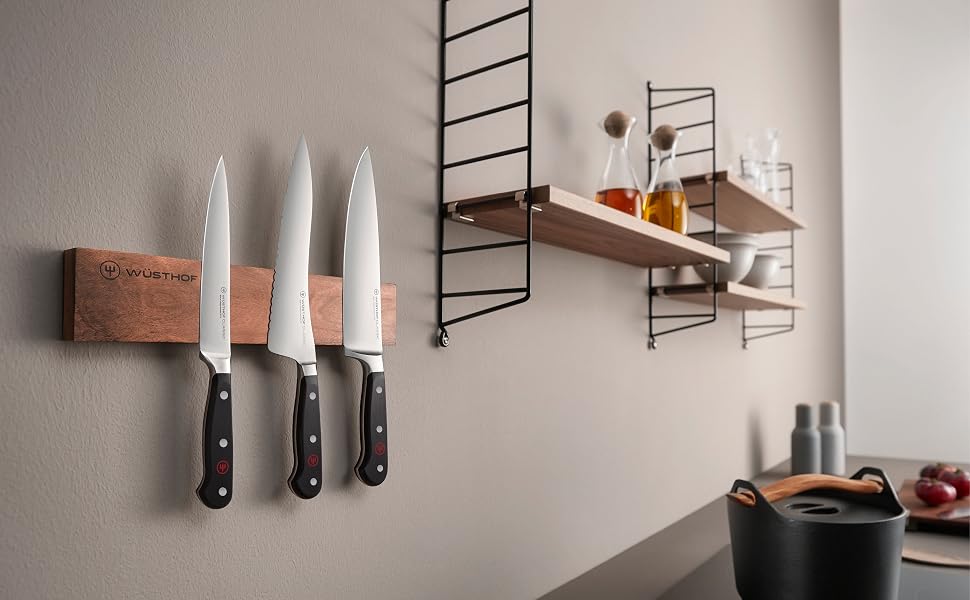
- Store dry and protected. Use a magnetic strip, a slotted block (fully dry), or edge guards. Never store a knife wet or sealed in a humid drawer.
- Oil high-carbon and Japanese blades. Apply a thin coat of food-safe mineral or camellia oil periodically, especially before long storage, to seal the steel from air and moisture.
- Choose the right steel if rust keeps winning. If you cannot commit to immediate drying, a higher-chromium stainless chef knife will be far more forgiving than a high-carbon or Japanese blade. Our best japanese chef knife and best chef knife under 100 guides note the steel type for each pick.
Frequently Asked Questions
Why do my stainless steel knives rust in the dishwasher?
Because “stainless” means rust-resistant, not rustproof, and the dishwasher defeats that resistance. Dishwasher detergents contain chlorides and are highly alkaline, which strip the protective chromium-oxide layer off the steel. Combine that with prolonged moisture, high drying heat, and knives knocking against other items, and even quality stainless blades develop rust spots and pitting. The heat and steam also loosen handle adhesives over time. The fix is simple: always hand wash knives and dry them immediately. No stainless knife is truly dishwasher-safe long term.
Is rust on a knife dangerous to my health?
Light surface rust is generally not dangerous. Rust is iron oxide, and cooking with a lightly rusted blade will not poison you; the tetanus concern associated with rusty metal does not meaningfully apply to a clean kitchen knife used on food. That said, you should remove it: rust pits and roughens the blade, dulls the edge, can flake into food, and spreads if ignored. Clean off active rust with baking soda or vinegar, dry and oil the blade, and keep using the knife.
How do I remove rust spots caused by the dishwasher?
Start gentle and escalate. Make a baking soda and water paste, apply it to the spots, wait about an hour, and scrub along the blade with a soft cloth or old toothbrush. If spots remain, rub with a cut lemon and salt or soak the blade in white vinegar for several minutes, then scrub with a non-metal pad. A rubberized rust eraser handles stubborn pitting. Rinse, dry the blade completely, and rub on a thin film of food-safe mineral oil. Then stop putting the knife in the dishwasher.
Which knives do not rust, or resist it best?
Nothing is fully rustproof, but higher-chromium stainless steels resist rust far better than high-carbon or Japanese blades. Steels with around 13 percent or more chromium, and some with added molybdenum or vanadium, hold their protective layer well and tolerate occasional neglect. The trade-off is that very rust-resistant steels can be slightly harder to sharpen to the same razor edge as high-carbon steel. If low maintenance is your priority, choose a full-stainless Western chef knife; see our best chef knife set and best knife sets guides for forgiving options.
Why does my high-carbon or Japanese knife rust so quickly?
High-carbon and many Japanese knives are made from steel with more carbon and less chromium, chosen because it takes and holds an exceptionally sharp edge. The cost of that performance is corrosion resistance — with little chromium, there is little protective oxide layer, so the iron reacts with moisture, acid, and salt almost immediately. These blades can spot with rust within minutes if left wet. They require diligent care: wipe dry during use, hand wash and dry at once, and oil the blade regularly. Many owners accept a thin natural patina, which actually helps protect the steel.
Does a bread knife or serrated knife rust the same way?
Yes, the same mechanism applies — any blade with iron in it can rust from moisture, acid, salt, and dishwasher detergent. Serrated blades like bread knives are a little harder to clean and dry in the tooth valleys, where moisture and food residue can linger and start corrosion. Dry them carefully along the serrations with the towel, and avoid the dishwasher just as with a chef knife. See our best bread knife guide for stainless options that stay low-maintenance.
The Bottom Line
Your chef knife is rusting because iron in the steel is meeting moisture, oxygen, salt, or acid, and “stainless” only slows that reaction rather than stopping it — high-carbon and Japanese blades are especially vulnerable. The dishwasher is the leading cause, followed by leaving the blade wet or storing it damp. Remove existing rust with baking soda, lemon and salt, vinegar, or a rust eraser, then dry and oil the blade. Prevent it by hand washing, drying immediately, storing dry, and oiling reactive steels. Get those habits right and even a delicate blade stays clean for years. For durable, easy-to-maintain options, see our best chef knife guide.

WÜSTHOF Classic 8-Inch Chef's Knife - Precision Forged German Steel for Professional Home Cooking
This precision-forged German chef's knife delivers 20% sharper cuts and twice the edge retention of previous models, making it ideal for daily chopping, mincing, and slicing tasks. Home cooks and professional chefs who want a reliable, balanced workhorse knife that holds its edge through heavy use should invest in this Classic series blade.
Pros and Cons
Pros
- German precision forging creates superior edge retention that stays sharp through months of regular kitchen use.
- The 8.5-ounce weight and ergonomic handle design reduce hand fatigue during extended meal prep.
- Backed by over 200 years of Solingen craftsmanship and strict German quality standards.
Cons
- The full bolster prevents sharpening the entire blade length on a standard whetstone without professional thinning.
- At 8.5 ounces, some cooks with smaller hands may find it heavier than Japanese-style chef's knives.

Zwilling
10-Inch Honing Steel for Kitchen Knife Maintenance and Edge Realignment
This honing steel uses an oval rod design that realigns knife edges with fewer strokes than traditional round rods, keeping your kitchen knives sharp between professional sharpening sessions. Home cooks who want to maintain their knife performance without learning complex sharpening techniques should consider this tool.
Pros and Cons
Pros
- Oval rod design requires fewer passes than traditional round honing steels to achieve the same edge realignment.
- Durable steel construction at 62 Rockwell hardness withstands regular contact with quality kitchen knives without deteriorating.
- Plastic handle with hanging hole makes storage simple in compact kitchens with limited drawer space.
Cons
- The product description contains a typo referring to the plastic handle, which may reflect less attention to quality control details.
- At this price point, some users may prefer a combination sharpening system that both hones and grinds rather than a honing-only tool.

Global Star Software
Mahjongg for Palm OS - Classic Tile Matching Game by Global Star Software for PC
This is a PC software product for installing Mahjongg solitaire on Palm OS handheld devices, not a kitchen product. It offers customizable tile sets and multiple difficulty levels for portable gaming on Palm-powered handhelds.
Pros and Cons
Pros
- Authentic mahjong solitaire experience optimized for Palm OS handhelds.
- Customizable graphics including tile sets and backgrounds for visual variety.
- Compatible with both color and grayscale Palm devices.
Cons
- Requires legacy Palm OS hardware that is no longer manufactured or widely supported.
- Not a kitchen product and provides no culinary functionality whatsoever.
WÜSTHOF Classic 8-Inch Chef's Knife - Precision Forged German Steel for Professional Home Cooking
WÜSTHOF Classic 8-Inch Chef's Knife - Precision Forged German Steel for Professional Home Cooking
This precision-forged German chef's knife delivers 20% sharper cuts and twice the edge retention of previous models, making it ideal for daily chopping, mincing, and slicing tasks. Home cooks and professional chefs who want a reliable, balanced workhorse knife that holds its edge through heavy use should invest in this Classic series blade.
$170.00 at AmazonEditors' Favorite
Brand Name: Wüsthof Set Name: Classic Manufacturer: Wüsthof UPC: 769194038526 670023145356 022934582438 Global Trade Identification Number: 00022934582438, 04002293158242, 40022931582422 Model Number: 4582-7/20 Manufacturer Part Number: 4582/20 Manufacturer Warranty Description: Lifetime warranty Item Type Name: Chef's Knives Unit Count: 16.0 Ounce Included Components: Cook's Knife Best Sellers Rank: #35,094 in Kitchen & Dining (See Top 100 in Kitchen & Dining) #103 in Chef's Knives ASIN: B00009ZK08 Blade Material Type: Stainless Steel Handle Material: Composite Is the item dishwasher safe?: No Material Type: Stainless Steel BladeLength: 8 Inches Item Weight: 0.24 Kilograms Item Length: 14 Inches Size: 8" Color: Black Blade Color: Silver Blade Edge: Chef's Knife Construction Type: Forged Blade Material: Stainless Steel Brand: Wüsthof
Shop NowZwilling 10-Inch Honing Steel for Kitchen Knife Maintenance and Edge Realignment
Zwilling
10-Inch Honing Steel for Kitchen Knife Maintenance and Edge Realignment
This honing steel uses an oval rod design that realigns knife edges with fewer strokes than traditional round rods, keeping your kitchen knives sharp between professional sharpening sessions. Home cooks who want to maintain their knife performance without learning complex sharpening techniques should consider this tool.
$59.95 at AmazonGreat Value
Material: Stainless Steel Brand: ZWILLING Color: Black/Stainless Steel Product Dimensions: 17"L x 9.8"W x 5.5"H Item Weight: 0.32 Kilograms Grit Type: Extra Fine Number of Items: 1 Manufacturer: ZWILLING J.A. HENCKELS Number of Packs: 1 Unit Count: 1.0 Count
Shop NowGlobal Star Software Mahjongg for Palm OS - Classic Tile Matching Game by Global Star Software for PC
Global Star Software
Mahjongg for Palm OS - Classic Tile Matching Game by Global Star Software for PC
This is a PC software product for installing Mahjongg solitaire on Palm OS handheld devices, not a kitchen product. It offers customizable tile sets and multiple difficulty levels for portable gaming on Palm-powered handhelds.
Check PriceASIN: B00005OL39 Customer Reviews: 4.0 4.0 out of 5 stars (6) 4.0 out of 5 stars Package Dimensions: 8.3 x 5.7 x 0.5 inches; 4.8 ounces Type of item: Video Game Rated: Everyone Item model number: GLS99509 Item Weight: 4.8 ounces Manufacturer: Global Star Software Date First Available: July 12, 2002
Shop Now


Write Your Review
No reviews yet. Be the first to share your experience!