

TL;DR — When people say their espresso machine is “sticking,” they almost always mean coffee grounds cling to the portafilter, the spent puck sticks in the basket, or the portafilter is hard to lock into the group head. The usual causes are a grind that is too fine, too much coffee (an overfilled basket), a wet or “soupy” puck from too much water hanging in the group, and worn or dirty group-head gaskets. Adjust dose and grind, keep the basket and screen clean, and replace an old gasket. For grinder picks that fix most of this at the source, see our best coffee grinder guide.
The HomeWhisk editorial team researches kitchen equipment by analyzing manufacturer specifications, mechanism design, and aggregated user reviews from major retailers and coffee communities like Reddit r/espresso and r/Coffee. “Sticking” is a catch-all complaint that covers several distinct problems, each with its own mechanism and fix. Below we separate them so you can diagnose exactly what is happening on your machine.
Are Coffee Grounds Naturally Sticky?
Yes — and understanding why explains most sticking problems. Freshly ground coffee carries a static electric charge created by friction and fracturing inside the grinder. Those charged particles repel each other and cling to metal and plastic, which is why grounds fly onto the counter, coat the portafilter walls, and stick to your tamper.
Coffee also contains oils (especially fresh, oily, dark-roast beans) that make fine particles tacky. Add the moisture in the group head after a shot, and you have three forces — static, oil, and water — all pulling grounds onto surfaces they should release from. Most of the fixes below are really about managing those three forces.
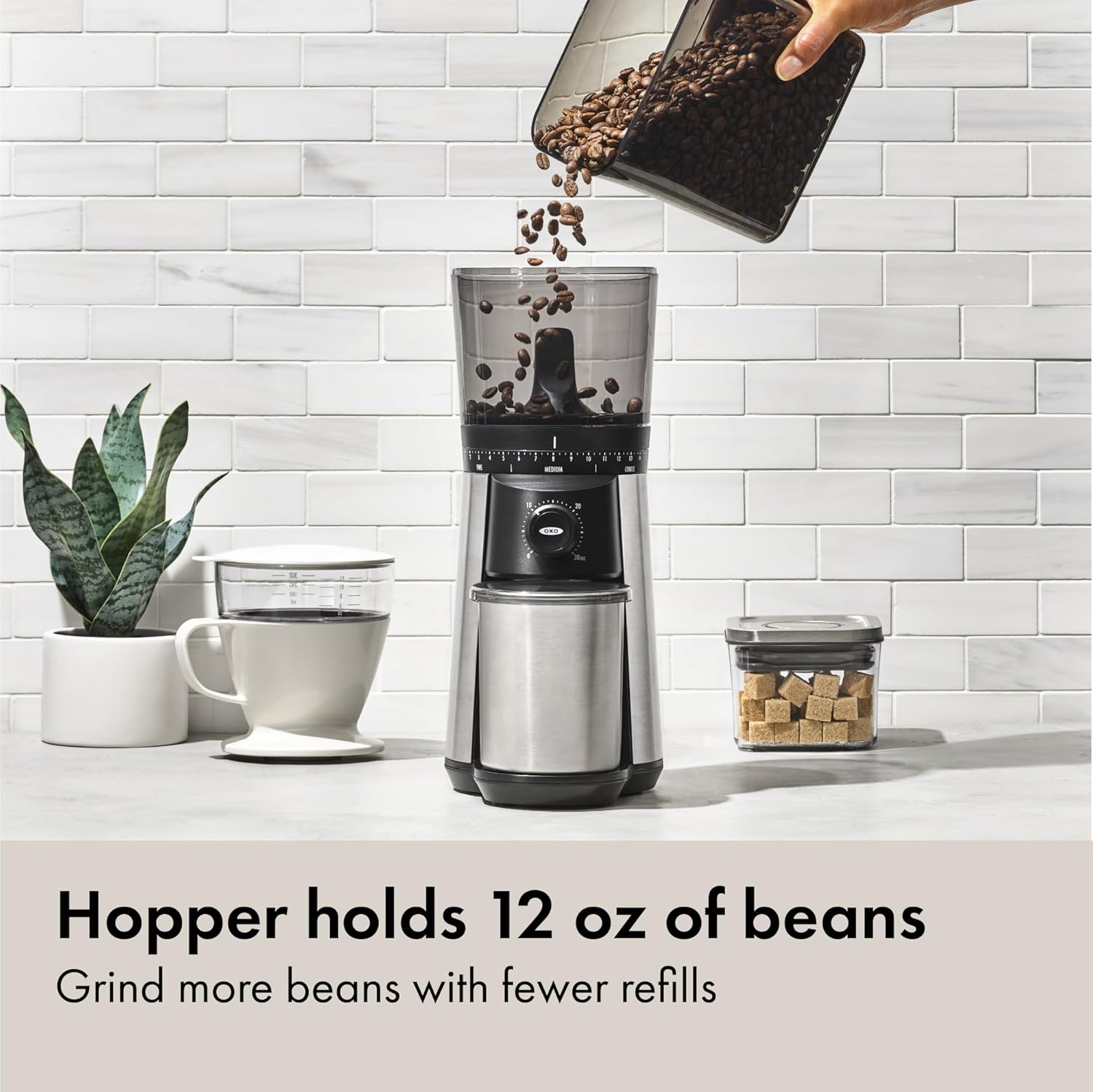
A well-designed grinder reduces static and clumping through anti-static features and better particle uniformity. If your current grinder throws grounds everywhere, that alone is a reason to look at our best coffee grinder guide.
Why the Coffee Puck Sticks in the Portafilter
The spent puck should knock out cleanly as a dry, cohesive disc. When it sticks, smears, or comes out as sludge, the cause is usually one of these:
- Grind too fine or dose too high. If you pack too much coffee into the basket, the puck expands during brewing and jams against the group-head screen, leaving no headspace. Reduce your dose by a gram or two so the puck has room.
- A “soupy” or wet puck. Some water always remains above the puck after extraction. On many machines this is normal and the puck stays wet; on others, excessive retained water means the group is not draining or the basket is over-dosed. A wet puck is more of a mess than a fault, but persistent flooding points to dose or drainage.
- Basket size mismatch. A single-wall basket sized for 18 grams will not release cleanly with 22 grams in it. Match your dose to the basket’s rated capacity.
If the puck sticks to the shower screen above rather than the basket below, the screen is likely dirty or the machine needs backflushing. A clogged screen also drives channeling and weak, uneven shots.
Why Grounds Stick to the Portafilter Basket
Grounds clinging to the basket walls before you even brew are almost entirely a static and grind-size issue.
- Static cling worsens with very fine, dry grinds and low humidity. The Ross Droplet Technique (RDT) — stirring a single drop of water into the beans before grinding, or misting them lightly — dramatically cuts static by grounding the charge. It is the single most effective fix for grounds scattering and sticking.
- Distribution habits. Tapping the portafilter hard on the counter to level grounds compacts fines against the walls and can crack the puck; gentle distribution or a distribution tool works better.
- Residual oils and old grounds. Oils build up and go rancid, making fresh grounds stick to a filmy surface. This is why cleaning matters (below).
Why the Portafilter Is Hard to Lock In or Feels Stuck
If the physical portafilter is hard to insert, rotate, or remove from the group head, the mechanism is different:
- Over-dosing. Too much coffee raises the puck so high it collides with the screen, and you have to force the handle past its normal stopping point. This is the most common cause of a portafilter that suddenly “won’t go in far enough.” Lower the dose.
- A worn or swollen group-head gasket. The rubber gasket that seals the portafilter against the group hardens and shrinks with age (typically every 1–2 years of regular use). A worn gasket makes the handle travel too far or lock loosely; a swollen one makes it stiff. Replacing it is a cheap, common fix.
- Dried coffee residue on the threads or lugs. Old grounds and oils gum up the bayonet fitting. Clean the group ring and the portafilter ears.
Portafilter and group-head frustration is also common on very cheap machines. If you are shopping in the entry tier, our best espresso machine under 200 guide flags models that lock in cleanly.
Why Grounds Stick to Tampers and Distribution Tools
- Tampers: Grounds stick to a tamper base because of static and oil, and because you may be tamping unevenly. A flat, polished or non-stick tamper base releases more cleanly, and wiping it occasionally helps. Tamp with firm, level pressure — roughly enough to compress the bed evenly; you do not need to press with bodyweight, and over-tamping does not meaningfully change extraction the way grind size does.
- Distribution tools (the spinning “leveler” and WDT tools): The two most common types are the spinning palm distributor that levels the top of the bed, and the WDT (Weiss Distribution Technique) tool with fine needles that break up clumps inside the basket. Grounds stick to both for the same static/oil reasons; a light misting (RDT) and periodic cleaning keep them clear. A WDT tool is especially effective at eliminating the clumps that cause channeling and uneven, “sticking” pucks.
How to Prevent Sticking: A Practical Routine
1. Dial in dose and grind first. Start with the basket’s rated dose, and coarsen the grind slightly if pucks are soupy or the portafilter is hard to lock. Grind consistency matters more than any single trick — an even grind resists channeling and produces a firm, releasable puck. 2. Use RDT — one small drop of water stirred into the beans — to kill static. 3. Add a WDT step to break up clumps before tamping. 4. Clean daily and weekly. Wipe the basket, rinse the portafilter, and wipe the shower screen after use. Weekly, backflush a machine with a solenoid valve using a blind (blank) basket and espresso-machine cleaner to clear oils behind the screen. Descale on the manufacturer’s schedule to prevent scale-related sticking and flow problems. 5. Replace the group gasket every 1–2 years, or sooner if the handle travels too far.
Consistent grind is the foundation of all of this. If your grinder is the weak link, see our best coffee grinder guide; for all-in-one convenience, our best coffee maker with grinder, best grind and brew coffee maker, and best coffee and espresso maker combo guides cover machines that grind and brew in one unit.
Frequently Asked Questions
Why does my coffee puck get stuck in the portafilter?
The puck usually sticks because the basket is over-dosed or the grind is too fine, so the puck expands and jams against the group-head shower screen with no room to release. It can also come out wet or “soupy” because water remains above the puck after the shot, which is normal on some machines. Reduce your dose by a gram or two, coarsen the grind slightly, and make sure the dose matches the basket’s rated capacity. A clean shower screen also helps the puck drop free.
Should I wash my portafilter, and how?
Yes. Rinse the portafilter and basket with hot water after each use to clear grounds and oils, and wipe the basket dry. A few times a week, remove the basket and scrub both with a soft brush and a little dish soap to cut the rancid oil film that makes fresh grounds stick. Every week or two, soak the basket and portafilter in a solution of espresso-machine cleaner (a percarbonate-based powder) to dissolve stubborn coffee oils, then rinse thoroughly.
Can I clean my portafilter with vinegar?
You can use diluted white vinegar for occasional descaling of mineral scale, but it is not ideal for coffee oils, and its smell and acidity can linger and taint flavor if not rinsed well. A dedicated espresso-machine cleaner (percarbonate-based) is more effective at dissolving the oils that cause sticking, and citric acid is a gentler descaler for limescale. If you do use vinegar, rinse repeatedly with hot water and run a few blank cycles before brewing again.
How hard should I tamp, and can I tamp too hard?
Tamp with firm, level pressure just enough to compress the coffee bed into an even puck; consistency and levelness matter far more than raw force. Once the bed is fully compacted, pressing harder does little — the grounds cannot compress much further, so extreme tamping mainly risks an uneven bed and sore wrists. Grind size, not tamp pressure, is the primary lever for controlling extraction and flow. Aim for the same repeatable, level tamp every time.
Why does my espresso come out watery or weak?
Watery, fast-running espresso usually means the grind is too coarse or the dose is too low, so water rushes through with little resistance and under-extracts. It can also come from channeling — water finding a crack in an unevenly distributed puck. Grind finer, verify your dose matches the basket, distribute evenly (a WDT tool helps), and tamp level. If problems persist across settings, check for a worn gasket or a scaled group head restricting proper pressure.
What is a distribution tool and do I need one?
A distribution tool evens out the coffee bed before tamping so water flows uniformly. The two common types are a spinning palm leveler that flattens the top of the bed to a set depth, and a WDT tool with fine needles that stir and break up clumps throughout the basket. You do not strictly need one, but a WDT tool in particular reduces clumping and channeling, which directly cuts the uneven, sticking pucks and inconsistent shots that frustrate most home baristas.
The Bottom Line
A “sticking” espresso machine is rarely broken — it is usually a dose, grind, static, or cleaning problem. Match your dose to the basket, coarsen the grind if the puck jams or floods, use a drop of water (RDT) and a WDT tool to tame static and clumping, and keep the basket, screen, and portafilter clean with regular backflushing. Replace the group gasket every year or two. The deepest fix, though, is grind quality: an even, consistent grind produces a firm, releasable puck and channel-free shots. For grinders and machines that make this easy, see our best coffee grinder, best coffee maker with grinder, and best espresso machine under 200 guides.

SHARDOR
Home Cappuccino and Latte Maker: SHARDOR 20-Bar Touchscreen Espresso Machine with Milk Frother
The SHARDOR espresso machine makes single or double espresso, cappuccinos, lattes, and flat whites, with touchscreen temperature control as its biggest advantage. It suits home or office coffee drinkers who want customizable espresso and steamed milk without a full-size commercial machine.
Pros and Cons
Pros
- The 20-bar pump and 1350W motor are designed to produce rich espresso flavor and aroma.
- The touchscreen includes single-cup, double-cup, manual, temperature, steam, and descaling controls.
- The compact stainless steel design takes up less counter space than a larger commercial-style machine.
- The included portafilter, cup filters, tamper with spoon, and water tank provide the core accessories for brewing.
Cons
- As a semi-automatic machine, it requires manual portafilter preparation and milk steaming.
- Regular descaling is necessary because brewing can stop when mineral buildup requires maintenance.

Spacekey
Home Espresso and Milk Drinks: Spacekey CM5080 20-Bar Compact Espresso Machine
The Spacekey CM5080 brews espresso, Americanos, cappuccinos, lattes, and mochas, with 45-second preheating as its biggest time-saving advantage. It suits home coffee drinkers who want a compact semi-automatic machine with PID temperature control, pre-soaking, and an adjustable steam wand.
Pros and Cons
Pros
- A 20-bar pump, pre-soak function, and PID control support more controlled espresso extraction.
- Fast 45-second preheating reduces waiting before brewing.
- Americano mode provides an additional black coffee option alongside espresso.
- The 360-degree adjustable steam nozzle is removable for easier cleaning.
Cons
- The manual steam wand and control dial require more involvement than a one-touch automatic machine.
- The machine may need a 10-second hot-water priming cycle before first use or if excess pressure prevents brewing.
The Best Deals This Week*
-
Home Cappuccino and Latte Maker
$99.99
($115)Save $15.01 -
Home Espresso and Milk Drinks
$99.99
($159.99)Save $60.00
*Deals are selected by our commerce team
FOSINSEE Espresso Knock Box, Walnut Tamping Station, 9 in 1 Coffee Organizer Box Fit for 51mm 54mm 58mm, Coffee Distributor & Portafilter, Espresso Accessories Kit

FOSINSEE
Espresso Knock Box, Walnut Tamping Station, 9 in 1 Coffee Organizer Box Fit for 51mm 54mm 58mm, Coffee Distributor & Portafilter, Espresso Accessories Kit
$70.99 at AmazonEditors' Favorite
Color: Natural wood Size: Large Dimensions: 9.84 x 8.93 x 3.7 Inches Weight: 5 pounds Product Group: Kitchen
Shop NowSHARDOR Home Cappuccino and Latte Maker: SHARDOR 20-Bar Touchscreen Espresso Machine with Milk Frother
SHARDOR
Home Cappuccino and Latte Maker: SHARDOR 20-Bar Touchscreen Espresso Machine with Milk Frother
The SHARDOR espresso machine makes single or double espresso, cappuccinos, lattes, and flat whites, with touchscreen temperature control as its biggest advantage. It suits home or office coffee drinkers who want customizable espresso and steamed milk without a full-size commercial machine.
$99.99 at AmazonGreat Value
Color: Silver Size: medium Dimensions: 8.14 x 5.12 x 15.27 inches Weight: 8.53 Pounds Product Group: Kitchen
Shop NowSpacekey Home Espresso and Milk Drinks: Spacekey CM5080 20-Bar Compact Espresso Machine
Spacekey
Home Espresso and Milk Drinks: Spacekey CM5080 20-Bar Compact Espresso Machine
The Spacekey CM5080 brews espresso, Americanos, cappuccinos, lattes, and mochas, with 45-second preheating as its biggest time-saving advantage. It suits home coffee drinkers who want a compact semi-automatic machine with PID temperature control, pre-soaking, and an adjustable steam wand.
$99.99 at AmazonColor: Silver Size: Silver Dimensions: 13.19 x 7.44 x 14.37 inches Product Group: Kitchen
Shop NowDe'Longhi Classic Espresso Machine, Milk Frother, Stainless Steel

Color: Metal Size: Medium Dimensions: 11.4 x 12 x 8.9 inches Weight: 9.28 Pounds Product Group: Kitchen Binding: Kitchen
Shop NowTENKER Espresso Machine 20 Bar, Cappuccino Machine with Automatic Milk Frother, Latte Machine in Stainless Steel Design, 1350W Touchscreen Coffee Maker for Home and Office (Silver)

TENKER
Espresso Machine 20 Bar, Cappuccino Machine with Automatic Milk Frother, Latte Machine in Stainless Steel Design, 1350W Touchscreen Coffee Maker for Home and Office (Silver)
$158.99 at AmazonColor: Silver Size: Medium Dimensions: 12.6 x 12.2 x 5.6 inches Weight: 2.8 Pounds Product Group: Kitchen
Shop Now






Write Your Review
No reviews yet. Be the first to share your experience!