

TL;DR — Yes, modern espresso machines are safe to use, but “safe” splits into two separate questions that get conflated online. The first is physical safety: pressure, heat, and scald risks, which well-made machines manage reliably through certified boilers, thermal cutouts, and relief valves. The second is material safety — whether plastics, seals, or metals leach anything into your coffee — and that’s where build quality and material choice matter. Stainless-steel, glass, and ceramic brewing paths minimize contact with plastic; budget machines with plastic boilers and tubing expose hot water and steam to polymer components. If minimizing plastic contact is your priority, choose a machine with a metal brew path and a good grinder. For picks, see our best coffee grinder guide.
The HomeWhisk editorial team researches kitchen equipment by analyzing manufacturer specifications, material composition, and aggregated owner feedback from major retailers and coffee communities like Reddit r/espresso and r/Coffee. The question “are espresso machines safe” most often comes from people worried about plastic exposure, lead, or pressure hazards, so this guide separates those concerns and addresses each with real mechanism and material detail.


SHARDOR
Home Cappuccino and Latte Maker: SHARDOR 20-Bar Touchscreen Espresso Machine with Milk Frother
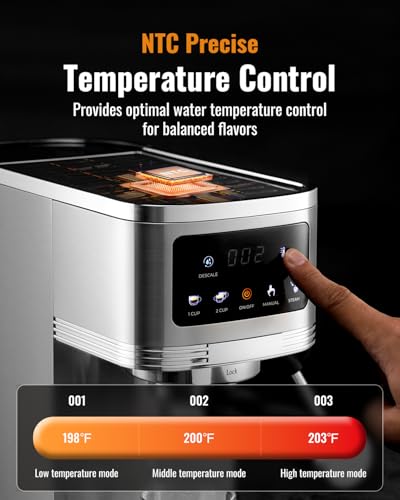
The SHARDOR espresso machine makes single or double espresso, cappuccinos, lattes, and flat whites, with touchscreen temperature control as its biggest advantage. It suits home or office coffee drinkers who want customizable espresso and steamed milk without a full-size commercial machine.
Pros and Cons
Pros
- The 20-bar pump and 1350W motor are designed to produce rich espresso flavor and aroma.
- The touchscreen includes single-cup, double-cup, manual, temperature, steam, and descaling controls.
- The compact stainless steel design takes up less counter space than a larger commercial-style machine.
- The included portafilter, cup filters, tamper with spoon, and water tank provide the core accessories for brewing.
Cons
- As a semi-automatic machine, it requires manual portafilter preparation and milk steaming.
- Regular descaling is necessary because brewing can stop when mineral buildup requires maintenance.

De'Longhi
One-Touch Lattes and Espresso: De'Longhi Magnifica Plus Automatic Espresso Machine
The De'Longhi Magnifica Plus grinds beans, brews 18 one-touch drinks, and automatically froths milk, making its biggest advantage an all-in-one coffee workflow. It suits households with varied drink preferences because four user profiles save customized sizes, intensities, and frequently selected recipes.
Pros and Cons
Pros
- The 18 one-touch recipes cover both hot espresso drinks and iced coffee from one machine.
- The integrated conical burr grinder provides 13 settings for adjusting extraction to different coffee beans.
- LatteCrema Hot technology froths dairy milk and milk alternatives with light, creamy, or dense foam settings.
- Four user profiles help multiple household members store individualized drink sizes and strengths.
Cons
- The supplied specifications do not include dimensions or weight, so buyers should confirm countertop and cabinet clearance before ordering.
- Users who only drink basic espresso may not benefit from the milk system, profiles, and extensive recipe selection.

Qipecedm
4oz Double Spout Espresso Cups Set of 2 by Qipecedm - Borosilicate Glass Shot Glasses with Handle
This set delivers two 4oz borosilicate glass espresso cups with double spouts that pour cleanly into two servings at once, eliminating drips on your counter. Buy it if you pull multiple shots daily and want dishwasher-safe durability without lead or chromium.
Pros and Cons
Pros
- Double spouts make leak-free pouring into two cups effortless and mess-free.
- Borosilicate glass handles thermal shock from espresso machines and microwaves without breaking.
- Dishwasher-safe design saves time on cleanup after morning coffee routines.
Cons
- No reviews yet means unverified real-world durability and pour accuracy.
- 4oz capacity may be too small for americanos or larger milk-based drinks.

AMZCHEF
Home Espresso, Cappuccino and Latte Brewing with AMZCHEF 20 Bar Espresso Machine
The AMZCHEF Espresso Machine makes espresso, cappuccinos, lattes, and Americanos at home, with 20-bar pressure and precise PID temperature control as its biggest advantage. It suits home coffee drinkers who want quick, customizable drinks in a compact machine with a large removable water tank.
Pros and Cons
Pros
- A 20-bar pressure system and 1350W heating system support flavorful espresso with quick preparation.
- Precise PID temperature control helps produce more consistent extraction from one drink to the next.
- The rotating stainless steel steam frother gives users control over milk texturing.
- Its compact design and removable 50oz tank suit apartments, offices, and smaller coffee stations.
Cons
- The semi-automatic design requires manual control of extraction and milk frothing.
- The product data does not provide dimensions or weight, so buyers cannot verify exact counter-space requirements.
The Best Deals This Week*
-
Home Cappuccino and Latte Maker
$99.99
($115)Save $15.01 -
One-Touch Lattes and Espresso
$899.95
($1,299.95)Save $400.00 -
Home Espresso, Cappuccino and Latte Brewing
$79.99
($129.99)Save $50.00
*Deals are selected by our commerce team
SHARDOR Home Cappuccino and Latte Maker: SHARDOR 20-Bar Touchscreen Espresso Machine with Milk Frother
SHARDOR
Home Cappuccino and Latte Maker: SHARDOR 20-Bar Touchscreen Espresso Machine with Milk Frother
The SHARDOR espresso machine makes single or double espresso, cappuccinos, lattes, and flat whites, with touchscreen temperature control as its biggest advantage. It suits home or office coffee drinkers who want customizable espresso and steamed milk without a full-size commercial machine.
Check price on AmazonThis machine solves the need for café-style espresso drinks at home or in an office without requiring a large commercial setup.
Its 20-bar pump, 1350W motor, and three temperature settings support rich espresso with adjustable extraction heat.
The compact stainless steel body suits smaller counters, while the 45-ounce removable tank reduces refilling. Product weight is not listed.
Manual brewing and steaming require more involvement than a fully automatic machine, and regular descaling is essential.
Best for home coffee drinkers who want touchscreen controls and adjustable espresso without a commercial-size appliance.
De'Longhi One-Touch Lattes and Espresso: De'Longhi Magnifica Plus Automatic Espresso Machine
De'Longhi
One-Touch Lattes and Espresso: De'Longhi Magnifica Plus Automatic Espresso Machine
The De'Longhi Magnifica Plus grinds beans, brews 18 one-touch drinks, and automatically froths milk, making its biggest advantage an all-in-one coffee workflow. It suits households with varied drink preferences because four user profiles save customized sizes, intensities, and frequently selected recipes.
Check price on AmazonThe De'Longhi Magnifica Plus is a super-automatic machine that replaces separate grinding, espresso brewing, and milk-frothing steps with one-touch preparation.
Its conical burr grinder has 13 settings, while 18 recipes and adjustable size and intensity controls reduce manual work without removing drink customization.
LatteCrema Hot automatically textures dairy milk and milk alternatives, with light, creamy, and dense foam options for different espresso drinks.
The machine has a silver finish and 3.5-inch color touchscreen, but the supplied data does not list construction materials, dimensions, or weight for evaluating countertop fit.
It is best for multi-user households that regularly prepare several espresso and milk-based drink styles.
Qipecedm 4oz Double Spout Espresso Cups Set of 2 by Qipecedm - Borosilicate Glass Shot Glasses with Handle
Qipecedm
4oz Double Spout Espresso Cups Set of 2 by Qipecedm - Borosilicate Glass Shot Glasses with Handle
This set delivers two 4oz borosilicate glass espresso cups with double spouts that pour cleanly into two servings at once, eliminating drips on your counter. Buy it if you pull multiple shots daily and want dishwasher-safe durability without lead or chromium.
Check price on AmazonThis set solves the problem of messy espresso pours and fragile cups that crack under heat. Two 4oz double-spouted glasses let you split a double shot cleanly.
Borosilicate glass resists thermal shock up to 300°F, so you can pour boiling water for americanos or milk for lattes without worry. Double spouts guide liquid into two servings without dripping.
Thick-walled construction keeps drinks hot while handles stay cool. Clear glass weighs enough to feel stable but light enough for daily use. Dishwasher and microwave safe.
Small 4oz capacity limits this set to espresso, cortados, and single-serving desserts. Larger drinks require a second pour or a bigger cup.
Best for home baristas who pull multiple shots daily and want durable, easy-to-clean glassware that performs under heat.
Pull double shots and pour them into two demitasse cups simultaneously using the dual spouts. The 4oz capacity holds exactly two servings of espresso or one serving with room for milk foam.
Use the clear glass to layer latte art or check crema thickness before serving. Microwave cold espresso for 20 seconds to reheat without transferring to another container.
Measure and pour salad dressings, melted butter, or sauces from the dual spouts for controlled plating. The handles stay cool even when filled with hot liquids straight from the stove.
AMZCHEF Home Espresso, Cappuccino and Latte Brewing with AMZCHEF 20 Bar Espresso Machine
AMZCHEF
Home Espresso, Cappuccino and Latte Brewing with AMZCHEF 20 Bar Espresso Machine
The AMZCHEF Espresso Machine makes espresso, cappuccinos, lattes, and Americanos at home, with 20-bar pressure and precise PID temperature control as its biggest advantage. It suits home coffee drinkers who want quick, customizable drinks in a compact machine with a large removable water tank.
Check price on AmazonThis compact semi-automatic machine prepares espresso, cappuccinos, lattes, and Americanos while reducing the need for frequent water refills.
The 20-bar Italian pump and PID temperature control support bold flavor, richer crema, and consistent extraction.
The stainless steel frothing system rotates 360°, while the compact design suits smaller kitchens; exact dimensions and weight are not provided.
Manual extraction timing and milk frothing require more involvement than a fully automatic coffee maker.
Best for home coffee drinkers who want customizable café-style drinks in a compact machine.
What “Safe” Means for an Espresso Machine
An espresso machine does three things that carry risk: it heats water to near boiling, it builds 9 to 15 bar of pressure, and it pushes pressurized water through a bed of grounds. Safety therefore has two layers that should not be confused.
Physical or operational safety covers whether the machine can burst, overheat, scald you, or fail electrically. Any machine sold in the US or EU with a certification mark (UL, ETL, CE) has been tested for pressure vessel integrity, thermal cutout behavior, and electrical safety. Certified machines have over-pressure relief valves that vent excess pressure back into the reservoir or drip tray rather than letting it build dangerously. The practical takeaway: buy a certified machine, descale it so pressure pathways don’t clog, and the pressure risk is extremely low.
Material or chemical safety covers whether the materials the water and coffee touch release anything into your drink. This is the concern most “non-toxic” searches are really about, and it’s largely a question of plastic versus metal and glass in the brew path.
The Real Concern: Plastic in the Brew Path
Most of the online worry about espresso machine safety traces back to plastic. The issue is that hot water and steam extract compounds from polymers far more aggressively than cold water does, so any plastic a machine uses in the boiler, internal tubing, group head, or portafilter is the part worth scrutinizing.
Budget espresso machines (roughly the under-200-dollar tier) commonly use thermoplastic boilers and internal hoses to cut cost. Hot water sits in and travels through these parts, which is why people seeking minimal plastic exposure prefer machines with stainless-steel or brass brew paths. Note that the difference is about long-term material preference, not that certified plastic boilers are inherently dangerous — food-grade, heat-rated polymers are tested for their intended use — but buyers who want to minimize polymer contact should look for metal boilers and tubing. See our best espresso machine under 200 guide for what’s realistic at that price, and our best coffee and espresso maker combo guide for multi-function picks.
BPA-free does not mean plastic-free. “BPA-free” only tells you bisphenol A was replaced, often with structurally similar compounds like BPS or BPS-free analogs; it says nothing about whether plastic is present. If your goal is to avoid plastic entirely, the spec to look for is “no plastic in the brew path,” a phrase some premium makers now advertise explicitly.
Stainless Steel, Glass, and Ceramic Brew Paths
For people who want the lowest-plastic coffee setup, the materials that matter are stainless steel, glass, and ceramic, because they are inert under brewing temperatures and don’t release polymers into hot water.
- Stainless steel boilers and tubing are standard on better machines and are the most durable, inert option. Higher-end espresso machines use stainless or brass boilers specifically because they tolerate heat and pressure without degrading.
- Brass and copper components are common in traditional Italian espresso machines. They conduct heat well and are durable; lead-leaching concerns are addressed by lead-free brass alloys used in modern food-contact parts, and reputable makers certify their brew-path components.
- Glass and ceramic appear mostly in manual brewers rather than espresso machines — pour over cones, French presses, and the carafes that come with some machines. Glass and ceramic are fully inert and easy to confirm as plastic-free. For a brewer with no plastic at all, manual pour over or French press is the simplest route.
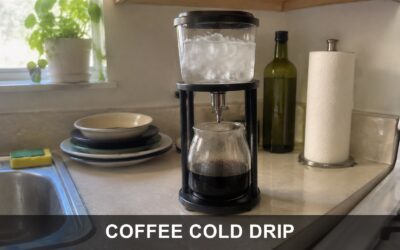
If avoiding plastic is the priority and you don’t need true 9-bar espresso, manual brewers sidestep the question entirely. Our best cold brew coffee maker guide covers a method that uses cold water and no pressurized plastic path at all.
Boilers, Seals, and What Actually Touches Your Coffee
Beyond the boiler, the parts worth thinking about are the seals (gaskets), the portafilter, and the shower screen. Most machines use food-grade silicone or EPDM rubber gaskets, which are heat-stable and widely considered safe for food contact at brewing temperatures; these are not the soft plastic components people worry about. Portafilters on better machines are chromed brass or stainless; budget machines sometimes use aluminum portafilters, which are fine for the brief contact time of a shot. The shower screen is usually stainless steel.
The bigger practical-safety issue than material chemistry is mineral scale buildup, which is also a health and longevity problem. Scale narrows the boiler and tubes, raises pressure, blocks the group head, and can harbor bacteria in a neglected machine. Regular descaling with citric-acid-based or manufacturer-recommended solution keeps the pressure path clear and the water clean — this is the single most important maintenance step for both safety and machine lifespan.
Lead-Free and “Non-Toxic” Claims: What to Look For
Searches for “lead-free espresso machines” and “non-toxic coffee maker” reflect a real concern but also a lot of confusion. Useful things to know:
- Lead is not a normal component of stainless steel, glass, or ceramic brew paths in modern machines. The historical concern was lead in brass fittings and in glazes on ceramic carafes; reputable modern makers use lead-free brass and lead-free glazes, and certified products are tested for heavy-metal migration.
- “Non-toxic” is a marketing term, not a regulated one. It usually means “less plastic and no obvious harmful materials,” but it has no legal standard. Rely on material specifics (stainless boiler, glass carafe, no plastic brew path) rather than the label.
- For accessories, food-grade silicone and stainless are the lower-worry options for milk frothing pitchers, tampers, and distribution tools.
If you want a built-in grinder so you control the whole bean-to-cup path, our best coffee maker with grinder and best grind and brew coffee maker guides cover machines where the brew path material is part of the buying decision.
Pressure and Heat: The Physical-Safety Side
The pressure that makes espresso is the part that sounds dangerous but, in practice, is well managed. A pump builds roughly 9 bar for brewing; over-pressure valves dump anything above that threshold so the boiler can’t over-pressurize. Thermal cutouts shut the heater off if it runs dry or overheats. The real scald and burn risks are user-side: steam wands jet steam at over 200 degrees, portafilters and group heads are hot metal, and pulling a portafilter off a pressurized group head is dangerous — always run a quick cooling flush and never disassemble under pressure.
The electrical safety baseline is the certification mark and an intact, undamaged cord. If a machine’s cord is frayed or the case is cracked, stop using it. These are the genuinely dangerous failure modes, and they’re rare in maintained, certified machines.
Frequently Asked Questions
Are espresso machines safe to use every day?
Yes. Certified modern machines are designed for daily home use, with pressure relief valves, thermal cutouts, and electrical safety testing managing the real hazards of heat and pressure. The main daily-use risks are user-side — steam-wand burns and hot-metal contact — not catastrophic machine failure. Keep the machine descaled so pressure pathways stay clear, inspect the cord periodically, and let hot parts cool before handling. A well-maintained certified machine is safe for daily use over many years.
Are coffee makers toxic because of plastic?
This is the most common version of the question, and the honest answer is nuanced. Food-grade, heat-rated plastics used in certified machines are tested for their intended hot-water use, but hot water and steam do extract more from polymers than cold water, which is why people who want to minimize plastic exposure prefer machines with stainless-steel or brass brew paths. “BPA-free” only means a specific chemical was avoided, not that the part is plastic-free. If your goal is to avoid plastic, look for “no plastic in the brew path” rather than the BPA-free label.
What’s the healthiest coffee maker with no plastic?
For a fully plastic-free brew path, manual methods are the easiest to confirm: glass or ceramic pour over, glass French press, or a stainless or ceramic percolator all keep hot water in inert materials. For true espresso, machines with stainless-steel or brass boilers and tubing minimize plastic contact, though most still use some polymer gaskets and internal fittings. Glass and ceramic are inert and easy to verify as plastic-free, so manual brewers are the simplest route for zero-plastic coffee.
Is Aarke’s coffee maker plastic-free?
Aarke markets its drip coffee maker and coffee press around stainless-steel construction and a reduced-plastic design philosophy, which appeals to buyers seeking a metal-forward brew path. Whether a specific model is fully plastic-free depends on the part in question — gaskets and some internal fittings are typically polymer even on metal-bodied machines. The practical approach: check the brew path (boiler, tubing, portafilter or shower head) rather than the exterior, since the brew path is what hot water actually contacts. Our best coffee maker with grinder guide covers similar material-focused picks.
Do espresso machines leach lead?
Lead is not a normal component of the stainless steel, glass, or ceramic used in modern brew paths. The historical concern was lead in brass fittings and ceramic glazes; reputable modern makers use lead-free brass and lead-free glazes, and certified food-contact parts are tested for heavy-metal migration. If you want certainty, buy a certified machine from an established brand and avoid unbranded, uncertified imports whose material composition is unverified. The lead question is reasonable but, for major-brand certified machines, the answer is that modern materials address it.
How do I keep an espresso machine safe and clean?
Descale regularly with citric-acid-based or manufacturer-recommended solution so scale doesn’t clog the boiler, group head, and pressure valve; backflush with cleaner if the machine has a three-way valve; wipe the steam wand and purge it after each milk drink; and use a clean, dry basket. Mineral scale is the biggest real threat to both safety and longevity because it raises pressure and can harbor bacteria in a neglected machine. Replace hardened gaskets when they leak, and stop using the machine if the cord or housing is damaged.
The Bottom Line
Espresso machines are safe when bought certified and maintained, and the online “are they safe” question really separates into two issues. Physical safety — pressure, heat, scalds — is well managed by relief valves, thermal cutouts, and certification testing, with user-side burns being the main practical risk. Material safety is mostly about plastic in the brew path: budget machines use plastic boilers and tubing, while stainless-steel and brass brew paths minimize polymer contact, and glass or ceramic manual brewers avoid it entirely. “BPA-free” is not the same as plastic-free, and “non-toxic” is marketing rather than a standard, so rely on material specifics. The most important real-world safety step is descaling, which keeps pressure pathways clear and water clean. For picks oriented to material quality and a good grinder, see our best coffee grinder, best espresso machine under 200, and best coffee and espresso maker combo guides.



Write Your Review
No reviews yet. Be the first to share your experience!