

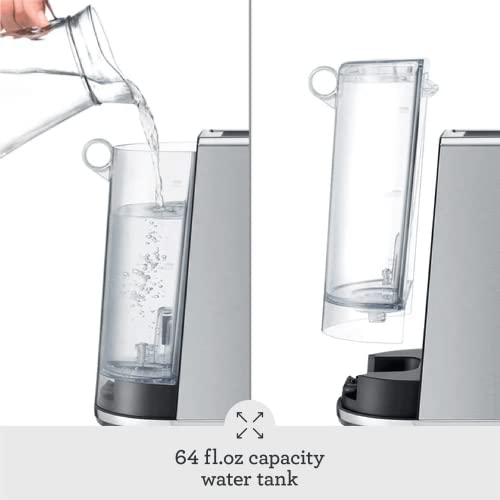
TL;DR — Breville is the enthusiast favorite: refined semi-automatic machines with precise control, a built-in grinder on many models, and excellent shot quality that lets you learn real espresso craft. De’Longhi offers a broad range from affordable manual machines to fully automatic bean-to-cup units — great value and convenience, especially its automatics. Choose Breville to learn/dial-in espresso, De’Longhi for value or push-button automatic convenience. Craft vs range/convenience is the core trade. The HomeWhisk team compared them against aggregated feedback. For picks, see our best espresso machine under 200 guide.
The HomeWhisk editorial team researches kitchen equipment by analyzing manufacturer specifications, features, and aggregated user reviews from major retailers and coffee communities. Our recommendations are based on what the products actually deliver, not what brands promise.

Breville and De’Longhi are two of the most popular home espresso brands, taking somewhat different approaches. Here’s how they compare and which fits you. For picks, see our best espresso machine under 200 and best coffee and espresso maker combo guides.
De'Longhi
One-Touch Espresso, Coffee & Americano at Home: De'Longhi Magnifica Start Super-Automatic Espresso Machine with Manual Milk Frother
The Magnifica Start grinds whole beans with a 13-setting conical burr grinder and pulls espresso, coffee, or americano at the press of a single button, so a cafe-style drink takes seconds instead of a multi-step manual routine. It suits home baristas who want fresh-ground espresso daily without learning dosing and tamping, and who still want hands-on control over milk texture for lattes and cappuccinos.
Pros and Cons
Pros
- Bean-to-cup operation in one machine replaces a standalone grinder, portafilter, and tamper.
- 13 grind settings plus adjustable intensity cover a wide range of bean varieties and taste preferences.
- Manual steam frother gives real control over foam texture instead of a fixed automatic pour.
- Dishwasher-safe removable components keep daily maintenance short.
Cons
- The frother is manual, so milk drinks require steaming and pouring yourself rather than a one-touch latte button.
- There is no built-in cappuccino or latte program, so milk-based recipes take more steps than the three automatic drinks.

Breville
Compact Home Espresso Brewing with Breville Bambino Plus Espresso Machine
The Breville Bambino Plus makes cafe-style espresso and automatic microfoam milk quickly, with ThermoJet heating reaching extraction temperature in 3 seconds. It suits home baristas who want adjustable lattes and compact countertop use without sacrificing precise temperature control.
Pros and Cons
Pros
- The ThermoJet heating system reaches the target extraction temperature in 3 seconds.
- Automatic microfoam milk texturing supports customized lattes and latte art.
- The compact 7.7-inch width saves valuable countertop space.
- The 54mm portafilter, low-pressure pre-infusion, and PID control support balanced espresso extraction.
Cons
- As a semi-automatic machine, it requires users to grind, dose, and tamp coffee themselves.
- Its 110 to 120-volt, 1560-watt design is intended for compatible household electrical systems.

Nespresso
Fast Coffee and Espresso Brewing: Nespresso Vertuo Up by DeLonghi with 6 Cup Sizes
The Nespresso Vertuo Up brews six coffee and espresso sizes in three seconds, with a movable 47-ounce tank that adapts to different counter layouts. It suits coffee drinkers who want fast hot or concentrated iced drinks with app-based size and temperature controls.
Pros and Cons
Pros
- The machine covers espresso through 18-ounce coffee without requiring separate brewers.
- Its three-second readiness makes it practical for time-sensitive mornings.
- The dedicated concentrated setting improves convenience for preparing iced coffee.
- The adjustable 47-ounce tank offers useful placement flexibility on crowded counters.
Cons
- Cup size and temperature customization relies on the Nespresso Smart App rather than only onboard controls.
- The provided product data does not specify dimensions, weight, or materials, so buyers should verify counter clearance before ordering.

De'Longhi
Hands-On Espresso, Cold Brew and Milk Drinks: De'Longhi La Specialista Touch Espresso Machine
The De'Longhi La Specialista Touch grinds, doses, brews, and froths coffee while guided Bean Adapt technology helps deliver consistent espresso extraction. It suits home baristas who want hands-on control with automatic guidance, customizable recipes, and cold brew preparation.
Pros and Cons
Pros
- Bean Adapt technology provides visual guidance for adjusting grind, dose, pre-infusion, and brewing temperature.
- The automatic steam wand supports both convenient milk frothing and manual microfoam control for latte art.
- Cold Extraction Technology adds a fast way to make cold brew at home.
- The 10 customizable drink recipes accommodate varied coffee preferences without requiring separate equipment.
Cons
- The semi-automatic design still requires hands-on grinding, tamping, and brewing steps.
- The product data does not specify machine dimensions or weight, which may matter when planning counter space.
De'Longhi One-Touch Espresso, Coffee & Americano at Home: De'Longhi Magnifica Start Super-Automatic Espresso Machine with Manual Milk Frother
De'Longhi
One-Touch Espresso, Coffee & Americano at Home: De'Longhi Magnifica Start Super-Automatic Espresso Machine with Manual Milk Frother
The Magnifica Start grinds whole beans with a 13-setting conical burr grinder and pulls espresso, coffee, or americano at the press of a single button, so a cafe-style drink takes seconds instead of a multi-step manual routine. It suits home baristas who want fresh-ground espresso daily without learning dosing and tamping, and who still want hands-on control over milk texture for lattes and cappuccinos.
$649.95 at AmazonEditors' Favorite
Color: Manual Frother, Silver Dimensions: 17 x 9.25 x 14 inches Weight: 19.62 pounds Product Group: Kitchen Binding: Kitchen
Shop NowBreville Compact Home Espresso Brewing with Breville Bambino Plus Espresso Machine
Breville
Compact Home Espresso Brewing with Breville Bambino Plus Espresso Machine
The Breville Bambino Plus makes cafe-style espresso and automatic microfoam milk quickly, with ThermoJet heating reaching extraction temperature in 3 seconds. It suits home baristas who want adjustable lattes and compact countertop use without sacrificing precise temperature control.
$498.49 at AmazonGreat Value
Color: Brushed Stainless Steel Size: One Size Dimensions: 7.6 x 12.5 x 12.2 Inches Weight: 11 Pounds Product Group: Kitchen Binding: Kitchen
Shop NowNespresso Fast Coffee and Espresso Brewing: Nespresso Vertuo Up by DeLonghi with 6 Cup Sizes
Nespresso
Fast Coffee and Espresso Brewing: Nespresso Vertuo Up by DeLonghi with 6 Cup Sizes
The Nespresso Vertuo Up brews six coffee and espresso sizes in three seconds, with a movable 47-ounce tank that adapts to different counter layouts. It suits coffee drinkers who want fast hot or concentrated iced drinks with app-based size and temperature controls.
$168.96 at AmazonColor: Graphite Dimensions: 15.4 x 8.7 x 10.1 inches Weight: 9 pounds Product Group: Kitchen Binding: Kitchen
Shop NowDe'Longhi Hands-On Espresso, Cold Brew and Milk Drinks: De'Longhi La Specialista Touch Espresso Machine
De'Longhi
Hands-On Espresso, Cold Brew and Milk Drinks: De'Longhi La Specialista Touch Espresso Machine
The De'Longhi La Specialista Touch grinds, doses, brews, and froths coffee while guided Bean Adapt technology helps deliver consistent espresso extraction. It suits home baristas who want hands-on control with automatic guidance, customizable recipes, and cold brew preparation.
$999.95 at AmazonColor: Stainless Steel Size: 10 Drink Presets Dimensions: 14.37 x 11.22 x 15.87 inches Weight: 23 pounds Product Group: Kitchen Binding: Kitchen
Shop NowThe Core Difference: Enthusiast Craft vs Broad Range
The comparison comes down to Breville’s enthusiast-focused semi-automatics versus De’Longhi’s broad range including automatics.
Breville is the enthusiast favorite for semi-automatic espresso. Its appeal:
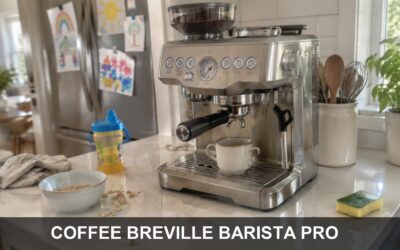
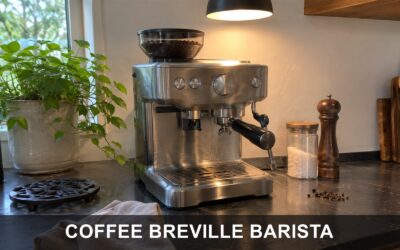
- Refined semi-automatic machines (like the popular Barista series) that let you control the shot — grind, dose, tamp, and extraction — to pull real, café-quality espresso.
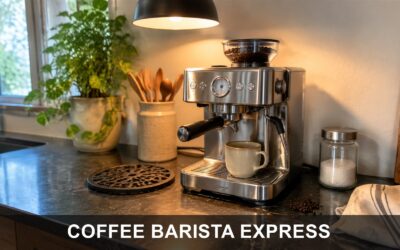
- Built-in grinder on many models (the “all-in-one” Barista Express and similar), integrating grinding and brewing.
- Excellent shot quality and control — precise temperature (PID on higher models), good steam wands for milk, and the ability to dial in and improve your espresso.
- Great for learning the craft — you develop barista skills and get rewarded with better espresso.
- Generally mid-to-premium priced.
See our best espresso machine under 200 guide.
De’Longhi offers a broad range from manual to fully automatic. Its appeal:
- Wide lineup — from affordable entry manual/semi-automatic machines to fully automatic bean-to-cup machines that grind, dose, tamp, brew, and even froth at the push of a button.
- Value — strong price-to-features, with accessible entry machines and well-priced automatics.
- Convenience (automatics) — bean-to-cup and super-automatic models make espresso and milk drinks with minimal effort (great for hands-off convenience).
- Broad availability across price points.
The trade: Breville leans toward enthusiast semi-automatics with control and craft (learn and dial in great espresso), while De’Longhi offers a broad range including convenient automatics and strong value. This drives the comparison. Our best espresso machine under 200 and best coffee and espresso maker combo guides cover both.
How They Compare
Here’s how Breville and De’Longhi stack up across what matters.
Espresso quality and control:
- Breville: the enthusiast winner — refined semi-automatics with precise control (grind, dose, temp, extraction) that let you pull and improve café-quality shots. Rewards skill.
- De’Longhi: good espresso across its range; its semi-automatics are capable, and its automatics make consistent (if less hands-on) shots. Less focused on manual craft than Breville’s Barista line.
Convenience:
- De’Longhi: the winner for hands-off — its fully automatic bean-to-cup machines make espresso and milk drinks at the push of a button, ideal if you want great coffee without learning barista skills.
- Breville: its semi-automatics require you to do the work (grind, tamp, steam) — more involved but more rewarding.
Built-in grinder:
- Breville: many models include an integrated grinder (all-in-one Barista Express, etc.).
- De’Longhi: automatics have built-in grinders (bean-to-cup); some manual models don’t.
Range and price:
- De’Longhi: broader range and often better value — from cheap entry machines to premium automatics.
- Breville: more focused on quality semi-automatics; mid-to-premium pricing.
Milk/steam:
- Breville: good manual steam wands for latte art and control.
- De’Longhi: automatic frothing on many machines (convenient) or manual wands on others.
Learning curve:
- Breville: steeper but rewarding — you learn espresso craft.
- De’Longhi automatics: minimal — push-button ease.
In short: Breville wins for enthusiast craft and control; De’Longhi wins for range, value, and automatic convenience. Our best espresso machine under 200 guide covers options.
Which Should You Buy?
Match the brand to whether you want to learn espresso or want push-button convenience.
Buy Breville if you:
- Want to learn and dial in real espresso — control grind, dose, tamp, and extraction for café-quality shots.
- Value precise control and shot quality (PID temperature, good steam wand).
- Want an all-in-one with a built-in grinder (Barista Express and similar).
- Enjoy the craft and are willing to put in a little practice for better results.
- Want an enthusiast-grade semi-automatic.
See our best espresso machine under 200 guide.
Buy De’Longhi if you:
- Want push-button convenience — a fully automatic bean-to-cup machine that makes espresso and milk drinks with minimal effort.
- Want value — strong price-to-features across a broad range.
- Prefer not to learn barista skills and just want good coffee easily (automatics).
- Want options from affordable entry machines to premium automatics.
- Value convenience and consistency over hands-on craft.
See our best coffee and espresso maker combo guide.
How to decide:
- Learn espresso, want control and craft → Breville (semi-automatic, e.g. Barista series).
- Push-button convenience, minimal effort → De’Longhi automatic (bean-to-cup).
- Best value or entry-level → De’Longhi’s broad range.
- Enthusiast shot quality with a built-in grinder → Breville all-in-one.
The honest verdict: Breville is the choice if you want to learn espresso and pull café-quality shots with control — its semi-automatics (especially the built-in-grinder Barista models) are enthusiast favorites that reward skill. De’Longhi is the choice for value or hands-off convenience — its fully automatic bean-to-cup machines make great coffee at the push of a button, and its range offers something at most price points. If you enjoy the craft, Breville; if you want convenience or value, De’Longhi. Our best espresso machine under 200 and best coffee and espresso maker combo guides cover picks, and our how-to-use-an-espresso-machine guide covers technique.
Frequently Asked Questions
Is Breville or De’Longhi better for espresso?
It depends on what you want. Breville is better for enthusiasts who want to learn and dial in real espresso — its refined semi-automatic machines (like the Barista series, many with built-in grinders) offer precise control and excellent shot quality, rewarding skill with café-quality results. De’Longhi is better for value and convenience — it offers a broad range from affordable manual machines to fully automatic bean-to-cup units that make espresso and milk drinks at the push of a button. Choose Breville to learn espresso craft, De’Longhi for push-button convenience or budget-friendly options.
What’s the difference between Breville and De’Longhi espresso machines?
Breville focuses on enthusiast semi-automatic machines that give you control over the shot (grind, dose, tamp, extraction) for café-quality espresso, with many models including a built-in grinder — great for learning the craft. De’Longhi offers a broader range, from affordable manual/semi-automatic machines to fully automatic bean-to-cup units that make espresso and milk drinks at the push of a button — emphasizing value and convenience. So Breville leans toward hands-on craft and shot quality, while De’Longhi spans from budget machines to convenient automatics. Breville is for dialing in espresso; De’Longhi for range and ease.
Are Breville espresso machines good for beginners?
Yes, with a caveat — Breville’s semi-automatic machines (like the Barista Express) are popular with beginners who want to learn espresso, because they’re all-in-one (built-in grinder) and give you the control to develop skills. But they do require learning: grinding, dosing, tamping, and steaming milk take practice. If you want to learn the craft and improve, Breville is a rewarding beginner-to-enthusiast choice. If you’d rather skip the learning curve entirely, a De’Longhi fully automatic (bean-to-cup) machine makes espresso at the push of a button with no barista skills needed. Match it to whether you want to learn or just brew.
What is a bean-to-cup (automatic) espresso machine?
A bean-to-cup (fully automatic or super-automatic) machine does everything at the push of a button — it grinds the beans, doses, tamps, brews the espresso, and often froths milk automatically, requiring no barista skills. De’Longhi is well known for these. The appeal is convenience and consistency: great coffee with minimal effort and no learning curve. The trade-off is less hands-on control than a semi-automatic (like Breville’s Barista series), so enthusiasts who want to craft and dial in shots may prefer semi-automatic. For push-button ease, bean-to-cup automatics are ideal; for craft, semi-automatics. De’Longhi’s automatics are a top convenience choice.
Does Breville or De’Longhi have a built-in grinder?
Both offer models with built-in grinders, but in different ways. Many Breville machines (like the Barista Express and similar all-in-one models) include an integrated grinder alongside a semi-automatic brewing setup, so you grind fresh and pull your own shots. De’Longhi’s fully automatic bean-to-cup machines include built-in grinders as part of their push-button operation (grind, brew, froth automatically), while some of its manual/entry machines don’t have a grinder. So for a semi-automatic with a grinder to learn on, look at Breville’s all-in-one models; for an automatic with a grinder, De’Longhi’s bean-to-cup machines. Check the specific model.
Which brand is better value, Breville or De’Longhi?
De’Longhi generally offers broader value — it spans from affordable entry-level manual machines to well-priced fully automatic bean-to-cup units, giving strong price-to-features across many budgets. Breville is more mid-to-premium, focused on refined semi-automatics with excellent shot quality and control (often with built-in grinders), so you pay more but get enthusiast-grade craft and results. So for pure value or an affordable entry point, De’Longhi has more options; for enthusiast quality and control (justifying a higher price), Breville. Match the value question to whether you want budget/convenience (De’Longhi) or craft and shot quality (Breville).
Related buying guides: best coffee grinder, best coffee maker with grinder and best grind and brew coffee maker.
The Bottom Line
Breville and De’Longhi take different approaches to home espresso. Breville is the enthusiast favorite — refined semi-automatic machines (many with built-in grinders, like the Barista series) that give precise control and excellent shot quality, letting you learn and dial in café-quality espresso. De’Longhi offers a broad range from affordable manual machines to fully automatic bean-to-cup units that make espresso and milk drinks at the push of a button, emphasizing value and convenience. Choose Breville to learn espresso craft and pull the best shots; choose De’Longhi for push-button automatic convenience or budget-friendly options. If you enjoy the craft, Breville; if you want ease or value, De’Longhi. See our best espresso machine under 200 and best coffee and espresso maker combo guides.


Write Your Review
No reviews yet. Be the first to share your experience!