

TL;DR — Wusthof and J.A. Henckels are both premium German knife makers from Solingen with very similar forged, full-bolster knives and comparable steel. Wusthof is slightly more premium and consistent (single company, one main line quality). Henckels is a broader brand with a confusing lineup — its top forged lines (Zwilling Pro/Four Star) rival Wusthof, but cheaper “International” lines are stamped and more basic. Choose Wusthof for consistency, or a premium Zwilling Henckels line for a comparable knife. The HomeWhisk team compared them against aggregated feedback. For picks, see our best chef knife guide.
The HomeWhisk editorial team researches kitchen equipment by analyzing manufacturer specifications, steel, and aggregated user reviews from major retailers and Reddit r/chefknives to produce this guide. Our recommendations are based on what the products actually deliver, not what brands promise.
Wusthof and Henckels are the two classic German knife brands, both from Solingen (“the City of Blades”), and they’re constantly compared. Here’s how they stack up and which to buy. For picks, see our best chef knife and best knife brands guides.
The Core Difference: Consistency vs a Broad Lineup
Both make excellent German knives; the key difference is Wusthof’s consistency versus Henckels’ broader, more confusing range.
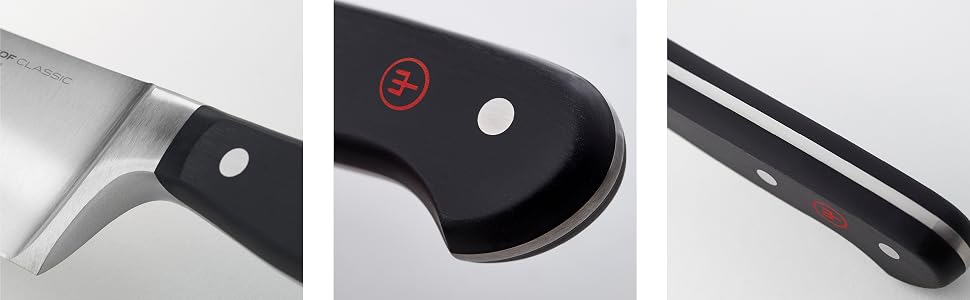
Both are premium German (Solingen) knife makers. They share the German knife tradition: forged, full-bolster, full-tang knives with similar high-carbon stainless steel (X50CrMoV15-class, ~HRC 56-58), built for durability, heft, and easy maintenance. Their comparable flagship lines cut, feel, and perform very similarly — this is the key point: at the top, they’re near-equals.
Wusthof is the more consistent brand. As essentially one focused company:
- Its main line (Classic) is a well-defined, forged, premium workhorse with consistent quality.
- Fewer confusing tiers — you largely know what you’re getting.
- Refined fit and finish, strong reputation and consistency.
Henckels has a broader, more confusing lineup. J.A. Henckels spans multiple tiers under different names, which trips people up:
- Zwilling J.A. Henckels (the premium branding) includes top forged lines like Zwilling Pro and Four Star that rival Wusthof directly — excellent forged knives.
- J.A. Henckels International (a separate, cheaper branding) includes stamped, more basic lines (like the popular budget sets) that are NOT the same quality as the forged Zwilling lines.
- The two “Henckels” logos (two figures vs one figure) signal different tiers, which many buyers don’t realize.
The trade: Wusthof offers consistency and a clear premium line, while Henckels offers a broader range where the top (Zwilling) lines rival Wusthof but the cheaper (International) lines are more basic. The key is knowing which Henckels line you’re buying. Our best chef knife and best knife brands guides cover both.
How They Compare
Here’s how Wusthof and Henckels stack up, comparing their premium forged lines.
Steel and sharpness:
- Comparable — both use similar German stainless (X50CrMoV15-class) at similar hardness, taking a keen edge and sharpening easily with the same tools. No meaningful edge difference between their forged lines.
Construction (premium lines):
- Both forged, full-bolster, full-tang on their flagship lines (Wusthof Classic; Zwilling Pro/Four Star). Very similar substantial German build.
Consistency and lineup:
- Wusthof: the winner — clearer, more consistent lineup; less risk of accidentally buying a lesser tier.
- Henckels: broader and more confusing — you must distinguish premium Zwilling (forged, rivals Wusthof) from cheaper International (stamped, basic).
Feel and design:
- Both: heavy, balanced German workhorses. Subtle differences in handle shape, bolster, and blade profile — largely preference. Some prefer Wusthof’s edge geometry (Wusthof shifted to a slightly more acute ~14° edge), others prefer Henckels’ feel.
Price:
- Comparable at the premium level (Wusthof Classic vs Zwilling Pro/Four Star). Henckels International lines are cheaper but are a different, more basic product.
Durability:
- Both: heirloom-grade forged knives built to last decades on their premium lines.
In short: at the premium level they’re near-equals; Wusthof wins on consistency/clarity, while Henckels offers a broader range where you must pick the right (Zwilling) tier. Our best chef knife guide covers both.
Which Should You Buy?
Match the choice to whether you want simplicity or are willing to navigate Henckels’ lineup.
Buy Wusthof (Classic) if you:
- Want a consistent, clearly premium German knife without navigating tiers.
- Value refined fit and finish and a strong, focused reputation.
- Prefer knowing exactly what quality you’re getting.
- Like Wusthof’s slightly more acute edge geometry.
- Want a straightforward premium buy-it-for-life German knife.
See our best chef knife guide.
Buy Henckels if you:
- Choose a premium Zwilling line (Pro or Four Star) — these rival Wusthof directly at a comparable price and are excellent forged knives.
- Want the broader range Henckels offers and are willing to identify the right tier.
- Find a better deal on a premium Zwilling line.
- (For budget) accept that Henckels International lines are stamped and more basic — fine as value knives, but not the forged premium equal of Wusthof.
See our best knife brands guide.
How to decide:
- Want consistency and simplicity → Wusthof.
- Want a premium forged knife and will pick the right line → Zwilling Pro/Four Star (Henckels).
- Confused by Henckels’ tiers → Wusthof avoids the confusion.
- On a budget → Henckels International is a cheaper stamped option (but compare to Victorinox for value — see our wusthof-vs-victorinox-chef-knife guide).
The critical tip: if buying Henckels, know which line you’re getting — premium Zwilling (Pro, Four Star) forged lines rival Wusthof, while J.A. Henckels International lines are stamped and more basic. The two share the “Henckels” name but are different products (the logo — two figures vs one — signals the tier). Many buyers are disappointed by accidentally buying the cheaper line expecting premium quality.
The honest verdict: at the premium forged level, Wusthof and Henckels (Zwilling) are near-equals — both are excellent German workhorses with comparable steel, construction, and performance, so you can choose on feel, price, and which is on sale. Wusthof wins for consistency and a clear lineup; Henckels wins if you find a great deal on a premium Zwilling line, but requires care to avoid the cheaper International tier. Our best chef knife and best knife brands guides cover picks.
Frequently Asked Questions
Is Wusthof or Henckels better?
At the premium level, they’re near-equals — both are classic German (Solingen) makers with forged, full-bolster knives, comparable steel, and similar performance, so neither is clearly better for their flagship lines (Wusthof Classic vs Zwilling Pro/Four Star). Wusthof wins on consistency and a clearer, more focused lineup. Henckels offers a broader range but a confusing one — its premium Zwilling lines rival Wusthof, while its cheaper International lines are stamped and more basic. Choose Wusthof for simplicity and consistency, or a premium Zwilling Henckels line for a comparable knife. Know which Henckels tier you’re buying.
What’s the difference between Wusthof and Henckels?
Both are premium German knife brands from Solingen with similar forged construction and steel on their flagship lines. The main difference is lineup: Wusthof is more consistent, with a clear premium line (Classic). Henckels is broader and more confusing — its premium Zwilling J.A. Henckels lines (Pro, Four Star) are forged and rival Wusthof, while its cheaper J.A. Henckels International lines are stamped and more basic. So Wusthof offers consistency; Henckels offers a wider range where you must identify the right tier. Their premium forged knives perform very similarly.
What’s the difference between Zwilling and J.A. Henckels International?
They’re different tiers under the Henckels umbrella, and confusing them is a common mistake. Zwilling J.A. Henckels (the premium branding, marked with a two-figure logo) includes top forged lines like Pro and Four Star that rival Wusthof — excellent, premium knives. J.A. Henckels International (a separate, cheaper branding, one-figure logo) includes stamped, more basic lines (popular budget sets) that are NOT the same quality. So “Henckels” can mean a premium forged knife or a budget stamped one depending on the line and logo. Always check which tier you’re buying to get the quality you expect.
Are Wusthof and Henckels knives sharp?
Yes — both take a keen edge using similar German stainless steel (X50CrMoV15-class) at comparable hardness, and both sharpen easily with standard tools (whetstones, honing rods, pull-through sharpeners). Their premium forged lines perform very similarly for sharpness. Wusthof shifted to a slightly more acute edge angle (~14° per side) on its knives, which some find a touch sharper out of the box, but in practice both are sharp and maintainable. Sharpness isn’t a meaningful differentiator between their flagship lines — both cut excellently when maintained. See our how-often-should-you-sharpen-a-knife guide.
Which German knife brand is more consistent?
Wusthof is generally the more consistent brand. As essentially one focused company with a clear main line (Classic), you largely know what quality you’re getting, with less risk of accidentally buying a lesser tier. Henckels spans multiple tiers under different names (premium Zwilling forged lines versus cheaper International stamped lines), which is broader but more confusing and can lead buyers to unintentionally purchase a more basic knife. So for consistency and simplicity, Wusthof has the edge; Henckels rewards buyers who carefully identify the premium Zwilling lines. Both make excellent knives at the top.
Should I buy Wusthof, Henckels, or Victorinox?
It depends on budget and preference. For premium forged German knives, Wusthof (Classic) and premium Zwilling Henckels (Pro/Four Star) are near-equal choices — pick on feel, price, and consistency (Wusthof is more consistent). For the best value, Victorinox (Fibrox Pro) is a lightweight stamped knife with pro-level sharpness at a fraction of the price — the top budget recommendation. So: Wusthof or premium Zwilling for a premium forged workhorse; Victorinox for value and light handling. Avoid confusing cheaper Henckels International lines with the premium Zwilling ones. See our wusthof-vs-victorinox-chef-knife guide.
Related buying guides: best knife sets, best bread knife and best chef knife under 100.
The Bottom Line
Wusthof and J.A. Henckels are the two classic German knife brands from Solingen, with very similar forged, full-bolster knives and comparable steel on their flagship lines — at the premium level, they’re near-equals. Wusthof is the more consistent brand with a clear premium line (Classic). Henckels is broader but confusing: its premium Zwilling lines (Pro, Four Star) rival Wusthof, while its cheaper International lines are stamped and more basic. Choose Wusthof for consistency and simplicity, or a premium Zwilling Henckels line for a comparable knife — just be sure to identify the right tier (the two-figure Zwilling logo signals premium). Both make excellent heirloom German knives. See our best chef knife and best knife brands guides.

Pros & Cons
Pros
- German precision forging creates superior edge retention that stays sharp through months of regular kitchen use.
- The 8.5-ounce weight and ergonomic handle design reduce hand fatigue during extended meal prep.
- Backed by over 200 years of Solingen craftsmanship and strict German quality standards.
Cons
- The full bolster prevents sharpening the entire blade length on a standard whetstone without professional thinning.
- At 8.5 ounces, some cooks with smaller hands may find it heavier than Japanese-style chef's knives.
Details
This is an 8-inch German chef’s knife designed to handle every cutting task in meal preparation, from dicing onions to slicing roasts.
Precision Edge Technology makes the blade 20% sharper out of the box with edge retention that lasts twice as long as older WÜSTHOF models. High carbon stainless steel tempered to 58 HRC resists dulling even with daily use.
The knife weighs 8.5 ounces with a 13.27-inch total length. Full tang construction runs through the triple-riveted synthetic handle for balanced weight distribution and durability.
The full bolster protects your fingers but makes sharpening the entire blade edge difficult without professional equipment.
Best for home cooks and professionals who want a single versatile knife that performs reliably across all cutting tasks.
Care Guide
Hand wash immediately after use with mild dish soap and dry completely before storing. The dishwasher will damage the blade edge and handle over time.
Hone the edge with a sharpening steel before each use to maintain alignment. Professional sharpening once or twice per year keeps the blade performing at its best.
Store in a knife block or on a magnetic strip to protect the edge. Tossing it loose in a drawer will dull the blade and create safety hazards.

Pros & Cons
Pros
- Oval rod design requires fewer passes than traditional round honing steels to achieve the same edge realignment.
- Durable steel construction at 62 Rockwell hardness withstands regular contact with quality kitchen knives without deteriorating.
- Plastic handle with hanging hole makes storage simple in compact kitchens with limited drawer space.
Cons
- The product description contains a typo referring to the plastic handle, which may reflect less attention to quality control details.
- At this price point, some users may prefer a combination sharpening system that both hones and grinds rather than a honing-only tool.
Details
This is a honing steel designed to realign knife edges that have rolled or bent during normal cutting tasks, not a sharpening stone that removes metal to create a new edge.
The oval rod shape increases contact area with the blade, letting you restore edge alignment in 3-4 strokes per side instead of 8-10 with round rods. The hard steel alloy at 62 Rockwell hardness stays straight and effective even after hundreds of uses.
The tool measures 10 inches in rod length with a plastic handle and weighing enough to provide stability during honing without causing arm fatigue. The steel ring at the base allows hanging storage to keep it accessible near your prep area.
This tool only hones and does not sharpen truly dull knives. Blades that cannot slice paper cleanly after honing need professional grinding or a whetstone.
Best for home cooks who use quality knives regularly and want to maintain edge performance between annual or semi-annual professional sharpening sessions.
Care Guide
Wipe the rod clean with a damp cloth after each use to remove metal particles. Do not run the honing steel through the dishwasher, as high heat and harsh detergents can damage the handle and degrade the steel surface over time.
Store the tool hanging by its ring or lying flat in a drawer with the rod protected. Avoid storing it loose with other utensils where the rod could get scratched or the tip could damage other items.
Check the rod surface every few months for deep scratches or roughness. A smooth rod maintains knife edges properly, while a damaged rod can create new burrs instead of removing them.

Pros & Cons
Pros
- Authentic mahjong solitaire experience optimized for Palm OS handhelds.
- Customizable graphics including tile sets and backgrounds for visual variety.
- Compatible with both color and grayscale Palm devices.
Cons
- Requires legacy Palm OS hardware that is no longer manufactured or widely supported.
- Not a kitchen product and provides no culinary functionality whatsoever.
Details
Mahjongg for Palm OS is PC installation software for a tile-matching solitaire game on Palm handheld devices. It solves no kitchen problems.
The software delivers customizable tile sets and backgrounds with adjustable difficulty levels for Palm OS gaming.
This is digital software requiring a PC for installation and a Palm OS handheld device for gameplay. No physical kitchen dimensions apply.
Palm OS devices are obsolete technology with no modern support or availability in retail markets.
Best for retro computing collectors seeking Palm OS software, not kitchen shoppers.
Best Uses
Install on Palm OS handhelds for portable mahjong solitaire during commutes or travel breaks.
Customize tile designs and backgrounds to refresh the visual experience across multiple playthroughs.
Adjust difficulty settings to match skill level, from beginner-friendly layouts to expert challenges requiring strategic thinking.
How We Evaluated These Picks
This guide is research-based, not a hands-on test. We did not buy, cook with, or measure the products above. What we did compare: manufacturer specifications, materials and construction, capacities and wattages, and the patterns that repeat across large volumes of verified owner reviews — especially the complaints that only surface after weeks of use, like coatings failing, motors weakening, controls drifting, or a design proving awkward to clean and store.
Where this page describes how something performs, it is reporting what the specifications state and what owners consistently report — not a result we produced ourselves. Prices and availability change constantly, so check the current listing before buying. We earn a commission on purchases made through links on this page, which never affects which products we include or how we rank them.



Write Your Review
No reviews yet. Be the first to share your experience!