

HomeWhisk earns commission from qualifying purchases made through links on this page. We research picks from specifications and owner reviews; we do not test products ourselves.
TL;DR — Match grind size to your brew method: extra-coarse for cold brew, coarse for French press, medium for drip, medium-fine for pour over, fine for espresso, extra-fine for Turkish. Too coarse tastes weak and sour (under-extracted); too fine tastes bitter (over-extracted). Grind size controls how fast water extracts, so it must match how long the method brews. The HomeWhisk team compiled this from brewing standards and aggregated feedback. For picks, see our best coffee grinder guide.
The HomeWhisk editorial team researches kitchen equipment by analyzing manufacturer specifications, brewing methods, and aggregated user reviews from major retailers and coffee communities. This guide reflects established brewing principles, not personal testing.

Grind size is one of the most important — and most misunderstood — coffee variables. The right grind depends entirely on your brewing method. Here’s the full guide. For a grinder that hits these sizes, see our best coffee grinder guide.
Deeper Dive: Our Top Picks
Our Top Picks
Kilimazart
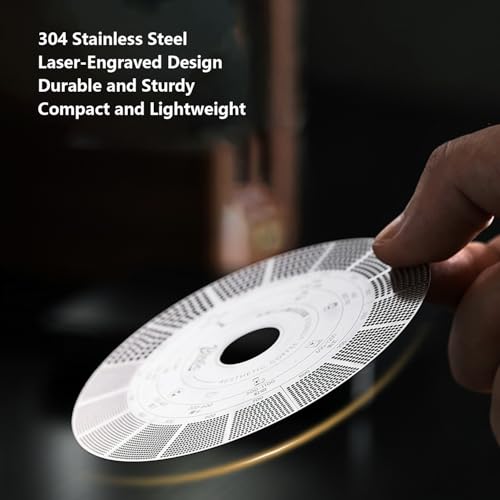
Coffee Grind Size Reference Chart for 8 Brewing Methods, Kilimazart B0G2Q7WGG5
This laser-engraved stainless steel card helps match coffee grind sizes to eight brewing methods, with the 16-level visual guide as its biggest advantage. It suits home brewers who want a durable, quick-reference tool beside their grinder for more consistent grind selection.
Pros and Cons
Pros
- Covers eight brewing methods in one compact reference card.
- Provides detailed 200μm to 1600μm measurements and 16 comparison levels.
- 304 stainless steel and laser engraving support long-term durability and clear markings.
- Compact, lightweight design makes it convenient to store near a grinder.
Cons
- It provides grind guidance but does not measure coffee particles or adjust a grinder.
- The small 10 cm by 10 cm format may require close viewing of the detailed markings.

YOGOTEU
Coffee Grind Size Reference Card for Grinder Calibration: YOGOTEU Stainless Steel Grind Chart Ruler
This stainless steel card displays grind size references and brewing conversion diagrams so you can dial in your grinder by sight instead of guessing between espresso, pour over, and French press. Buy it if you switch brew methods often and want a durable countertop reference that works with any grinder brand or model.
Pros and Cons
Pros
- Stainless steel body holds up to repeated handling and moisture better than printed paper or laminated charts.
- Universal design means no compatibility checks against your specific grinder model.
- Conversion diagrams put brew method and grind size on one surface for fast reference mid-routine.
Cons
- It is a reference guide only, so it will not measure your actual grounds or replace a scale or sifter.
- The listing does not state card dimensions, so buyers cannot confirm how readable the printed grind sizes are before ordering.

OSALADI
Dial In Espresso and Drip Grind Size by Eye: OSALADI Coffee Grind Size Reference Card and Flavor Guide
This pocket card puts espresso, drip, and coarser grind textures side by side so you can match your grounds by eye instead of guessing at grinder settings. It suits newer home baristas with an adjustable burr grinder who want repeatable shots and pour overs without buying a sieve set.
Pros and Cons
Pros
- One card handles both espresso and drip, the two brew methods most home setups actually use.
- Compact 3.34 by 2.16 inch footprint stores flat against the grinder, in a drawer, or in a travel kit.
- Works beyond coffee for judging ground spices and nut meal texture.
- Sturdy material holds up to repeated use around a wet, grounds covered counter.
Cons
- It is a visual comparison chart, not a measuring instrument, so accuracy depends on decent lighting and your own eye.
- Small and light enough to disappear under a bag of beans or into the back of a drawer.

watchget
Coffee Grind Size Reference Ruler for Dialing In Espresso and Pour Over: watchget Stainless Steel Grind Measuring Tool
This stainless steel reference card gives you a marked scale to compare your ground coffee against known grind sizes, so you can dial in a grinder by sight instead of guesswork. It suits home baristas switching between espresso, pour over, and French press who want repeatable grind settings without buying a sieve set.
Pros and Cons
Pros
- Rust-resistant stainless construction holds up to daily use near a grinder and sink.
- Clear printed markings make side by side grind comparison quick without magnification tools.
- Lightweight and portable enough to carry to a cafe or take on trips with a hand grinder.
- Useful for beginners learning grind size and for experienced users retuning a grinder.
Cons
- It is a visual reference only, so it estimates grind size rather than measuring particle distribution the way a sieve set does.
- The listing does not state exact dimensions, so the card may be smaller than expected for spreading out a full dose of grounds.
Editors' Picks
Kilimazart Coffee Grind Size Reference Chart for 8 Brewing Methods, Kilimazart B0G2Q7WGG5
Kilimazart
Coffee Grind Size Reference Chart for 8 Brewing Methods, Kilimazart B0G2Q7WGG5
This laser-engraved stainless steel card helps match coffee grind sizes to eight brewing methods, with the 16-level visual guide as its biggest advantage. It suits home brewers who want a durable, quick-reference tool beside their grinder for more consistent grind selection.
$9.90 at AmazonEditors' Favorite
Color: Silver Size: 10cm*10cm Dimensions: 3.3464566895 x 3.3464566895 x 0.0393700787 inches Weight: 0.110231131 pounds Product Group: Kitchen
Shop NowYOGOTEU Coffee Grind Size Reference Card for Grinder Calibration: YOGOTEU Stainless Steel Grind Chart Ruler
YOGOTEU
Coffee Grind Size Reference Card for Grinder Calibration: YOGOTEU Stainless Steel Grind Chart Ruler
This stainless steel card displays grind size references and brewing conversion diagrams so you can dial in your grinder by sight instead of guessing between espresso, pour over, and French press. Buy it if you switch brew methods often and want a durable countertop reference that works with any grinder brand or model.
$10.68 at AmazonGreat Value
Color: English Style Size: Dimensions as shown Weight: 0.05070632026 pounds Product Group: Kitchen Binding: Kitchen
Shop NowOSALADI Dial In Espresso and Drip Grind Size by Eye: OSALADI Coffee Grind Size Reference Card and Flavor Guide
OSALADI
Dial In Espresso and Drip Grind Size by Eye: OSALADI Coffee Grind Size Reference Card and Flavor Guide
This pocket card puts espresso, drip, and coarser grind textures side by side so you can match your grounds by eye instead of guessing at grinder settings. It suits newer home baristas with an adjustable burr grinder who want repeatable shots and pour overs without buying a sieve set.
$8.49 at AmazonColor: Light Brown Size: 8.50X5.50X0.10CM Dimensions: 3.34 x 2.16 x 0.03 Inches Weight: 0.02 pounds Product Group: Kitchen Binding: Kitchen
Shop Nowwatchget Coffee Grind Size Reference Ruler for Dialing In Espresso and Pour Over: watchget Stainless Steel Grind Measuring Tool
watchget
Coffee Grind Size Reference Ruler for Dialing In Espresso and Pour Over: watchget Stainless Steel Grind Measuring Tool
This stainless steel reference card gives you a marked scale to compare your ground coffee against known grind sizes, so you can dial in a grinder by sight instead of guesswork. It suits home baristas switching between espresso, pour over, and French press who want repeatable grind settings without buying a sieve set.
$8.59 at AmazonColor: Silver Size: middle Product Group: Kitchen Binding: Kitchen
Shop NowWhy Grind Size Matters
Before the specific sizes, understand why grind must match the method — it’s about extraction speed.
Coffee flavor comes from water extracting compounds from the grounds, and grind size controls how fast that happens:
- Finer grounds have more surface area, so water extracts faster — right for short brews.
- Coarser grounds have less surface area, so water extracts slower — right for long brews.
Each brewing method has a different contact time between water and coffee, so each needs a grind that extracts correctly in that time:
- Espresso brews in ~25 seconds → needs a fine grind to extract fast enough.
- French press steeps ~4 minutes → needs a coarse grind so it doesn’t over-extract.
- Cold brew steeps 12-24 hours → needs an extra-coarse grind.
Get it wrong and you get off-flavors:
- Too fine for the method → over-extraction → bitter, harsh.
- Too coarse for the method → under-extraction → weak, sour.
So grind size isn’t about personal preference so much as matching the method’s brew time. This is also why a consistent grinder matters — uneven grounds (from a blade grinder) extract unevenly, giving bitter-and-sour at once (see our burr-vs-blade guide). Match the grind to the method, and use a burr grinder for uniformity. Our best coffee grinder guide covers grinders with the range of settings.
Grind Size by Brew Method
Here’s the practical chart matching grind size to each brewing method, from coarsest to finest.
Extra-coarse (like peppercorns):
- Cold brew — the very long steep (12-24 hours) needs the coarsest grind to avoid over-extraction. See our cold brew guide.
Coarse (like sea salt):
- French press — the ~4-minute full immersion steep needs coarse grounds; too fine makes it bitter and lets sediment through the metal filter. See our French-press guide.
- Percolators.
Medium-coarse:
- Chemex (some prefer medium-coarse), Café solo, some cold brew.
Medium (like sand):
- Drip coffee makers (automatic) — the standard grind for most home machines.
- Flat-bottom pour over (Kalita Wave).
- Aeropress (with longer steeps).
Medium-fine:
- Pour over (V60, cone drip) — the medium-short brew needs medium-fine.
- Aeropress (shorter brews).
Fine (like table salt / powdery):
- Espresso — the fast, pressurized ~25-second extraction needs a fine grind. See our espresso guide.
- Moka pot (fine, though slightly coarser than espresso).
- Aeropress (espresso-style short brews).
Extra-fine (like flour/powder):
- Turkish coffee — the finest grind of all, almost powdery.
The pattern: longer brew time = coarser grind; shorter brew time = finer grind. Cold brew (longest) is coarsest; espresso and Turkish (shortest/most concentrated) are finest. Match your method to its spot on this scale. Our best coffee grinder and best pour over coffee maker guides cover the gear.
Dialing In and Troubleshooting
The chart is a starting point — use taste to fine-tune your grind within the right range.
Read your coffee’s taste to adjust:
- Bitter, harsh, dry = over-extracted → grind coarser (or reduce brew time/temperature). Common with too-fine grounds.
- Sour, weak, watery = under-extracted → grind finer (or increase brew time/temperature). Common with too-coarse grounds.
- Balanced, sweet, rounded = grind is right.
Adjust grind in small steps and taste, changing one variable at a time. This “dialing in” is especially important for espresso (see our espresso guide) but helps every method.
Other grind tips:
- Grind fresh, right before brewing. Ground coffee goes stale fast (oxidizes within minutes), so grinding just before brewing dramatically improves flavor — a key reason to grind your own (see our whole-bean-vs-ground guide).
- Use a burr grinder for a uniform grind. Blade grinders produce uneven dust-and-chunks that extract unevenly (bitter and sour at once), no matter the size setting. This is the single biggest grind-quality factor — see our burr-vs-blade guide.
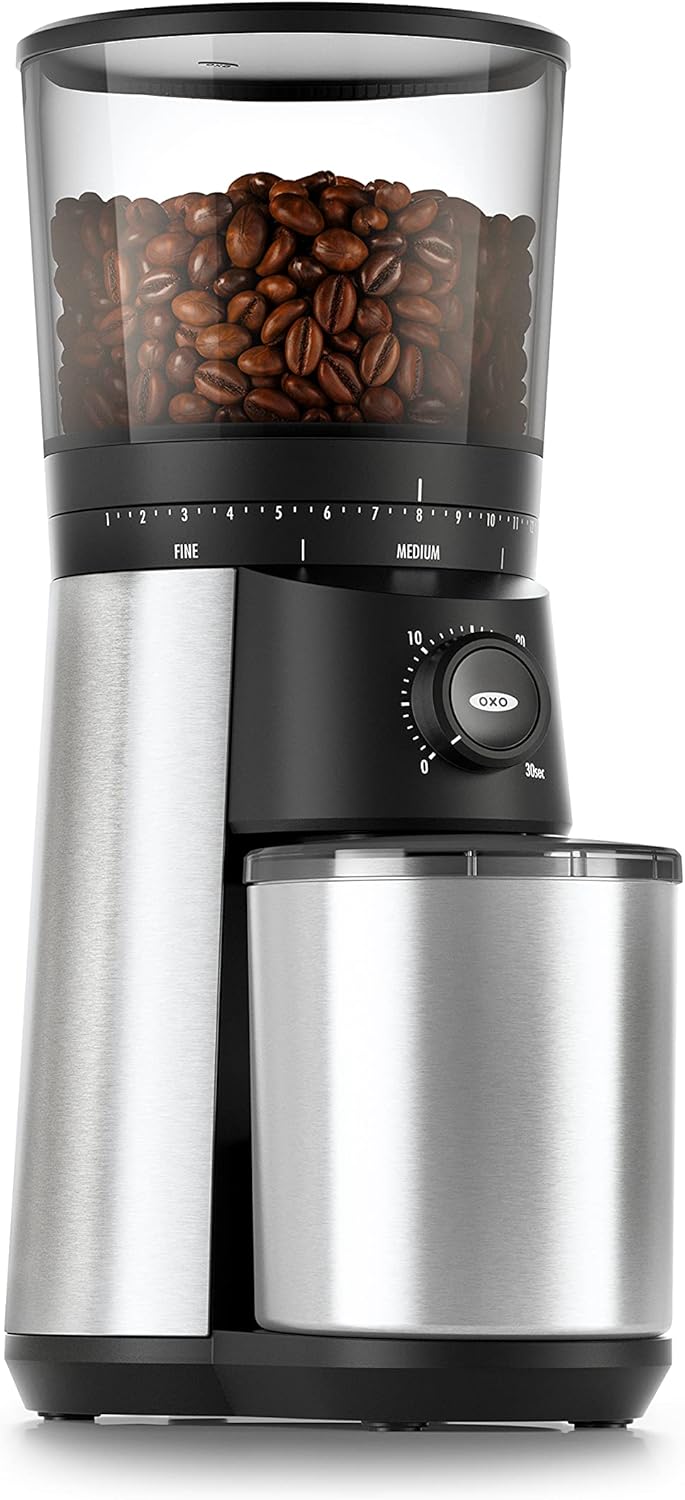
- Match grind to your grinder’s settings: burr grinders have labeled or numbered settings; experiment to find the right spot for your method.
- Consistency matters as much as size: the same grind every time (via a good grinder) lets you dial in and repeat.
If your coffee is off, grind size is often the culprit — but also check your ratio (see our coffee-to-water-ratio guide) and water temperature (see our water-temperature guide), since all three affect extraction together. Start with the right grind for your method, then fine-tune by taste. Our best coffee grinder guide covers grinders that make dialing in easy.
Frequently Asked Questions
What grind size should I use for my coffee maker?
Match the grind to your method: extra-coarse for cold brew, coarse for French press, medium for automatic drip makers, medium-fine for pour over (V60), fine for espresso and moka pot, and extra-fine for Turkish coffee. The rule is that longer brewing methods need coarser grinds and shorter/faster methods need finer grinds, because grind size controls how fast water extracts. Most automatic drip makers use a medium grind (like sand). Start with the recommended grind for your method, then adjust by taste.
Why does grind size matter for coffee?
Because grind size controls how fast water extracts flavor from the grounds, and each brewing method has a different contact time. Finer grounds have more surface area and extract faster (right for short brews like espresso); coarser grounds extract slower (right for long brews like cold brew). If the grind doesn’t match the method’s time, you get off-flavors: too fine over-extracts (bitter), too coarse under-extracts (weak, sour). Matching grind to brew time is essential for balanced coffee.
Is my coffee bitter or sour because of the grind?
Often, yes. Bitter, harsh coffee usually means over-extraction — the grind is too fine for your method (or water too hot, or brewed too long), so grind coarser. Sour, weak coffee usually means under-extraction — the grind is too coarse (or water too cool, or brewed too briefly), so grind finer. Adjust the grind in small steps and taste. Also check your ratio and water temperature, since all three affect extraction. Grind size is a common culprit for both bitter and sour coffee.
What grind is best for a French press?
A coarse grind, like sea salt. French press uses full immersion for about 4 minutes, so coarse grounds prevent over-extraction (bitterness) over that time, and they’re less likely to slip through the metal mesh filter into your cup as sediment. Too fine a grind for a French press makes it bitter and muddy with sediment. Use a burr grinder set to coarse for consistency. See our how-to-use-a-French-press guide for the full method and ratio.
What grind size for espresso?
A fine grind — finer than most methods, because espresso’s fast (~25 second), pressurized extraction needs the extra surface area to extract properly in that short time. Too coarse and the shot runs too fast and tastes weak and sour; too fine and it chokes, running slow and bitter. Espresso also requires a consistent, precisely-adjustable grind, which is why a good burr grinder is essential for it. You “dial in” the exact fineness using shot time. See our espresso and coffee-grinder guides.
Should I grind coffee right before brewing?
Yes. Ground coffee goes stale quickly — it oxidizes and loses aroma within minutes to hours of grinding — so grinding fresh right before brewing dramatically improves flavor over pre-ground coffee. This is a key reason to grind your own beans with a burr grinder. Buy whole beans, store them properly (airtight, away from light and heat), and grind only what you need for each brew. Fresh grinding, at the right size for your method, is one of the biggest upgrades to home coffee. See our whole-bean-vs-ground guide.
Related buying guides: best coffee maker with grinder, best grind and brew coffee maker and best cold brew coffee maker.
The Bottom Line
Grind size must match your brewing method because it controls how fast water extracts: extra-coarse for cold brew, coarse for French press, medium for drip, medium-fine for pour over, fine for espresso and moka pot, extra-fine for Turkish. The rule is longer brews need coarser grinds, shorter brews need finer. Too fine for the method tastes bitter (over-extracted); too coarse tastes weak and sour (under-extracted) — use taste to fine-tune within the right range. Grind fresh right before brewing, and use a burr grinder for the uniform grind that consistent extraction requires. See our best coffee grinder and best pour over coffee maker guides.


Write Your Review
No reviews yet. Be the first to share your experience!