

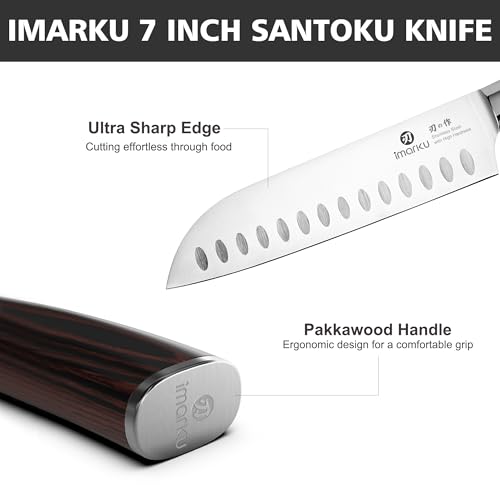
TL;DR — A chef’s knife has a curved blade built for rocking cuts and is the versatile Western all-rounder; a santoku is a shorter, flatter Japanese knife built for straight up-and-down chopping and precise slicing. Both are general-purpose kitchen knives that do most of the same jobs. The HomeWhisk team compared the two on blade shape, cutting style, and handling. If you rock the blade against the board, a chef’s knife feels natural; if you chop straight down and want a lighter, nimbler knife, a santoku suits you. This guide explains which fits your hands and habits.
The HomeWhisk editorial team researches kitchen equipment by analyzing manufacturer specifications, blade geometry, and aggregated user reviews from major retailers and cooking communities. Our recommendations are based on what the products actually deliver, not what brands promise.
For this comparison, we analyzed blade shape, cutting mechanics, weight, and real-world feedback from home cooks. Here’s how the santoku and chef’s knife differ, and which should be your everyday knife. For picks, see our best santoku knife and best chef knife guides.
Two All-Purpose Knives, Different Design Philosophies
Both are general-purpose knives, but they come from different traditions with different design logic. That’s the root of every difference.
The chef’s knife is the Western workhorse, typically 8 inches (6-10 inch range), with a curved belly that rises to a pointed tip. That curve is intentional — it’s designed for a rocking motion, where you keep the tip on the board and rock the blade down and forward through food. It’s heavier and taller, built to power through a wide range of tasks. It’s the standard “one knife to own” in Western kitchens.
The santoku is a Japanese knife, typically 5-7 inches, with a flatter blade and a rounded, sheepsfoot tip that curves down at the end (no sharp point). “Santoku” means “three virtues” (slicing, dicing, mincing). The flat edge is designed for a straight up-and-down chopping motion (or a push-cut), not rocking. It’s shorter, lighter, and thinner, built for precision and nimble control.
The consequence: the chef’s knife’s curve suits rocking and its size and weight suit powering through tough tasks; the santoku’s flat edge suits chop-and-lift or push cutting and its lighter, thinner build suits precise, clean cuts. They overlap enormously in function — both chop vegetables, slice meat, and mince herbs — but they feel different in use because they’re built for different cutting motions. Neither is better; they suit different techniques.
Cutting Style: Rocking vs Chopping
The single biggest practical difference is the cutting motion each is built for, and matching it to how you cut is what decides comfort.
The chef’s knife rocks. Its curved belly lets you keep the tip anchored on the board and rock the blade down and forward in a smooth motion — efficient for mincing herbs and garlic (rock repeatedly over a pile) and for continuous chopping. This rocking technique is what most Western cooks learn, and the chef’s knife is optimized for it. If you naturally rock your knife, the chef’s knife feels right and the santoku’s flat edge will feel awkward (it can’t rock).
The santoku chops straight down. Its flat edge is designed to come straight down and make full contact with the board along its whole length, then lift — a chop-and-lift or push-cut motion. This gives clean, precise cuts and is efficient for slicing vegetables and proteins into uniform pieces. It doesn’t rock (the flat edge and blunt tip don’t allow it), so if you try to rock a santoku, it feels wrong. If you naturally chop up-and-down, the santoku feels fast and precise.
Why it matters: using a knife against its intended motion is uncomfortable and inefficient. This is the main thing to know about yourself before choosing: do you rock or chop? Watch how you cut — if you keep the tip down and rock, get a chef’s knife; if you lift the whole blade and chop down, a santoku will feel natural. Many cooks can adapt to either, but comfort with your instinctive motion matters.
Handling, Weight, and Precision
Beyond cutting motion, the physical feel differs in ways that affect everyday comfort.
Weight and size: the chef’s knife is longer, taller, and heavier. That heft helps power through dense vegetables (squash, root vegetables) and larger cuts, and the length handles big items (a whole cabbage, a large roast) in one stroke. But the weight can tire some cooks, and the size can feel unwieldy for delicate work or in small hands. The santoku is shorter, lighter, and thinner — nimbler and less fatiguing, easier to control for precise work, and better suited to smaller hands or those who find a chef’s knife bulky.
Precision and thinness: the santoku’s thinner blade (and often harder Japanese steel, ground to a finer edge) makes very clean, precise slices — great for thin vegetable slices and delicate proteins. The trade-off is that thin, hard blades can be more delicate (chip-prone on bone or hard items). The chef’s knife’s thicker, often tougher blade is more forgiving of rough use.
The tip: the chef’s knife has a sharp pointed tip useful for detailed work (scoring, piercing, fine cuts); the santoku’s blunt sheepsfoot tip can’t do tip work but is safer and puts more blade in contact with the board.
Granton edges: many santoku knives have dimples (Granton edge) along the blade to reduce food sticking — helpful for slicing potatoes, cheese, and other sticky foods. Some chef’s knives have these too.
The feel summary: chef’s knife = longer, heavier, more powerful and versatile for big/tough tasks and tip work; santoku = lighter, nimbler, more precise for clean slicing and control. Try both if you can; hand feel is personal. See our best chef knife and best santoku knife guides.
Which Should You Choose?
For most people, either works as the primary knife — the choice comes down to cutting style, hand size, and the tasks you do most.
Choose a chef’s knife if you rock your blade when cutting, want maximum versatility and the ability to handle large and tough items, do tip work (scoring, piercing), have larger hands or like some heft, or want the standard Western “one knife to rule them all.” It’s the safer default for most Western cooks and the more universally versatile choice. Start with our best chef knife guide.
Choose a santoku if you chop straight up-and-down, prefer a lighter, shorter, nimbler knife, do a lot of precise vegetable slicing and dicing, have smaller hands or find a chef’s knife bulky, or like the clean cuts of a thinner Japanese blade. It excels at everyday vegetable and protein prep. See our best santoku knife guide.
Do you need both? Not really — either serves as your one main knife, since they overlap so much. But many cooks own both and reach for whichever suits the task: the chef’s knife for big jobs, breaking down large items, and rocking-mince; the santoku for precise slicing and everyday chopping. They complement each other well, so if you cook a lot, having both gives you the right tool for each motion. If buying one, pick by your instinctive cutting style.
Frequently Asked Questions
What’s the difference between a santoku and a chef’s knife?
A chef’s knife is a longer (usually 8-inch), heavier Western knife with a curved blade built for a rocking cutting motion and a pointed tip. A santoku is a shorter (5-7 inch), lighter Japanese knife with a flatter blade built for straight up-and-down chopping and a blunt, rounded tip. Both are general-purpose knives that do most of the same tasks, but the chef’s knife rocks and powers through big jobs, while the santoku chops and slices with lighter precision.
Is a santoku or chef’s knife better for beginners?
Either works, but it depends on your cutting style. A chef’s knife is the versatile Western standard and suits those who rock the blade; it handles the widest range of tasks. A santoku is lighter and nimbler, easier to control for those who chop straight down or have smaller hands, and excels at vegetable prep. Beginners should pick based on their instinctive motion — rockers choose a chef’s knife, choppers a santoku. If unsure, the chef’s knife is the more universally versatile default.
Can a santoku replace a chef’s knife?
Yes, for most tasks — a santoku is a general-purpose knife that chops, slices, and dices like a chef’s knife, so it can be your primary knife. The main things it does less well are rocking cuts (its flat edge can’t rock), handling very large items (it’s shorter), and tip work (its tip is blunt). If you don’t rock-cut and mostly do everyday prep, a santoku fully replaces a chef’s knife. If you rock or break down large items often, you may prefer the chef’s knife.
Why does a santoku have dimples on the blade?
Those dimples form a Granton edge, designed to reduce food sticking to the blade. The small air pockets they create break the suction between the blade and moist or starchy foods like potatoes, cucumbers, cheese, and fish, so slices fall away more cleanly instead of clinging. It’s especially helpful for thin slicing of sticky vegetables. Some chef’s knives have Granton edges too. The dimples don’t affect sharpness — they’re purely about food release.
Which knife is better for cutting vegetables?
Both excel, but many find the santoku slightly better for precise vegetable slicing and dicing — its flat edge makes clean full-contact chops, its thin blade slices finely, and a Granton edge reduces sticking. The chef’s knife handles vegetables very well too, especially with a rocking mince for herbs and garlic and powering through dense items like squash. For everyday precise vegetable prep, the santoku is a favorite; for a mix of vegetables plus larger and tougher tasks, the chef’s knife’s versatility wins.
Should I own both a santoku and a chef’s knife?
You don’t need both — either serves as your one main knife since they overlap heavily. But many cooks own both and use each for its strength: the chef’s knife for rocking cuts, large items, and tough tasks; the santoku for precise slicing and everyday chopping. If you cook often, having both gives you the right tool for each cutting motion and they complement each other. If buying just one, choose by your instinctive cutting style — rocking favors the chef’s knife, chopping favors the santoku.
Related buying guides: best knife sets, best bread knife and best boning knife.
The Bottom Line
The santoku and chef’s knife are both excellent all-purpose knives that overlap in function but are built for different cutting motions. The chef’s knife (longer, heavier, curved blade) is made for rocking cuts and powering through big and tough tasks — the versatile Western standard. The santoku (shorter, lighter, flatter blade) is made for straight up-and-down chopping and precise, clean slicing — nimble and controllable. Neither is better; choose by how you instinctively cut: rockers want a chef’s knife, choppers want a santoku. Many cooks happily own both. See our best santoku knife and best chef knife guides.
Deeper Dive: Our Top Picks
Our Top Picks
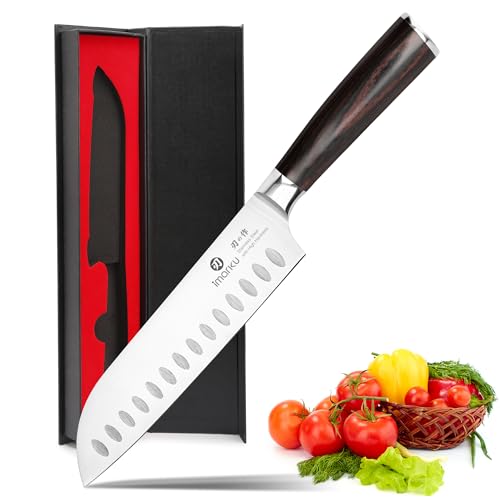
imarku
7-Inch Santoku Knife for Precision Slicing
The imarku 7-inch Santoku knife combines a hollow scalloped edge and 15-18 degree hand-polished bevel to reduce drag and prevent food from sticking during high-volume prep work. Home cooks and apartment dwellers who want a restaurant-capable knife without the steep price will find it covers meat, vegetables, and bread with a single blade.
Pros and Cons
Pros
- The 2.5mm blade thickness paired with the hollow edge design handles both delicate julienne cuts and heavier chopping without flexing or wedging.
- Pakkawood handle construction offers a more sanitary and dimensionally stable grip than standard composite or natural wood handles.
- The 15-18 degree edge angle matches professional Japanese knife geometry, giving it a noticeably sharper out-of-box performance than German-style knives at this price.
- Versatile enough for meat, vegetables, fruit, and bread, making it a practical single-knife solution for small kitchens with limited storage.
Cons
- With zero verified reviews available, long-term edge retention and handle durability under daily use remain unconfirmed by real buyers.
- The 3-month refund window is shorter than the lifetime guarantees offered by competing brands at the same price point.

Zwilling
Henckels Santoku Knife 7-inch Hollow Edge German Stainless Steel
This 7-inch Santoku excels at mincing, slicing, and dicing with its hollow-edge blade that prevents food sticking during prep. Buy it if you want a durable, balanced Japanese-style knife that handles everyday vegetable work without the premium price tag.
Pros and Cons
Pros
- Hollow-edge grantons genuinely prevent cucumber and tomato slices from sticking to the blade mid-cut.
- German stainless steel holds its edge through repeated use on harder vegetables like carrots and beets.
- Fully forged construction creates noticeable weight and balance that makes repetitive dicing feel controlled and effortless.
Cons
- At 7 inches, it's smaller than Western chef's knives, requiring more frequent repositioning on larger vegetables.
- Dishwasher safe, but hand washing extends blade life and prevents potential handle loosening over time.

HOSHANHO
7-Inch Japanese Santoku Chef Knife | HOSHANHO High Carbon Stainless Steel
This 7-inch santoku slices vegetables, meat, and fish with a 15-degree blade angle that delivers thinner, more precise cuts than standard chef knives. Home cooks and professional chefs alike benefit from the triple-layer laminated steel construction that stays sharp longer and resists corrosion.
Pros and Cons
Pros
- The triple-layer laminated steel with 10Cr15CoMoV Japanese steel reaches 62HRC hardness, delivering edge retention that outlasts standard stainless blades.
- Ergonomic pakkawood handle provides secure grip and control without hand fatigue during extended prep sessions.
- 15-degree blade angle and hand-sharpened edge produce cleaner cuts through delicate vegetables and proteins compared to wider blade angles.
Cons
- Hand-washing required; dishwasher use will degrade the blade edge and handle finish over time.
- Requires regular honing to maintain the 15-degree angle; the initial sharpness will gradually diminish with normal kitchen use.

MercerCulinary
Mercer Genesis 7-Inch Santoku Knife: Professional Slicing & Mincing
This fully forged German steel santoku delivers razor-sharp precision for slicing vegetables and mincing herbs with its Granton edge that releases food cleanly. Buy it if you prep vegetables daily and want a professional-grade knife that won't require constant sharpening.
Pros and Cons
Pros
- Granton edge prevents food from sticking to the blade, making thin slicing of cucumbers, tomatoes, and fish noticeably faster than standard chef's knives.
- Ergonomic handle with substantial bolster reduces wrist strain during extended prep sessions and feels secure even when wet.
- Professional-grade construction at under $50 delivers the same German steel and forging process used in culinary schools.
Cons
- Requires hand-washing only; dishwasher use will damage the blade and handle, adding a maintenance step most busy cooks dislike.
- Santoku's shorter blade length and rectangular shape take practice if you're accustomed to Western chef's knives, requiring a learning curve.

Henckels Forged Accent 2-Piece Santoku Knife Set | German Stainless Steel
This 2-piece santoku set delivers razor-sharp German engineering for mincing, slicing, and dicing with effortless precision and lasting edge retention. Buy it if you prep vegetables daily and want knives that stay sharp without constant maintenance.
Pros and Cons
Pros
- Forged bolster transitions seamlessly from blade to handle, eliminating weak points that cause blade wobble during cutting.
- Satin-finished blade holds its edge noticeably longer than stamped knives, reducing the need for frequent sharpening.
- Two-knife set covers both precision work and larger prep tasks without requiring a full block of specialty knives.
Cons
- Santoku blade shape has a steeper learning curve than traditional chef's knives if you're accustomed to rocking motions.
- German stainless steel requires hand-washing to maintain edge longevity, despite being dishwasher-safe.
Editors' Picks
imarku 7-Inch Santoku Knife for Precision Slicing
imarku
7-Inch Santoku Knife for Precision Slicing
The imarku 7-inch Santoku knife combines a hollow scalloped edge and 15-18 degree hand-polished bevel to reduce drag and prevent food from sticking during high-volume prep work. Home cooks and apartment dwellers who want a restaurant-capable knife without the steep price will find it covers meat, vegetables, and bread with a single blade.
$39.99 at AmazonEditors' Favorite
Color: Brown and Silver Size: 7" Dimensions: 12 x 3 x 1 inches Weight: 0.43 pounds Product Group: Kitchen Binding: Kitchen
Shop NowZwilling Henckels Santoku Knife 7-inch Hollow Edge German Stainless Steel
Zwilling
Henckels Santoku Knife 7-inch Hollow Edge German Stainless Steel
This 7-inch Santoku excels at mincing, slicing, and dicing with its hollow-edge blade that prevents food sticking during prep. Buy it if you want a durable, balanced Japanese-style knife that handles everyday vegetable work without the premium price tag.
$79.95 at AmazonGreat Value
Brand Name: ZWILLING J.A. Henckels Manufacturer: ZWILLING UPC: 035886185930 Global Trade Identification Number: 00035886185930 Model Number: 31170-181 Manufacturer Part Number: 31170-181 -OPEN BOX Manufacturer Warranty Description: Lifetime Warranty Against Manufacturer'S Defects Item Type Name: Hollow Edge Santoku Knife Unit Count: 1.0 Count Included Components: Hollow Edge Santoku Knife Best Sellers Rank: #92,282 in Kitchen & Dining (See Top 100 in Kitchen & Dining) #244 in Bread Knives ASIN: B00068J2A0 Customer Reviews: 4.6 4.6 out of 5 stars (1,418) 4.6 out of 5 stars Blade Material Type: Stainless Steel Handle Material: Stainless Steel,Steel Is the item dishwasher safe?: No Material Type: ZWILLING Carbon No Stain Steel BladeLength: 7 Inches Item Weight: 6.4 ounces Item Length: 16 Inches Size: 7" Color: Stainless Steel Blade Color: Silver Blade Edge: Hollow Ground Construction Type: Forged Blade Material: Stainless Steel Brand: ZWILLING J.A. Henckels
Shop NowHOSHANHO 7-Inch Japanese Santoku Chef Knife | HOSHANHO High Carbon Stainless Steel
HOSHANHO
7-Inch Japanese Santoku Chef Knife | HOSHANHO High Carbon Stainless Steel
This 7-inch santoku slices vegetables, meat, and fish with a 15-degree blade angle that delivers thinner, more precise cuts than standard chef knives. Home cooks and professional chefs alike benefit from the triple-layer laminated steel construction that stays sharp longer and resists corrosion.
$52.99 at AmazonBrand Name: HOSHANHO Manufacturer: HOSHANHO UPC: 714757571477 Model Number: 7 inch Santoku Knife Manufacturer Part Number: HSHES-2022-002 Item Type Name: 7 inch Santoku Chef Knife Unit Count: 1.0 Count Included Components: 7 inch Santoku Knife Best Sellers Rank: #13,746 in Kitchen & Dining (See Top 100 in Kitchen & Dining) #29 in Chef's Knives ASIN: B0C1BQTQKL Customer Reviews: 4.7 4.7 out of 5 stars (1,742) 4.7 out of 5 stars Blade Edge: Plain Construction Type: Forged Blade Material Type: High Carbon Stainless Steel Handle Material: Pakkawood Is the item dishwasher safe?: No Material Type: High Carbon Stainless Steel BladeLength: 7 Inches Item Weight: 11.2 ounces Item Length: 7 Inches Size: 7" Color: Silver Blade Color: Silver Blade Material: High Carbon Stainless Steel Brand: HOSHANHO
Shop NowMercerCulinary Mercer Genesis 7-Inch Santoku Knife: Professional Slicing & Mincing
MercerCulinary
Mercer Genesis 7-Inch Santoku Knife: Professional Slicing & Mincing
This fully forged German steel santoku delivers razor-sharp precision for slicing vegetables and mincing herbs with its Granton edge that releases food cleanly. Buy it if you prep vegetables daily and want a professional-grade knife that won't require constant sharpening.
$39.95 at AmazonBrand Name: Mercer Culinary Manufacturer: Mercer Tool Corp. UPC: 749628445519 765301903244 Global Trade Identification Number: 00765301903244 Model Number: M20707 Manufacturer Part Number: M20707 Manufacturer Warranty Description: Lifetime limited manufacturer's warranty Item Type Name: Genesis Unit Count: 1.0 Count Included Components: Mercer Culinary Genesis 7-Inch Forged Santoku Knife Best Sellers Rank: #3,706 in Kitchen & Dining (See Top 100 in Kitchen & Dining) #15 in Santoku Knives ASIN: B000IBVD4I Customer Reviews: 4.8 4.8 out of 5 stars (1,577) 4.8 out of 5 stars Blade Material Type: High Carbon Steel Handle Material: Santoprene Is the item dishwasher safe?: No Material Type: Stainless steel and manmade BladeLength: 7 Inches Item Weight: 2.99 ounces Item Length: 14.05 Inches Size: 7" Color: Black Blade Color: Silver Blade Edge: Plain Construction Type: Forged Blade Material: High Carbon Steel Brand: Mercer Culinary
Shop NowHenckels Forged Accent 2-Piece Santoku Knife Set | German Stainless Steel
Henckels Forged Accent 2-Piece Santoku Knife Set | German Stainless Steel
This 2-piece santoku set delivers razor-sharp German engineering for mincing, slicing, and dicing with effortless precision and lasting edge retention. Buy it if you prep vegetables daily and want knives that stay sharp without constant maintenance.
$49.95 at AmazonBrand Name: HENCKELS Manufacturer: Henckels UPC: 035886649906 Model Number: 1021241 Manufacturer Part Number: 1021241 Item Type Name: Asian Knife Set Unit Count: 2.0 Count Included Components: 5" HE Santoku, 7" HE Santoku Best Sellers Rank: #41,522 in Kitchen & Dining (See Top 100 in Kitchen & Dining) #14 in Santoku Knives ASIN: B09RTDZ14W Customer Reviews: 4.6 4.6 out of 5 stars (284) 4.6 out of 5 stars Blade Edge: Plain Construction Type: Forged Blade Material Type: Stainless Steel Handle Material: Stainless Steel Is the item dishwasher safe?: Yes Material Type: Stainless Steel BladeLength: 5 Inches Item Weight: 9.07 g Item Length: 5 Inches Size: 2-pc Color: Black Blade Color: Silver Blade Material: Stainless Steel Brand: HENCKELS
Shop NowHow We Evaluated These Picks
This guide is research-based, not a hands-on test. We did not buy, cook with, or measure the products above. What we did compare: manufacturer specifications, materials and construction, capacities and wattages, and the patterns that repeat across large volumes of verified owner reviews — especially the complaints that only surface after weeks of use, like coatings failing, motors weakening, controls drifting, or a design proving awkward to clean and store.
Where this page describes how something performs, it is reporting what the specifications state and what owners consistently report — not a result we produced ourselves. Prices and availability change constantly, so check the current listing before buying. We earn a commission on purchases made through links on this page, which never affects which products we include or how we rank them.


Write Your Review
No reviews yet. Be the first to share your experience!