

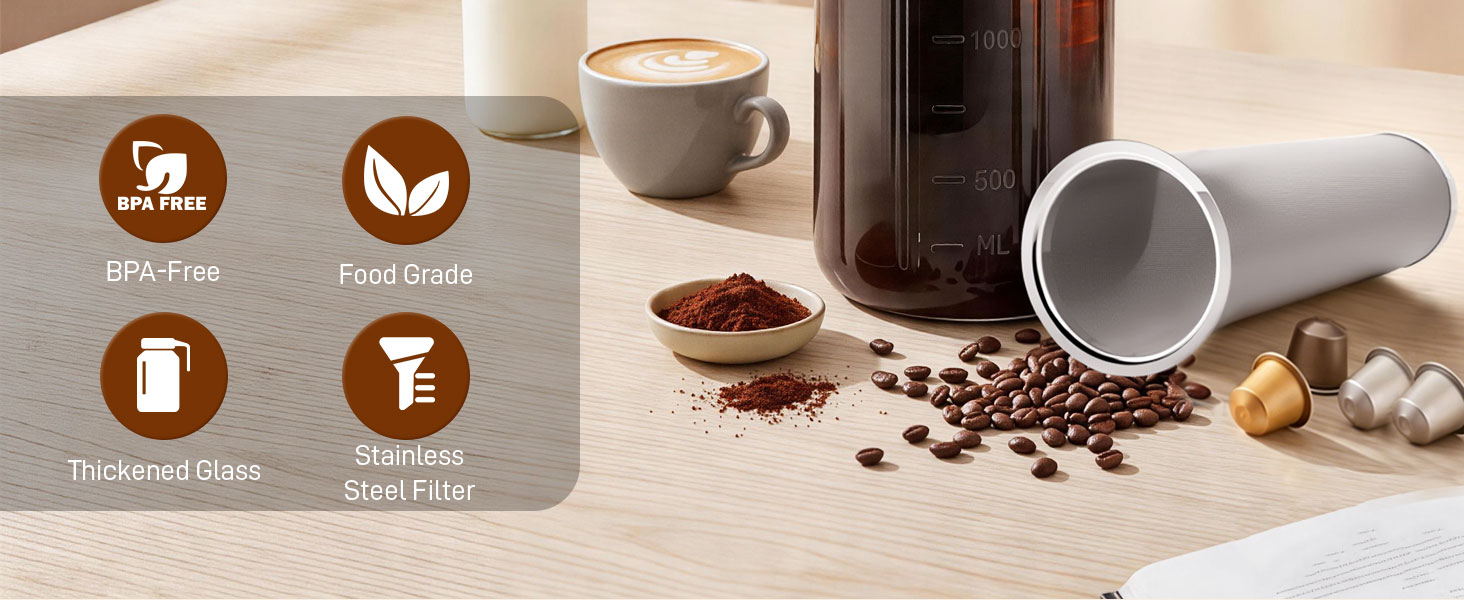
TL;DR — Coarsely grind coffee, combine with cold water at about 1:8 for a concentrate (or 1:15 for ready-to-drink), steep 12-24 hours in the fridge, then strain. Cold brew is smooth, low-acid, and nearly foolproof — no heat, no special skill, just time. The HomeWhisk team compiled this from brewing guidance and aggregated owner feedback. The only things that matter are a coarse grind, a long steep, and thorough straining. Here’s the complete method, plus ratios and how to serve it.
The HomeWhisk editorial team researches kitchen equipment by analyzing manufacturer specifications, brewing guidance, and aggregated user reviews from major retailers and coffee communities. This guide reflects established cold-brew principles, not personal testing.

Cold brew is the easiest way to make great coffee at home because it’s forgiving — you steep coffee in cold water over many hours, and time does the work. The result is smooth, sweet, and low in acidity, and it keeps for days in the fridge. Here’s how to make it with a dedicated maker or basic kitchen gear. For a dedicated maker, see our best cold brew coffee maker guide.
What Makes Cold Brew Different
Understanding how cold brew works explains why it tastes different and why the method is what it is.
Cold brew is coffee steeped in cold (or room-temperature) water for a long time — 12-24 hours — rather than brewed quickly with hot water. Because there’s no heat, extraction happens slowly and differently: the cold water pulls out the coffee’s sugars and flavors but extracts far less of the acidic and bitter compounds that hot water draws out quickly.
The result is a coffee that’s smooth, naturally sweet, and low in acidity — about 65-70% less acidic than hot-brewed coffee by many measures — which is why people with sensitive stomachs and those who find hot coffee bitter often prefer it. It also tastes mellow and chocolatey rather than bright and sharp.
Cold brew vs iced coffee: these aren’t the same. Iced coffee is hot-brewed coffee poured over ice (fast, brighter, more acidic). Cold brew is never heated (slow, smooth, low-acid). Cold brew can be served hot by diluting the concentrate with hot water, but it’s made cold.
Why the long steep: without heat to speed extraction, cold brew needs 12-24 hours to pull enough flavor from the grounds. This is the trade-off — it’s hands-off but not fast. The method below is built around this slow, cold extraction. It also means cold brew is very forgiving: an extra few hours rarely ruins it.
The Basic Method, Step by Step
Here’s the complete process using either a dedicated cold brew maker or a jar and strainer.
1. Coarsely grind your coffee. Use a coarse grind — like coarse sea salt, similar to French press grind. Coarse grounds are essential: fine grounds over-extract (bitter) and slip through the filter, making the brew muddy and gritty. If buying pre-ground, ask for a coarse/French press grind. See our best coffee grinder guide for grinding fresh.
2. Combine coffee and cold water in your container at your chosen ratio (see below). Use cold, filtered water. Stir gently to make sure all the grounds are saturated — dry clumps won’t extract.
3. Steep 12-24 hours. Cover and leave it in the fridge (or at room temperature for a somewhat faster, slightly stronger extraction). 12-18 hours is a good range for most; longer (up to 24) makes it stronger. Beyond 24 hours it can turn bitter or woody.
4. Strain thoroughly. This is where cold brew is made or ruined. Strain out the grounds — a dedicated maker has a built-in filter you simply lift out; otherwise, strain through a fine-mesh sieve lined with a coffee filter, cheesecloth, or a nut-milk bag. For clarity, strain twice (once to remove grounds, once through a paper filter to catch fines). Don’t rush this — leftover grounds make it gritty and over-extract further.
5. Store the concentrate in a clean sealed jar in the fridge. It keeps well for up to 1-2 weeks (concentrate keeps longer than diluted).
That’s it. The active work is 5-10 minutes; the rest is waiting.
Ratios and How to Serve
The coffee-to-water ratio determines whether you make a concentrate to dilute or a ready-to-drink brew. This is the main choice.
Concentrate (most common and flexible): about 1:8 coffee-to-water by weight (for example, 1 cup of grounds to 8 cups / ~2 liters of water, or ~100g coffee to 800g water). This makes a strong concentrate you dilute before drinking — convenient because it stores compactly and lasts longer. Dilute roughly 1:1 with water or milk to taste when serving.
Ready-to-drink: about 1:15 coffee-to-water makes cold brew you can drink straight without diluting, but it takes more fridge space and doesn’t keep as long. Good if you’ll drink it quickly.
How to serve:
- Iced: pour concentrate over ice, add water or milk to taste. The classic serving.
- Hot: dilute concentrate with hot water for a smooth, low-acid hot coffee.
- With milk/cream: cold brew takes well to milk, cream, or milk alternatives, and to sweeteners or flavored syrups.
- Adjust strength: start with 1:1 concentrate-to-water/milk and adjust — more water for milder, less for stronger.
Ratio tips: these are starting points — adjust to your taste. If your cold brew is too weak, use more coffee or steep longer next time; too strong or bitter, dilute more or steep less. Once you find your ratio and steep time, it’s perfectly repeatable. A dedicated best cold brew coffee maker often has markings that take the measuring out.
Tips, Storage, and Common Mistakes
A few details separate good cold brew from great, and help you avoid the usual pitfalls.
Use good, fresh coffee — cold brew’s smoothness showcases the bean, and a medium or dark roast tends to give the classic chocolatey, smooth cold-brew flavor (light roasts can taste sour cold). Freshly ground is best.
Grind coarse, always — this is the number-one factor. Fine grounds are the most common cause of bitter, gritty, muddy cold brew. If you don’t have a grinder, buy coarse-ground or use pre-ground French-press grind.
Don’t over-steep — 12-24 hours is the window; past 24 hours (especially at room temperature) it can turn bitter and woody. Set a reminder if needed.
Strain well — under-straining leaves grit and lets extraction continue, throwing off the flavor. A dedicated maker’s filter or a double strain solves this.
Storage: concentrate lasts up to ~2 weeks refrigerated in a sealed container; diluted cold brew is best within a few days. Keep it sealed so it doesn’t pick up fridge odors.
Save money and hassle with a dedicated cold brew maker (a jar or pitcher with a built-in fine filter) — it simplifies steeping and straining into one vessel and gives consistent results. A best french press also works as a cold brew maker (steep, then press and pour). Our best cold brew coffee maker guide covers purpose-built options.
Frequently Asked Questions
How do you make cold brew coffee at home?
Coarsely grind coffee, combine it with cold filtered water (about 1:8 for concentrate or 1:15 for ready-to-drink), stir to saturate, and steep 12-24 hours in the fridge. Then strain thoroughly to remove the grounds — using a dedicated maker’s filter or a fine sieve lined with a coffee filter or cheesecloth. Store the result sealed in the fridge. It’s nearly foolproof: the only critical factors are a coarse grind, a long steep, and good straining. Active work is just a few minutes.
What’s the ratio for cold brew coffee?
For a concentrate you’ll dilute, use about 1:8 coffee-to-water by weight (roughly 1 cup grounds to 8 cups water), then dilute about 1:1 with water or milk when serving. For ready-to-drink cold brew, use about 1:15. Concentrate is more popular because it stores compactly and lasts longer. These are starting points — adjust to taste: more coffee or longer steeping for stronger brew, less for milder. Once dialed in, it’s easy to repeat.
How long should cold brew steep?
12 to 24 hours. Around 12-18 hours suits most people; steeping up to 24 hours makes it stronger. Steeping in the fridge is standard; room temperature extracts a bit faster and stronger. Don’t exceed about 24 hours (especially at room temperature), as over-steeping turns cold brew bitter and woody. Cold brew is forgiving within the window — an extra hour or two won’t ruin it — but there is such a thing as too long.
What grind should I use for cold brew?
A coarse grind, like coarse sea salt — the same as for French press. This is the single most important factor. Coarse grounds extract slowly and evenly over the long steep and are easy to strain out. Fine grounds over-extract (making it bitter) and slip through filters, leaving gritty, muddy coffee. If buying pre-ground, choose a coarse or French-press grind. Grinding fresh coarse with a burr grinder gives the best results.
Is cold brew less acidic than regular coffee?
Yes, significantly — cold brew is roughly 65-70% less acidic than hot-brewed coffee by common measures. Because it’s made with cold water over a long time rather than hot water quickly, it extracts far fewer of the acidic and bitter compounds. This makes it smoother and easier on sensitive stomachs, and is a main reason people prefer it. The result tastes mellow, sweet, and chocolatey rather than bright and sharp like hot coffee.
How long does cold brew last in the fridge?
Cold brew concentrate keeps well for up to 1-2 weeks in a sealed container in the fridge, while diluted cold brew (mixed with water or milk) is best consumed within a few days. Concentrate lasts longer because it’s stronger and undiluted. Keep it sealed to prevent it from absorbing fridge odors. This long shelf life is a big advantage — you can make a batch of concentrate and enjoy fresh-tasting cold brew all week.
Related buying guides: best coffee maker with grinder and best grind and brew coffee maker.
The Bottom Line
Cold brew is the most forgiving coffee to make at home: coarsely grind coffee, steep it in cold water 12-24 hours in the fridge, and strain well. Use about 1:8 for a concentrate you dilute (roughly 1:1 with water or milk) or 1:15 for ready-to-drink. The three things that matter are a coarse grind (prevents bitterness and grit), a long steep, and thorough straining. The result is smooth, low-acid coffee that keeps for up to two weeks as concentrate and serves iced or hot. A dedicated maker or a best french press simplifies the process. See our best cold brew coffee maker and best coffee grinder guides.







Write Your Review
No reviews yet. Be the first to share your experience!