

HomeWhisk earns commission from qualifying purchases made through links on this page. We research picks from specifications and owner reviews; we do not test products ourselves.
TL;DR — An air fryer uses hot air and almost no oil for crispy-ish results with easy cleanup and healthier food; a deep fryer submerges food in hot oil for true deep-fried texture but with more oil, mess, and calories. They’re not the same tool. The HomeWhisk team compared the two on texture, health, convenience, and cost. If you want everyday crisping with minimal oil and fuss, air fryer. If you crave authentic deep-fried food (real battered fish, doughnuts, restaurant-style fries), a deep fryer does what an air fryer can’t. This guide sorts out which fits you.
The HomeWhisk editorial team researches kitchen equipment by analyzing manufacturer specifications, cooking methods, and aggregated user reviews from major retailers and cooking communities. Our recommendations are based on what the products actually deliver, not what brands promise.
For this comparison, we analyzed how each appliance cooks, the texture and health differences, and real-world convenience feedback from home cooks. Here’s how air fryers and deep fryers really differ. For picks, see our best air fryer and best deep fryer guides.


Save $10.00
Pros & Cons
Pros
- Large 4.5-liter capacity handles family-sized portions in one cycle, reducing the need to fry in multiple batches.
- Dishwasher-safe basket and removable oil container make post-frying cleanup faster than stovetop frying methods.
- Viewing window and adjustable temperature control give you precise monitoring without opening the lid and losing heat.
- Magnetic breakaway cord adds a safety layer in kitchens with kids or pets by preventing spills if the cord is pulled.
Cons
- The 4.5-liter size takes up significant counter space and requires dedicated storage when not in use.
- Oil capacity means you'll need to buy and dispose of more oil compared to compact 2-3 liter models.
Details
This is a countertop electric deep fryer designed to eliminate the mess and guesswork of stovetop frying. It solves the problem of uneven heating and oil splatters that come with using a pot on the stove.
The 1700-watt heating element maintains stable oil temperature through the entire cooking cycle. The adjustable dial lets you set the exact heat level for different foods, from delicate donuts at 325°F to crispy chicken at 375°F.
Stainless steel construction resists fingerprints and wipes clean easily. The unit measures large enough to fry a whole chicken or multiple servings of fries, but requires permanent counter space or cabinet storage due to its size.
The oil container is not sealed for storage, so you’ll need to drain or transfer oil after each use if you plan to reuse it. No built-in oil filtration system.
Best for households that fry weekly and have the counter or storage space to accommodate a dedicated appliance.
How to Use
Fill the oil container to the minimum line before plugging in. Attach the basket and set your target temperature using the dial. Wait 8-10 minutes for the oil to reach temperature before adding food.
Lower food gently into the oil using the basket handle. Keep the lid closed during frying to contain splatters. Check progress through the viewing window instead of lifting the lid repeatedly.
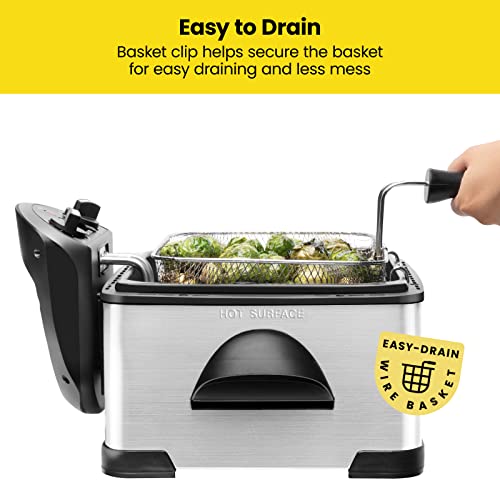
When done, clip the basket to the side drain rail and let oil drip for 30 seconds. Unplug the unit and allow oil to cool completely before removing the container for disposal or storage.

Pros & Cons
Pros
- The stacked design delivers two cooking zones while fitting under standard cabinets.
- Two removable racks let each basket cook foods on two levels with superheated air surrounding both foods.
- Smart Finish and Match Cook simplify preparing different foods or full-capacity meals.
- The six cooking programs cover crisping, roasting, baking, reheating, broiling, and dehydrating.
Cons
- Each zone uses a 5-quart basket, so the stacked layout may not suit oversized single items.
- The product data does not list the unit's weight, which may matter if it needs frequent storage.
Details
The Ninja DoubleStack XL solves the need to cook several family-size foods without the footprint of a traditional two-basket air fryer.
Two independently controlled baskets and stacked racks support four foods at once, while Smart Finish coordinates different cooking settings to finish together.
Its 10-quart capacity includes two 5-quart baskets, nonstick crisper plates, and removable meal racks. The listed design is 40% slimmer than traditional two-basket models, but weight is not provided.
Each basket is separate rather than one large cavity, which can limit the size of individual items.
Best for families who need multi-food cooking and substantial capacity in a space-saving countertop design.
How to Use
Choose Air Fry, Air Broil, Roast, Bake, Reheat, or Dehydrate, then set each basket independently for the foods you are preparing.
Use the stacked meal racks when you want two levels of food in a basket. Select Smart Finish for different settings that end together, or Match Cook to copy settings across both zones.
Place the crisper plates and baskets in the dishwasher after cooking when cleanup requires less manual washing.

Pros & Cons
Pros
- Heats oil fast and holds temperature steady, which prevents soggy or greasy results even when frying in batches.
- The viewing window eliminates guesswork and keeps you from opening the lid repeatedly, which drops oil temperature.
- Compact 2-liter size fits on most countertops and stores easily in a cabinet, unlike bulky commercial-style fryers.
Cons
- The 2-liter capacity limits you to small batches, so frying for more than 4 people requires multiple rounds.
- The temperature range starts at 275°F, which is too hot for some delicate items that need gentler frying below 250°F.
Details
This is an electric countertop deep fryer that replaces the guesswork and danger of heating oil in a pot on the stove. It holds 2 liters of oil and plugs into a standard outlet.
The 1500W heating element brings oil to frying temperature quickly and the adjustable dial lets you set anywhere from 275°F to 375°F. The viewing window on the lid means you can watch your food brown without lifting the lid and losing heat.
The body is brushed stainless steel and the frying basket has a cool-touch handle with a hook that rests on the side of the fryer for draining. The lid locks in place to contain splatters. The whole unit weighs under 5 pounds.
The 2-liter capacity is enough for 2 to 4 servings depending on what you are frying, but large families will need to work in batches. The temperature range does not go below 275°F, so very delicate items may brown too fast.
Best for home cooks who fry once or twice a week and want consistent results without the hassle and safety risks of stovetop oil.
How to Use
Fill the fryer with oil up to the marked line, close the lid, plug it in, and turn the dial to your target temperature. The red light indicates heating and the green light comes on when the oil is ready.
Lower the basket gently into the oil to avoid splattering. Use the viewing window to check progress. When the food is done, lift the basket and hook it on the side of the fryer to let excess oil drain back into the tank.
Unplug the unit and let the oil cool completely before removing the tank for cleaning. Wipe the stainless steel body with a damp cloth. The basket can go in the dishwasher.

Pros & Cons
Pros
- The three-basket setup provides useful flexibility for smaller portions or larger batches.
- Adjustable temperature and timer controls simplify cooking different ingredients.
- The stainless steel body is designed for durable use in home or busy kitchen settings.
- The transparent lid window lets you monitor cooking without opening the lid.
Cons
- The listing does not provide the fryer’s weight or countertop footprint, so buyers must confirm available space.
- The controls use rotating knobs rather than a digital display.
Details
The ALPHA LIVING 4.5L electric deep fryer helps home and restaurant kitchens cook fried chicken, fries, and other foods in controlled batches.
Its adjustable temperature and timer knobs support different ingredients, while the three included baskets let you fry smaller portions or more food simultaneously.
Stainless steel construction supports frequent use, and the 4.5L capacity suits batch cooking. The listing does not specify the fryer’s weight.
The transparent-window lid helps limit splatters while letting you monitor food without opening the fryer.
Best for home cooks and busy kitchens that need flexible batch frying with manual controls.
How to Use
Choose the 2-quart baskets for smaller portions or the 4-quart basket for larger batches, then add the basket before cooking.
Set the temperature and timer knobs according to the food being prepared, and use the transparent lid window to monitor progress.
Use separate baskets when preparing multiple portions or ingredients at the same time to make better use of the 4.5L fryer.
How Each One Cooks
The fundamental difference in method drives every other difference, so start here.
A deep fryer submerges food completely in hot oil (usually 350-375°F). The oil transfers heat rapidly and evenly to the entire surface at once, cooking food fast and creating the signature deep-fried result: a crisp, golden, uniform crust with a moist interior, plus the flavor that oil imparts. It’s the authentic method restaurants use.
An air fryer doesn’t fry at all — it’s a compact convection oven. A heating element warms the air and a fan blasts it rapidly around the food, crisping the surface using the food’s own fat or a light oil spray. It mimics fried texture using hot air instead of an oil bath.
The consequence: a deep fryer produces true deep-fried texture and flavor because food is actually cooked in oil; an air fryer produces a crispy, roasted result that approximates frying but isn’t identical — good, sometimes very good, but not the same as oil-submerged. This single difference explains the trade-offs in texture, health, and cleanup below.
Texture and Taste: Deep Fryer Wins Authenticity
For pure fried-food quality, the deep fryer has a real edge — it’s worth being honest about this.
A deep fryer delivers the genuine article: uniformly crisp, golden crust all over (because oil surrounds the whole surface), the light-and-crunchy texture of properly fried food, and the flavor oil adds. Crucially, it handles wet batters — beer-battered fish, tempura, corn dogs, funnel cake, doughnuts — because the hot oil instantly sets the batter into a crisp shell. These foods are essentially impossible in an air fryer.
An air fryer does very well on foods that crisp from their own fat or a light coating — frozen fries, wings, breaded (dry-coated) items, roasted vegetables — often indistinguishable enough for everyday eating. But it can’t replicate oil-fried texture perfectly: results can be a bit drier or less uniformly golden, and wet batter fails entirely (the fan blows it around).
The honest verdict: if you’re a fried-food purist who wants restaurant-quality fish and chips, doughnuts, or tempura, the deep fryer wins on texture and is the only option for battered foods. If you want “crispy enough” everyday food (fries, wings, nuggets, veg) without the oil, the air fryer is more than good enough for most people. See our best deep fryer guide for authentic frying.
Health, Oil Use, and Cleanup: Air Fryer Wins
For everyday practicality and health, the air fryer’s advantages are significant and are why it’s so popular.
Health and oil use: the air fryer uses a tablespoon of oil or less (often none), versus the deep fryer’s several cups of oil that food absorbs. Air-fried food has dramatically less fat and fewer calories than deep-fried — the single biggest reason people choose air fryers. If cutting oil matters to you, this is decisive.
Cleanup and mess: this is a major everyday difference. An air fryer has a removable, often dishwasher-safe basket to wash — quick and contained. A deep fryer leaves you with several cups of used hot oil to cool, filter, store or dispose of, plus a greasy appliance to clean and lingering fried-food smell in the kitchen. The oil management alone deters many people from deep fryers.
Safety: an air fryer has no hot oil, so no risk of oil splatter burns or fires. A deep fryer’s vat of 375°F oil requires care. Air fryers are the safer choice, especially in busy or family kitchens.
Cost over time: an air fryer needs almost no oil, so ongoing cost is tiny. A deep fryer consumes oil continuously (a large volume per use, replaced periodically), which adds up. Upfront prices are comparable; the air fryer is cheaper to run.
Versatility: the air fryer also roasts, bakes small items, and reheats — a deep fryer only fries. This makes the air fryer a more useful all-rounder.
Which One Should You Buy?
For most households the air fryer is the smarter buy, but the deep fryer has a real niche. Here’s how to decide.
Buy an air fryer if you want everyday crisping with minimal oil, easy cleanup, less fat and fewer calories, safety (no hot oil), and versatility (it roasts, bakes, and reheats too). This fits the large majority of home cooks who mostly make fries, wings, vegetables, frozen foods, and reheats. Start with our best air fryer guide.
Buy a deep fryer if you’re a dedicated fried-food lover who wants authentic restaurant-quality results, especially battered foods (fish and chips, tempura, doughnuts, corn dogs) that an air fryer simply can’t make, and you fry often enough to justify the oil, cleanup, and storage. See our best deep fryer guide.
Buy both (or neither extra) only if you both crave authentic fried food regularly and want the everyday air-fryer convenience — a minority. For most, the honest answer is: get an air fryer for daily use, and only add a deep fryer if you specifically miss battered, oil-fried foods.
If you’re leaning air fryer but want more capacity and baking too, our best toaster oven guide covers oven-style air-fry units.
Frequently Asked Questions
Is an air fryer healthier than a deep fryer?
Yes, significantly. An air fryer uses a tablespoon of oil or less (often none), while a deep fryer submerges food in several cups of oil that the food absorbs. Air-fried food therefore has far less fat and fewer calories than deep-fried food. For anyone trying to reduce oil and calorie intake, the air fryer is clearly the healthier choice — this is the main reason air fryers became so popular.
Does an air fryer taste as good as a deep fryer?
For many everyday foods (fries, wings, nuggets, vegetables), close enough that most people are satisfied. But a deep fryer produces authentic fried texture — uniformly crisp, golden, and light — that an air fryer approximates but doesn’t perfectly match, and air-fried food can be slightly drier. For battered foods like fish and chips or doughnuts, the deep fryer is far better; air fryers can’t handle wet batter at all. Purists prefer deep frying; casual eaters find air frying good enough.
Can an air fryer do everything a deep fryer can?
No. An air fryer can’t make wet-battered foods (beer-battered fish, tempura, corn dogs, funnel cake) because it has no oil to set the batter — the fan just blows it around. It also can’t perfectly replicate oil-fried texture. However, the air fryer does more in other ways: it roasts, bakes small items, and reheats, which a deep fryer can’t. So neither fully replaces the other; they overlap on crispy foods but each has exclusive strengths.
Which is easier to clean, an air fryer or deep fryer?
An air fryer, by a wide margin. It has a removable, often dishwasher-safe basket you rinse or put in the dishwasher. A deep fryer leaves several cups of used hot oil that must cool, then be filtered and stored or disposed of, plus a greasy appliance to clean and fried-food odor in the kitchen. Oil management is the deep fryer’s biggest everyday drawback and the air fryer’s clearest convenience win.
Is a deep fryer worth it if I have an air fryer?
Only if you regularly want authentic deep-fried foods the air fryer can’t make — especially battered items like fish and chips, tempura, and doughnuts — and you fry often enough to justify the oil, cleanup, and storage. For occasional fried food, most air-fryer owners find they don’t need a deep fryer. If you’re a genuine fried-food enthusiast, a deep fryer adds real capability; otherwise it’s likely to sit unused. See our best deep fryer guide.
Which should a beginner or small household buy?
An air fryer. It’s safer (no hot oil), easier to clean, uses little oil, is more versatile (roasts, bakes, reheats), and handles the crispy foods most people want day to day. A deep fryer’s oil handling, mess, and safety considerations make it a more specialized purchase. Beginners and small households are almost always happier starting with an air fryer, adding a deep fryer later only if they find they miss authentic battered fried food.
Related buying guides: best blender and best instant pot.
The Bottom Line
Air fryers and deep fryers both make food crispy, but by different methods with different trade-offs. The deep fryer wins on authentic fried texture and flavor and is the only option for battered foods, at the cost of oil, mess, calories, and safety concerns. The air fryer wins on health, easy cleanup, safety, low running cost, and versatility, delivering “crispy enough” results for everyday cooking. For most households, the air fryer is the smarter everyday buy; add a deep fryer only if you specifically crave restaurant-style battered fried food. See our best air fryer and best deep fryer guides to choose.





Write Your Review
No reviews yet. Be the first to share your experience!