

HomeWhisk earns commission from qualifying purchases made through links on this page. We research picks from specifications and owner reviews; we do not test products ourselves.
TL;DR — Run a solution of equal parts white vinegar and water (or a commercial descaler) through the machine, let it sit partway through, then run two or three cycles of fresh water to rinse. Descale drip machines and kettles every 1-3 months, and pod machines like Keurig every 3-6 months, more often with hard water. The HomeWhisk team compiled this from manufacturer guidance and aggregated owner feedback. Descaling removes the mineral scale that builds up from water, which otherwise clogs the machine, drops brew temperature, and makes coffee taste bad.
The HomeWhisk editorial team researches kitchen equipment by analyzing manufacturer specifications, care guidance, and aggregated user reviews from major retailers and cooking communities. This guide reflects common manufacturer descaling instructions, not personal testing.

Every coffee maker that heats water accumulates limescale — hard mineral deposits from the water — inside its tank, tubes, and heating element. Scale slows water flow, lowers brew temperature (making weak, sour coffee), and eventually clogs the machine entirely. Descaling dissolves those deposits. Here’s how to do it for each type of machine. For machines that resist scale and signal when to descale, see our best keurig coffee maker 2025 and best coffee maker with grinder guides.
Deeper Dive: Our Top Picks
Our Top Picks
Whirl Fresh
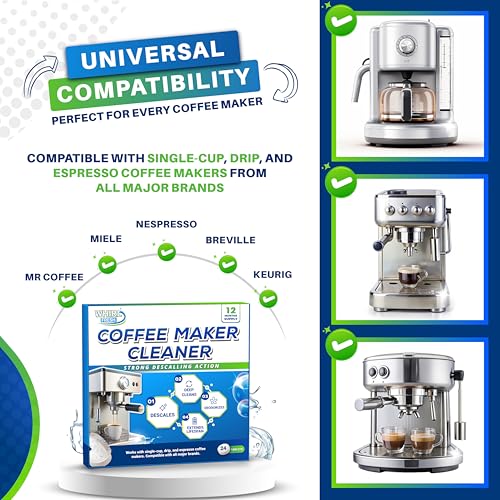
Coffee Maker Descaler Tablets: Whirl Fresh 24-Count Cleaner for Keurig
Whirl Fresh descaling tablets remove limescale, calcium, grime, and coffee oils while helping maintain water flow and brew clarity. Buy them for compatible single-serve or multi-cup brewers if you want twice-monthly maintenance in a year-long supply.
Pros and Cons
Pros
- Broad compatibility includes Breville, Keurig, Nespresso Vertuo, Philips, Cuisinart, De'Longhi, Mr. Coffee, Ninja, Hamilton Beach, Miele, and Jura.
- Concentrated tablets target both mineral scale and coffee oils.
- A 24-count package provides a convenient year-long maintenance supply when used twice monthly.
- The cleaning process uses a brew cycle followed by a rinse instead of complicated disassembly.
Cons
- The product data does not specify tablet ingredients, machine-specific dosing, or material details.
- Compatibility is broad, but buyers should still confirm their machine's cleaning instructions before use.
Keurig
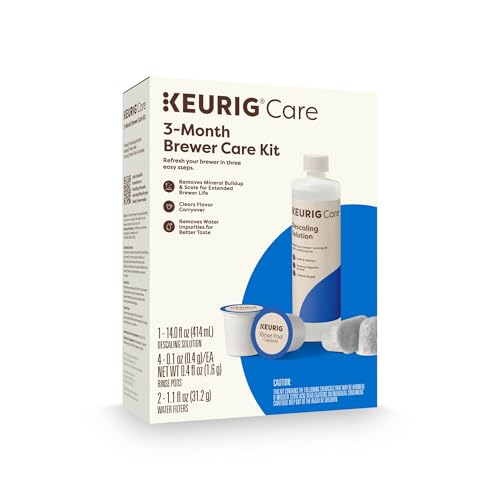
Complete 3-Month Coffee Maker Cleaning Kit: Keurig Brewer Maintenance Kit with Descaler, Rinse Pods & Water Filters
This kit bundles four rinse pods, one descaling solution, and two water filter cartridges to strip mineral scale and oil residue from Classic, 1.0, and 2.0 K-Cup brewers on a quarterly schedule. Buy it if you brew daily and have noticed slower drip times or a stale carryover taste between different K-Cup flavors.
Pros and Cons
Pros
- Covers all three maintenance tasks Keurig recommends in a single purchase.
- Fits Classic, 1.0, and 2.0 K-Cup brewers, so it works across most household Keurig models.
- Filter cartridges are ready in about five minutes after a soak and rinse.
- Rinse pod cleaning requires no tools, soaking, or brewer teardown.
Cons
- Two filter cartridges cover roughly four months of use, so heavy brewers will run out before the next descaling cycle.
- Water filter cartridges only fit Keurig brewers with a filter-ready reservoir handle, which some compact models lack.

Urnex
Descale Keurig, Espresso Machines and Kettles: Urnex Liquid Dezcal Activated Descaling Solution, 33.6 oz, 8 Uses
Urnex Liquid Dezcal is a fast-acting liquid descaler that strips mineral and limescale buildup from coffee makers, espresso machines, kettles, and garment steamers, with one 33.6 ounce bottle covering eight full descaling cycles. Buy it if you run a Keurig 1.0/2.0 or espresso machine on hard water and want one solution that services every water-heating appliance in the kitchen instead of buying a separate descaler for each.
Pros and Cons
Pros
- Works across Keurig 1.0/2.0, drip brewers, espresso machines, kettles, and steamers rather than locking you into one appliance brand.
- Fast-acting liquid cuts through heavy mineral deposits in a single descaling cycle on most machines.
- The 33.6 ounce size costs far less per cycle than single-dose descaling packets.
- Simple measure, brew, and rinse routine that takes minutes and needs no disassembly.
Cons
- You need to run two or three plain water cycles afterward, or the first cup will carry a sour aftertaste.
- Some manufacturers require their own branded descaler to keep a machine's warranty intact, so check your manual first.

LIBMAN COMMERCIAL
Descale a Drip, Pod, or Espresso Brewer in One Cycle: Libman Liquids Coffee Machine Descaler and Cleaner
Libman Liquids Coffee Machine Descaler and Cleaner is a pour-in liquid that dissolves hard water scale and coffee oil film inside a brewer's tank, heating element, and lines, restoring brew temperature and flow without any disassembly. Buy it if you run a coffee machine daily on hard tap water and want one bottle that handles descaling and residue cleaning instead of two separate products.
Pros and Cons
Pros
- Liquid format needs no tablet dissolving or powder measuring before a cycle.
- Covers descaling and oil residue cleaning, replacing two products in the cabinet.
- Not tied to a single machine brand, so it fits mixed coffee setups.
- Bottle stores under the sink and dispenses directly into the water reservoir.
Cons
- The listing does not state bottle volume or how many descaling cycles it delivers, so heavy users cannot judge how long one bottle lasts.
- No published compatibility list for specific espresso machines, so owners of sealed or warranty-sensitive units should check the manual first.

Fellow
Descale Coffee Makers and Espresso Machines Without Scrubbing: Fellow 8 oz Liquid Descaler
Fellow's 8 oz liquid descaler dissolves the mineral scale that builds up inside coffee makers and espresso machines, restoring water flow and heating speed without disassembly. Buy it if you run an espresso machine or drip brewer on hard water and want a purpose-made descaling solution instead of improvised vinegar rinses.
Pros and Cons
Pros
- Liquid concentrate is easier to portion accurately than tablets or loose powder.
- Compatible with both espresso machines and standard coffee makers.
- Compact 8 oz bottle stores easily beside the machine for scheduled maintenance.
- Coffee-specific formulation avoids the lingering smell that vinegar descaling leaves behind.
Cons
- At 8 oz, it is a consumable that needs repurchasing every few descaling cycles on hard water.
- Some manufacturers void warranties unless you use their branded descaler, so check your machine's manual first.
Editors' Picks
Whirl Fresh Coffee Maker Descaler Tablets: Whirl Fresh 24-Count Cleaner for Keurig
Whirl Fresh
Coffee Maker Descaler Tablets: Whirl Fresh 24-Count Cleaner for Keurig
Whirl Fresh descaling tablets remove limescale, calcium, grime, and coffee oils while helping maintain water flow and brew clarity. Buy them for compatible single-serve or multi-cup brewers if you want twice-monthly maintenance in a year-long supply.
$9.99 at AmazonEditors' Favorite
Color: White Size: 1 Count (Pack of 24) Product Group: Kitchen Binding: Kitchen
Shop NowKeurig Complete 3-Month Coffee Maker Cleaning Kit: Keurig Brewer Maintenance Kit with Descaler, Rinse Pods & Water Filters
Keurig
Complete 3-Month Coffee Maker Cleaning Kit: Keurig Brewer Maintenance Kit with Descaler, Rinse Pods & Water Filters
This kit bundles four rinse pods, one descaling solution, and two water filter cartridges to strip mineral scale and oil residue from Classic, 1.0, and 2.0 K-Cup brewers on a quarterly schedule. Buy it if you brew daily and have noticed slower drip times or a stale carryover taste between different K-Cup flavors.
$13.49 at AmazonGreat Value
Color: Works with all K-Cup Pod Coffee Makers Size: 1 Count (Pack of 1) Dimensions: 8.3 x 6.2 x 2.8 Inches Product Group: Kitchen Binding: Kitchen
Shop NowUrnex Descale Keurig, Espresso Machines and Kettles: Urnex Liquid Dezcal Activated Descaling Solution, 33.6 oz, 8 Uses
Urnex
Descale Keurig, Espresso Machines and Kettles: Urnex Liquid Dezcal Activated Descaling Solution, 33.6 oz, 8 Uses
Urnex Liquid Dezcal is a fast-acting liquid descaler that strips mineral and limescale buildup from coffee makers, espresso machines, kettles, and garment steamers, with one 33.6 ounce bottle covering eight full descaling cycles. Buy it if you run a Keurig 1.0/2.0 or espresso machine on hard water and want one solution that services every water-heating appliance in the kitchen instead of buying a separate descaler for each.
$17.94 at AmazonColor: Greay and White Size: 33.8 Fl Oz (Pack of 1) Dimensions: 3.15 x 3.15 x 9.1 inches Weight: 2.425084882 pounds Product Group: Drugstore Binding: Kitchen
Shop NowLIBMAN COMMERCIAL Descale a Drip, Pod, or Espresso Brewer in One Cycle: Libman Liquids Coffee Machine Descaler and Cleaner
LIBMAN COMMERCIAL
Descale a Drip, Pod, or Espresso Brewer in One Cycle: Libman Liquids Coffee Machine Descaler and Cleaner
Libman Liquids Coffee Machine Descaler and Cleaner is a pour-in liquid that dissolves hard water scale and coffee oil film inside a brewer's tank, heating element, and lines, restoring brew temperature and flow without any disassembly. Buy it if you run a coffee machine daily on hard tap water and want one bottle that handles descaling and residue cleaning instead of two separate products.
$9.98 at AmazonProduct Group: Kitchen Binding: Tools & Home Improvement
Shop NowFellow Descale Coffee Makers and Espresso Machines Without Scrubbing: Fellow 8 oz Liquid Descaler
Fellow
Descale Coffee Makers and Espresso Machines Without Scrubbing: Fellow 8 oz Liquid Descaler
Fellow's 8 oz liquid descaler dissolves the mineral scale that builds up inside coffee makers and espresso machines, restoring water flow and heating speed without disassembly. Buy it if you run an espresso machine or drip brewer on hard water and want a purpose-made descaling solution instead of improvised vinegar rinses.
$14.95 at AmazonSize: 8 Fl Oz (Pack of 1) Product Group: Kitchen Binding: Tools & Home Improvement
Shop NowWhat Descaling Is and Why It Matters
Understanding what scale does explains why this chore matters more than most people think.
Limescale is calcium and magnesium carbonate left behind when water is heated and evaporates. Over weeks and months it coats the inside of your coffee maker’s water tank, heating element, and tubing as a chalky white or greenish crust. You can’t see most of it because it’s inside the machine.
The consequences build gradually: water flow slows as tubes narrow, brew temperature drops because scale insulates the heating element (and cooler water under-extracts, making coffee taste weak and sour), the machine gets louder and slower, and eventually it clogs or fails. Scale is the number-one cause of premature coffee-maker death.
Descaling uses a mild acid — white vinegar or a commercial descaling solution — to dissolve the mineral deposits and flush them out. Done regularly, it keeps the machine brewing hot, fast, and clean-tasting, and dramatically extends its life. It’s the single most important maintenance any coffee maker needs.
How to Descale a Drip Coffee Maker
Standard drip machines are the easiest to descale. Here’s the process.
1. Empty the carafe and remove any filter and grounds. Make sure the machine is empty of coffee and the used filter is gone.
2. Mix the descaling solution. Combine equal parts white vinegar and water — enough to fill the water reservoir (for example, 4 cups vinegar + 4 cups water for a 12-cup machine). Alternatively, use a commercial descaler mixed per its instructions. Pour it into the reservoir.
3. Run a half brew cycle, then pause. Start the machine and let it run about halfway through the cycle, then turn it off and let the solution sit in the reservoir and carafe for 30-60 minutes. This dwell time lets the acid dissolve the scale.
4. Finish the cycle. Turn the machine back on and let it complete brewing the solution through.
5. Rinse thoroughly. Discard the solution, refill the reservoir with fresh, clean water, and run a full brew cycle. Repeat this fresh-water cycle two or three times to flush out all vinegar taste and dissolved scale. Vinegar smell should be gone before you brew coffee again.
6. Wash the carafe and basket in warm soapy water, and wipe down the machine.
That’s it — the whole process takes about an hour, mostly waiting.
How to Descale a Keurig or Pod Machine
Pod machines have narrow internal tubing that scales up fast, so they need regular descaling. The method is similar with a few specifics.
1. Empty the machine: remove any pod, empty the drip tray, and if the water reservoir is removable, empty it. Remove any water filter cartridge from the reservoir.
2. Add descaling solution: fill the reservoir with a 1:1 vinegar-and-water mix, or Keurig’s own descaling solution followed by water per its label. Pod-machine makers often recommend their commercial descaler, but white vinegar works for most.
3. Run cycles without a pod: place a large mug on the tray and run the largest brew size without a K-cup, dispensing the solution into the mug. Empty the mug and repeat until the reservoir is nearly empty. Pause and let the machine sit with solution in it for 30 minutes if heavily scaled.
4. Rinse completely: refill the reservoir with fresh water and run repeated water-only cycles (usually a full reservoir’s worth, several mugs) until there’s no vinegar smell or taste. Pod machines need thorough rinsing because residual vinegar taints the next coffee.
5. Reinsert the water filter cartridge (or a fresh one) and you’re done.
Many modern pod machines have a descale light or button that indicates when descaling is due and sometimes runs a guided descale mode — follow the machine’s prompt. Our best keurig coffee maker 2025 guide covers models with this feature.
How to Descale an Electric Kettle
Electric kettles scale heavily because they do nothing but boil water. Descaling them is quick.
1. Fill with equal parts white vinegar and water — enough to cover the scaled areas, usually the heating element and lower walls where white crust forms.
2. Boil, then let it sit. Bring the solution to a boil, switch off, and let it sit for 20-30 minutes (up to an hour if heavily scaled). The hot acid dissolves the limescale.
3. Pour out and scrub gently if needed — loosened scale often wipes away with a soft cloth. Don’t use abrasive tools on the element.
4. Rinse well: fill with fresh water, boil, and discard. Repeat two or three times until no vinegar smell remains. Then boil one more full kettle of fresh water and discard it before making tea or coffee.
For kettles used daily with hard water, monthly descaling keeps them fast and clean. Our best electric kettle guide covers models with scale-limiting features. Citric acid (a spoonful in water, boiled) works too and leaves less odor than vinegar.
How Often, and Preventing Scale
Frequency depends mostly on your water hardness — the harder your water, the faster scale builds.
General schedule: descale drip machines and electric kettles every 1-3 months, and pod machines like Keurig every 3-6 months. With hard water, move to the shorter end (monthly for kettles and drip); with soft or filtered water, you can stretch longer. If you notice slower brewing, cooler coffee, more noise, or visible white crust, descale regardless of schedule — those are signs scale has built up.
Prevent scale in the first place:
- Use filtered water instead of hard tap water — this is the biggest factor. It dramatically slows scale buildup and improves coffee flavor too.
- Empty the reservoir between uses rather than leaving water sitting, which deposits minerals.
- Use the machine’s water filter cartridge if it has one, and replace it on schedule.
- Wipe and dry removable parts regularly.
Prevention plus regular descaling keeps a coffee maker brewing like new for years. Neglecting it is the fastest way to kill an otherwise good machine.
Frequently Asked Questions
How often should I descale my coffee maker?
It depends on water hardness. As a general rule, descale drip machines and electric kettles every 1-3 months and pod machines (like Keurig) every 3-6 months. With hard water, descale more often — monthly for kettles and drip machines. Watch for signs regardless of schedule: slower brewing, cooler or weaker coffee, more noise, or visible white crust all mean it’s time to descale.
Can I descale with vinegar, or do I need a commercial descaler?
White vinegar (mixed 1:1 with water) works well for most coffee makers and is cheap and effective. Commercial descalers are formulated to be equally effective with less odor and are sometimes recommended by pod-machine makers. Either works; the key is thorough rinsing afterward. Note that some manufacturers void warranties if you use vinegar instead of their descaler, so check your manual if the machine is under warranty.
How do I know if my coffee maker needs descaling?
Signs include slower brewing, coffee that’s cooler or tastes weak and sour (from dropped brew temperature), the machine being louder than usual, longer heat-up times, and visible white or chalky mineral crust in the reservoir or on the heating element. Many pod machines have a descale indicator light. If you can’t remember the last time you descaled and have hard water, it’s almost certainly due.
Why does descaling matter for coffee taste?
Scale insulates the heating element, which lowers brew temperature below the ideal 195-205°F. Cooler water under-extracts coffee, making it taste weak, sour, and flat. Scale also slows water flow, disrupting proper extraction. Descaling restores full brew temperature and flow, so the machine extracts coffee properly again — noticeably improving flavor. A scaled machine simply can’t make good coffee no matter how good the beans are.
How do I rinse the vinegar taste out after descaling?
Run repeated cycles of fresh, clean water through the machine — two or three full cycles for a drip maker, several reservoirs for a pod machine, and two or three boils for a kettle. Continue until there’s no vinegar smell or taste at all. Thorough rinsing is essential, because residual vinegar will taint your next cup. Smell the water and the machine before brewing coffee to confirm it’s clear.
Will descaling damage my coffee maker?
No — descaling with properly diluted vinegar or a commercial descaler is safe and is exactly what manufacturers recommend to maintain the machine. The mild acid dissolves mineral scale without harming the components. The only cautions are to dilute correctly (don’t use undiluted vinegar), rinse thoroughly afterward, and check whether your warranty specifies a particular descaler. Regular descaling extends the machine’s life rather than harming it.
Related buying guides: best coffee grinder and best grind and brew coffee maker.
The Bottom Line
Descaling is the most important maintenance your coffee maker needs, and it’s simple: run a 1:1 vinegar-and-water solution (or commercial descaler) through the machine, let it dwell, then rinse with two or three fresh-water cycles until the vinegar smell is gone. Do it every 1-3 months for drip machines and kettles, every 3-6 months for pod machines, and more often with hard water. Using filtered water slows scale buildup between descalings. Regular descaling keeps coffee hot and flavorful and can double a machine’s lifespan. For low-maintenance machines, see our best keurig coffee maker 2025 and best electric kettle guides.




Write Your Review
No reviews yet. Be the first to share your experience!