

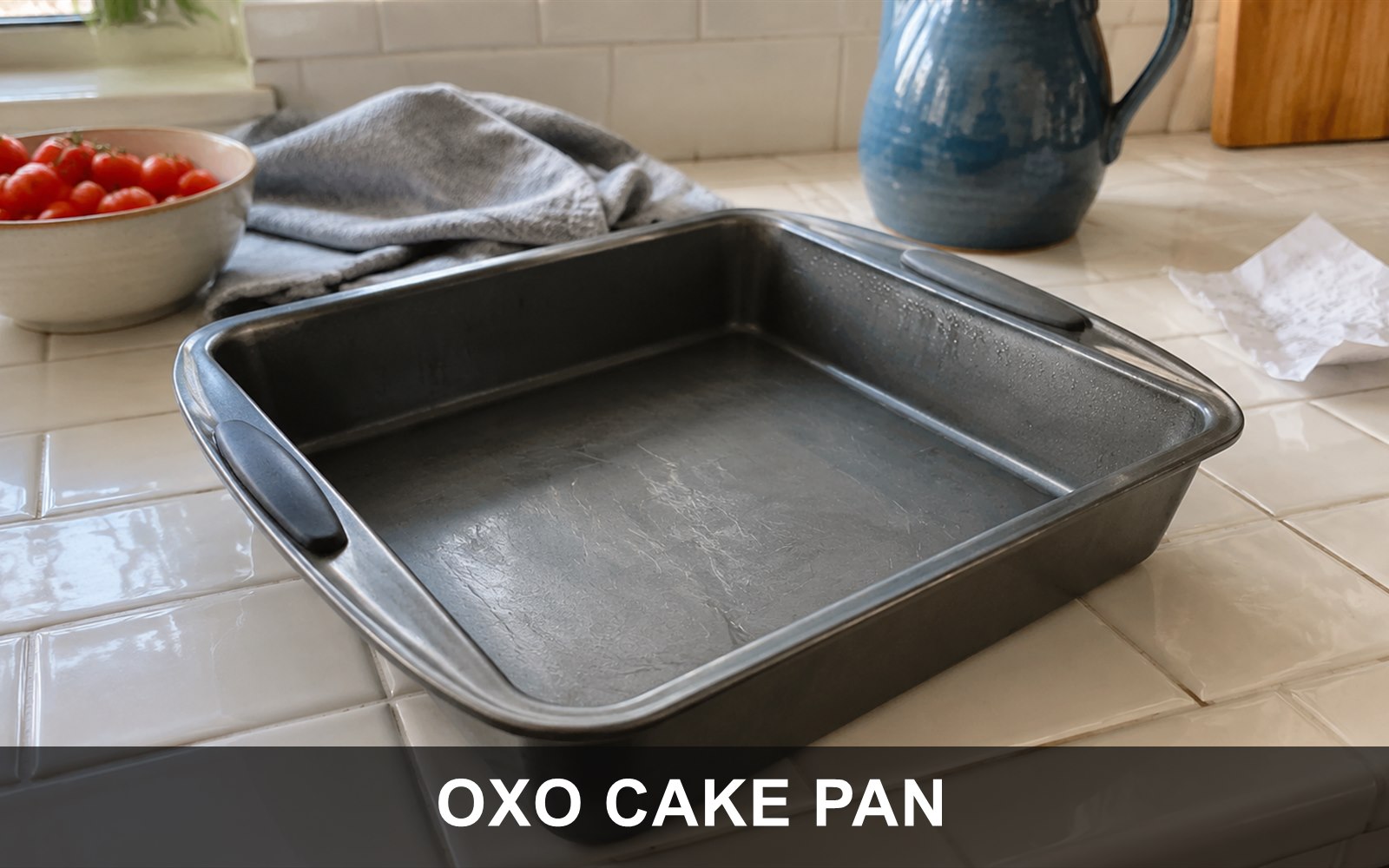
TL;DR — The best oxo cake pan should match how you actually cook, how often you will use it, and how much maintenance you want. Prioritize proven construction, practical usability, easy cleaning, and long-term owner feedback over flashy feature lists. For adjacent picks, compare best bundt cake pan, best baking sheets, best mixing bowls.
The HomeWhisk editorial team researches kitchen equipment by analyzing manufacturer specifications, construction details, and aggregated user reviews from major retailers and enthusiast communities. Our recommendations are based on what products actually deliver, not what brands promise.
For this guide, we reviewed oxo cake pan options through the lens of material, sizing, durability, cleaning, storage, accuracy, and home-baker feedback. If you are still comparing categories, see best bundt cake pan, best baking sheets, best mixing bowls, best kitchen scale, best cutting board, best food storage containers for related commercial guides.
Editor’s Picks
| Category | Pick | Why |
|---|---|---|
| Best Overall | Top researched option from the list below | Strongest balance of performance, durability, and owner satisfaction |
| Best Value | Value-focused pick | Good daily usability without overpaying for cosmetic extras |
| Best for Beginners | Easiest-maintenance option | Simple to use, clean, store, and maintain |
Pros & Cons
Pros
- Commercial grade coating releases cake layers cleanly with minimal greasing or parchment.
- Aluminized steel body resists warping and delivers consistent browning across the base.
- Rolled edges add rigidity and make transferring a filled pan safer.
- Size marking on the pan removes guesswork when matching a recipe to your bakeware.
Cons
- Non-stick coating requires silicone or nylon tools and hand washing to preserve its life.
- Only sold as a single 9-inch pan, so multi-layer cakes mean buying two or three.
Details
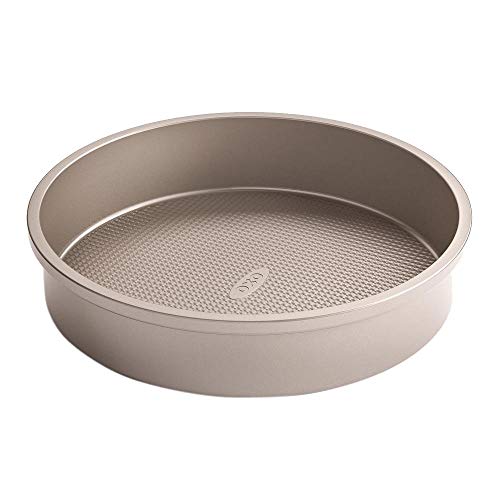
A 9-inch round baking pan built for layer cakes that stick, brown unevenly, or come out domed in cheap thin pans.
The micro-textured base minimizes surface contact and promotes airflow, so batter sets evenly and releases in one piece after a short cool-down.
Commercial grade aluminized steel with square rolled edges gives the pan real heft and a firm grip, and the top-surface size marking speeds up cabinet sorting.
The two-layer PTFE coating is scratch resistant but still needs hand washing and non-metal utensils to last.
Best for home bakers building two and three layer cakes who want repeatable results without parchment rounds.
Cooking Tips
Grease lightly even though the coating releases well. A thin film of butter or spray is enough, since the micro-texture does most of the work.
Cool cakes in the pan for about ten minutes before inverting. The aluminized steel holds heat, and a brief rest firms the crumb so layers lift out intact.
Buy two or three pans if you bake layer cakes often, then wash by hand with a soft sponge and skip metal knives when cutting inside the pan.

Pros & Cons
Pros
- Non-toxic ceramic coating avoids the PTFE and PFAS chemistry found in conventional non-stick bakeware.
- 550F heat tolerance gives it more range than the typical 450F limit on coated pans.
- Standard 9-inch diameter drops straight into common cake and tarte recipes without conversion math.
- Designed to sit out on display rather than be hidden in a cabinet.
Cons
- Hand wash only, so it cannot go in the dishwasher with the rest of your bakeware.
- A single 9-inch pan means buying two or three if you bake multi-layer cakes in one session.
Details
A 9-inch round baking pan with a ceramic non-stick interior, built for cakes, tartes, and other round bakes that need to come out of the pan whole.
The coating cuts prep: less greasing and parchment before baking, and minimal scrubbing after. Cakes release cleanly, which matters most when you are stacking layers.
Ceramic coating over a metal body, free of PTFE, PFOA, PFAS, lead, and cadmium. Rated to 550F, and sized to the 9-inch standard most recipes assume.
It is hand wash only, and ceramic coatings lose slickness faster than PTFE with heavy use or metal utensils.
Best for the home baker who wants non-toxic bakeware and bakes rounds often enough to justify a dedicated pan.
Cooking Tips
Skip the heavy greasing. A light coat of butter or spray is enough, and thick layers of shortening can build up residue on ceramic over time.
Let cakes cool in the pan for about ten minutes before turning out. The non-stick surface releases best once the crumb has set slightly.
Use silicone or wooden tools to lift and slice, and hand wash while the pan is still warm. Skip abrasive pads to keep the coating slick.
Save $3.51
Pros & Cons
Pros
- Superior heat conductivity promotes consistent baking and even browning.
- The encapsulated rim helps the pan retain its shape over time.
- Natural aluminum will not rust, supporting durable everyday use.
- Its 2.5-inch height provides useful depth for layer cakes.
Cons
- The 8-inch size limits the amount of batter compared with larger cake pans.
Details
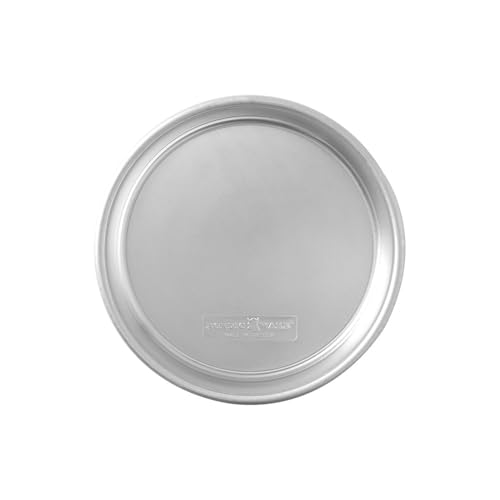
This 8-inch round cake pan helps home bakers produce evenly browned cakes without relying on inconsistent heat distribution.
Natural aluminum conducts heat efficiently, while the encapsulated rim helps prevent warping during repeated baking.
The pan has an 8-inch interior, 8.6-inch exterior diameter, and 2.5-inch height. Its weight is not listed.
Its compact capacity may not suit large cakes or recipes designed for bigger pans.
Best for home bakers and small bakeries needing a durable 8-inch cake pan.
Cooking Tips
Use the 8-inch interior dimensions when choosing recipes and portioning batter to avoid overfilling.
Allow space for the cake to rise, and check doneness according to your recipe’s baking guidance.
Use this pan when consistent browning and long-term durability matter more than large batch capacity.


Pros & Cons
Pros
- The two-pan set supports simultaneous baking of matching cake layers.
- Straight sides produce tall layers with clean edges for decorating.
- Anodized aluminum resists rust and provides even heating.
- The 9 x 2-inch dimensions work with favorite cake mixes and recipes.
Cons
- The pans are not dishwasher safe and require hand washing before and after use.
- Nonstick spray and parchment paper are recommended for easier cake release.
Details
This two-pan set helps home bakers create matching 9-inch cake layers without baking each layer separately.
Anodized aluminum promotes even heating, while straight sides support tall layers with clean edges for simpler decorating.
Each pan measures 9 x 2 inches and uses rust-resistant aluminum. The product listing does not specify weight.
The pans are not dishwasher safe, and easier release requires nonstick vegetable spray plus parchment paper.
Best for home bakers making decorated layer cakes with standard mixes or recipes.
Cooking Tips
Coat each pan with nonstick vegetable spray and line the bottom with a parchment circle before adding batter.
Use both pans together when preparing a layer cake so the layers can bake at the same time.
Hand wash before first use and after every bake, then rinse and dry thoroughly.
At a Glance: Comparison Table
| Factor | Why It Matters | What to Look For |
|---|---|---|
| Build quality | Determines lifespan and reliability | Solid materials, good fit-and-finish, few recurring owner complaints |
| Daily workflow | Determines whether you actually use it | Easy setup, cleanup, storage, and repeatable results |
| Maintenance | Prevents premature replacement | Clear care requirements that match your habits |
| Size and fit | Prevents overbuying | Capacity or dimensions that fit your household and kitchen |
| Value | Keeps the purchase practical | Pay for performance, not just brand name or appearance |
How We Evaluated These Products
This guide is research-based. The HomeWhisk team reviewed product specifications, owner-review patterns, retailer listings, and community feedback to identify which oxo cake pan options show the strongest combination of usable performance and long-term satisfaction. We do not claim direct product testing; instead, we synthesize repeated signals across many sources.
We paid special attention to recurring complaints because they reveal what matters after the first week: warping, dulling, weak motors, awkward cleaning, unreliable controls, poor handles, storage problems, and whether a product feels worth the price after repeated use.
What Actually Matters:
Material and durability
Material and gauge drive how evenly an oxo cake pan bakes and how long it lasts. Heavier aluminum and steel resist the hot spots and warping that plague thin, flimsy sheets, but they take longer to come up to temperature. Match the gauge to your oven and patience: thick pans reward slow, even bakes, while lighter ones heat fast at the cost of uniformity.
Sizing and capacity
Rim design and flatness decide whether the pan stays true through hundreds of hot-to-cold cycles. A rolled or encapsulated rim adds rigidity that fights the twist and buckle you hear as a bang in a hot oven. Set the pan on a flat surface and look for a dead-flat base — a rocking or bowed pan browns unevenly and never quite recovers.
Cleaning and storage
Surface finish and release govern the daily annoyance of sticking and scrubbing. Weigh bare aluminum and steel, which brown beautifully but need greasing or liners, against nonstick and ceramic coatings that release easily but wear and dislike metal tools and high heat. The right finish depends on what you bake most and how gentle you are willing to be with it.
Accuracy and consistency
Size, storage, and oven fit are easy to overlook until the pan does not fit. Measure your oven’s usable width with room for air to circulate, and think about how the pan nests or hangs in your cabinets. For most home kitchens, a slightly smaller pan that fits comfortably and stores without a fight beats an oversized one that bakes poorly against the walls.
Price and practical value
Care routine and long-term value depend on how the oxo cake pan ages under real use. Coated pans simplify cleanup but have a finite lifespan; bare metal is nearly immortal but wants drying and the occasional scrub to stay rust-free and non-sticky. Choose the maintenance story you will actually follow, because the pan you care for correctly is the one that lasts.
Frequently Asked Questions
What is the best oxo cake pan for most people?
The best choice is the one that fits your actual use case, maintenance habits, and budget. Start with the options in this guide, then compare related categories like best bundt cake pan and best baking sheets.
Is it worth paying more?
It is worth paying more when the upgrade improves durability, usability, or performance you will notice often. It is not worth it for cosmetic features you rarely benefit from.
What should beginners prioritize?
Beginners should prioritize easy cleaning, forgiving materials, simple controls or maintenance, and a size that fits their kitchen.
What should I avoid?
Avoid vague materials, poor owner feedback, oversized products, hard-to-clean designs, and bundles that add pieces you will not use.
How long should it last?
A well-chosen product should last years with normal care, though lifespan depends on material, maintenance, and frequency of use.
What is the buying takeaway?
Choose the product that solves the daily job cleanly and reliably. If you need broader context, compare best bundt cake pan, best baking sheets, best mixing bowls, best kitchen scale before deciding.
Our Top Pick
The best oxo cake pan is the one that balances performance, maintenance, and value for your kitchen. Buy for real workflow first: how you cook, how often you use it, how easily it cleans, and whether it fits your storage. For most readers, comparing best bundt cake pan, best baking sheets, best mixing bowls is the smartest next step.



Write Your Review
No reviews yet. Be the first to share your experience!