

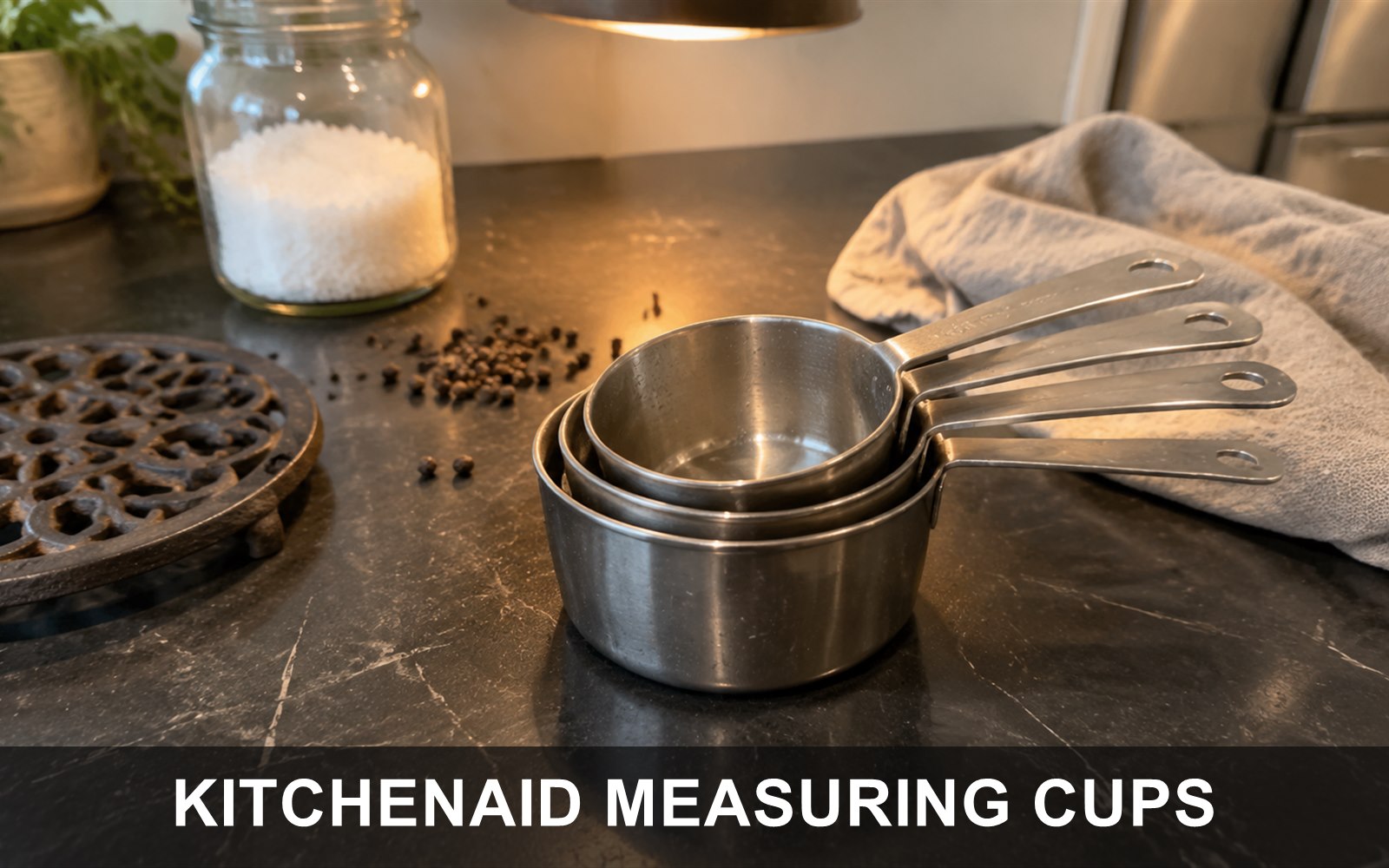
TL;DR — The best kitchenaid measuring cups should match how you actually cook, how often you will use it, and how much maintenance you want. Prioritize proven construction, practical usability, easy cleaning, and long-term owner feedback over flashy feature lists. For adjacent picks, compare best buy for kitchenaid mixer, best baking sheets, best mixing bowls.
The HomeWhisk editorial team researches kitchen equipment by analyzing manufacturer specifications, construction details, and aggregated user reviews from major retailers and enthusiast communities. Our recommendations are based on what products actually deliver, not what brands promise.
For this guide, we reviewed kitchenaid measuring cups options through the lens of material, sizing, durability, cleaning, storage, accuracy, and home-baker feedback. If you are still comparing categories, see best buy for kitchenaid mixer, best baking sheets, best mixing bowls, best kitchen scale, best cutting board, best food storage containers for related commercial guides.

Editor’s Picks
| Category | Pick | Why |
|---|---|---|
| Best Overall | Top researched option from the list below | Strongest balance of performance, durability, and owner satisfaction |
| Best Value | Value-focused pick | Good daily usability without overpaying for cosmetic extras |
| Best for Beginners | Easiest-maintenance option | Simple to use, clean, store, and maintain |
Pros & Cons
Pros
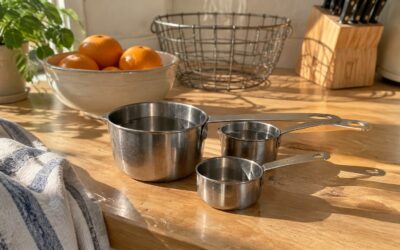
- Includes useful 1/4, 1/3, 1/2, and 1 cup sizes.
- Standard and metric markings support accurate measuring across recipes.
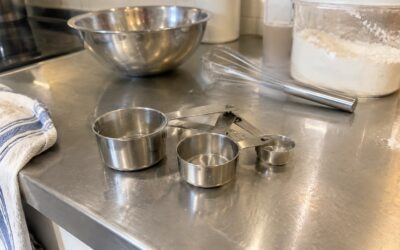
- Nesting design and retaining ring improve drawer organization.
- Dishwasher-safe construction reduces cleanup effort.
Cons
- The set only includes four cup sizes and does not provide smaller spoon measurements.
- The product data does not specify the cup material or individual weights.
Details
The KitchenAid four-piece measuring cup set helps solve inconsistent ingredient portions when preparing recipes with wet or dry ingredients.
Clearly marked standard and metric units make measurements easier to read, while sizes from 1/4 to 1 cup cover common kitchen tasks.
Nesting cups and the included ring keep the set together in a drawer. Dishwasher-safe construction supports simpler cleanup.
Materials and individual weights are not specified, and the set does not include smaller measuring spoons.
Best for home cooks who want an organized, dishwasher-safe measuring cup set for everyday recipes.
Best Uses
Use the 1/4, 1/3, 1/2, and 1 cup sizes for measured flour, sugar, grains, liquids, and other recipe ingredients.
Check the standard and metric markings when following recipes that use different measurement systems.
Nest the cups and secure them with the ring after washing to keep the set organized in a drawer.
Pros & Cons
Pros
- The set covers three common capacities without requiring separate purchases.
- Tempered glass works in the microwave, freezer, dishwasher, and preheated oven.
- Large markings appear in both ounces and milliliters for flexible recipe use.
- The curved spout and comfortable handle make liquids easier to transfer.
Cons
- Glass is heavier and more vulnerable to impact than plastic measuring cups.
- The 4-cup model measures 8 inches across by 6 inches high, so it needs meaningful storage space.
Details
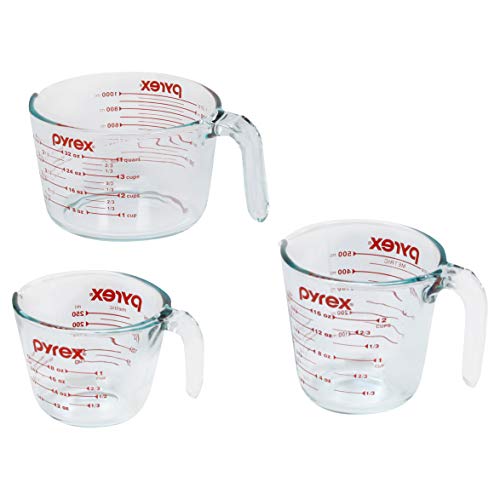
This three-piece set solves the need for multiple measuring capacities during baking, cooking, mixing, and ingredient transfer.
Bold ounce and milliliter markings improve readability, while curved spouts help direct liquids into bowls and pans.
Tempered glass is non-porous, BPA-free, and safe for the microwave, freezer, dishwasher, and preheated oven.
Glass handles kitchen heat and odors well but weighs more and can break if dropped or struck.
Best for home cooks who want readable measurements and versatile glass prepware in three sizes.
Best Uses
Use the 1-cup model for butter, milk, and smaller liquid ingredients, then scale up to the 2-cup or 4-cup cup for larger batches.
Measure and mix ingredients directly in the cups, or melt butter in the microwave before pouring through the curved spout.
Place the cups in the dishwasher after use, and use the freezer or preheated oven when the recipe requires it.
At a Glance: Comparison Table
| Factor | Why It Matters | What to Look For |
|---|---|---|
| Build quality | Determines lifespan and reliability | Solid materials, good fit-and-finish, few recurring owner complaints |
| Daily workflow | Determines whether you actually use it | Easy setup, cleanup, storage, and repeatable results |
| Maintenance | Prevents premature replacement | Clear care requirements that match your habits |
| Size and fit | Prevents overbuying | Capacity or dimensions that fit your household and kitchen |
| Value | Keeps the purchase practical | Pay for performance, not just brand name or appearance |
How We Evaluated These Products
This guide is research-based. The HomeWhisk team reviewed product specifications, owner-review patterns, retailer listings, and community feedback to identify which kitchenaid measuring cups options show the strongest combination of usable performance and long-term satisfaction. We do not claim direct product testing; instead, we synthesize repeated signals across many sources.
We paid special attention to recurring complaints because they reveal what matters after the first week: warping, dulling, weak motors, awkward cleaning, unreliable controls, poor handles, storage problems, and whether a product feels worth the price after repeated use.
What Actually Matters:
Material and durability
Material and construction quality set the ceiling for how a kitchenaid measuring cups performs and survives. Look at the core material, thickness, and how parts are joined — riveted or welded handles, encapsulated bases, and solid seams outlast glued or thin-gauge builds. A heavier, well-bonded piece usually earns its price through years of stable, predictable use.
Sizing and capacity
Heat behavior and cooking control tell you how forgiving the piece is day to day. Even heating and quick recovery matter more than a flashy finish, because hot spots burn food and slow recovery drags out cooking. Check how the material responds to changes on the burner — responsive control is what lets you actually cook rather than react.
Cleaning and storage
Compatibility with your stove and oven is a spec people skip and regret. Confirm induction support if you need it, the oven-safe temperature, and whether the handles and lids share that limit. A great kitchenaid measuring cups that cannot go under the broiler or sit on your cooktop is the wrong one, no matter how well it is made.
Accuracy and consistency
Cleaning, maintenance, and storage decide how often the piece actually gets used. Weigh dishwasher tolerance against hand-washing, whether the surface traps residue, and how the piece stacks or hangs without damage. Something that is a struggle to clean or store tends to migrate to the back of the cabinet regardless of how well it cooks.
Price and practical value
Price, warranty, and long-term value come down to cost per year of real use, not the tag. Weigh the warranty, the availability of replacement parts, and whether the upgrade over a cheaper model changes anything you do weekly. For most home kitchens, spend on the fundamentals that show up every time you cook and skip cosmetic extras that fade fast.
Frequently Asked Questions
What is the best kitchenaid measuring cups for most people?
The best choice is the one that fits your actual use case, maintenance habits, and budget. Start with the options in this guide, then compare related categories like best buy for kitchenaid mixer and best baking sheets.
Is it worth paying more?
It is worth paying more when the upgrade improves durability, usability, or performance you will notice often. It is not worth it for cosmetic features you rarely benefit from.
What should beginners prioritize?
Beginners should prioritize easy cleaning, forgiving materials, simple controls or maintenance, and a size that fits their kitchen.
What should I avoid?
Avoid vague materials, poor owner feedback, oversized products, hard-to-clean designs, and bundles that add pieces you will not use.
How long should it last?
A well-chosen product should last years with normal care, though lifespan depends on material, maintenance, and frequency of use.
What is the buying takeaway?
Choose the product that solves the daily job cleanly and reliably. If you need broader context, compare best buy for kitchenaid mixer, best baking sheets, best mixing bowls, best kitchen scale before deciding.
Our Top Pick
The best kitchenaid measuring cups is the one that balances performance, maintenance, and value for your kitchen. Buy for real workflow first: how you cook, how often you use it, how easily it cleans, and whether it fits your storage. For most readers, comparing best buy for kitchenaid mixer, best baking sheets, best mixing bowls is the smartest next step.



Write Your Review
No reviews yet. Be the first to share your experience!