

The toaster is one of the most-used and least-thought-about appliances in the kitchen — until you get a bad one. The difference between a good toaster and a frustrating one comes down to a few unglamorous things: does it brown evenly across the whole slice (not pale in the middle and burnt at the edges), does it actually hit the shade you dial in, and do slices two through six come out like slice one instead of progressively darker. The premium toasters that publications rave about nail all three; budget ones vary.
The category sorts mainly by capacity and slot type. 2-slice toasters are compact and right for one or two people. 4-slice models feed a family or batch-toast for guests. Long-slot toasters use one or two extended slots to fit artisan bread, long slices, and more at once. Beyond that, the features that matter are wide slots (for bagels and thick bread), a real shade range, and conveniences like bagel mode, a ‘a bit more’ boost, and a crumb tray. Below are the most-bought picks with quick verdicts and detail.
Our Quick Picks
- Best Overall (2-Slice): Hamilton Beach 2-Slice with Extra-Wide Slots and Toast Boost
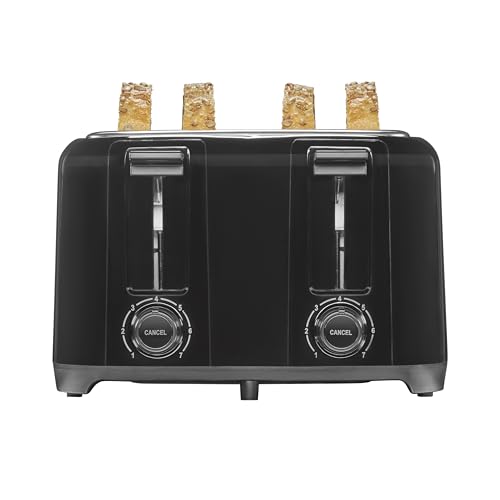
- Best for Families (4-Slice): Proctor Silex 4-Slice with Extra-Wide Slots
- Best Long-Slot: Elite Gourmet SLIMTOAST 2-Slice Long Slot
- Best Smart Toaster: Ganiza Smart Toaster with Touchscreen and Timer
- Best Display/Budget: 2-Slice Wide-Slot Toaster with LCD Digital Countdown

Pros & Cons
Pros
- Extra-wide slots and the bagel setting make it genuinely versatile for bread types beyond standard sandwich slices.
- Toast Boost is a practical safety feature that eliminates the need to dig into hot slots for smaller items.
- Stainless steel housing resists fingerprints less than chrome and holds up to daily countertop use.
- Seven shade levels offer finer control than the three or four settings found on basic models in this price range.
Cons
- Two-slot capacity limits throughput for households that routinely toast for three or more people at once.
- No wide-slot cover or dust guard is included, so the slots collect debris when the toaster sits unused.
Details
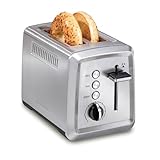
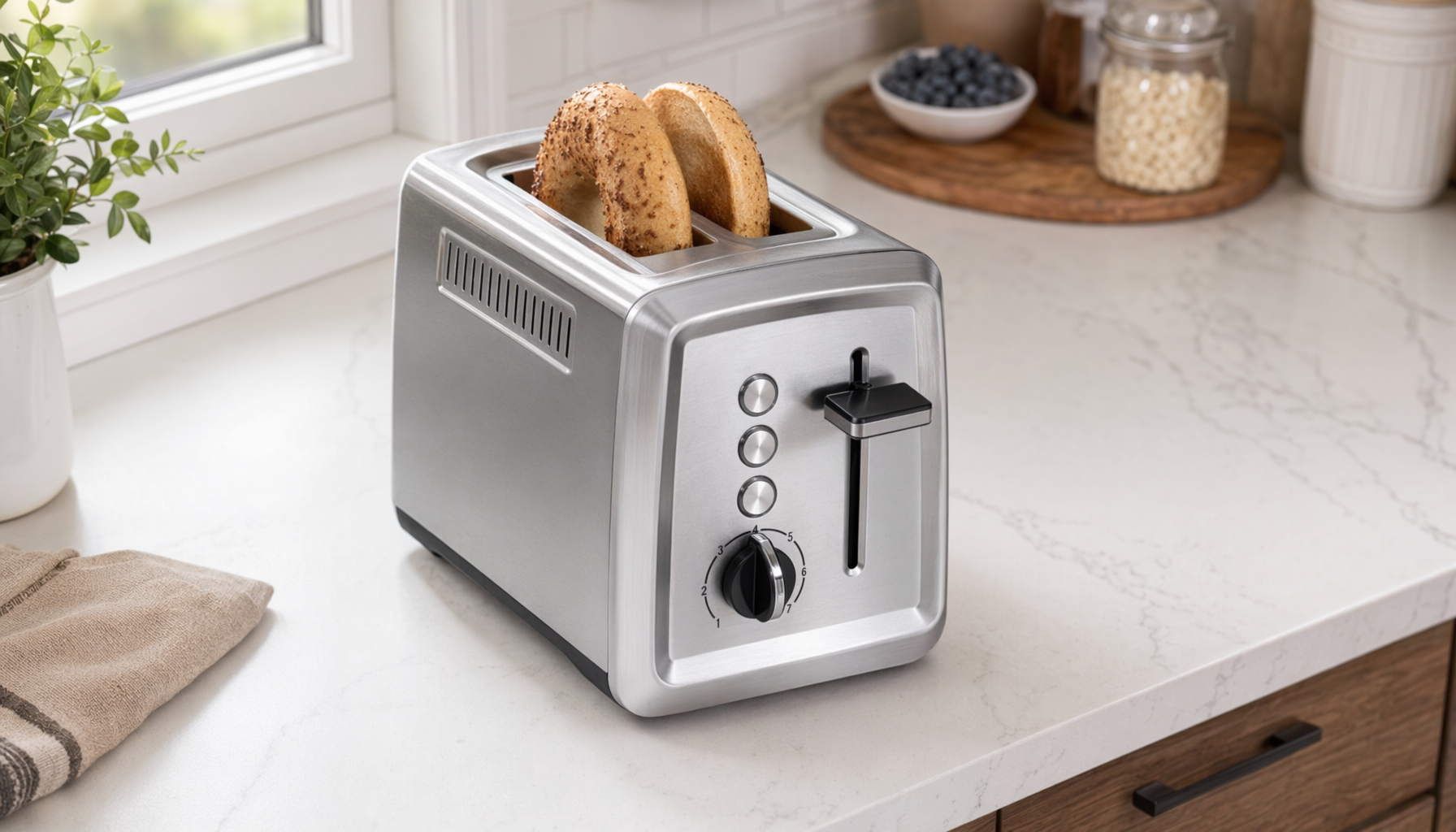
The Hamilton Beach 22794 is a 2-slice countertop toaster built to handle bread types that standard narrow-slot models cannot, including thick-cut Texas toast, split bagels, and oversized English muffins.
Seven shade settings and dedicated bagel mode give you consistent results whether you want a light warm-through or a firm, dark crust. The defrost cycle extends that range to frozen items straight from the freezer.
Toast Boost is the standout mechanical feature: it raises finished toast above the slot rim so small items are reachable without tools or risk of contact with heating elements.
The slide-out crumb tray is the only cleaning task this toaster requires regularly. The stainless steel shell does not add much weight and fits comfortably on a standard countertop footprint.
Best for single households or couples who toast a variety of bread types and want a reliable, easy-clean appliance without paying for a four-slice model.
How to Use
Select the correct function before lowering the lever: Bagel mode toasts the cut side while gently warming the crust side, so place bagels cut-face toward the center of the slot.
For frozen waffles or pancakes, press Defrost first, then set your preferred shade. The cycle runs longer automatically to account for the frozen starting temperature.
Pull out the crumb tray from the base every few uses, tap it over a trash bin, and slide it back in. No tools or disassembly needed to keep the interior clean between uses.

Save $10.00
Pros & Cons
Pros
- Extra-wide slots fit bagels and Texas toast flat, eliminating the uneven toasting that comes from forcing thick bread into standard slots.
- The cancel button stops the cycle immediately at any browning stage, so you are never locked into waiting out the timer.
- Toast Boost lifts small breads high enough to grab safely, a practical detail that standard budget toasters skip.
- Cool-touch exterior walls stay safe to brush against during the toast cycle, reducing burn risk in a busy kitchen.
Cons
- No independent slot controls, so both pairs of slots run on the same shade setting, limiting flexibility when toasting two different items at once.
- Plastic construction keeps the price low but may show wear faster than stainless-steel alternatives under heavy daily use.
Details
The Proctor Silex 24215PS is a countertop 4-slice toaster built to handle thick breads that jam in standard-width slots, solving the uneven-browning problem common with bagels and Texas toast.
Extra-wide slots and 7 browning levels are the two features that drive daily performance: wider slots allow full contact with thick slices, while 7 levels give precise shade control most budget toasters do not offer.
Build materials are primarily plastic with a cool-touch exterior; the unit is lightweight and sized for standard counter depth, making it easy to slide under most cabinets.
Both slot pairs share a single shade selector, so you cannot run light toast on one side and dark on the other in the same cycle.
Best for households that regularly toast bagels or thick-cut bread and want a low-cost, no-fuss appliance with enough browning control for consistent daily results.
How to Use
Drop standard slices or bagels cut-side up into the wide slots, select your shade level on the dial, and press the lever down to start. The slots grip thick bread without forcing.
For English muffins or small rolls, use the same process; Toast Boost automatically raises the finished item above the slot rim so you can lift it out without reaching into the toaster.
After each session, slide out the pull-out crumb tray from the base, discard the crumbs over the trash, and replace it. Wrap the cord around the base cord storage before storing the unit.

Pros & Cons
Pros
- The extra-wide 1.5-inch slot handles thick-cut sourdough, frozen waffles, and bagel halves without forcing or jamming.
- The slim 3.94-inch footprint is narrower than most 2-slice toasters, making it a practical fit for tight kitchen counters.
- Six browning levels offer more granular control than the typical 3-to-4 shade options found on toasters in this price range.
- Backed by a 1-year limited warranty with US-based phone, email, and live chat support, reducing the risk of a dead-end purchase.
Cons
- A noticeable odor on first use requires running two empty cycles at the highest setting before toasting food, which is an extra step out of the box.
- The 3.94-inch width accommodates only two slices at a time, so households regularly toasting for three or more people will need multiple cycles.
Details
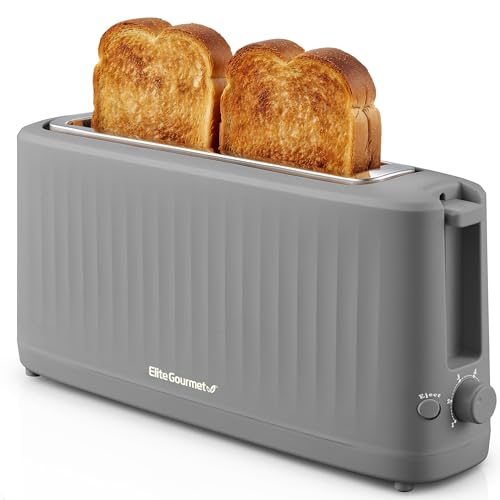
The ECT2517G is a 2-slice toaster built specifically for oversized bread that standard slots cannot handle, solving the common problem of cutting artisan loaves just to fit them.
Its 10-inch long slot with self-centering guides ensures full-surface contact with heating elements, producing consistent browning without cold spots at the crust ends.
The unit measures 15.67 inches long, 3.94 inches wide, and 7.28 inches tall. The slim width is the standout dimension for counter-space planning.
First-time users should run two empty high-heat cycles before making food; a faint manufacturing odor on initial use is normal and clears quickly.
Best for small-kitchen cooks and artisan bread enthusiasts who need long-slot capacity without giving up significant counter space.
How to Use
Before first use, run two empty cycles at the highest browning setting to burn off any manufacturing residue and eliminate the initial odor.
Slide bread into the long slot and let the self-centering guides grip it automatically. For bagels, place cut-side down. For full artisan loaves, no cutting needed. Select a browning shade between 1 and 6 and lower the lever.
Press Eject at any point to cancel and release bread immediately. After each use, pull out the crumb tray from the base, empty it over a trash bin, and slide it back in before storing.

Save $20.00
Pros & Cons
Pros
- The touchscreen with countdown timer removes all guesswork from browning level selection, a real upgrade over rotary dials on comparable-priced toasters.
- Anti-jam auto shutoff stops heating if bread gets stuck, reducing a common kitchen safety risk with wide-slot toasters.
- Four function modes including Defrost and Frozen Waffle mean you can go straight from freezer to toasted without a separate thaw step.
- Compact footprint with cord wrap storage makes it practical for kitchens where counter space is limited.
Cons
- At 925W maximum power, this toaster operates at the lower end of the wattage range, so back-to-back batches may take slightly longer than higher-wattage models.
- With zero published customer reviews at launch, there is no long-term reliability data yet to confirm how the touchscreen holds up after months of daily use.
Details
The Ganiza 2-slice toaster is a touchscreen-controlled countertop appliance that solves the common problem of inconsistent browning and wasted time watching a toaster with no visible feedback.
Its 925W element paired with upgraded heating technology browns both faces of a slice simultaneously and evenly, which matters most when toasting thick artisan bread or dense bagels that standard toasters char on the outside before the center warms.
The body is full stainless steel with food-grade slot liners and a heat-resistant exterior, keeping it odor-free and durable. The compact footprint fits a single square foot of counter space.
The touchscreen adds a layer of complexity over a simple dial; if the screen develops faults over time, repair is less straightforward than replacing a mechanical knob.
Best for small households or singles who toast daily and want repeatable results without adjusting settings every morning.
How to Use
Select your browning level by tapping the touchscreen shade scale from 1 to 6, then press the lever down. The countdown timer starts immediately so you know exactly when toast will pop up.
For frozen items, tap the Defrost or Frozen Waffle mode before pressing the lever. The toaster automatically extends the cycle to account for the lower starting temperature without you adjusting the shade setting.
Use the plus-or-minus 10-second buttons during any active cycle to nudge the result darker or lighter. After toasting, slide out the crumb tray, empty it over a bin, and slide it back. Wrap the cord around the base storage clips before putting the unit away.
Pros & Cons
Pros
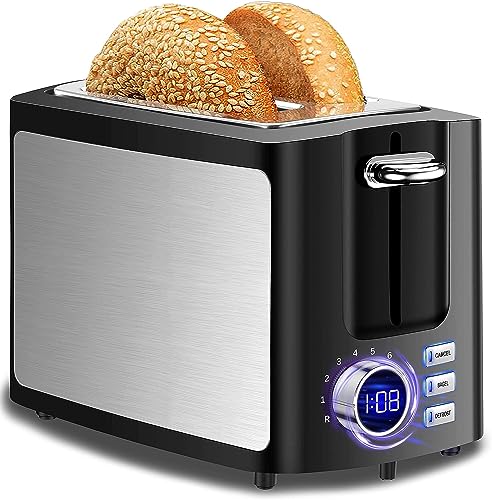
- The LCD digital timer removes uncertainty by displaying the remaining toast time in real time.
- Four dedicated function buttons (Bagel, Defrost, Reheat, Cancel) cover the most common toasting scenarios without mode-hunting.
- Wide slots accommodate thick or oversized bread varieties that typically require a specialty toaster.
- Cord storage underneath the base reduces countertop clutter without needing a separate organizer.
Cons
- With zero verified reviews at launch, real-world durability and heating consistency are unconfirmed.
- Nine browning levels may feel excessive for users who only need a simple light-or-dark setting.
Details
The Hommater 2-Slice Toaster solves the common problem of unevenly toasted or burnt bread by pairing a digital LCD countdown timer with 9 browning controls for consistent, repeatable results.
The wide 1.5-inch slots handle bagels, muffins, and Texas toast. The Defrost mode thaws and toasts frozen slices in a single cycle without pre-thawing on the counter.
At 13 inches deep by 5 inches wide by 7 inches tall, it fits most standard kitchen counters without dominating prep space. The crumb tray and cord storage are practical daily-use touches.
With no verified reviews yet, long-term heating element durability is unknown, which is worth considering before purchase.
Best for households that toast a variety of bread types daily and want a timer-based toaster to reduce counter supervision.
How to Use
Select your browning level from 1 to 9 using the dial, then press the function button that matches your bread type: Bagel for split rolls, Defrost for frozen slices, or the standard setting for fresh bread.
The LCD timer starts counting down immediately. You can monitor progress from across the kitchen and use Cancel at any point if the bread reaches your preferred color early.
After toasting, slide out the crumb tray from the bottom, tap out debris over a trash bin, and reinsert it. Wrap the cord into the built-in storage compartment underneath to keep the counter clear.
About These Recommendations
The technique above is the point of this guide; the products are here because they help. We have not tested them ourselves — we did not buy or use this gear. The recommendations come from comparing specifications and materials against the patterns in verified owner reviews, so treat them as a shortlist worth researching rather than a verdict from our own kitchen.
Availability and prices change often, so check the current listing before buying. We earn a commission on purchases made through links on this page, which never affects what we recommend.
The Picks in Detail
Hamilton Beach 2-Slice Toaster with Extra-Wide Slots, Bagel Setting, Toast Boost — Best Overall
Pros: The do-everything value pick for most households. The extra-wide slots swallow bagels, thick artisan slices, and English muffins without jamming, the dedicated bagel setting toasts the cut side while warming the other, and the ‘Toast Boost’ lifts smaller items (or shorter bread) up so you can grab them safely. A slide-out crumb tray makes cleanup easy, and Hamilton Beach’s reliability at this price is well established.
Cons: As a budget-friendly 2-slice it won’t have the heavy build or the most uniform edge-to-edge browning of a premium toaster, and color consistency across many batches is good rather than perfect.
Best for: One or two people who want wide slots, bagel handling, and reliable everyday toast without overspending.
Proctor Silex 4-Slice Toaster with Extra-Wide Slots, Cool-Touch Walls — Best for Families
Pros: The capacity pick for feeding more than one person at a time. Four extra-wide slots mean you can toast a family’s breakfast in one go (or a mix of bread and bagels), the cool-touch walls are a safety plus around kids, and a shade selector lets everyone get their preferred doneness. Proctor Silex keeps it simple, affordable, and easy to clean with a crumb tray.
Cons: Budget 4-slice toasters can brown slightly unevenly between the two slot pairs, and the build is functional rather than premium. No frills beyond the essentials.
Best for: Families and households that regularly toast for several people and want capacity and cool-touch safety on a budget.
Elite Gourmet SLIMTOAST 2-Slice Long Slot Toaster, 6 Shades — Best Long-Slot
Pros: The pick for artisan and long bread. The single long slot fits longer slices, baguette pieces, and oversized artisan bread that won’t sit in standard slots, and its slim, space-saving footprint is great for tight counters. Six browning shades give real control over doneness, the cool-touch body is safer to handle, and it covers the core job for one or two people who buy bakery-style loaves.
Cons: A single long slot toasts fewer pieces at once than a 4-slice for the same footprint, and long-slot heating can be slightly less even end-to-end on budget models.
Best for: People who buy long or artisan loaves, have a narrow counter, and want the flexibility of a long slot over square slots.
Ganiza Smart Toaster, 2-Slice with Touchscreen and Digital Countdown Timer — Best Smart Toaster
Pros: The high-tech pick for people who want precision and a modern look. A touchscreen interface and digital countdown timer show you exactly how much toasting time remains (no more guessing or hovering), with fine shade control for repeatable results. Wide slots handle bagels and thick bread, and the digital display elevates it above mechanical-dial toasters.
Cons: You pay for the screen and tech, and a touchscreen is one more thing that can fail over a toaster’s long life versus a simple mechanical lever. The core toasting performance is what matters most, and a screen doesn’t guarantee better browning than a good analog unit.
Best for: Gadget-minded cooks who value a precise digital timer, repeatable shade settings, and a sleek countertop look.
2-Slice Wide-Slot Toaster with LCD Digital Countdown Display — Best Display/Budget
Pros: A budget-friendly way to get the digital-countdown convenience without a premium price. It pairs wide slots (for bagels and thick bread) with an LCD display that counts down the remaining toast time, so you get a bit of the ‘smart’ experience — knowing exactly when your toast is done — at an accessible price point. Covers the everyday 2-slice job with a touch more feedback than a basic dial.
Cons: As a value smart-style unit, build quality and browning evenness are good-not-great, and the display tech on inexpensive models is less proven over years of use.
Best for: Single users or couples who like the countdown-display convenience but don’t want to pay for a premium smart toaster.
What to Look For in a Toaster
Even, Consistent Browning
This is the single most important quality and the hardest to judge from a listing. A good toaster browns the whole slice evenly (no pale center or scorched edges) and produces consistent results from the first slice to the sixth, rather than getting progressively darker as it heats up. Premium toasters excel here; if reviews mention ‘uneven’ or ‘one side darker,’ take note. It’s the difference between a toaster you trust and one you babysit.
Capacity and Slot Type
Match it to your household: a 2-slice for one or two people, a 4-slice for families or batch toasting, and a long-slot for artisan and oversized bread (or to save counter width). Long slots fit baguettes and bakery loaves that won’t sit in square slots. Consider how many people you toast for at once before counter footprint.
Slot Width and Bagel Function
Extra-wide slots are essential if you eat bagels, thick-cut artisan bread, or English muffins — standard slots jam or squish them. A dedicated bagel setting toasts the cut side while gently warming the other, and a ‘boost’ or lift feature raises small items so you can grab them safely. These are the conveniences you’ll use daily.
Shade Control and Extras
A real range of shade settings (not just three) lets everyone get their preferred doneness, and a digital countdown or display removes the guesswork. Practical extras include a removable crumb tray (a must for easy cleaning), cool-touch walls for safety around kids, and defrost/reheat modes. Don’t pay for gimmicks, but wide slots, a crumb tray, and reliable shade control are worth prioritizing.
Frequently Asked Questions
Is a 2-slice or 4-slice toaster better?
It depends on your household. A 2-slice toaster is compact, uses less counter space, and is ideal for one or two people. A 4-slice toaster toasts more at once, making it better for families or anyone who regularly feeds several people breakfast. The trade-off is footprint and a slightly higher price. If you often toast for a group or batch-toast for guests, go 4-slice; otherwise a 2-slice is simpler and saves space.
What is a long-slot toaster good for?
A long-slot toaster uses one or two extended slots that fit longer and oversized bread — artisan loaves, baguette pieces, and long slices that won’t sit properly in standard square slots. Many also have a slim, space-saving footprint that suits narrow counters. They’re ideal for people who buy bakery-style bread. The trade-off is that a single long slot may toast fewer pieces at once than a 4-slice of similar size.
Do I need a toaster with wide slots?
If you eat bagels, thick-cut artisan bread, or English muffins, yes — wide (or extra-wide) slots are essential, since standard slots jam or squish thicker items. Even for regular sliced bread, wider slots add flexibility. Most quality modern toasters now include wide slots and a bagel setting, so it’s worth prioritizing unless you only ever toast thin sandwich bread.
Why does my toaster brown unevenly?
Uneven browning usually comes from inconsistent heating elements or a budget design with hot spots, and it’s the most common complaint about cheap toasters. The best toasters are engineered to brown the whole slice evenly and keep results consistent from the first slice to later ones as the unit heats up. If even browning matters to you, prioritize a well-reviewed model and check reviews specifically for comments about uneven or one-sided toasting.
How do you clean a toaster?
Unplug it and let it cool, then slide out and empty the crumb tray (a removable tray is a feature worth having) — do this regularly, since accumulated crumbs are a fire hazard and affect performance. Wipe the exterior with a damp cloth; never insert metal utensils into the slots, and don’t submerge the toaster in water. For stuck crumbs, turn it upside down over a sink and gently shake. Regular crumb-tray cleaning is the main maintenance a toaster needs.
The Bottom Line
For most people, the Hamilton Beach 2-slice with extra-wide slots is the right toaster — bagel handling, a lift boost, easy cleanup, and reliable everyday toast at a friendly price. Step up to the Proctor Silex 4-slice for families, the Elite Gourmet long-slot for artisan bread and narrow counters, or one of the digital/smart units if you want a countdown display and precise repeatable shades. Whatever you choose, prioritize even, consistent browning and wide slots over gimmicks, and keep the crumb tray clean. To round out your breakfast setup, see our guides to the best toaster oven for more versatility and the best coffee maker with grinder for the morning brew.

Write Your Review
No reviews yet. Be the first to share your experience!