

HomeWhisk earns commission from qualifying purchases made through links on this page. We research picks from specifications and owner reviews; we do not test products ourselves.
TL;DR — When people ask about is an egg cooker worth it, they are usually trying to make a buying or care decision without wasting money. This guide keeps the focus on what changes day-to-day use. For product picks, the closest next steps are best rice cooker, best slow cooker, and best pressure cooker.
Our view is based on product specs, material trade-offs, and repeated owner feedback — not one-off kitchen anecdotes or brand claims. For appliance topics, we pay close attention to capacity, controls, cleanup, storage, reliability complaints, and whether the machine saves enough effort to justify the space.

Pros
- Twelve-egg capacity covers batch cooking that most compact egg cookers cannot handle in one pass.
- The thermal sensor removes the guesswork of timing soft, medium, or hard boiled eggs.
- One appliance covers boiling, poaching, omelets, and steaming vegetables or dumplings.
- Dishwasher-safe removable parts and internal accessory storage keep cleanup and storage simple.
Cons
- It is a countertop appliance that needs an outlet and a bit of shelf space, which is a real cost in a small kitchen when a pot of water already works.
- Doneness depends on measuring the right amount of water rather than choosing a setting, so the first few batches take some trial and error.
An electric egg cooker that solves timing. It boils 12 eggs, poaches 7, or cooks one omelet without watching a pot or setting a kitchen timer.
The built-in thermal sensor stops the cycle at the correct doneness. The steam function also handles vegetables and dumplings, so it earns counter space beyond breakfast.
Compact aqua housing with removable trays. Accessories nest inside the unit, and the non-electric parts are dishwasher safe, so storage and cleanup stay contained.
Doneness is controlled by water volume, not a dial, so expect a couple of test batches before you land on your preferred yolk.
Best for families and meal preppers who cook eggs in batches several mornings a week.
Fill the measuring cup to the line for your preferred doneness, pour it into the base, and set the tray in place. Less water yields softer yolks.
Pierce the wide end of each egg with the built-in pin to prevent cracking, load the tray, cover, and start. The sensor ends the cycle on its own.
Move eggs to cold water right away for easier peeling. Wash the tray, lid, and poaching trays in the dishwasher, then wipe the heating plate clean.
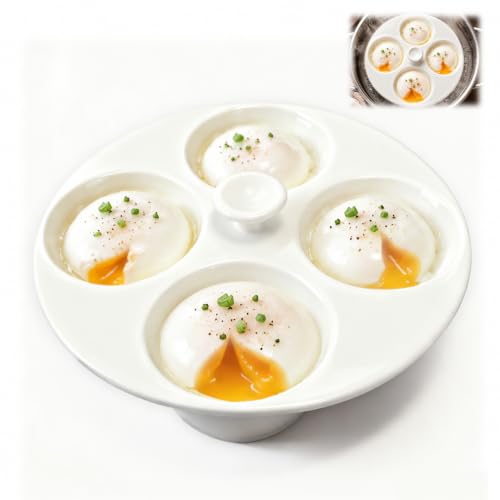
Pros
- Ceramic body spreads heat evenly across all four cups, so eggs finish at the same time.
- Nonstick ceramic surface means eggs release cleanly and the tray wipes out fast.
- Works as an insert with existing cookware rather than requiring a dedicated pan.
- Food-safe ceramic avoids the coating flake-off common on older metal poachers.
Cons
- It cannot touch an open flame directly, so it must always be used inside a pot or pan with water beneath it.
- Ceramic is more prone to cracking from drops or thermal shock than a stainless steel poacher.
A four-cup ceramic tray that turns any pot you own into a steam poacher, solving the swirling-water method that shreds egg whites.
The ceramic nonstick interior releases eggs intact, and even heat distribution across the tray means all four cups finish together instead of staggered.
Food-grade ceramic measuring 9 x 9 inches with 3.15 inch cup depth, sized to sit inside standard skillets and steamer pots, and dishwasher safe.
It must never contact an open flame directly, so it only works as an insert above water, never as a standalone pan.
Best for households cooking multiple poached eggs at once who want ceramic instead of coated metal.
Add water to the pot base first and bring it to a simmer before setting the tray in, so the eggs start cooking on contact.
Crack eggs directly into the ceramic cups and cover the pot to trap steam, which sets the tops without flipping.
Let the tray cool before rinsing or loading the dishwasher, since sudden temperature changes are what crack ceramic.

Pros
- Two cups per set means you can poach a pair of eggs in one pot at the same time.
- Included oil brush makes it easy to coat the cavity evenly, which is what the nonstick surface needs to release properly.
- Works in pots you already own, so there is no single-purpose pan to store.
- The same cavity also handles small pancakes, egg muffins, and sandwich rounds.
Cons
- Water has to stay below the cup rim or it pools inside with the egg, which rules out shallow pans and rolling boils.
- The nonstick coating still needs a light coat of oil before each use, so it is not a true zero-prep tool.
A two-piece set of nonstick poaching cups that hook over a pot rim, solving the mess of free-poaching eggs in swirling water.
The 1.57-inch deep cavity holds the white in place, and the open top lets you pull each egg the moment the yolk hits your preferred set.
Food grade stainless steel with a nonstick interior, a silicone-sleeved handle that folds flat, and an oil brush in the box for even coating.
Fill level matters: water above the cup edge seeps in and waterlogs the egg, so you need a pot with enough depth.
Best for cooks who want consistent poached eggs a couple at a time without dedicating a pan or drawer to it.
Brush the cavity with oil, hook both cups over the rim, and hold the water at a bare simmer below the cup edge. Crack in and cover the pot.
Watch the whites turn opaque and lift by the silicone handle. Runny yolks come out earlier than you expect, so check on the early side.
Beyond eggs, use the cups for egg muffins with chopped vegetables, small pancakes, or round sandwich patties sized to an English muffin.
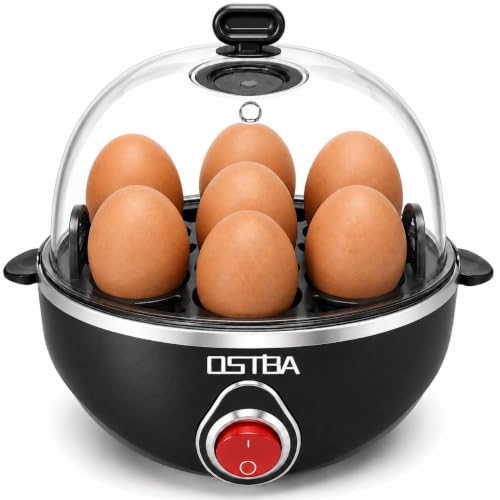
Pros
- Steam cooking skips the stovetop pot entirely, which frees a burner during busy mornings.
- Adjusting water instead of settings makes doneness repeatable once you find your number.
- Compact footprint stores on a counter or in a cabinet without crowding other appliances.
- Built-in piercing pin addresses shell cracking before it happens rather than after.
Cons
- Seven eggs is the ceiling, so larger families will need to run back-to-back cycles.
- The heating plate needs wiping after each use to prevent limescale, and the base can never be submerged.
An electric steam cooker that handles up to seven eggs, replacing the pot-of-boiling-water routine and the guesswork that comes with it.
Doneness is controlled by water volume using the marked measuring cup, and the unit powers down automatically when the water runs out, so eggs stop cooking on schedule.
The design is compact enough for most counters, with a removable egg tray and measuring cup that come out for washing and an electrical base that stays dry.
Capacity caps at seven eggs, and the heating plate needs a wipe after each use or mineral buildup accumulates.
Best for singles, couples, and meal preppers who eat boiled eggs regularly and want them hands-off.
Read the manual before the first run. Use the piercing pin on the measuring cup to vent the wide end of each egg, which reduces cracking during the cycle.
Fill the measuring cup to the line matching your target doneness, pour the water onto the heating plate, load the tray, cover, and press the switch.
The cooker shuts off when the water is gone. Run cooked eggs under cold water for easier peeling, then empty leftover water and wipe the cooled plate.
Is It Worth It?
A egg cooker earns its price when you use it often enough to notice better control, durability, or cleanup week after week. For small-kitchen owners it usually pays off; for occasional cooks, the money is better spent elsewhere. The honest answer depends on frequency, not on the product being good or bad. If you are shopping, our best rice cooker and best slow cooker guides are the fastest way in.
How To Get It Right
Think through the whole workflow: cleaning removable parts by hand, letting the motor rest between heavy loads, and not overfilling past the max line. A appliance that fits your routine and cleanup habits beats a technically superior one you fight with. We cover specific models in best rice cooker, best slow cooker, and best pressure cooker.
Common Misconceptions
The biggest myth is that the most expensive appliance is automatically the best for you. In reality, the right choice depends on preset controls, and speed under load — plus your own habits. Another trap is buying by brand alone — the same maker sells both excellent and forgettable lines.
Who Benefits Most
This matters most for small-kitchen owners, and meal-preppers batching food. If that is you, treat preset controls, and speed under load as non-negotiable. Casual users can relax the requirements and prioritize price and storage instead.
Related Product Guides
If this topic is part of a buying decision, these are the HomeWhisk guides most closely tied to it:
- best rice cooker
- best slow cooker
- best pressure cooker
- best air fryer
- best blender
- best instant pot
- best stand mixer
Frequently Asked Questions
Is a egg cooker worth it?
Yes if you use it regularly and value motor or heating-element power; less so for occasional use, where a value pick from best pressure cooker makes more sense.
What matters most for egg cooker?
Focus on noise level, digital versus dial controls, and cleaning access first. Those decide real performance; the rest is secondary. Compare best rice cooker and best slow cooker for options that get the basics right.
What should I avoid?
Avoid buying by brand alone, ignoring checking the seals and gaskets, and oversizing for your space. Each invites uneven cooking or heating down the line.
How do I keep it in good shape?
Build not overfilling past the max line, and checking the seals and gaskets into normal cleanup. Light, consistent care prevents unresponsive controls far better than occasional deep effort.
Who is this most useful for?
Mainly busy weeknight cooks, and gadget-minimalists who want one do-it-all unit. If that is you, treat storage bulk as a requirement rather than a nice-to-have.
The Bottom Line
The simplest takeaway: buy for your real routine, not the most impressive feature list. Match the egg cooker to your cooking frequency, cleanup habits, and storage, then use best rice cooker, best slow cooker, and best pressure cooker to compare actual products.
{“@context”:”https://schema.org”,”@type”:”FAQPage”,”mainEntity”:[{“@type”:”Question”,”name”:”Is a egg cooker worth it?”,”acceptedAnswer”:{“@type”:”Answer”,”text”:”Yes if you use it regularly and value motor or heating-element power; less so for occasional use, where a value pick from best pressure cooker makes more sense.”}},{“@type”:”Question”,”name”:”What matters most for egg cooker?”,”acceptedAnswer”:{“@type”:”Answer”,”text”:”Focus on noise level, digital versus dial controls, and cleaning access first. Those decide real performance; the rest is secondary. Compare best rice cooker and best slow cooker for options that get the basics right.”}},{“@type”:”Question”,”name”:”What should I avoid?”,”acceptedAnswer”:{“@type”:”Answer”,”text”:”Avoid buying by brand alone, ignoring checking the seals and gaskets, and oversizing for your space. Each invites uneven cooking or heating down the line.”}},{“@type”:”Question”,”name”:”How do I keep it in good shape?”,”acceptedAnswer”:{“@type”:”Answer”,”text”:”Build not overfilling past the max line, and checking the seals and gaskets into normal cleanup. Light, consistent care prevents unresponsive controls far better than occasional deep effort.”}},{“@type”:”Question”,”name”:”Who is this most useful for?”,”acceptedAnswer”:{“@type”:”Answer”,”text”:”Mainly busy weeknight cooks, and gadget-minimalists who want one do-it-all unit. If that is you, treat storage bulk as a requirement rather than a nice-to-have.”}}]} {“@context”:”https://schema.org”,”@type”:”ItemList”,”numberOfItems”:5,”itemListElement”:[{“@type”:”ListItem”,”position”:1,”url”:”https://www.amazon.com/dp/B07GPF8CCZ?tag=homewhisk06-20″},{“@type”:”ListItem”,”position”:2,”url”:”https://www.amazon.com/dp/B0FR473T6T?tag=homewhisk06-20″},{“@type”:”ListItem”,”position”:3,”url”:”https://www.amazon.com/dp/B0H1H47HVW?tag=homewhisk06-20″},{“@type”:”ListItem”,”position”:4,”url”:”https://www.amazon.com/dp/B0FPMB5BD8?tag=homewhisk06-20″},{“@type”:”ListItem”,”position”:5,”url”:”https://www.amazon.com/dp/B0GWPMZ52P?tag=homewhisk06-20″}]}




Write Your Review
No reviews yet. Be the first to share your experience!