

HomeWhisk earns commission from qualifying purchases made through links on this page. We research picks from specifications and owner reviews; we do not test products ourselves.
TL;DR — How to store a rice cooker is not complicated, but it does reward a little patience and the right sequence. If you are comparing products, start with best rice cooker, best slow cooker, and best pressure cooker; those guides give the model-level context behind this advice.
We looked at manufacturer details, material behavior, recurring owner-review patterns, and where this topic overlaps with related buying guides. For appliance topics, we pay close attention to capacity, controls, cleanup, storage, reliability complaints, and whether the machine saves enough effort to justify the space.


Pros
- Locking clips plus vents deliver genuinely low-mess rice cooking in the microwave, the main failure point of DIY methods.
- Compact 7.5 inch by 6 inch footprint stores in a cabinet instead of occupying permanent counter space.
- Includes a serving paddle, so you can fluff and portion rice without buying a separate utensil.
- Fridge and freezer safe construction lets it work as a cook, store, and reheat container in one.
Cons
- Cook times shift with microwave wattage and rice variety, so expect a few test batches before you land on your exact timing.
- The 10-cup rating refers to total capacity, not finished rice yield, so you cannot fill it to the brim with dry grain.
A microwave-only rice cooker that solves boil-over and unevenly cooked rice without a plug-in appliance or a watched pot on the stove.
The pressure chamber traps steam while release vents regulate pressure, producing tender, evenly steamed grains in about 15 minutes from a simple rice-and-water fill.
BPA-free plastic, 7.5 inches in diameter by 6 inches high, with easy-lock clips, inner and outer lids, and a serving paddle. Dishwasher, fridge, and freezer safe.
Timing is not universal. Microwave wattage and rice type both change the result, so the first two batches are calibration.
Best for dorm residents, apartment cooks, and families who want family-size rice without dedicating counter space.
Everyday white and brown rice: rinse, add rice and water, clip both lids, and microwave about 15 minutes. Let it rest before unclipping so steam finishes the grains.
Vegetable steaming: broccoli, green beans, and carrots cook in the same sealed chamber, so one container handles the main starch and the side.
Reheating leftovers: the vented lid steams cold rice back to soft instead of drying it out, and the same container goes to the fridge or freezer.

Pros
- The 2-cup cooked capacity minimizes leftovers when preparing rice for one person.
- The lightweight, compact design is easier to pack for offices, vacations, and road trips.
- The indicator light and automatic Keep Warm function reduce the need to watch the cooker closely.
- A glass lid, mixing paddle, measuring scoop, and recipe guide are included for immediate use.
Cons
- The 2-cup cooked capacity is too limited for most families or batch meal preparation.
- The removable pot and included accessories are hand-wash friendly rather than specified as dishwasher safe.
The DASH Mini Rice Cooker prepares up to 2 cups of cooked rice, solving the portion and counter-space problems common for solo cooks and compact kitchens.
Its one-switch operation streamlines cooking, while the indicator light and automatic Keep Warm function help keep rice warm and fluffy until serving.
The lightweight body has a compact footprint, and the removable ceramic nonstick pot and glass lid support convenient daily cooking and cleanup.
Its small capacity works best for individual meals and is not designed for family-size portions or large batches.
Verdict: Best for solo cooks, students, office workers, RV users, and travelers who value portability and simple operation.
Measure up to 1 cup of uncooked rice with the included scoop, add it to the removable pot with the appropriate water, secure the glass lid, and activate the single switch.
Check the indicator light for cooking status; once cooking finishes, the automatic Keep Warm function maintains serving temperature until you are ready to eat.
Use the included recipe guide to prepare oatmeal, quinoa, pasta, soup, or banana bread, then hand wash the removable pot, lid, paddle, and scoop after cooling.
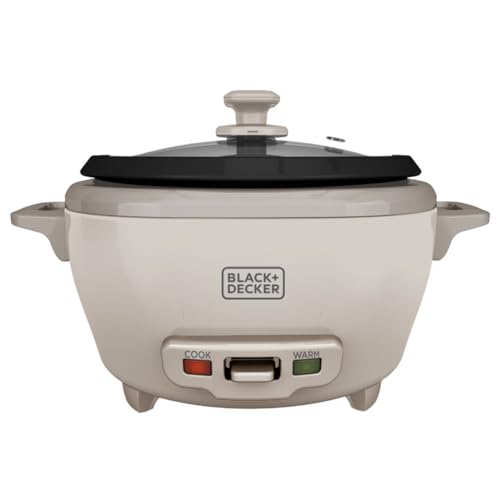
Pros
- Rice and compatible steamed foods can cook together, helping reduce prep time and extra cookware.
- Automatic Keep Warm makes serving schedules more flexible after the cooking cycle finishes.
- The removable dishwasher-safe components simplify routine cleaning.
- Its pastel gloss finish offers a polished countertop-friendly appearance.
Cons
- The 6-cup cooked capacity may be too limited for large households or batch cooking for a crowd.
- The listed one-touch controls do not include specialized rice programs, a delay timer, or adjustable cooking settings.
This compact appliance prepares up to 6 cups of cooked rice, solving the need for an easy side dish, leftovers, or meal-prep portions without stovetop monitoring.
One-touch cooking handles the main cycle, and automatic Keep Warm keeps finished rice hot until the rest of the meal is ready.
The steam basket lets vegetables, seafood, fish, or dumplings cook above the rice, helping create a fuller meal in one appliance.
A tempered glass lid, cool-touch handles, and a durable ceramic-coated cooking surface support daily use; exact dimensions and weight are not provided.
Its main limitation is basic operation, making it best for small families and meal preppers who value simplicity over programmable settings.
Add rice and the appropriate amount of water to the removable cooking pot, close the tempered glass lid, and start the one-touch cooking cycle.
Place compatible vegetables, seafood, fish, or dumplings in the steam basket when you want to cook a second component while the rice cooks below.
After cooking, automatic Keep Warm holds the rice for serving; once cooled, remove the dishwasher-safe parts for easier cleanup.
Storing a Rice Cooker: The Essentials
How you store a rice cooker decides how long it lasts as much as how you use it. Good storage keeps edges and surfaces protected, prevents moisture damage, and keeps the tool easy to grab without hunting.
Step By Step
1. Make sure the rice cooker is fully clean and bone-dry before it goes away. 2. Protect the working surface — a guard, sleeve, or dedicated slot beats loose in a drawer. 3. Keep it somewhere dry and ventilated to avoid motors that bog down under load. 4. Store it where it is easy to reach, so care stays a habit.
How To Know You Did It Right
The result should be practical and repeatable: the appliance should work cleanly, feel controlled, and show no signs of lingering odors. If the same issue returns quickly, the cause is usually a missed care step — not the tool itself.
Common Mistakes To Avoid
The usual failure is treating a durable appliance as indestructible. Harsh shortcuts lead to trapped residue in seams, and lingering odors. Do not assume pricier gear removes the need for care, either — technique matters more than the badge. Start your shortlist with best rice cooker, best slow cooker, and best pressure cooker before narrowing by budget.
Related Product Guides
If this topic is part of a buying decision, these are the HomeWhisk guides most closely tied to it:
- best rice cooker
- best slow cooker
- best pressure cooker
- best air fryer
- best blender
- best instant pot
- best stand mixer
Frequently Asked Questions
What is the right way to store a rice cooker?
How you store a rice cooker decides how long it lasts as much as how you use it. Do it consistently and you avoid trapped residue in seams.
What gear pairs well with it?
Start with a reliable core piece, then add as needs appear. Compare best rice cooker, best slow cooker, and best pressure cooker for related choices.
What matters most for rice cooker?
Focus on motor or heating-element power, build quality of seals, and storage bulk first. Those decide real performance; the rest is secondary. Compare best rice cooker and best slow cooker for options that get the basics right.
Who is this most useful for?
Mainly busy weeknight cooks, and meal-preppers batching food. If that is you, treat digital versus dial controls as a requirement rather than a nice-to-have.
How do I keep it in good shape?
Build letting the motor rest between heavy loads, and not overfilling past the max line into normal cleanup. Light, consistent care prevents motors that bog down under load far better than occasional deep effort.
The Bottom Line
How to store a rice cooker comes down to fit: how often you use the tool, how much care it needs, and whether it solves a real kitchen problem. If you are buying, compare best rice cooker, best slow cooker, and best pressure cooker before you spend.
{“@context”:”https://schema.org”,”@type”:”FAQPage”,”mainEntity”:[{“@type”:”Question”,”name”:”What is the right way to store a rice cooker?”,”acceptedAnswer”:{“@type”:”Answer”,”text”:”How you store a rice cooker decides how long it lasts as much as how you use it. Do it consistently and you avoid trapped residue in seams.”}},{“@type”:”Question”,”name”:”What gear pairs well with it?”,”acceptedAnswer”:{“@type”:”Answer”,”text”:”Start with a reliable core piece, then add as needs appear. Compare best rice cooker, best slow cooker, and best pressure cooker for related choices.”}},{“@type”:”Question”,”name”:”What matters most for rice cooker?”,”acceptedAnswer”:{“@type”:”Answer”,”text”:”Focus on motor or heating-element power, build quality of seals, and storage bulk first. Those decide real performance; the rest is secondary. Compare best rice cooker and best slow cooker for options that get the basics right.”}},{“@type”:”Question”,”name”:”Who is this most useful for?”,”acceptedAnswer”:{“@type”:”Answer”,”text”:”Mainly busy weeknight cooks, and meal-preppers batching food. If that is you, treat digital versus dial controls as a requirement rather than a nice-to-have.”}},{“@type”:”Question”,”name”:”How do I keep it in good shape?”,”acceptedAnswer”:{“@type”:”Answer”,”text”:”Build letting the motor rest between heavy loads, and not overfilling past the max line into normal cleanup. Light, consistent care prevents motors that bog down under load far better than occasional deep effort.”}}]} {“@context”:”https://schema.org”,”@type”:”ItemList”,”numberOfItems”:5,”itemListElement”:[{“@type”:”ListItem”,”position”:1,”url”:”https://www.amazon.com/dp/B012W9BI2K?tag=homewhisk06-20″},{“@type”:”ListItem”,”position”:2,”url”:”https://www.amazon.com/dp/B06XDV7L1C?tag=homewhisk06-20″},{“@type”:”ListItem”,”position”:3,”url”:”https://www.amazon.com/dp/B01BUL7FJ6?tag=homewhisk06-20″},{“@type”:”ListItem”,”position”:4,”url”:”https://www.amazon.com/dp/B0FT4TDZ1P?tag=homewhisk06-20″},{“@type”:”ListItem”,”position”:5,”url”:”https://www.amazon.com/dp/B0GT6RHHY9?tag=homewhisk06-20″}]}




Write Your Review
No reviews yet. Be the first to share your experience!