

Type “fire and ice grill cooler” into a search bar and two generations of the same idea appear. The original dates to the early 2000s, when Thermos sold a gas grill with a cooler built into the cart and stamped the fire-and-ice name across it. Current versions are patio carts pairing a burner on top with an insulated bin below, pitched at anyone tired of hiking back to the kitchen fridge mid-cookout.
The pitch rests on four quiet assumptions: that a combo does both jobs well, that grill heat ruins nearby food, that raw meat is automatically safe at the grill station, and that the unit can stand in for a real cooler. Each one deserves a fact-check before you spend money.
What “Fire and Ice” Actually Puts on Your Patio
Strip the marketing and every fire and ice grill cooler on the market is an ice chest wearing cabinetry. Nothing plugs in and nothing refrigerates; performance lives or dies on insulation, exactly as with any cooler. Current products fall into three camps: grill carts with drop-in bins holding 26 to 54 quarts, standalone rolling patio coolers running 60 to 100 quarts beside whatever grill you own, and fuller hybrids that add a prep surface and sometimes a sink for pool-party duty. The distinction matters because shoppers routinely assume powered cooling hides somewhere in the cabinet. It doesn’t. Ice goes in, ice melts, and how slowly that happens is the entire ballgame.
Two Jobs, One Cabinet, and Usually Only One Done Well
The combo pitch implies symmetry: a real grill and a real cooler in a single purchase. Manufacturing reality skews hard the other way. Burners, grates, and igniters are mature, inexpensive technology, so brands concentrate effort there and treat the cold side as a molded afterthought. Open up a typical cart combo and you find hollow double-wall plastic, less than an inch of foam if any, no gasket on the lid, and a drain plug that weeps once the bin fills.
Set that beside a proper cooler and the gap becomes obvious. A rotomolded chest carries roughly 1.5 to 2 inches of dense foam plus a lid seal that compresses when latched, which is why it can advertise five days of ice while a cart bin surrenders its cubes after a day and a half of July sun. Interrogate the spec sheet accordingly. A listing that states wall thickness, lid gasket, and tested ice retention was engineered by someone who cared about the cold half. A listing that leads with LED rims and cup holders is telling you the insulation is decorative.
Will Grill Heat Spoil the Food Inside? Mostly No
Next comes the heat-soak fear: a 600-degree firebox sits a few feet from the potato salad, therefore spoilage. Physics disagrees. Foam is a lousy heat conductor, which is precisely its job, so a closed, ice-packed chest gains a degree or two per hour even in 95-degree air. Radiant energy also fades fast over distance. Step three feet to the side of a roaring firebox and the sting fades to mild warmth at arm’s length, and convection sends most of the heat straight up anyway.
Sunlight, not the grill, is what actually cooks a cooler. A black powder-coated lid in direct afternoon sun can pass 150 degrees at the surface, pushing heat inward for hours, and every idle lid-lift dumps a batch of cold air onto the lawn. Position the unit the way you would treat anything perishable: a few feet clear of the grill’s side-radiation, shaded or angled away from the western sun, pre-chilled before loading, and opened deliberately rather than constantly. Do that and the neighboring grill barely registers. Skip it and no amount of distance saves your ice by hour four of a pool party.
Raw Meat at the Grill Station Is Not Safe by Default
This third assumption carries real risk. Meat at the grill station is only as safe as its coldest degree, and thin-walled combo bins hover near the danger line as the ice melts. The numbers worth memorizing: food-safety agencies set the safe cold threshold at 40 degrees F (4 degrees C), warn that bacteria multiply fastest between 40 and 140, and cap unrefrigerated time at two hours, dropping to one once air temperatures pass 90. Chicken idling at 48 degrees for three hours has spent the whole stretch inside the growth zone even though it feels cold to the touch.
Cross-contamination stacks on top of the temperature problem. Raw poultry juice pooling in a bin shared with watermelon slices and drink cans converts a convenience feature into a liability, so sealed containers belong beneath anything ready to eat, ideally on a lower shelf or in a dedicated bin. Proper cooking kills bacteria, but toxins some microbes leave behind survive the grate, which means prevention happens at storage, not at searing. The workable routine is simple: haul meat cold in sealed bags, load it into a pre-chilled cooler packed two-thirds with ice, clip a small thermometer inside, and move protein from bin to grate within the hour window instead of letting it loiter.
Why It Won’t Replace a Real Cooler Past an Afternoon
For a Saturday backyard barbecue with the kitchen twenty steps away, a combo earns its footprint. Restock ice from the freezer, rotate drinks, done. Stretch the scenario and the story changes. A six-hour tailgate in an August parking lot, a doubleheader at the kids’ tournament, a lakeside afternoon miles from a store: those expose the limits fast. Most cart bins hold 30 to 50 cans with ice, and once the thin walls start losing the melt race you’re draining gray slush by mid-afternoon and handing out lukewarm soda.
A pre-chilled 50-to-70-quart rotomolded chest holds ice three to five days through identical weather, which is why serious tailgaters own one regardless of what sits in the garage. The fair rule: combos cover events measured in hours with resupply nearby, while a dedicated cooler covers days or distance. Buy a combo expecting it to replace your chest cooler and you end up owning a mediocre version of both.
Buying Guidance: Specs That Separate Working Combos from Gimmicks
Start judging on the cold side, because that’s where corners get cut. Look for stated foam thickness of an inch and a half or better, a lid gasket that visibly compresses, and a threaded drain plug that empties without tipping the whole cart. The liner should be food-grade HDPE, and a removable basket or divider earns genuine credit since it lets sealed raw meat ride low while drinks stay clean above. Match capacity to the guest list honestly: 26 quarts handles a couple’s weeknight cookout, while a pool party for ten wants 50 or more.
Durability details predict lifespan. Insist on a UV-stabilized shell that won’t chalk after two summers and rot-resistant stainless or powder-coated hardware near the firebox, since plain steel corrodes quickly in the splash zone between grease and melted ice. Locking casters at least three inches tall roll across gravel and lawn without chewing up a deck. On the hot side the bar is lower but real: main burners totaling around 30,000 BTU for even heat, cast-iron or porcelain-coated grates, and a parts diagram on the manufacturer’s site, which quietly signals the company expects the unit to last. Warranty length is the cheapest credibility test going; one year means disposable, five means confidence. When a listing spends more space on Bluetooth speakers than on insulation, believe the emphasis.
Fire and Ice Grill Cooler Questions, Answered
How long does ice actually last in a fire and ice grill cooler?
Wall construction decides the answer. Budget bins with hollow or thinly foamed walls give up their ice in 12 to 24 hours of summer heat, stretching toward 36 if you pre-chill the box, shade the unit, and keep the lid shut. Better-engineered combos carrying an inch and a half of foam plus a gasket push a day and a half to two days. A mid-range hard cooler manages two to three days, and premium rotomolded designs advertise five or more. Plan events around the combo’s honest number and stash backup ice accordingly.
Can I keep raw burgers in the cooler section while I grill?
Yes, if you treat the bin as temporary refrigeration rather than a staging shelf. Sealed packaging rides on the lowest shelf so nothing drips onto drinks or ready-to-eat sides, a clip thermometer confirms the cavity holds at or below 40 degrees, and the meat reaches the grate within two hours, or one hour once the day tops 90. Marinade waits in the fridge rather than softening at ambient temperature. If the ice has melted and the interior drifts above 40, the burgers go straight to the fire or back indoors, never back on hold.
Are fire and ice combos worth it for tailgating?
Sometimes, and the length of the stay decides it. One-trip setup appeals in a crowded lot, and locking casters handle asphalt better than most buyers expect. But a noon-to-night game punishes thin insulation, and with no kitchen nearby for refills a 40-quart bin can be serving warm drinks by the third quarter. If the grill half is genuinely well made and the cooler spec includes real foam and a gasket, the combo justifies itself. If you’re mainly buying a cooler that happens to include a grill, a dedicated chest serves you better.

Igloo
Rolling Party Cooler for Backyard Entertaining: Igloo Party Bar 125 Qt Insulated Ice Chest with Wheels
The Igloo Party Bar holds 158 cans with its dividers in place or 212 without, and the lid lifts off so the whole cooler becomes an open beverage tub at counter height. Buy it if you host large cookouts or tailgates and want drinks served, drained, and rolled away without giving up a table or half the fridge.
Pros and Cons
Pros
- The cooler body detaches from the wheeled base, so it still works as a conventional chest cooler in a truck bed or boat.
- Cool Riser Technology lifts the body off hot patio stone and asphalt, which slows ice melt during all-day events.
- Utility loops hold towels and a trash bag, keeping cleanup supplies at the drink station instead of the kitchen.
- The 125-quart capacity covers a full party's drinks in one load rather than three small coolers.
Cons
- Loaded with ice and 200 cans it gets very heavy, and the casters roll well only on flat, hard surfaces rather than grass or sand.
- The footprint on the wheeled base is large, so garage or pantry storage needs planning between events.

Coleman
Keep Ice 5 Days at the Tailgate or Beach: Coleman Classic Series Insulated Portable Cooler, 52 to 150 Quart
The Coleman Classic Series is a hard-sided insulated cooler that holds up to 100 cans and keeps ice frozen up to 5 days in temperatures as high as 90°F. Buy it if you host backyard BBQs, tailgates, or camping trips and need overflow cold storage that outlasts a weekend without a power source.
Pros and Cons
Pros
- Five-day ice retention in 90°F heat means fewer mid-trip ice runs.
- Recessed lip makes the lid easy to open with wet or full hands.
- Built-in ruler on the lid measures your catch without extra gear.
- Made in the USA with four capacity options from 52 to 150 quarts.
Cons
- Even the smallest 52-quart size is bulky and heavy once loaded with ice and cans, so plan on two people for carrying.
- It is leak-resistant rather than fully leak-proof, so melted ice can seep out during transport in a car.

Adventure Seeka
Campfire Cooking Made Simple: Adventure Seeka 24" Heavy Duty Folding Grill with Swivel Grate and Griddle
This 24-inch coated steel grill folds flat for transport and swivels over a campfire so you can move food on and off direct heat without lifting the grate. Buy it if you cook over open fires while camping or RVing and need a cooking surface that packs down small between trips.
Pros and Cons
Pros
- Folding construction saves significant packing space compared to fixed-frame campfire grills.
- Swivel action gives you real heat control over an open fire, which most flat camp grates lack.
- Grate and griddle combination covers both breakfast and dinner cooking without a second piece of gear.
- Coated steel resists the wear that campfire heat and outdoor storage inflict on cheaper grills.
Cons
- Heavy duty steel means real weight, so this suits car camping and RV travel rather than backpacking.
- Listing specifications are incomplete, so confirm packed dimensions and weight before buying if storage space is tight.

REDCAMP
Over-Fire Campfire Cooking Grate: REDCAMP Swivel Camp Grill with Adjustable Height and Carrying Bag
This REDCAMP swivel grill plants a 16.7 by 12.6 inch iron cooking grate over an open fire on a 32 inch stake, and its pivoting arm lets you swing food off the flames without lifting a hot pan. Campers and backyard fire pit cooks who want real grate space for skillets, foil packs, and steaks should pick it up, since it holds up to 11 pounds and packs into the included bag.
Pros and Cons
Pros
- Heavy duty iron construction stands up to direct flame contact season after season.
- Height adjustment and swivel action give you real heat control over an unpredictable campfire.
- Generous grilling surface handles multiple pans or a full round of food at once.
- Backed by a 365 day limited manufacturer warranty with a stated 24 hour response window.
Cons
- The single stake must be driven into soft ground, so it will not work on rock, gravel pads, or established concrete fire rings.
- At 32 inches tall with a heavy iron grate, it is bulkier than a flat folding grill for backpacking.
Quilushey
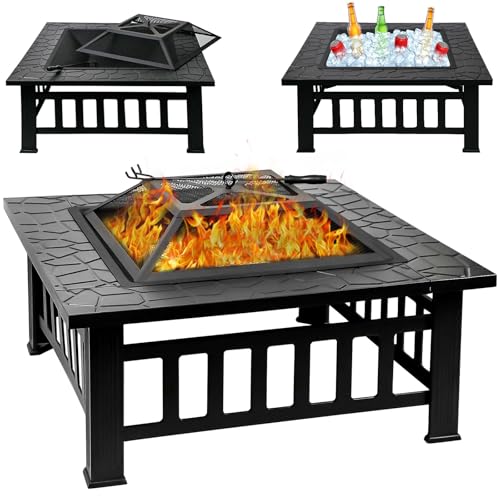
Backyard Grilling and Bonfire Heating: Quilushey 32 Inch 3 in 1 Fire Pit Table with Spark Screen and Fire Poker
This square iron fire pit switches between wood burning heat, charcoal grilling, and an ice tub for drinks, so one unit handles cooking and entertaining outdoors. Buy it if you host patio or campsite gatherings and want the spark screen and poker included rather than bought separately.
Pros and Cons
Pros
- Spark screen and poker are included, so the pit is usable the day it arrives.
- Powder coated iron body stands up to outdoor exposure better than thin painted steel.
- The open square design accepts both split logs and charcoal, so you burn whatever fuel you already stock.
- Ice bucket mode keeps it in service during warm months instead of sitting idle until fall.
Cons
- The listed dimensions of 27 inches deep by 23 wide by 11 high do not match the 32 inch size in the product name, so measure your space before ordering.
- No weather cover or heat resistant handles are included, so plan on full cooldown before moving it after a burn.

Odoland
Open-Fire Cooking and 16-Hour Cold Storage: Odoland Folding Campfire Grill and 48-Can Rolling Soft Cooler Bundle
This two-piece set pairs a heavy-duty steel folding grill that cooks over wood or charcoal on a 19.7 by 11.8 inch mesh surface with a wheeled soft cooler that holds 48 cans cold for up to 16 hours. Buy it if you cook and drink away from a kitchen at campsites, beaches, or backyard fire pits and want both the cook surface and the cold storage to fold down and roll to the car.
Pros and Cons
Pros
- It works as both a wood burning stove and a charcoal barbecue grill, so you cook with whatever fuel the site allows.
- The soft cooler detaches from the frame and works as a standalone wheeled cooler, while the empty frame becomes a hand truck for other gear.
- A front zip pocket and two side pockets hold 4 to 6 bottles of wine plus utensils, and an elastic cord secures a picnic mat.
Cons
- The grill has no lid, adjustable height, or temperature control, so heat management depends entirely on how you build and bank the fire.
- A soft-sided cooler tops out at 16 hours of cold retention, which is short of what a hard-sided chest delivers on multi-day trips.
The Best Deals This Week*
-
Rolling Party Cooler for Backyard Entertaining
$229.99
($279.99)Save $50.00 -
Keep Ice 5 Days at the Tailgate or Beach
$74.99
($84.99)Save $10.00 -
Backyard Grilling and Bonfire Heating
$48.98
($66.99)Save $18.01 -
Open-Fire Cooking and 16-Hour Cold Storage
$78.18
($86.98)Save $8.80
*Deals are selected by our commerce team
Igloo Rolling Party Cooler for Backyard Entertaining: Igloo Party Bar 125 Qt Insulated Ice Chest with Wheels
Igloo
Rolling Party Cooler for Backyard Entertaining: Igloo Party Bar 125 Qt Insulated Ice Chest with Wheels
The Igloo Party Bar holds 158 cans with its dividers in place or 212 without, and the lid lifts off so the whole cooler becomes an open beverage tub at counter height. Buy it if you host large cookouts or tailgates and want drinks served, drained, and rolled away without giving up a table or half the fridge.
$229.99 at AmazonEditors' Favorite
Color: Party Bar Gray 125 Qt Size: One Size Dimensions: 39.1 x 21.8 x 26.9 inches Weight: 34.27 Pounds Product Group: Outdoors Binding: Sports
Shop NowColeman Keep Ice 5 Days at the Tailgate or Beach: Coleman Classic Series Insulated Portable Cooler, 52 to 150 Quart
Coleman
Keep Ice 5 Days at the Tailgate or Beach: Coleman Classic Series Insulated Portable Cooler, 52 to 150 Quart
The Coleman Classic Series is a hard-sided insulated cooler that holds up to 100 cans and keeps ice frozen up to 5 days in temperatures as high as 90°F. Buy it if you host backyard BBQs, tailgates, or camping trips and need overflow cold storage that outlasts a weekend without a power source.
$74.99 at AmazonGreat Value
Color: Rock Grey Size: 70qt Dimensions: 31.2 x 15.7 x 17 Inches Weight: 11.4 pounds Product Group: Outdoors Binding: Sports
Shop NowAdventure Seeka Campfire Cooking Made Simple: Adventure Seeka 24" Heavy Duty Folding Grill with Swivel Grate and Griddle
Adventure Seeka
Campfire Cooking Made Simple: Adventure Seeka 24" Heavy Duty Folding Grill with Swivel Grate and Griddle
This 24-inch coated steel grill folds flat for transport and swivels over a campfire so you can move food on and off direct heat without lifting the grate. Buy it if you cook over open fires while camping or RVing and need a cooking surface that packs down small between trips.
$76.97 at AmazonColor: Black Dimensions: 13.5 x 15 x 3 inches Weight: 13.999353637 pounds Product Group: Outdoors Binding: Tools & Home Improvement
Shop NowREDCAMP Over-Fire Campfire Cooking Grate: REDCAMP Swivel Camp Grill with Adjustable Height and Carrying Bag
REDCAMP
Over-Fire Campfire Cooking Grate: REDCAMP Swivel Camp Grill with Adjustable Height and Carrying Bag
This REDCAMP swivel grill plants a 16.7 by 12.6 inch iron cooking grate over an open fire on a 32 inch stake, and its pivoting arm lets you swing food off the flames without lifting a hot pan. Campers and backyard fire pit cooks who want real grate space for skillets, foil packs, and steaks should pick it up, since it holds up to 11 pounds and packs into the included bag.
$48.59 at AmazonSize: 16.7 x 12.6 inches Dimensions: 16.99999998266 x 11.99999998776 x 28.99999997042 inches Weight: 6.19058031696 pounds Product Group: Lawn & Patio Binding: Tools & Home Improvement
Shop NowQuilushey Backyard Grilling and Bonfire Heating: Quilushey 32 Inch 3 in 1 Fire Pit Table with Spark Screen and Fire Poker
Quilushey
Backyard Grilling and Bonfire Heating: Quilushey 32 Inch 3 in 1 Fire Pit Table with Spark Screen and Fire Poker
This square iron fire pit switches between wood burning heat, charcoal grilling, and an ice tub for drinks, so one unit handles cooking and entertaining outdoors. Buy it if you host patio or campsite gatherings and want the spark screen and poker included rather than bought separately.
$48.98 at AmazonColor: Black Dimensions: 27 x 23 x 11 inches Weight: 22 Pounds Product Group: Lawn & Patio Binding: Lawn & Patio
Shop NowOdoland Open-Fire Cooking and 16-Hour Cold Storage: Odoland Folding Campfire Grill and 48-Can Rolling Soft Cooler Bundle
Odoland
Open-Fire Cooking and 16-Hour Cold Storage: Odoland Folding Campfire Grill and 48-Can Rolling Soft Cooler Bundle
This two-piece set pairs a heavy-duty steel folding grill that cooks over wood or charcoal on a 19.7 by 11.8 inch mesh surface with a wheeled soft cooler that holds 48 cans cold for up to 16 hours. Buy it if you cook and drink away from a kitchen at campsites, beaches, or backyard fire pits and want both the cook surface and the cold storage to fold down and roll to the car.
$78.18 at AmazonProduct Group: Lawn & Patio Binding: Product Bundle
Shop Now





Write Your Review
No reviews yet. Be the first to share your experience!