

A genuine cappuccino is a small drink built on strict proportions: roughly one part espresso, one part steamed milk, one part dense foam, all fitted into a 5-6 ounce cup. The arithmetic sounds easy, and yet most home attempts fail twice over — first because the espresso underneath runs thin or sour, then because the milk on top whips into bubbly dishwater instead of velvet. Machines that can actually build this drink fall into three honest price tiers, and each tier solves a different slice of the problem.
This guide walks through those tiers as they stand in 2026: entry machines from $80 to $200, committed home setups from $250 to $600, and prosumer hardware at $700 and beyond. Every one of them is a manual or semi-automatic unit with a real steam wand — no pods, no bean-to-cup robots, no automatic frothers doing the work behind a lid. The goal is to match the machine to your habit, because spending past your needs purchases nothing but counter clutter.
What a Cappuccino Asks of a Machine
Start with the ratio, because everything downstream follows from it. Classic proportioning runs 1:1:1 — a shot of espresso measuring 1 to 2 ounces, 4 to 6 ounces of milk stretched with steam, and a dense foam cap roughly matching the liquid beneath. The finished drink fills a 5-6 ounce cup, which is precisely why a cappuccino poured into a 12-ounce latte mug ceases to be one. Any machine worth considering here has to pull that shot with brewing water near 200°F, then produce steam dry enough to texture milk rather than merely warm it.
Milk temperature carries more weight than newcomers expect. Texturing belongs between 140°F and 155°F; push past 160°F and the sugars in milk lose their perceived sweetness while the foam collapses into something coarse and dry. A wand that blasts wet, overheated steam will sabotage even a flawless shot. So judge the steam circuit as seriously as the pump or the group head, because it is half of every milk drink you will ever make.
Tier 1: Entry Machines From $80 to $200
The starter tier runs on single thermoblock boilers, 54mm baskets, and heating elements in the 1,350-to-1,450-watt range, usually wrapped in plastic housings with water reservoirs near a liter. These machines can produce both halves of a cappuccino: a legitimate espresso extraction, then frothed milk from a working wand. What they cannot do is hurry. Switching from brew mode to steam mode costs 30 to 60 seconds while the thermoblock climbs temperature, which turns a two-drink morning into a small test of patience and sequencing.
Nearly every machine at this price ships with a pressurized basket, a double-walled design that injects air into the passing stream to fabricate crema. That sounds sinister and mostly is not. Pressurized baskets forgive stale supermarket beans and sloppy tamping, sparing beginners the expensive early failures that used to drive people back to instant coffee. The trade-off is a hard ceiling on quality, because the basket performs part of the extraction work for you and caps how much skill can change the outcome. If you are still testing whether the daily cappuccino habit will stick — whether you will truly stand at the counter at 6:45 a.m. holding a tamper — this tier answers that question for roughly the cost of a month of café visits.
Tier 2: The Committed Home Setup, $250 to $600
Somewhere around $250 the architecture changes. Single-boiler heat-exchange designs take over, E61 group heads — the chunky brass, thermosyphon-heated groups borrowed from Italian café counters — begin appearing, and baskets widen to the 58mm commercial standard. The pressurized crutch disappears as well: these machines expect non-pressurized baskets where the coffee bed alone generates resistance and real crema. Microfoam becomes genuinely achievable here, glossy enough to pour latte art, and the wands carry enough pressure to texture 6 ounces of milk in 20 to 30 seconds.
That capability imposes obligations of its own. Non-pressurized baskets punish stale beans instantly, so freshly roasted coffee stops being optional, and repeatable doses demand a burr grinder in the $40 to $100 range parked beside the machine. Tally it up and an honest tier 2 build lands nearer $350 than $250 once the supporting cast arrives. Even so, most long-term home baristas treat this band as the rational ceiling for a household: below it you fight the equipment, above it you buy speed and repeatability that one or two drinks a day almost never uses.
Tier 3: Prosumer Hardware at $700 and Beyond
Dual boilers define the top tier. Brew water and steam occupy separate vessels, so extraction and milk texturing happen simultaneously with zero wait between modes — the 60-second penalty from the starter tier vanishes altogether. PID controllers hold brew temperature within about ±1°F of target, a margin that matters because a swing of just a few degrees tips extraction from bright toward bitter. Many machines here also swap the standard vibratory pump for a rotary one, dropping the noise from a rattling 70-plus decibels to a hum nearer 50, and some add direct plumbing so the reservoir never needs refilling.
None of that comes cheap, and none of it suits everyone. The math only works if you prepare three or more milk drinks daily, host often, or pursue the shot-to-shot consistency that competition baristas obsess over. A household pouring a single cappuccino each morning will never claw back the extra several hundred dollars. Choose this tier because the ritual anchors your day, not because the specification sheet flatters you.
Where the Next Dollar Belongs
Between tiers, money spends unevenly. The highest-return upgrade in home espresso is rarely another hundred dollars of machine; it is a burr grinder, the component that converts tier 2 hardware from temperamental to dependable. Bean freshness runs a close second, since roasted coffee fades noticeably within two to four weeks of its roast date and no boiler or pump compensates for staleness. Point your budget there before climbing any ladder.
As for stopping points: stop at tier 1 if the habit is unproven and your beans arrive from a supermarket shelf, since the pressurized basket will politely mask what those beans lack. Stop at tier 2 once the routine has settled, you drink one or two cappuccinos a day, and you want foam firm enough to attempt a rosetta. Cross into tier 3 only when mode-switching waits genuinely sting or the entire household orders milk drinks before sunrise. The drink itself is identical at every tier in principle; the tiers differ only in how much friction stands between you and it.
Common Questions About Cappuccino Machines
Can a $150 espresso machine make real cappuccino foam?
Yes, within limits. Machines in this bracket rely on single thermoblock boilers and pressurized baskets, and their wands can stretch milk into respectable foam once you learn the wand angle and air-injection timing. Expect the 30 to 60 second pause while the boiler switches from brewing to steaming, and expect a texture one step coarser than café microfoam. For one or two drinks each morning the result satisfies completely. The ceiling shows up when you want latte-art gloss or back-to-back rounds for guests.
Why should cappuccino milk stay between 140°F and 155°F?
Milk sweetness depends on lactose, and the perception of that sweetness falls away sharply once milk passes 160°F. Held between roughly 140°F and 155°F, the fats and proteins remain intact, the foam stays dense and silky, and the finished drink tastes rounded instead of flat. Overheated milk also picks up cooked, faintly sulfurous notes that argue with the espresso rather than cushioning it. Experienced baristas cut the steam a few degrees early because temperature keeps climbing during texturing. An inexpensive stem thermometer removes nearly all of the guesswork while your hands learn the sound and pitch of properly stretching milk.
Do you need a burr grinder for a mid-range cappuccino machine?
At tier 2, practically yes. Non-pressurized 58mm baskets lean entirely on grind size to create extraction resistance, and blade grinders cannot cut particles consistent enough to hold a 25 to 30 second shot. A burr model costing $40 to $100 closes that gap and usually improves the cup more than the same money spent anywhere else in the chain. The exception lives at tier 1, where pressurized baskets manufacture their own resistance and pre-ground coffee stays workable. Move up a tier, though, and the grinder stops being an accessory and becomes half the machine.

Aromaster
Fast Home Lattes and Cappuccinos: Aromaster 20-Bar Touchscreen Espresso Machine
The Aromaster espresso machine brews hot or iced espresso drinks with fast 1400W heating, with its dual-circuit system reducing delays between beverages. It suits home or office users who want touchscreen brewing, manual milk frothing, and consistent temperature control in a compact machine.
Pros and Cons
Pros
- The 20-bar system, pre-infusion, and controlled brewing temperature are designed to produce espresso with a velvety crema.
- Touchscreen controls simplify drink selection for users moving beyond basic drip coffee.
- The heat-resistant steam-wand grip supports safer, more comfortable manual milk frothing.
- Its compact stainless steel construction is suited to kitchens, apartments, and shared office counters.
Cons
- The manual steam wand requires practice and hands-on frothing compared with an automatic milk system.
- The supplied specifications do not list exact dimensions, weight, or water-tank capacity, making placement and refill frequency harder to assess before purchase.

CHULUX
Home Cappuccino and Latte Making with the CHULUX Slim Espresso Machine and Milk Frother
The CHULUX Slim Espresso Machine makes espresso, cappuccino, and latte drinks at home, with a 20-bar pump and 30-second preheating as its biggest advantages. It suits beginners and coffee lovers who want a compact 5.5-inch machine for home or office use.
Pros and Cons
Pros
- A real-time pressure gauge helps users monitor extraction pressure while brewing.
- Pre-infusion supports more even and balanced espresso extraction.
- Food-safe materials are used for the boiler, water tank, brew head, silicone pipes, filter, and steam wand.
- The straightforward button operation is approachable for espresso beginners.
Cons
- The semi-automatic design requires ground coffee preparation and manual steam-wand use.
- The product data does not list its weight, which may matter when moving it for storage.
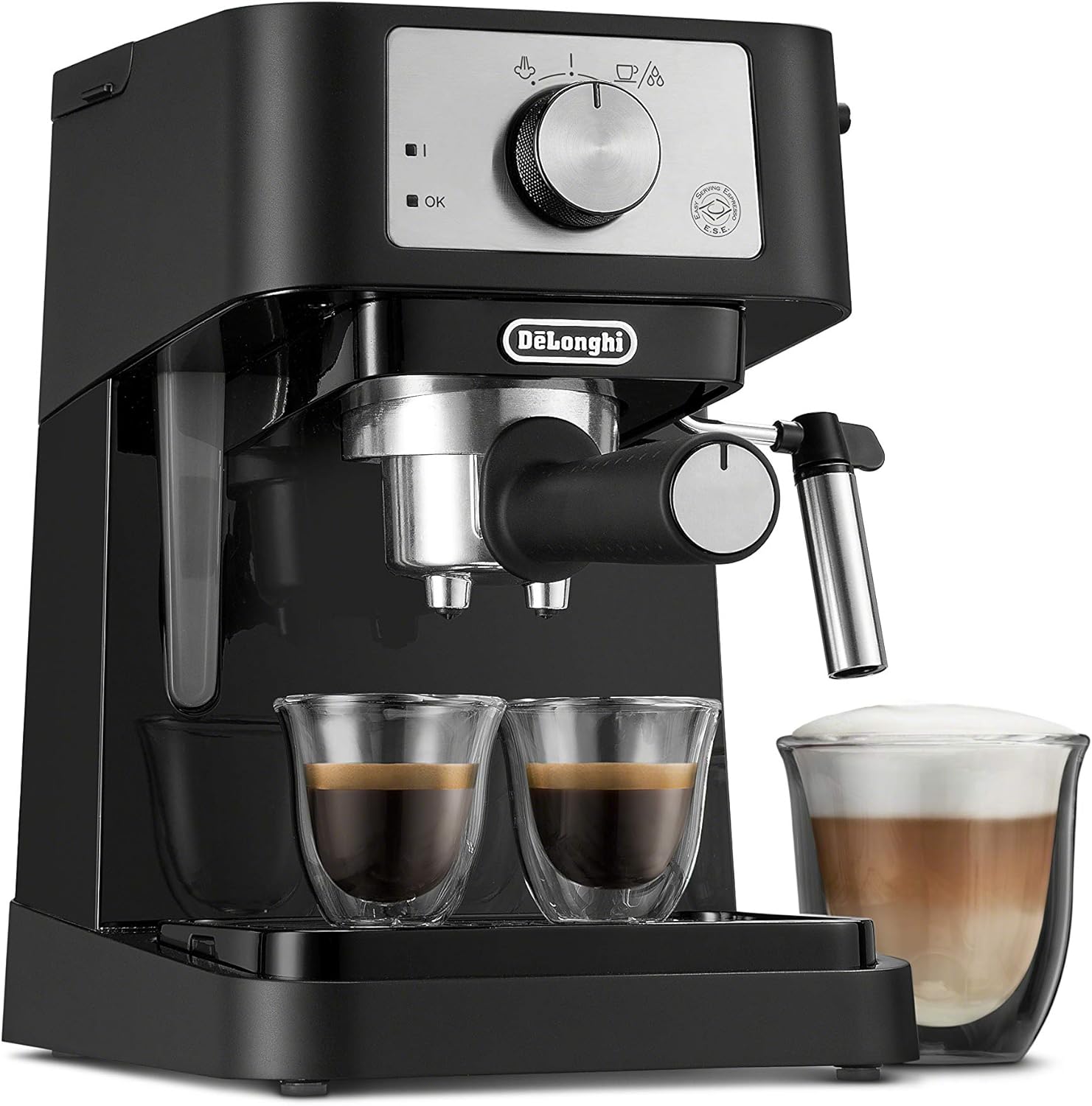
De'Longhi Stilosa Manual Espresso Machine 15 Bar Pump Compact
The Stilosa delivers authentic espresso, lattes, and cappuccinos at home using a 15 bar pump and manual steam wand for milk frothing. Buy this if you're starting your espresso journey and want café-quality drinks without a steep learning curve or large footprint.
Pros and Cons
Pros
- Stainless steel boiler is engineered for durability and consistent performance over years of daily use.
- Manual milk frother gives you direct control to create rich, creamy texture for authentic cappuccinos and lattes.
- Two-level cup holder accommodates everything from espresso cups to travel mugs without modification.
Cons
- Manual operation requires technique and practice to dial in grind size, tamp pressure, and steam timing correctly.
- 15 bar pump is entry-level; advanced espresso enthusiasts may eventually outgrow this machine's capabilities.

PHILIPS
One-Touch Espresso and Milk Drinks: Philips 3300 Series LatteGo Espresso Machine
The Philips 3300 Series automatically grinds, tamps and brews six hot or iced drinks, with its fast-cleaning LatteGo system providing the biggest everyday advantage. It suits households wanting customizable café-style coffee without manual espresso preparation or complicated milk-tube cleaning.
Pros and Cons
Pros
- The full-color display provides direct access to six drinks and adjustable coffee settings.
- LatteGo automatically froths milk and is dishwasher safe for simpler maintenance.
- The machine handles grinding, tamping and brewing automatically for consistent one-touch preparation.
- A 15-bar pressure system supports espresso brewing while the iced coffee preset expands drink options.
Cons
- Only six drink presets are included, so buyers seeking a larger specialty-drink menu may find the selection limited.
- AquaClean filters require periodic replacement to maintain the stated extended descaling interval.

AIRMSEN
One-Touch Lattes and Cappuccinos: AIRMSEN B0DGLKWMDY 20-Bar Espresso Machine
The AIRMSEN espresso machine makes espresso, cappuccino, and latte drinks with one-touch controls, while its dual-boiler system handles extraction and automatic milk frothing quickly. It suits home coffee drinkers who want milk-based café drinks without learning to operate a manual steam wand.
Pros and Cons
Pros
- Single and double shot options provide control over serving size and coffee strength.
- The full LED touchscreen makes drink selection more direct than multi-dial control layouts.
- Dual-boiler heating allows coffee extraction and milk frothing to operate together for faster preparation.
- The four-sided stainless steel exterior offers a durable finish suited to regular countertop use.
Cons
- The 4.1-inch cup clearance may not accommodate taller travel mugs.
- The detachable milk reservoir still requires cleaning after milk-based drinks to prevent residue buildup.

De'Longhi
Fast Lattes and Cappuccinos at Home: De'Longhi Classic Signature Espresso Machine
The De'Longhi Classic Signature brews single or double espresso with a 15-bar pump, while Thermoblock technology minimizes temperature wait time. It suits home coffee drinkers who want automated espresso dosing and adjustable milk textures for lattes, cappuccinos, and other café-style drinks.
Pros and Cons
Pros
- The professional 15-bar pump supports espresso extraction for lattes, cappuccinos, iced macchiatos, and espresso martinis.
- Thermoblock heating reduces warm-up time and provides stable temperature control.
- Adjustable frothing settings handle both dairy milk and milk alternatives.
- Programmable single and double espresso recipes reduce repeated manual dosing.
Cons
- The steam wand requires manual frothing, so producing consistent microfoam may take practice.
- A built-in coffee grinder is not listed, so whole-bean users may need a separate grinder.
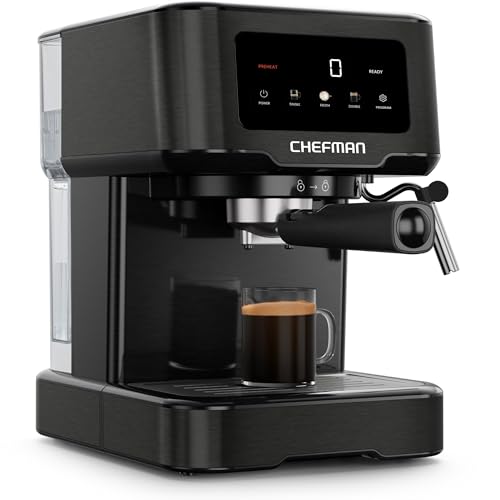
Chefman
Home Lattes and Cappuccinos: Chefman CraftBrew 15-Bar Digital Espresso Machine
The Chefman CraftBrew prepares single or double espresso shots and steamed-milk drinks, with programmable shot volume providing useful control over strength. It suits home coffee drinkers who want lattes, cappuccinos, lungos, and ristrettos from one compact machine.
Pros and Cons
Pros
- The 1350-watt machine combines espresso brewing and manual milk steaming in a compact countertop design.
- Programmable shot volume offers more flexibility than machines limited to fixed single and double pours.
- The large removable water tank reduces refilling when preparing drinks for several people.
- cETL approval and Chefman's one-year assurance provide documented safety and warranty coverage.
Cons
- The manual steam wand requires practice to achieve consistent milk texture.
- No built-in coffee grinder is listed, so buyers may need pre-ground espresso or a separate grinder.

XIXUBX
Small-Kitchen Espresso and Cappuccino Maker: XIXUBX Compact 3.5-Bar Machine with Steam Wand
The XIXUBX Compact Espresso and Cappuccino Machine brews smooth espresso and steams milk in a space-saving design, with its biggest advantage being the compact 3.3-pound body. Buy it for dorms, offices, RVs, or small kitchens when you want beginner-friendly espresso drinks without a bulky appliance.
Pros and Cons
Pros
- The 3.5-bar extraction is designed for a smooth, mild espresso flavor rather than an overly bitter cup.
- The powerful steam wand supports velvety milk foam and adjustable positioning through its cool-touch silicone grip.
- The mechanical knob avoids complex menus and keeps daily operation straightforward for beginners and seniors.
- The lightweight 3.3-pound design makes the machine easy to store or move between locations.
Cons
- The low-pressure 3.5-bar system may not satisfy buyers seeking the stronger extraction associated with higher-pressure espresso machines.
- The compact body has limited capacity compared with larger machines designed for repeated drink preparation.
The Best Deals This Week*
-
Fast Home Lattes and Cappuccinos
$109.99
($182.99)Save $73.00 -
Home Cappuccino and Latte Making with the CHULUX
$109.99
($149.99)Save $40.00 -
De'Longhi Stilosa Manual Espresso Machine 15 Bar
$99
($149.95)Save $50.95 -
One-Touch Espresso and Milk Drinks
$499.99
($899.99)Save $400.00 -
One-Touch Lattes and Cappuccinos
$134.99
($149.99)Save $15.00
*Deals are selected by our commerce team
Aromaster Fast Home Lattes and Cappuccinos: Aromaster 20-Bar Touchscreen Espresso Machine
Aromaster
Fast Home Lattes and Cappuccinos: Aromaster 20-Bar Touchscreen Espresso Machine
The Aromaster espresso machine brews hot or iced espresso drinks with fast 1400W heating, with its dual-circuit system reducing delays between beverages. It suits home or office users who want touchscreen brewing, manual milk frothing, and consistent temperature control in a compact machine.
$109.99 at AmazonEditors' Favorite
Color: Sterling Silver Size: household Dimensions: 11 x 5 x 12 inches Product Group: Kitchen
Shop NowCHULUX Home Cappuccino and Latte Making with the CHULUX Slim Espresso Machine and Milk Frother
CHULUX
Home Cappuccino and Latte Making with the CHULUX Slim Espresso Machine and Milk Frother
The CHULUX Slim Espresso Machine makes espresso, cappuccino, and latte drinks at home, with a 20-bar pump and 30-second preheating as its biggest advantages. It suits beginners and coffee lovers who want a compact 5.5-inch machine for home or office use.
$109.99 at AmazonGreat Value
Color: Creamy Size: Slim Dimensions: 11.7 x 5.5 x 12.5 inches Weight: 7.8 pounds Product Group: Kitchen
Shop NowDe'Longhi Stilosa Manual Espresso Machine 15 Bar Pump Compact
De'Longhi Stilosa Manual Espresso Machine 15 Bar Pump Compact
The Stilosa delivers authentic espresso, lattes, and cappuccinos at home using a 15 bar pump and manual steam wand for milk frothing. Buy this if you're starting your espresso journey and want café-quality drinks without a steep learning curve or large footprint.
$99.00 at AmazonOther Special Features of the Product: Milk Frother Coffee Maker Type: Espresso Machine Specific Uses For Product: Espresso Operation Mode: Manual Wattage: 1100 watts Voltage: 110 Volts Human Interface Input: Buttons Output Pressure: 15 Bars Coffee Input Type: ground_coffee Smart Home Compatibility: Not Smart Home Compatible Power Source: AC adapter Filter Type: Reusable Capacity: 1000 Milliliters Item Dimensions D x W x H: 8.07"D x 13.5"W x 11.22"H Item Weight: 9.48 Pounds Number of Items: 1 Unit Count: 1.0 Count EU Spare Part Availability Duration: 5 Years Brand Name: De'Longhi Included Components: 33.8 fl.oz water tank, Accessories Included: Portafilter, Measuring Scoop/Tamper, single & double pod filter, De’Longhi Stilosa Espresso Machine Model Name: Stilosa Model Number: EC260BK Manufacturer: De'Longhi Warranty Description: 1 year manufacturer UPC: 044387026000 Part Number: EC260BK Item Type Name: Stilosa Manual Espresso Machine, Latte & Cappuccino Maker, 15 Bar Pump Pressure + Manual Milk Frother Steam Wand, Black / Stainless, EC260BK Best Sellers Rank: #25,531 in Home & Kitchen (See Top 100 in Home & Kitchen) #2 in Manual Espresso Machines ASIN: B08C96BG9H Customer Reviews: 4.2 4.2 out of 5 stars (13,617) 4.2 out of 5 stars Color: Black and Stainless Style: Stliosa Espresso Machine Material: Plastic, Stainless Steel Is the item dishwasher safe?: No Brand: De'Longhi Product Dimensions: 8.07"D x 13.5"W x 11.22"H Special Feature: Milk Frother
Shop NowPHILIPS One-Touch Espresso and Milk Drinks: Philips 3300 Series LatteGo Espresso Machine
PHILIPS
One-Touch Espresso and Milk Drinks: Philips 3300 Series LatteGo Espresso Machine
The Philips 3300 Series automatically grinds, tamps and brews six hot or iced drinks, with its fast-cleaning LatteGo system providing the biggest everyday advantage. It suits households wanting customizable café-style coffee without manual espresso preparation or complicated milk-tube cleaning.
$499.99 at AmazonColor: Glossy Black (Ep 3341/ 50) Size: 9.7"D x 17"W x 14.6"H Dimensions: 9.68 x 17.04 x 14.6 inches Weight: 17.63 Pounds Product Group: Kitchen Binding: Kitchen
Shop NowAIRMSEN One-Touch Lattes and Cappuccinos: AIRMSEN B0DGLKWMDY 20-Bar Espresso Machine
AIRMSEN
One-Touch Lattes and Cappuccinos: AIRMSEN B0DGLKWMDY 20-Bar Espresso Machine
The AIRMSEN espresso machine makes espresso, cappuccino, and latte drinks with one-touch controls, while its dual-boiler system handles extraction and automatic milk frothing quickly. It suits home coffee drinkers who want milk-based café drinks without learning to operate a manual steam wand.
$134.99 at AmazonColor: silver Size: Espresso Machine Dimensions: 13.9763779385 x 11.2204724295 x 15.1574802995 inches Weight: 9.3 Pounds Product Group: Kitchen
Shop NowDe'Longhi Fast Lattes and Cappuccinos at Home: De'Longhi Classic Signature Espresso Machine
De'Longhi
Fast Lattes and Cappuccinos at Home: De'Longhi Classic Signature Espresso Machine
The De'Longhi Classic Signature brews single or double espresso with a 15-bar pump, while Thermoblock technology minimizes temperature wait time. It suits home coffee drinkers who want automated espresso dosing and adjustable milk textures for lattes, cappuccinos, and other café-style drinks.
$227.99 at AmazonColor: Stainless Steel Size: Linea Classic Dimensions: 11.14 x 8.89 x 12 inches Weight: 9 Pounds Product Group: Kitchen Binding: Kitchen
Shop NowChefman Home Lattes and Cappuccinos: Chefman CraftBrew 15-Bar Digital Espresso Machine
Chefman
Home Lattes and Cappuccinos: Chefman CraftBrew 15-Bar Digital Espresso Machine
The Chefman CraftBrew prepares single or double espresso shots and steamed-milk drinks, with programmable shot volume providing useful control over strength. It suits home coffee drinkers who want lattes, cappuccinos, lungos, and ristrettos from one compact machine.
$84.99 at AmazonColor: Stainless Black Size: 1.5 Liter Dimensions: 10.79921258741 x 8.90157479407 x 11.90157479101 inches Product Group: Kitchen Binding: Kitchen
Shop NowXIXUBX Small-Kitchen Espresso and Cappuccino Maker: XIXUBX Compact 3.5-Bar Machine with Steam Wand
XIXUBX
Small-Kitchen Espresso and Cappuccino Maker: XIXUBX Compact 3.5-Bar Machine with Steam Wand
The XIXUBX Compact Espresso and Cappuccino Machine brews smooth espresso and steams milk in a space-saving design, with its biggest advantage being the compact 3.3-pound body. Buy it for dorms, offices, RVs, or small kitchens when you want beginner-friendly espresso drinks without a bulky appliance.
$49.99 at AmazonColor: Black Size: 8.3"D x 6"W x 11.8"H Dimensions: 8.3 x 6 x 11.8 inches Weight: 3.3 pounds Product Group: Kitchen
Shop Now


Write Your Review
No reviews yet. Be the first to share your experience!