

Walk into any kitchen store and the sales pitch writes itself: bigger blade, fancier steel, mirror-polished pattern welding. Most of it is noise. The best kitchen knife for you is rarely the one with the most impressive spec sheet, and a lot of the “rules” people repeat about knives fall apart the moment you actually cook with one. Below are the myths that steer buyers wrong, and what actually matters once the blade hits the cutting board.
Myth 1: A Longer Blade Is a Better Blade
People fixate on blade length as if inches equal skill. They see a chef swing a 10-inch chef’s knife on TV and assume that is the target. It is not. Blade length should match your hands, your counter space, and the food you cut most often, not some idea of what a “serious” cook uses.
An 8-inch chef’s knife handles roughly 90 percent of home tasks, from breaking down an onion to slicing a roast. Jump to 10 inches and you gain reach for big cabbages and watermelons, but you also lose control near the tip, and the knife feels clumsy on a small board. Plenty of experienced cooks quietly prefer a 7-inch blade or even a nimble santoku because the shorter length turns faster through dense vegetables. If your cutting board is 12 inches wide and your counter is cramped, a 10-inch knife is a liability, not an upgrade. Pick the length you can steer with confidence.
Myth 2: Damascus Steel Cuts Better Because It Looks Better
The rippling water pattern on a Damascus blade is gorgeous, and marketing leans on it hard. Here is the part nobody prints on the box: that pattern is almost entirely cosmetic. Modern Damascus is made by forge-welding dozens of layers of softer steel around a single hard cutting core. The layers you admire are not doing the cutting. The core is.
What this means in practice is simple. A knife with a great core steel and a plain finish will outperform a beautiful Damascus knife built around a mediocre core. The pattern tells you nothing about how long the edge lasts or how thin it can be ground. Two knives can share identical VG-10 cutting cores; one wears a 67-layer cladding and costs twice as much, and they cut the same. Buy Damascus if you love how it looks and you are willing to pay for craftsmanship. Just do not confuse the artwork with the performance. Ask what the cutting core is made of, and judge the knife on that answer.
Myth 3: The Sharpest Knife Off the Shelf Is the Best One
Out-of-the-box sharpness feels thrilling. You slide the blade through a tomato with zero pressure and assume you bought the right knife. But initial sharpness and edge retention are two different traits, and confusing them is how buyers end up disappointed three weeks later.
Any knife can be honed screaming sharp for a demo. The real question is how long it stays that way under daily use, and that comes down to the steel’s hardness and grain structure, measured on the Rockwell scale. A softer German-style blade around 56 to 58 HRC dulls faster but shrugs off abuse and takes seconds to touch up on a honing rod. A harder Japanese blade at 60 to 63 HRC holds its edge far longer, yet it chips if you twist it through a squash or hit a bone, and it needs a whetstone rather than a quick swipe.
Neither is objectively better. A cook who hates maintenance and hacks through everything is happier with the softer, forgiving steel. A careful slicer who enjoys a Sunday sharpening session gets more from the harder blade. Chasing the sharpest possible edge while ignoring how you actually cook is a recipe for a chipped tip and a knife you stop reaching for.
Myth 4: Price and Weight Tell You What You Need to Know
Two more shortcuts buyers rely on: heavier feels sturdier, and pricier must be sharper. Both mislead. A heavy bolster can help some people muscle through hard squash, but for long prep sessions that same weight tires your wrist and slows you down. Lighter Japanese knives let the edge do the work while your hand stays relaxed. Weight is a preference, not a grade.
Price is even less reliable. Above roughly the $60 to $100 mark, you are often paying for brand prestige, handle materials, and finish rather than a sharper or more durable edge. Some of the highest-rated chef’s knives in blind tests cost a fraction of the luxury names. The smartest move is to hold a knife, feel where it balances, and check the core steel and hardness. Spec sheets and receipts do not chop dinner. The knife that disappears in your hand does.
What Actually Makes a Great Kitchen Knife
Strip away the myths and the checklist gets short. You want a blade length you can control on your board, a cutting core made of steel you can name, a hardness that fits your maintenance habits, and a balance point that feels natural when you pinch the blade. Comfort and control beat flash every time. Get those right and you will reach for the same knife for years, no marketing pattern required.
Frequently Asked Questions
Is an 8-inch or 10-inch chef’s knife better for a home cook?
For most home kitchens, 8 inches wins. It covers nearly every task while staying easy to control on a standard board. Go up to 10 inches only if you regularly break down large produce and have the counter space to swing it safely.
Does Damascus steel actually cut better than a plain blade?
No. The layered pattern is mostly decorative cladding wrapped around a single cutting core. Performance depends on that core steel, not the visible ripples, so a plain knife with the same core cuts just as well for less money.
How often should I sharpen a kitchen knife?
Hone softer German-style blades on a rod every few uses and sharpen them on a stone a few times a year. Harder Japanese blades hold their edge longer, so they need a proper whetstone sharpening only once or twice a year, depending on how much you cook.
Pros
- 10° blade angle delivers exceptional sharpness that slices through tough proteins and delicate vegetables with minimal pressure.
- Full-tang construction provides stability and control during complex cutting tasks, reducing hand strain and improving precision.
- Lifetime service warranty and 100-day trial remove buyer hesitation—you can test the set risk-free before committing.
- Acacia wood block with non-slip base keeps knives protected and organized while adding visual appeal to kitchen countertops.
Cons
- Hand-washing only requirement means these knives cannot go in the dishwasher, adding to daily cleanup routine.
- 15-piece set may be oversized for small kitchens or minimalist cooks who only need 4-5 core knives.
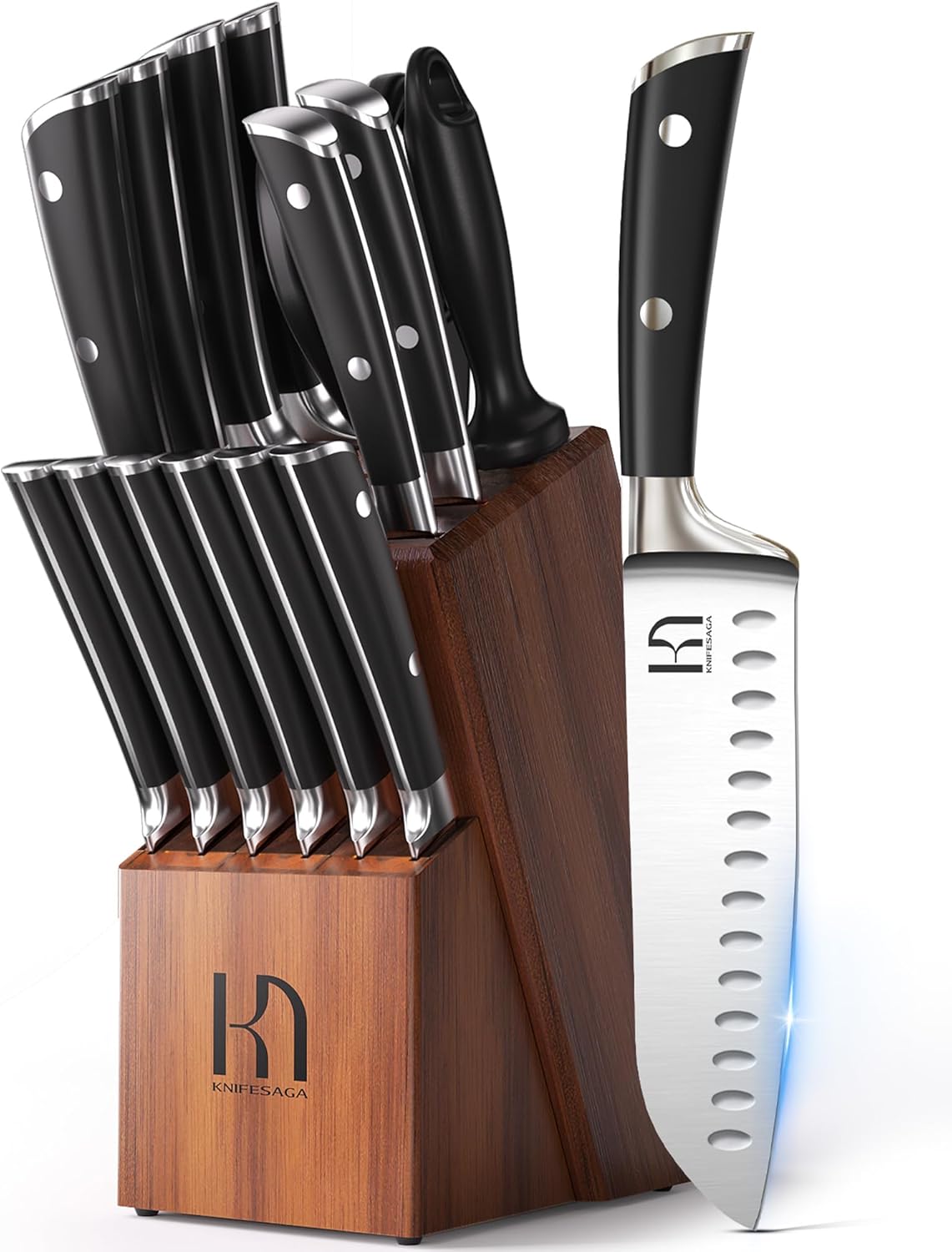
This 15-piece knife set solves the common kitchen problem of dull, inconsistent blades that require excessive pressure and produce uneven cuts. The 10° blade edge is 8.7x sharper than standard kitchen knives, delivering precision cuts through meats, vegetables, and bread without crushing or tearing.
The full-tang ergonomic handle reduces hand fatigue by 50% during extended prep work, while next-generation high-carbon steel resists corrosion and maintains sharpness through heavy daily use. The set includes an 8" chef knife, 8" bread knife, santoku, utility, paring knives, six steak knives, shears, and a sharpening steel, all housed in a solid acacia wood block.
Built from heat-treated high-carbon steel, these knives balance hardness and toughness for durability. The acacia wood block features a non-slip base to prevent sliding on countertops.
One limitation: hand-washing only is required to preserve the blade edge and handle finish, which adds to your cleanup routine.
Best for home cooks and aspiring chefs who want professional-grade cutting performance with a complete knife set and lifetime support.
Hand-wash immediately after use with warm soapy water and dry with a soft cloth. Never soak blades or place in the dishwasher, as this dulls edges and weakens the handle. Store knives in the acacia wood block to protect blades and prevent accidents.
Use the included sharpening steel regularly before each use to maintain the 10° edge and extend time between professional sharpening. The steel realigns the blade edge without removing metal, keeping knives sharp longer.
Avoid cutting on glass, marble, or ceramic surfaces that damage blades. Use wooden or plastic cutting boards instead. Store the block in a dry location away from direct heat or moisture to preserve the acacia wood finish.

Pros
- 10° blade angle cuts cleanly through tomatoes, chicken, and bread without slipping or crushing, delivering restaurant-quality results at home.
- Angled wood block with non-slip base keeps knives organized and accessible on the counter without taking up drawer space.
- Lifetime warranty and 100-day trial remove financial risk, letting you test the set risk-free before committing.
- Includes all essential knives plus kitchen shears and sharpener, eliminating the need to buy pieces separately.
Cons
- Hand-wash only requirement means no dishwasher convenience; daily rinsing adds 2 minutes to cleanup routine.
- 14-piece set takes up counter space; not ideal for small kitchens or minimalist setups.
This 14-piece knife set solves the problem of dull, frustrating cuts that slow meal prep and make cooking feel like a chore. The 10° Japanese steel blade edge glides through proteins and vegetables cleanly, and the built-in sharpener keeps blades kitchen-ready without external maintenance.
Heat-treated next-gen steel maintains sharpness 3x longer than standard stainless. Perfectly balanced weight reduces arm fatigue during extended prep sessions, while the ergonomic grip feels natural in your hand for hours of cutting.
The set includes an 8" chef knife, 8" bread knife, 7" santoku, 5" utility knife, 3.5" paring knife, six 4.5" steak knives, kitchen shears, and a built-in sharpener, all stored in an angled cherry or acacia wood block with a non-slip base.
Hand-wash only; dishwasher use voids the warranty and dulls blades faster. The wood block requires counter space, which may challenge small kitchens.
Best for home cooks who prep meals 4+ times weekly and want professional cuts without professional maintenance.
Hand-wash immediately after use under warm water with mild soap. Dry blades with a soft cloth before storing in the angled wood block. Never soak or use the dishwasher, which damages the heat-treated steel and dulls edges.
Use the built-in sharpener monthly for light maintenance. For deeper sharpening after 6 months of regular use, run each blade through the sharpener 3-4 times at a consistent angle. Store the block on a stable counter away from moisture and direct sunlight.
Avoid cutting on glass, marble, or ceramic surfaces; use only wood or plastic cutting boards to preserve the blade edge. Never leave knives loose in drawers where they bang against other utensils.

Pros
- The genuine layered Damascus pattern is formed through repeated folding, forging, and heat treatment rather than laser etching.
- The 62 HRC hardness supports long-lasting sharpness and resistance to wear.
- The frosted G10 handle offers durable, comfortable handling compared with traditional wood handles.
- The included 12-month warranty adds support for buyers choosing a daily-use chef knife.
Cons
- At 270 grams, it may feel heavier than preferred for cooks seeking an especially lightweight chef knife.
- The 8-inch blade may be less suitable for buyers who prefer compact knives for smaller prep areas.
The HINOKITO Chef Knife is an 8-inch all-purpose kitchen knife for slicing, chopping, dicing, and everyday meal preparation.
Its 10Cr15MoV core, 62 HRC hardness, and 15-degree edge support precise cuts with strong wear resistance and edge retention.
It combines 67 steel layers, a 2.2 mm blade, a 5.3-inch G10 handle, and a 270-gram top-balanced design.
The 270-gram weight may feel substantial to cooks who prefer lightweight knives.
Best for home cooks and professionals wanting a durable, controlled chef knife for frequent prep.
Preserve the 15-degree edge by using a sharpening method suited to fine chef-knife angles and avoiding rough cutting surfaces.
The 10Cr15MoV core resists rust and corrosion, while prompt drying helps protect the Damascus finish after washing.
Use the 8-inch blade for controlled slicing, chopping, and dicing, keeping the G10 handle clean for a secure grip.

Pros
- Hollow edge genuinely prevents food from sticking during chopping, making prep faster and cleaner than traditional chef's knives.
- Full-tang construction with visible triple rivets ensures the handle won't separate from the blade after years of hand-washing and daily use.
- Satin-finished blade maintains sharpness through hand-honing and resists staining better than carbon-only steel alternatives.
Cons
- Requires hand-washing and immediate drying; dishwasher use may eventually dull the blade or damage the handle finish despite being technically dishwasher-safe.
- At 8 inches, this knife sits between utility and chef's knife sizes, making it less ideal if you need a full 10-inch blade for large cutting boards.
This hollow-edge chef's knife solves the problem of food sticking to the blade during rapid vegetable prep and sashimi slicing, keeping your cutting surface clean and your workflow uninterrupted.
The scalloped hollow edge creates air pockets that reduce friction, producing paper-thin, uniform slices. The full-tang forged blade with visible triple rivets ensures the handle stays permanently bonded to the steel, even after years of daily use and hand-washing.
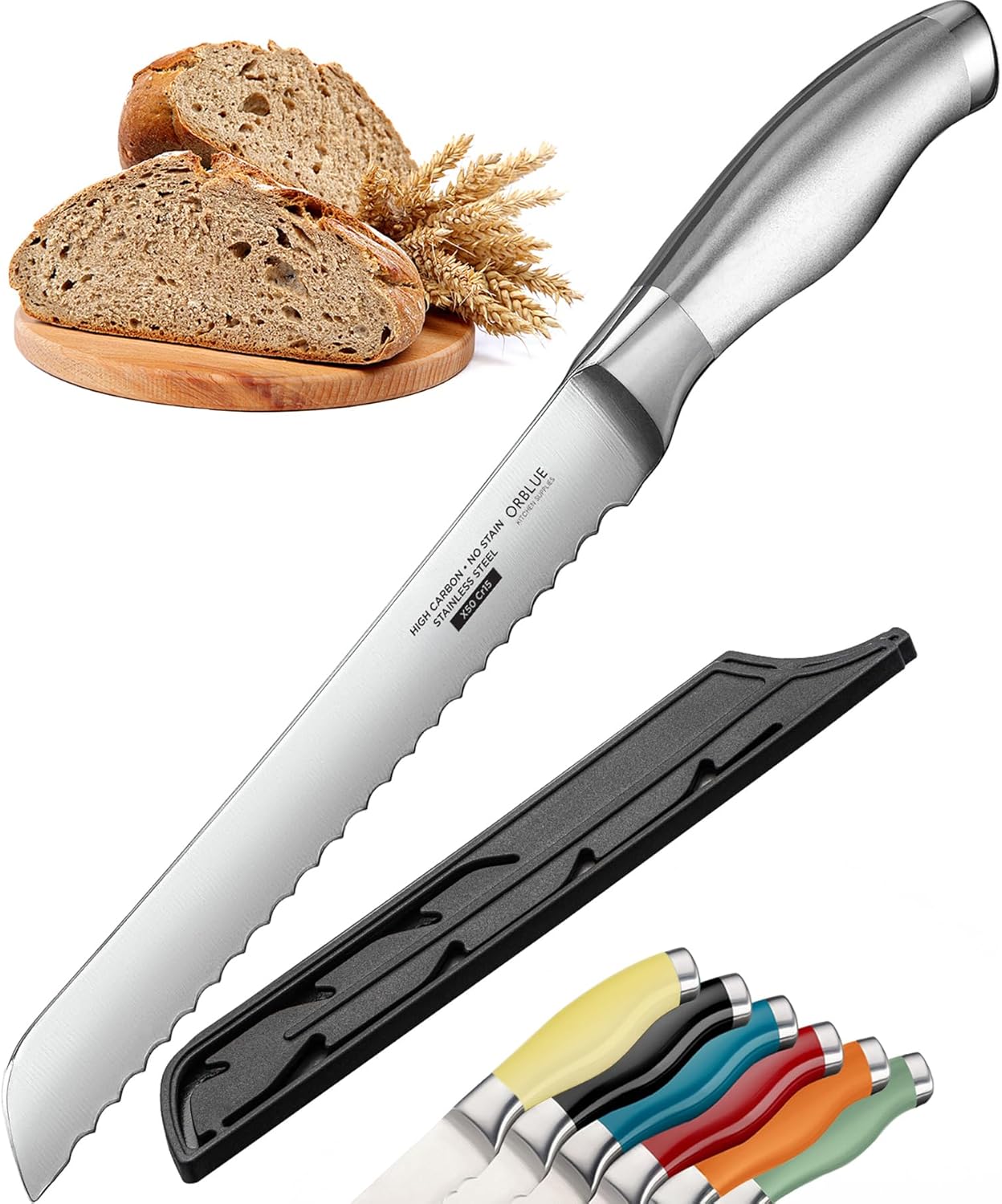
Built from high-carbon, no-stain German stainless steel with a full bolster and ergonomic triple-riveted handle. The 8-inch blade balances precision with maneuverability on standard home cutting boards.
The main limitation: this knife requires hand-washing and immediate drying to preserve the blade edge and handle finish, making it less convenient than dishwasher-safe alternatives.
Best for home cooks and Asian cuisine enthusiasts who prioritize thin, clean slices and want professional-grade durability without the professional price tag.
Hand-wash immediately after use under warm running water with mild dish soap. Dry the blade and handle completely with a soft cloth before storing to prevent water spots and steel oxidation.
Store the knife in a knife block, on a magnetic strip, or with a blade guard to protect the edge and prevent accidental contact with other utensils that dull the steel.
Sharpen every 3–6 months using a honing steel or whetstone, depending on cutting frequency. The hand-honed edge will maintain its precision longer than mass-produced blades due to the forged construction.
Pros
- 32,768-layer blade construction from 108 traditional forging steps delivers exceptional durability and edge retention compared to mass-produced knives.
- At 8 inches, the blade length balances control for detail work with enough surface area for efficient slicing of larger cuts.
- FSC-certified African Pakka wood handle provides comfortable grip without slipping, even when wet or during repetitive cutting motions.
Cons
- Requires hand-washing and immediate drying to prevent water spots and maintain the stainless steel finish; dishwasher use will damage the blade.
- The high-carbon content means the blade can chip if used on hard surfaces like bone or frozen foods without proper technique.
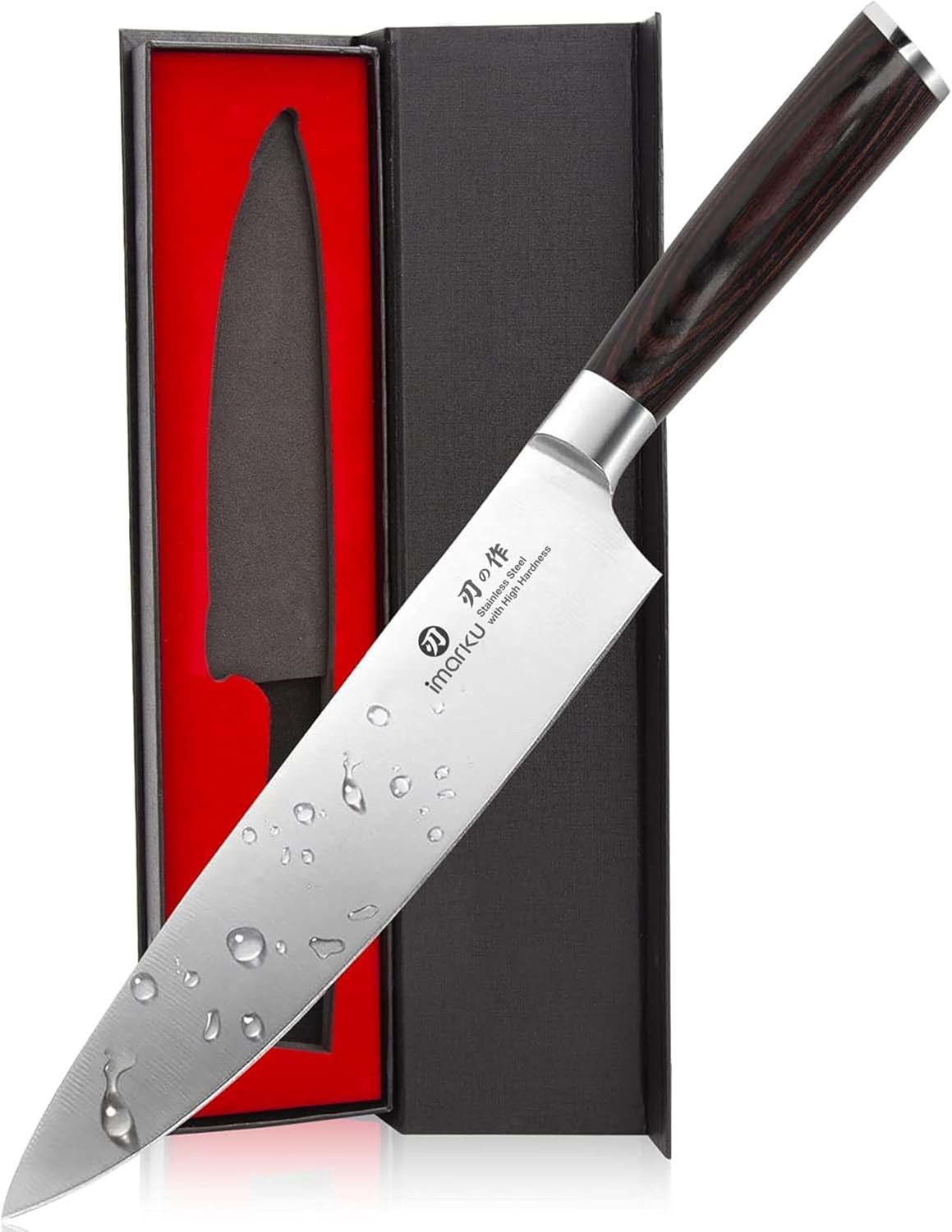
This is an 8-inch gyutou knife designed to replace multiple knives in your kitchen. It slices proteins, dices vegetables, and chops herbs with a single blade, solving the problem of owning too many single-purpose knives.
The 56-58 HRC hardness rating makes it twice as hard as standard kitchen knives, staying sharp through hundreds of cuts. The high-carbon stainless steel (16-18% chrome) resists rust and maintains its glossy finish for years.
The blade weighs approximately 6-7 ounces with an 8-inch cutting edge. The Pakka wood handle is textured for grip control and designed to reduce hand fatigue during extended prep work.
The main limitation is maintenance: it requires hand-washing and immediate drying to prevent water spots and corrosion. Dishwasher use will dull and damage the blade.
Best for home cooks and meal-prep enthusiasts who want a single, reliable knife that handles 80% of daily kitchen tasks without constant sharpening.
Hand-wash immediately after use with warm soapy water and a soft cloth. Dry the blade completely with a kitchen towel to prevent water spots and mineral buildup on the stainless steel surface.
Store the knife in a knife block or on a magnetic strip to protect the edge and prevent accidental dulling. Never store loose in a drawer where it contacts other utensils.
Hone the blade monthly with a honing steel to realign the edge. Professional sharpening every 1-2 years will restore the blade if it loses sharpness despite proper care and use.
Pros
- The set combines an 8-inch chef knife, 7-inch nakiri knife, and 3.5-inch paring knife for broad kitchen coverage.
- The 15° double-bevel edges are designed for precise, smooth cutting.
- Pakkawood handles provide an ergonomic grip with balanced control.
- Japanese high-carbon stainless steel supports durability and corrosion resistance when maintained properly.
Cons
- The manufacturer recommends hand washing and drying, so the set requires more care than dishwasher-friendly knives.
- The set does not include specialized options such as a bread knife or carving knife.
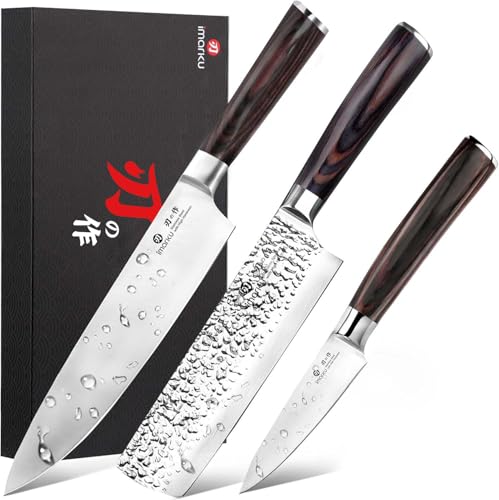
This 3-piece set addresses everyday prep with an 8-inch chef knife, 7-inch nakiri knife, and 3.5-inch paring knife.
Hand-polished 15° double-bevel edges help the blades move cleanly through vegetables, fruit, fish, and meat.
Japanese high-carbon stainless steel, 2.3mm blade thickness, and 57±1 HRC hardness support daily durability. Pakkawood handles provide ergonomic control; weight is not listed.
Hand washing and drying are recommended, and the set lacks specialized knives for bread or carving.
Best for home cooks and culinary students who want versatile daily knives in a gift-ready set.
Hand wash each knife after use and dry it promptly to help protect the Japanese stainless steel and pakkawood handle.
Use the appropriate knife for each task: the chef knife for general prep, nakiri for larger ingredients, and paring knife for peeling and precision work.
Store the knives safely and avoid using them on hard surfaces or for tasks outside normal food preparation.
Pros
- The 2.5mm blade thickness paired with the hollow edge design handles both delicate julienne cuts and heavier chopping without flexing or wedging.
- Pakkawood handle construction offers a more sanitary and dimensionally stable grip than standard composite or natural wood handles.
- The 15-18 degree edge angle matches professional Japanese knife geometry, giving it a noticeably sharper out-of-box performance than German-style knives at this price.
- Versatile enough for meat, vegetables, fruit, and bread, making it a practical single-knife solution for small kitchens with limited storage.
Cons
- With zero verified reviews available, long-term edge retention and handle durability under daily use remain unconfirmed by real buyers.
- The 3-month refund window is shorter than the lifetime guarantees offered by competing brands at the same price point.
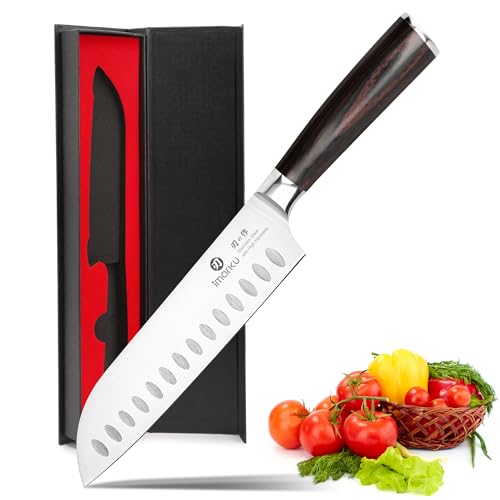
The imarku Santoku solves the sticking problem common with flat-edge knives by using a hollow scalloped blade that keeps sliced food from clinging during fast prep.
Its 15-18 degree hand-polished edge cuts with less force than wider-angle Western knives, which matters most when processing large volumes of vegetables or thin-sliced proteins.
Built from high carbon stainless steel at 2.5mm thickness with a Pakkawood handle, it balances rigidity and grip comfort across different hand sizes.
The brand upgrade notice means packaging and minor cosmetics may vary from product photos, though materials and construction are stated to be unchanged.
Best for home cooks who want one capable, low-maintenance knife that handles daily prep without occupying much counter or drawer space.
Hand-wash with warm soapy water immediately after use and dry thoroughly before storage. Dishwasher cycles degrade the Pakkawood handle and accelerate edge micro-chipping on high carbon steel.
Hone the blade on a ceramic rod every 3-4 uses to maintain the 15-18 degree edge angle. Sharpen on a whetstone at the same angle when honing no longer restores bite.
Store on a magnetic strip or in a knife block. Loose drawer storage causes edge-on-edge contact that dulls the blade faster than actual cooking use.

Pros
- Anti-rust coating and dishwasher-safe design mean zero daily maintenance—just rinse and load into the washer.
- Six blade guards make this set genuinely portable for travel and compact enough to fit in tight kitchen drawers.
- The 15° edge angle holds sharpness longer than standard 20° blades, reducing the frequency of re-sharpening.
Cons
- Stainless steel requires occasional hand-drying to prevent water spots, though the anti-rust coating prevents actual corrosion.
- The serrated bread knife may struggle with very dense crusts compared to premium carbon-steel alternatives.
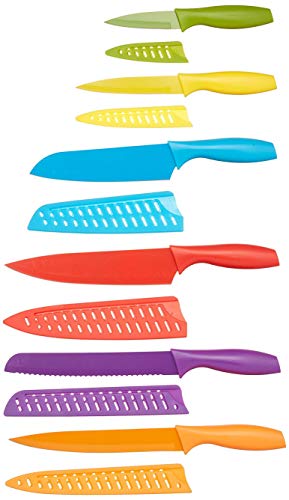
A complete 13-piece knife set designed to eliminate the need for buying knives piecemeal. It solves the problem of incomplete kitchen drawers and the cost of premium single knives by bundling every essential blade type into one affordable package.
The 15° blade angle keeps edges sharper longer than standard 20° designs, reducing re-sharpening frequency. The anti-rust coating survives dishwasher cycles without oxidation, eliminating the handwash-only requirement that slows cleanup.
Stainless steel construction with ergonomic, textured handles. Includes six blade guards for safe storage. Set weighs approximately 2 lbs and fits standard kitchen drawers.
Stainless steel can spot if left wet, though the anti-rust coating prevents actual rust formation.
Best for home cooks who meal prep regularly, travel with kitchen gear, or need a complete starter set without premium pricing.
Hand-dry knives within 30 minutes of dishwasher cycles to prevent water spotting on the stainless steel blade. The anti-rust coating protects against oxidation, but air-drying extends the finish lifespan. Store each knife in its blade guard to prevent edge dulling and maintain safety.
Avoid cutting on glass or marble surfaces, which dull edges faster than wood or plastic boards. The 15° angle stays sharp longer, but honing every 2–3 months of regular use maintains peak performance.
Do not soak blades in standing water for extended periods. Clean immediately after cutting acidic foods like citrus or tomatoes to preserve the non-stick coating that keeps blades clean throughout the day.

Pros
- Seven purpose-specific knives provide more cutting options than a basic chef-knife setup.
- Strong double-sided magnets offer visible storage and quick access to the blades.
- High-carbon 10Cr15CoMoV steel, vacuum heat treatment, and a 60HRC hardness rating support edge durability.
- The natural Pakkawood handles are reinforced to resist deformation during long-term use.
Cons
- The set does not include a bread knife or serrated blade, so those tasks require another knife.
- The magnetic block stores blades openly, which may be less suitable for kitchens where exposed knives are a safety concern.
This set equips a kitchen for chopping, slicing, dicing, filleting, and detail work while keeping seven knives visible on one double-sided magnetic acacia block.
Vacuum-treated 10Cr15CoMoV blades with a 15-degree edge support precise cuts, while the strong magnets keep each knife accessible during meal preparation.
The set includes 8-inch, 7-inch, 6-inch, and 3.75-inch knives, plus an acacia holder. Blade and handle materials are specified, but product weight is not provided.
There is no bread knife or serrated blade, and the magnetic holder leaves blades exposed rather than enclosed.
Best for home chefs and professionals who want a broad knife selection with countertop magnetic storage.
Use the correct knife for each task and cut on a suitable kitchen cutting board to protect the 15-degree edges.
Return each clean, dry knife to the magnetic block with the blade positioned securely against the holder.
Keep the exposed blades away from children and use another knife for bread or serrated cutting tasks.
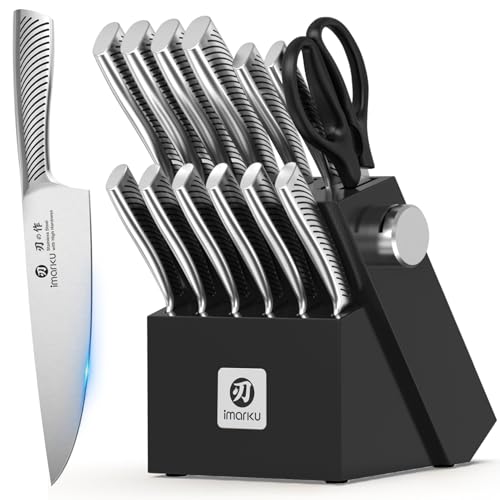
Pros
- The set covers core kitchen tasks with chef, Santoku, bread, slicing, utility, and paring knives.
- Full-tang construction supports balance and control, while anti-slip handles improve grip security.
- The mirror-polished Japanese high-carbon stainless steel blades are treated for corrosion resistance and lasting sharpness.
- Dishwasher-safe construction simplifies cleanup after larger meal-prep sessions.
Cons
- The listing does not provide block dimensions, so buyers with limited counter space cannot verify the exact footprint.
- The blade and block may arrive with either the classic or updated imarku logo, which may matter to buyers expecting an exact visual match.
This 14-piece imarku set consolidates everyday prep knives, six steak knives, shears, storage, and sharpening into one coordinated countertop system.
The 15-degree edges support precise chopping and slicing, while the built-in sharpener helps restore cutting performance without requiring a separate sharpening tool.
Blades use Japanese high-carbon stainless steel with a mirror polish and specialized heat treatment. Full-tang construction and contoured anti-slip handles improve balance and control during daily prep.
Block dimensions are not listed, and the logo design may vary between the classic and updated imarku branding.
Best for home cooks who want a complete black knife set covering food preparation and steak service in one block.
Although the set is labeled dishwasher safe, remove and dry the knives promptly after cleaning to limit water spots on the mirror-polished blades.
Use the built-in sharpener when a blade begins to drag rather than waiting until the edge becomes noticeably dull. Follow the included sharpening directions to maintain the 15-degree edge.
Return each clean, dry knife to its assigned block slot. Avoid loose drawer storage, which can expose the edges to contact with other utensils.
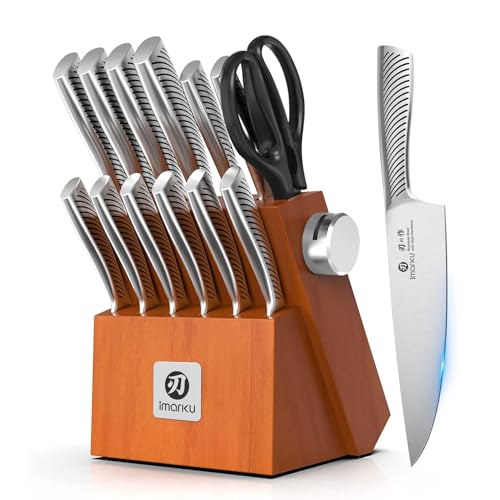
Pros
- The assortment covers chef, Santoku, bread, slicing, utility, paring, and steak-knife tasks.
- Full-tang construction and weighted ergonomic handles provide balanced handling.
- The stainless steel blades are listed as dishwasher safe for easier cleanup.
- The manufacturer promises lifetime coverage for defective sets through exchange or return.
Cons
- The product information inconsistently describes the collection as both 14 pieces and 15 pieces, so buyers should verify the current package contents.
- Although the blades are dishwasher safe, repeated machine washing may be less suitable for preserving sharp edges than careful hand washing.
This all-in-one knife block set equips a home kitchen for chopping produce, slicing meat, cutting bread, detailed paring, and serving steak without buying separate knives.
Each blade is hand sharpened to 15° per side, providing a fine cutting edge for cleaner slices and controlled preparation.
Heat-treated Japanese high-carbon stainless steel reaches 56 ± 2 HRC, while full-tang ridged handles add balance, grip, and durability for daily use.
The listing uses both 14-piece and 15-piece descriptions, so confirm the included components if the exact total matters.
Best for home cooks who want a broad knife assortment, six matching steak knives, shears, and organized countertop storage in one set.
Hand wash and dry each knife promptly when possible to help preserve the 15° edge, even though the stainless steel blades are listed as dishwasher safe.
Store clean, fully dry knives in the ventilated block to protect the edges and limit trapped moisture around the blades.
Wipe the FSC-certified wood block with a slightly damp cloth and dry it immediately rather than soaking or placing it in a dishwasher.
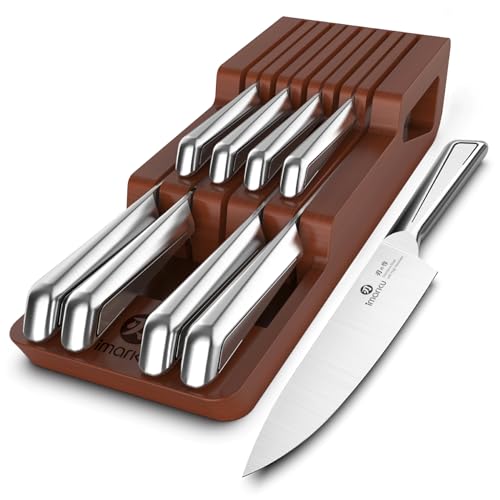
Pros
- The set includes chef, slicing, bread, santoku, boning, and four serrated steak knives for broad meal-prep coverage.
- Its slim wooden block can be placed inside a drawer or displayed on the counter.
- Patented handles combine non-slip grooves with a balanced shape for more controlled cutting.
- Permanent coverage against defects adds reassurance for long-term ownership.
Cons
- The organizer requires at least 16.2 inches by 6.2 inches by 3.6 inches of clear drawer space, so measuring before purchase is essential.
- The set does not include a paring knife, kitchen shears, or a sharpener.
This nine-knife set and wooden organizer solve two common kitchen problems: covering core cutting tasks and storing sharp blades without occupying counter space.
An 8-inch chef knife handles general prep, while dedicated slicing, bread, santoku, boning, and steak knives reduce the need to use one blade for every task.
The knives use Japanese stainless steel and grooved handles. The FSC-certified wood block measures 15.9 inches long, 5.9 inches wide, and 3.2 inches high; product weight is not listed.
The organizer will not fit every drawer, and the recommended minimum interior clearance is 16.2 inches by 6.2 inches by 3.6 inches.
Best for space-conscious home cooks who want a broad knife assortment stored safely inside a properly sized drawer.
The knives are dishwasher safe, but hand washing and immediate drying can better protect the blades and support long-term sharpness.
Allow each knife to dry completely before returning it to the block; the hollowed organizer top helps moisture escape during storage.
Keep every blade in its assigned slot to protect the cutting edge and reduce accidental contact when opening the drawer.





Write Your Review
No reviews yet. Be the first to share your experience!