

Air fryer vs sous vide comes down to one question: do you want speed and crunch, or precision and tenderness? An air fryer blasts food with hot, fast-moving air to brown and crisp it in minutes. A sous vide cooker holds a water bath at an exact temperature so food cooks evenly edge to edge, usually over an hour or more. They don’t really compete. They solve different problems, and plenty of cooks end up using both.
This guide breaks down how each one works, what each does well, where each falls short, and how to decide which belongs on your counter first. You’ll also see how the two fit together, because the best steak many home cooks make starts in a water bath and finishes with a hard sear.
How an air fryer works and what it’s good at
An air fryer is a compact convection oven. A heating element sits above the food and a fan pushes hot air down and around it at high speed. That moving air strips moisture from the surface, which is what lets the outside brown and crisp. Most models top out somewhere around 400°F, and preheating takes only a few minutes, so a weeknight batch of wings, fries or roasted vegetables lands on the table fast.
The strengths are easy to list in plain terms. It’s quick. It needs little oil, often a teaspoon or a light spray instead of a pot of frying fat. It reheats leftovers like pizza and fried chicken far better than a microwave, because the surface dries and crisps again instead of going soggy. And cleanup is usually one basket or tray.
The weakness is control over the inside of the food. Hot air cooks from the outside in, so a thick chicken breast or pork chop can brown nicely while the center is still underdone, or reach a safe center while the edges dry out. Small baskets also limit batch size. Crowd the basket and the air can’t circulate, so food steams instead of crisping.
If you’d like to see what a newer design looks like, the Ninja Crispi Glass Air Fryer takes a different approach than the usual nonstick basket. It’s a 5-in-1 unit with a glass cooking vessel, sold in an Emerald finish under model number FN103BF. Glass lets you watch browning without pulling the drawer, and it’s a draw for people who’d rather avoid coated baskets. It sits at the premium end, so it makes most sense if you’ll use it often. For a wider comparison, our guide to the best air fryer covers more options.

Ninja
Crispi Glass Air Fryer 5-in-1 for Personal Meals and Family Feasts
The Ninja Crispi Glass Air Fryer cooks crisp meals, bakes, reheats, and keeps food warm while its three glass containers eliminate container transfers. It suits solo cooks and families who want right-sized portions, countertop portability, and cook-to-table-to-fridge convenience.
Pros and Cons
Pros
- Three container sizes accommodate personal portions, side dishes, and family meals.
- The glass containers are thermal shock-resistant and can move from frozen to crispy cooking.
- Fixed heat-safe feet protect granite, quartz, marble, butcher block, and laminate countertops.
- The portable PowerPod delivers full-sized air fryer wattage without a bulky appliance footprint.
Cons
- The product data does not specify the PowerPod's weight, which may matter if you plan to move it frequently.
- The system requires storing three containers, three crisper plates, three lids, and an adapter, despite nesting for compact storage.
Ninja Crispi Glass Air Fryer 5-in-1 for Personal Meals and Family Feasts
Ninja
Crispi Glass Air Fryer 5-in-1 for Personal Meals and Family Feasts
The Ninja Crispi Glass Air Fryer cooks crisp meals, bakes, reheats, and keeps food warm while its three glass containers eliminate container transfers. It suits solo cooks and families who want right-sized portions, countertop portability, and cook-to-table-to-fridge convenience.
$219.95 at AmazonEditors' Favorite
Color: Green Bundle Size: 4 QT Dimensions: 11.5 x 9.25 x 11.75 Inches Weight: 15.74 pounds Product Group: Kitchen Binding: Kitchen
Shop NowHow sous vide works and what it’s good at
Sous vide means “under vacuum” in French. You seal food in a bag, lower it into a water bath, and an immersion circulator heats and moves the water at a set temperature. Because the water never goes above that number, the food can’t overcook past it. A steak set to 131°F comes out the same pink from edge to center, with no gray band under the crust.
That’s the main appeal. Precision. You pick the doneness, and the cooker holds it. Timing is also forgiving: a steak that’s ready at 1 hour is usually still fine at 2 or 3. That makes sous vide great for dinner parties, meal prep and busy evenings where you don’t want to stand over a pan.
Where sous vide shines
Tough or lean cuts benefit most. Chicken breast stays juicy because it can be held at a lower temperature long enough to be safe, instead of being blasted to 165°F. Pork tenderloin, salmon, eggs and long-cooked cuts like short ribs or brisket all do well. Vegetables such as carrots and asparagus hold their color and texture, too.
Where sous vide falls short
Water can’t brown anything. Food comes out of the bag cooked through but pale, soft on the surface and often a little wet. Almost every sous vide protein needs a finishing step: a ripping-hot skillet, a torch, a grill or, yes, an air fryer. It’s also slow. A 1-inch steak needs roughly an hour, and tougher cuts can run 24 hours or more. Not a fit for “I’m hungry now” cooking.
Air fryer vs sous vide: a side-by-side look
Here’s how the two compare on the points that matter most when you’re deciding.
Speed
The air fryer wins easily. Frozen fries take around 15 to 20 minutes. Sous vide rarely takes less than 45 minutes once you count heating the water, and most proteins need an hour or more before searing.
Texture
Air fryers deliver crisp, browned surfaces. Sous vide delivers even, tender interiors. Neither gives you both on its own, which is why the pairing works so well.
Precision and consistency
Sous vide is the clear winner. You’re setting the exact final temperature of the food. With an air fryer you’re managing time and heat and checking with a thermometer, and results vary with thickness and how full the basket is.
Hands-on effort
Both are low effort, in different ways. An air fryer needs a shake or flip halfway. Sous vide needs bagging up front and a sear at the end, but the long middle stretch is completely hands-off.
Counter space and gear
An air fryer is a self-contained box. A sous vide stick is small, but you also need a pot or container deep enough to hold the water, plus bags. That’s where kits with a dedicated container help.
The CATTLEMAN Sous Vide Cooker is one example of an all-in-one setup. Its title lists a 1000W immersion circulator, a 12-quart container with lid and a neoprene sleeve, along with accurate temperature and timer controls and fast heating. The lid and sleeve help hold heat and cut down on evaporation during long cooks, and the listing also pitches it as a wine chiller. If you’re starting from zero and don’t want to rig a stockpot, a kit like this removes a step. You can compare more circulators in our roundup of the best sous vide cookers.

CATTLEMAN CUISINE
Sous Vide Cooking and Rapid Wine Chilling: CATTLEMAN CUISINE 1000W Immersion Circulator Kit with 12QT Container
This 1000W immersion circulator holds temperature between 68 and 194°F with 3D water circulation and ships with a 12-quart polycarbonate container, insulated sleeve, and lid so nothing else needs buying. Home cooks who want restaurant-texture steak and also entertain often will get the most from it, since the Chill mode drops wine and beer to serving temperature in minutes using the same unit.
Pros and Cons
Pros
- Sealed 12-quart kit with lid and insulating sleeve means low evaporation on 12 to 24 hour cooks without foil or ping-pong balls.
- Brushless motor runs under 15 dB, quiet enough to leave running overnight in an open kitchen.
- Timer spans 0 to 72 hours with an audible alert, covering everything from a 45 minute egg to multi-day short ribs.
- The 30-degree tilted panel and long-press adjustment on the plus and minus keys make setting temperature fast from a standing position.
Cons
- The 194°F ceiling is standard for sous vide but rules out higher-temperature uses some cooks attempt with a circulator.
- No app or Wi-Fi connectivity, so every temperature and timer change has to happen at the unit itself.
CATTLEMAN CUISINE Sous Vide Cooking and Rapid Wine Chilling: CATTLEMAN CUISINE 1000W Immersion Circulator Kit with 12QT Container
CATTLEMAN CUISINE
Sous Vide Cooking and Rapid Wine Chilling: CATTLEMAN CUISINE 1000W Immersion Circulator Kit with 12QT Container
This 1000W immersion circulator holds temperature between 68 and 194°F with 3D water circulation and ships with a 12-quart polycarbonate container, insulated sleeve, and lid so nothing else needs buying. Home cooks who want restaurant-texture steak and also entertain often will get the most from it, since the Chill mode drops wine and beer to serving temperature in minutes using the same unit.
$99.99 at AmazonEditors' Favorite
Color: Sous Vide Unit with Container Size: Sous Vide Cooker with 12QT Container Dimensions: 4.92 x 2.63 x 13.58 inches Weight: 4 Pounds Product Group: Kitchen
Shop NowUsing both together
This is where things get interesting. The two tools cover each other’s weak spots. Sous vide handles the inside. The air fryer handles the outside.
A common approach: cook chicken thighs sous vide until done, chill or pat them very dry, then give them a few minutes in a hot air fryer to render and crisp the skin. The same goes for sous vide potatoes, which you can parcook in the bath and finish in the basket for a creamy center and a crackly shell. Pork belly works this way, too.
Steak is the one case where many cooks still prefer a cast-iron pan, because direct contact with a very hot surface builds a deeper crust faster than moving air can. An air fryer will brown a steak, just more gently. Dry the surface well first either way. Moisture is the enemy of browning, and a sous vide bag leaves plenty behind.
If you’re working with a larger family or big batches of finishing, a roomier basket helps. Our guides to the best 6 qt air fryer and the best air fryer oven cover bigger options that can handle a whole tray of sous vide chicken at once.
Common mistakes with each
Most disappointing results from either tool come from a handful of habits that are easy to fix.
Air fryer mistakes
Overcrowding is the big one. Food needs space for air to move, so cook in batches if you have to. Skipping the shake is another. Fries and wings brown unevenly if they sit in one layer the whole time. Using too much oil can cause smoke, and aerosol sprays with propellants can wear down some nonstick coatings over time, so check your manual. Finally, don’t assume a recipe’s time is exact. Basket size and wattage vary, so start checking a few minutes early.
Sous vide mistakes
Air in the bag makes it float, and floating food cooks unevenly. Use the water displacement method or a clip to keep bags submerged. Don’t skip drying before searing, or you’ll steam instead of brown. And don’t treat sous vide as an excuse to ignore food safety. Low temperatures are safe only when held long enough, so follow a trusted time and temperature chart, especially for poultry and anything you plan to cook below 130°F.
Which should you buy first?
If you cook quick weeknight meals, reheat a lot of leftovers or love crispy food, start with an air fryer. It’ll get used more days of the week, and it’s the more versatile everyday tool for most households.
If you cook a lot of steak, chicken breast or fish, care about exact doneness, or meal prep on weekends, a sous vide cooker earns its spot. It’s the more specialized tool, but the results on proteins are hard to match any other way.
If your budget is tight, there’s a simple path: buy a small, inexpensive air fryer now and add sous vide later. A compact model also works well as a finishing station once you do pick up a circulator.
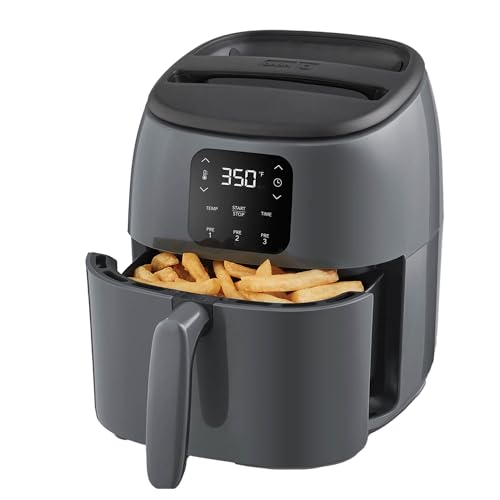
The Dash Tasti-Crisp Digital Air Fryer fits that starter role. It’s a 2.6-quart unit with digital controls in a Cream finish, and it sits at a much lower price point than premium models. That capacity suits one or two people, side dishes, reheating, or crisping a couple of sous vide chicken thighs. It won’t handle a family-size batch in one go, so larger households may want more room. For more compact picks, see our list of the best mini air fryer models, or the best Dash air fryer lineup.
DASH Tasti-Crisp Digital Air Fryer, 2.6 Quart, Cream

Editors' Favorite
Color: Cream Size: 2.6 Quart Dimensions: 10.5 x 8 x 13 Inches Weight: 5.7 pounds Product Group: Kitchen Binding: Kitchen
Shop NowFAQ
Can an air fryer replace a sous vide cooker?
Not really. An air fryer cooks with hot air from the outside in, so it can’t hold food at one exact internal temperature for a long time. You can make a great chicken thigh in an air fryer, but you won’t get the edge-to-edge doneness that sous vide gives.
Can you sear sous vide steak in an air fryer?
Yes, you can. Pat the steak very dry, preheat the air fryer to its highest setting and cook for a few minutes per side. The crust will be lighter than a cast-iron sear, so many cooks save the air fryer for chicken skin and potatoes and use a pan for steak.
Is sous vide healthier than air frying?
Both use little or no added fat, so neither is a heavy method. Sous vide keeps more moisture in the food, and the air fryer may use a small amount of oil for browning. The bigger health factor is usually what you cook, not which of the two tools you use.
Which is faster, an air fryer or sous vide?
The air fryer is much faster. Most foods are done in 10 to 25 minutes. Sous vide usually needs at least an hour for proteins, plus time to heat the water and sear at the end.
Do I need a vacuum sealer for sous vide?
No. Heavy-duty zip-top bags work for most cooks if you push the air out with the water displacement method. A vacuum sealer helps with long cooks and freezer prep, but it’s optional when you’re starting out.




Write Your Review
No reviews yet. Be the first to share your experience!