

TL;DR — The useful way to compare air fryer vs rice cooker is to look at daily workflow, upkeep, and what each option does better. Use this as the practical background, then check best air fryer, best rice cooker, and best deep fryer for specific product options.
We treated this as an editor’s note for home cooks: what matters, what is optional, and which related product guides are worth checking before you buy. For appliance topics, we pay close attention to capacity, controls, cleanup, storage, reliability complaints, and whether the machine saves enough effort to justify the space.


Save $40.00
Pros & Cons
Pros
- Two lids let you switch between pressure cooking for speed and air frying for texture without transferring food or washing extra equipment.
- Over 10 built-in safety features including overheat protection and seal lock give confidence to new pressure cooker users.
- Comes with steam rack, dehydrator tray, air fryer basket, and broil tray so you can start cooking without buying accessories.
Cons
- The 6-quart capacity may be too small for families larger than six or for batch cooking more than a week's worth of meals.
- Switching between lids requires storage space for the one not in use, and both lids add bulk compared to single-lid models.
Details
The Instant Pot Duo Crisp solves the problem of needing multiple appliances by pairing a pressure cooker base with an air fryer lid. You get tender stews in 30 minutes and crispy chicken wings without heating a separate fryer.
EvenCrisp technology circulates hot air for even browning with 95% less oil than deep frying. The 1500-watt heating element maintains steady temperature whether you’re searing meat or dehydrating fruit.
The 6-quart stainless steel inner pot is dishwasher-safe and scratch-resistant. At 13 inches tall with the pressure lid on, it fits under most cabinets but takes up roughly the footprint of a large slow cooker.
Swapping lids mid-recipe works smoothly, but you’ll need drawer or shelf space to store the unused lid since both are bulky. The air fryer lid also vents steam during cooking, so leave clearance above.
Best for home cooks who want faster weeknight meals and crispy finishes without owning five separate appliances or deep frying with quarts of oil.
How to Use
For pressure cooking, add ingredients and liquid, lock the pressure lid, set the valve to sealing, and select a preset like soup or rice. The pot builds pressure automatically and releases steam when done.
For air frying, swap to the air fryer lid, place food in the basket, and choose the air fry setting with your target temperature. The lid circulates heat from above, so flip thicker items halfway for even crisping.
You can pressure cook first to tenderize meat or potatoes, then switch to the air fryer lid to brown and crisp the top without transferring to another device. This two-step method works well for pulled pork, chicken thighs, and casseroles.

Pros & Cons
Pros
- Handles both white and brown rice with dedicated settings that adjust cook time and temperature automatically.
- Compact footprint fits on crowded countertops or stores easily in a cabinet when not in use.
- Works for more than rice including oatmeal, soups, chili, and jambalaya with the same reliable results.
Cons
- The 8-cup maximum cooked capacity is too small for families larger than four people or batch cooking.
- Stainless steel exterior shows fingerprints and smudges easily during daily handling.
Details
This is a 4-cup uncooked / 8-cup cooked digital rice cooker that solves the problem of burnt, mushy, or inconsistent stovetop rice. It uses preset functions and automatic temperature control to deliver restaurant-quality results with zero guesswork.
Sensor Logic Technology adjusts heat throughout the cooking cycle to achieve fluffy texture every time. The Flash Rice function is the standout feature, cutting standard cook time by up to 50 percent for last-minute meals.
Stainless steel exterior with a 2-quart inner pot. Compact design measures small enough to store in a cabinet. Includes a steam tray, rice measuring cup, and serving spatula. All removable parts are dishwasher safe.
The 8-cup cooked capacity works well for singles, couples, and small families but runs too small for households of five or more.
Best for home cooks who eat rice regularly and want foolproof results without monitoring a pot on the stove.
How to Use
Measure rice using the included cup, rinse it under cold water, and add to the inner pot with the correct water ratio marked on the pot’s interior. Select White Rice, Brown Rice, or Flash Rice depending on your grain and timing needs.
To steam food simultaneously, place protein or vegetables in the steam tray and set it on top of the rice. The Steam function also works independently when you need steamed vegetables without cooking rice below.
For delayed cooking, press the Delay Timer button and set the number of hours ahead. The cooker will start automatically and switch to Keep Warm when done, holding rice at serving temperature until you’re ready to eat.
Save $8.03
Pros & Cons
Pros
- Automatic shutoff and keep-warm function remove all guesswork from timing.
- Compact footprint takes minimal counter space while still making 2-3 servings.
- PFAS-free ceramic nonstick surface cleans easily and avoids potentially harmful coatings.
Cons
- 1-quart capacity is too small for families of four or more.
- No timer or delay-start function for advance meal prep.
Details
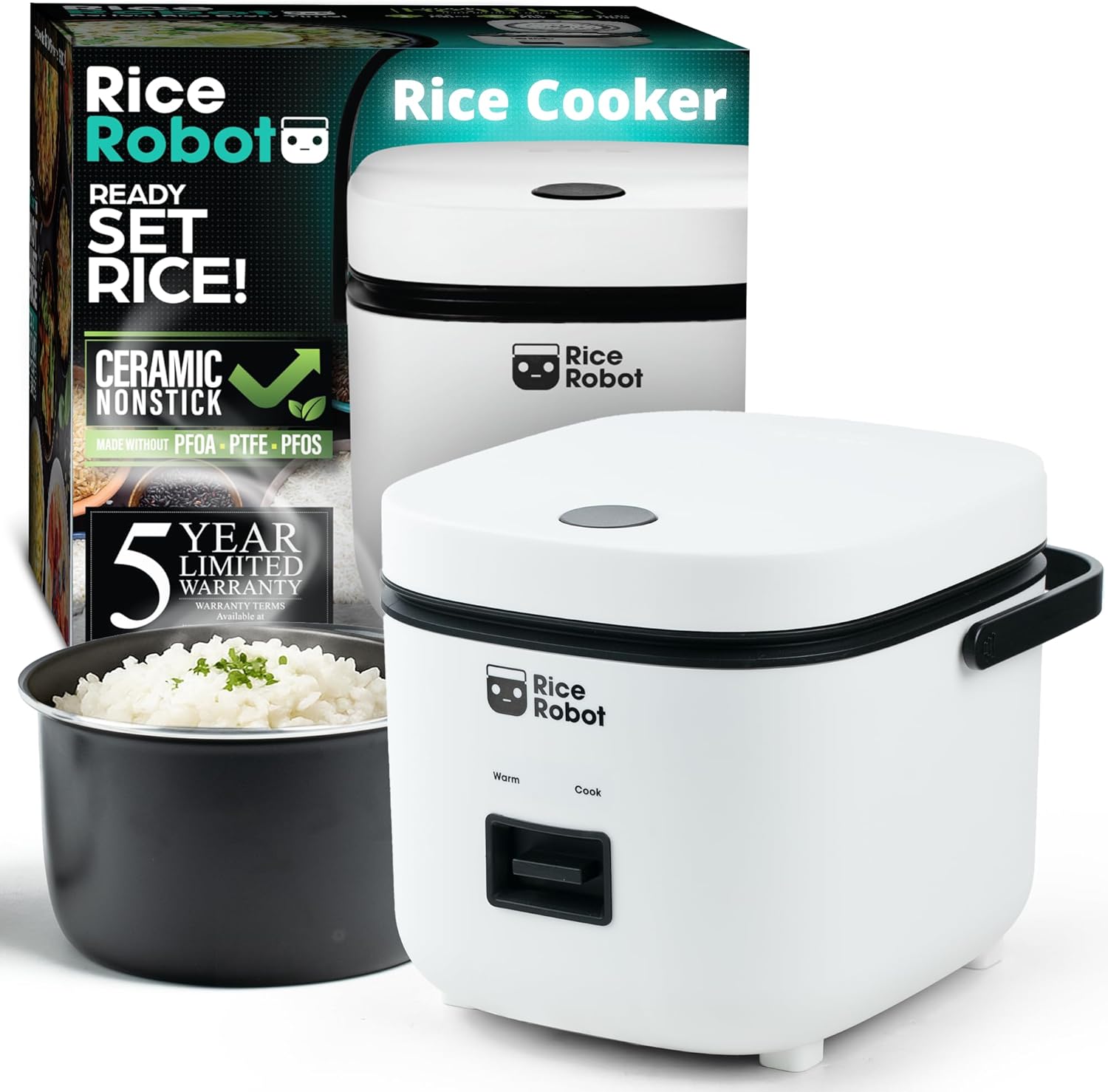
The Rice Robot is a 1-quart personal rice cooker designed to prevent the most common stovetop mistakes: burning, mushiness, and timing errors.
Its controlled heat technology clicks on to cook, then automatically switches to keep-warm when moisture levels indicate rice is done. The included steamer tray sits above the pot, letting you cook vegetables or protein simultaneously.
The inner pot has a PFAS-free ceramic nonstick coating and is dishwasher safe. The unit measures compact enough for dorm rooms or RV kitchens. Total capacity yields 2-3 servings of cooked rice.
The single-button operation means no learning curve, but also no programmable settings or delay timer.
Best for individuals or couples who cook rice several times a week and want reliable results without monitoring.
How to Use
Measure rice and water using the included cups, pour into the nonstick pot, and press the cook button. The unit heats automatically and switches to keep-warm when steam absorption completes, usually 15-20 minutes depending on rice type.
To steam vegetables or dumplings, place the stainless steel tray over the rice during cooking. Both layers finish at the same time for a complete single-person meal.
After use, let the pot cool, then wash by hand or place in the dishwasher. The nonstick surface releases stuck grains easily without soaking.

Pros & Cons
Pros
- The ceramic inner pot does not develop scratches or coating flakes like traditional nonstick surfaces, and buyers report it lasting years without performance loss.
- Texture customization for white and brown rice (soft, regular, hard) gives control over results whether you want separate grains for fried rice or sticky grains for sushi.
- Quick Rice mode cuts cooking time significantly when you need white rice fast, with reviewers noting minimal quality difference from the standard cycle.
- The guided touch display with clear measurement marks inside the pot eliminates guesswork for water-to-rice ratios across different grain types.
Cons
- The 10-cup capacity refers to uncooked rice, which yields about 20 servings, making this too large for singles or couples who cook small batches and want to minimize counter space.
- Steam mode requires the separate stainless basket and cannot cook rice simultaneously with steaming, which limits one-pot meal options compared to some competitors.
Details
This is a programmable rice cooker that replaces multiple appliances by handling rice, grains, oatmeal, steaming, slow cooking, and sautéing in one 10-cup unit. It solves the problem of inconsistent rice texture by using fuzzy logic technology that automatically adjusts temperature and timing based on the type and amount of food.
The dual heating system places elements on both top and bottom with temperature sensors, reducing water condensation that drips back and causes soggy spots. Fuzzy logic monitors environmental factors like humidity throughout the 7-step cooking process, which is why novice cooks get the same fluffy results as experienced users without adjusting ratios.
The ceramic nonstick inner pot measures 12.3 inches deep by 10.6 inches wide, with the full unit weighing 9.3 pounds and standing 9.2 inches tall. The ceramic surface resists scratching better than aluminum coatings and goes in the dishwasher along with the detachable inner lid and steam cap, which matters for daily use and long-term durability.
The stainless steel steamer basket only works in steam mode, not during rice cooking, so you cannot steam vegetables directly over rice like some multi-tier steamers allow. This means steaming and rice require separate cycles if you want both.
Best for families or meal preppers who cook rice multiple times per week and want texture control, programmable timing, and the flexibility to make oatmeal, quinoa, or slow-cooked soups in the same appliance.
How to Use
Measure rice using the included cup and add water to the corresponding line inside the pot based on the grain type. Select your rice variety and texture preference on the touch display, then press start. The fuzzy logic system handles all temperature adjustments automatically.
For sauté mode, press the sauté button and let the pot preheat for 2 minutes before adding oil and ingredients. Stir frequently since the heating element concentrates at the bottom. Switch to a different cooking mode after browning to complete dishes like pilaf or risotto.
Use the delay timer by selecting your cooking program first, then pressing the timer button to set when you want cooking to finish. The 24-hour keep warm activates automatically after cooking completes, maintaining serving temperature without drying out rice for up to a full day.
Air fryer vs Rice cooker: The Core Difference
There is no automatic winner between air fryer and rice cooker. The better pick is the one that solves the job you actually repeat, without adding care you will avoid. For product picks, compare best air fryer, best rice cooker, and best deep fryer.
Head To Head
Best fit: Air fryer makes sense when its specific strengths match the work you do most; rice cooker is better when you want broader everyday use.
Daily effort: compare cleaning, storage, and maintenance before you compare minor feature differences.
Value: paying more only helps if the difference shows up in your normal routine.
Risk: the wrong pick usually becomes annoying later — harder cleanup, awkward handling, or a tool that sits unused.
When Air fryer Wins
Air fryer is the right call if you want the more specialized tool and will use that advantage often. It is the better fit when precision matters more than flexibility. If you are shopping, our best air fryer and best rice cooker guides are the fastest way in.
When Rice cooker Wins
Go with rice cooker if you want the easier everyday choice. It may not feel as specialized, but it is often the one that gets used more.
Where Each One Wins
Reach for the more specialized option when its strengths line up with the work you do most. Choose the versatile one when everyday reliability matters more than a narrow advantage. Start your shortlist with best air fryer, best rice cooker, and best deep fryer before narrowing by budget.
Related Product Guides
If this topic is part of a buying decision, these are the HomeWhisk guides most closely tied to it:
- best air fryer
- best rice cooker
- best deep fryer
- best slow cooker
- best pressure cooker
- best blender
- best instant pot
Frequently Asked Questions
Should I choose air fryer or rice cooker?
Neither wins outright — pick air fryer for a more focused job, rice cooker for easier everyday versatility. Compare best air fryer and best rice cooker for real models.
What is the main difference between air fryer and rice cooker?
It comes down to preset controls versus convenience and cost. Match the winner to how often you cook and the motors that bog down under load you most want to avoid.
How do I keep it in good shape?
Build not overfilling past the max line, and descaling water-based units into normal cleanup. Light, consistent care prevents gaskets that stop sealing far better than occasional deep effort.
What is the bottom line?
Match the appliance to your real habits: buy for durability if it is daily, for value and storage if it is occasional.
Who is this most useful for?
Mainly busy weeknight cooks, and families cooking in volume. If that is you, treat cleaning access as a requirement rather than a nice-to-have.
The Bottom Line
A good air fryer decision should feel obvious after you line up size, material, cleaning, and durability. If it is still a purchase question, the next step is best air fryer, best rice cooker, and best deep fryer.




Write Your Review
No reviews yet. Be the first to share your experience!