

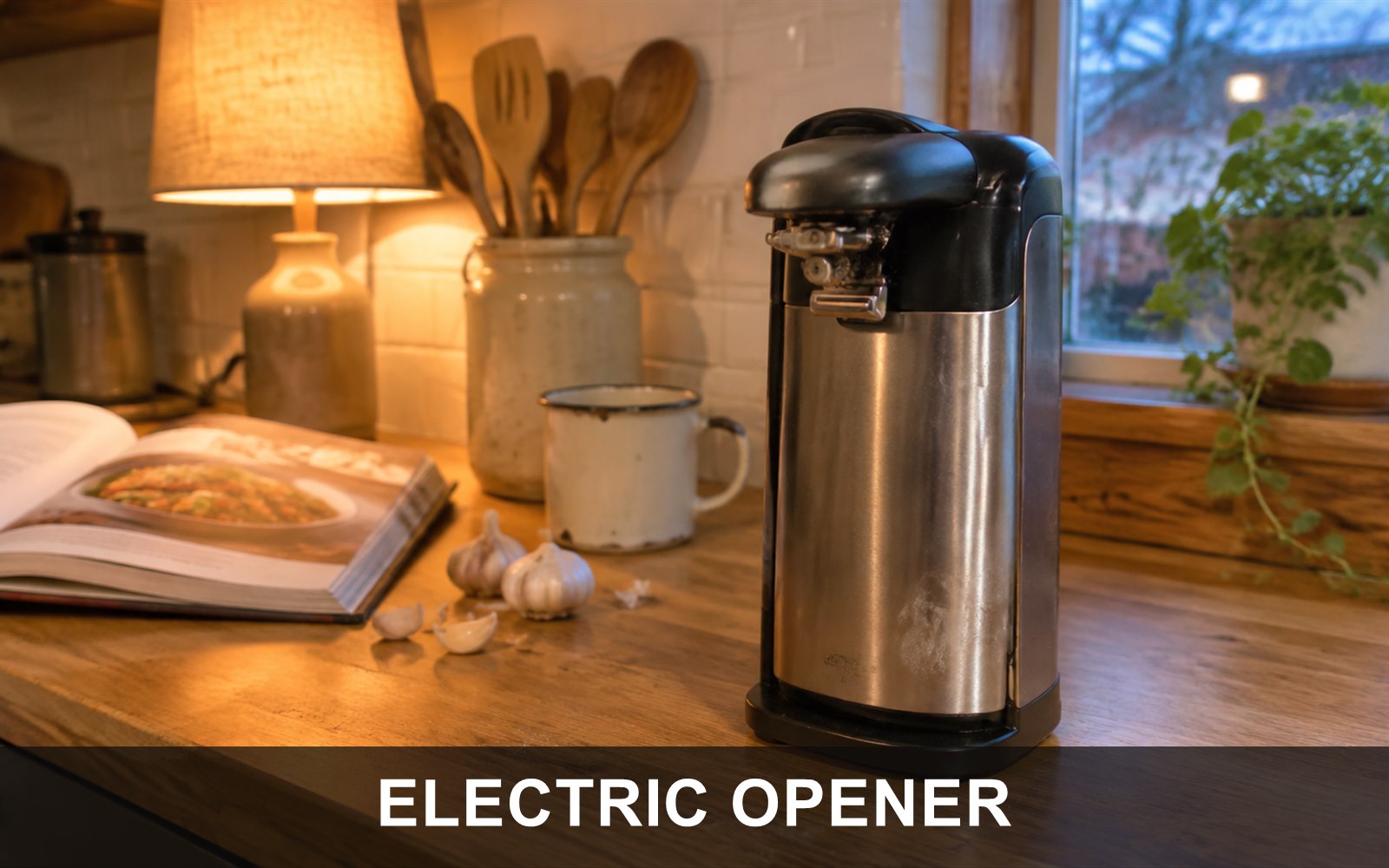
TL;DR — A good electric can opener buying decision starts with how you cook, how much space you have, and which trade-offs you will actually notice. When this turns into a purchase decision, compare best electric knife, best electric kettle, and best electric griddle before narrowing your shortlist.
The HomeWhisk approach is research-first: compare construction, usability, cleaning, and long-term complaints before recommending a direction. For appliance topics, we pay close attention to capacity, controls, cleanup, storage, reliability complaints, and whether the machine saves enough effort to justify the space.

Pros & Cons
Pros
- Removable washable cutting lever makes cleanup far easier than openers with sealed blade housings.
- Hands-free operation with automatic shutoff frees you up during multi-step cooking.
- Combines can opening and knife sharpening in a single appliance.
- Internal cord storage reduces countertop clutter in small kitchens.
Cons
- The integrated sharpener handles routine touch-ups but will not restore a badly dulled or chipped blade.
- It occupies permanent counter or cabinet space, which is a tradeoff against a drawer-sized manual opener.
Details
The Proctor Silex 75217PS is a countertop electric can opener that removes the hand strain and misaligned cuts of manual openers.
Press the lever and the motor cuts the lid, then shuts off automatically, so you can season a pot or chop vegetables while it works. The guide post holds the can steady for a clean first-try start.
The plastic housing stays in black, sits upright to save counter width, and stores its cord inside the base. The cutting lever twists off for washing.
The knife sharpener is built for maintenance passes on working edges, not for reviving heavily damaged blades.
Best for batch cooks and anyone with limited grip strength who opens cans several times a week.
How to Use
Set the can against the guide post so the rim seats under the cutting wheel, then press the lever down. The motor engages and rotates the can automatically.
Wait for the automatic shutoff before lifting the lever. Raise it, lift the can away, and remove the cut lid by its edge.
Twist off the cutting lever after messy cans and wash it, then draw knives through the sharpener slot a few times to maintain edges.

Pros & Cons
Pros
- The 60-watt motor and steel blade track around both narrow tins and large jar lids without stalling mid-cut.
- One-touch operation removes the gripping and twisting that makes manual openers hard on arthritic hands.
- The detachable cutting lever and stainless blade clean up quickly after sticky sauces and condensed milk.
- Cord storage and multiple color options, including this Oatmilk finish, make it easier to leave on display.
Cons
- It needs an outlet and permanent counter or cabinet space, unlike a manual opener that lives in a drawer.
- The magnet is sized for standard steel can lids and offers less help with very large or heavy jar lids.
Details
BELLA’s countertop can opener pairs a 60-watt motor with a stainless steel cutting wheel, so one press opens a can end to end with no hand-cranking or stiff manual grip.
It sizes itself to everything from small tuna tins to wide tomato jars, and the magnet holds the cut lid up so it never drops into the contents.
The stainless blade resists rust from wet lids, the cutting lever detaches for rinsing, and hidden cord storage keeps the base compact on a crowded counter.
It does occupy permanent counter or cabinet space and needs an outlet, which is more commitment than a drawer-stored manual opener.
Best for cooks with limited hand strength who open cans daily and want the lid lifted off cleanly.
How to Use
Set the can under the cutting lever, line the blade up on the rim, and press once. The motor tracks the lid and stops on its own.
Raise the lever and the magnet keeps the lid suspended above the food, so it goes straight to recycling without touching the cut edge.
After sticky contents like tomato sauce or condensed milk, remove the cutting lever, rinse and dry it, then wipe the base instead of submerging it.

Save $1.00
Pros & Cons
Pros
- One touch start requires no grip strength, wrist rotation, or squeezing pressure.
- Side cut design produces a smooth lid edge instead of a jagged metal rim.
- Runs unattended and shuts off at the end of the cut, freeing both hands during prep.
- Cordless and lightweight, so it moves between kitchen, RV, and travel use easily.
Cons
- Battery only power means the opener stops working until replacements are on hand.
- Sized for most standard cans, so oversized or irregularly shaped cans still need a manual opener.
Details
A battery powered can opener built to remove the twisting and squeezing that manual openers demand from anyone with reduced grip strength.
One press starts it, the unit tracks around the can on its own, and it stops when the cut finishes, leaving both hands free for other prep.
The side cutting wheel separates the lid at the seam, so the lid and the can rim stay smooth rather than sharp when you empty the contents.
Cordless and lightweight, it rests on top of the can instead of clamping to a counter, but batteries are the only power source and need spares on hand.
Best for seniors, arthritis sufferers, and left handed cooks who open cans often and want to stop asking for help.
How to Use
Install the batteries, set the opener flat on a closed can so the cutting wheel meets the rim, then press the button once.
Let it travel the full circumference without holding or steering it, and wait for it to stop on its own once the lid separates.
Lift the unit off, remove the lid by its smooth edge, and wipe the cutting wheel after oily or sauced cans to prevent residue buildup.

Save $1.05
Pros & Cons
Pros
- Fully automatic operation removes the grip strength and wrist rotation that manual openers demand.
- Runs quieter than older battery-powered models, at roughly a quarter less noise.
- Food-grade stainless steel blade cuts cleanly with minimal metal debris falling into the can.
- USB-C charging means no proprietary cable and no disposable batteries to replace.
Cons
- Rimless cans and unusually shaped containers are not supported, so a manual backup opener is still worth keeping.
- The rating comes from a very small feedback pool, so long-term motor and battery durability are unproven.
Details
An automatic, battery-powered can opener that removes the twisting and squeezing manual openers require, aimed at users with arthritis or reduced hand strength.
Press once and the motor tracks the rim, cuts the lid free, then shuts off by itself. The magnet lifts the lid clear so fingers never touch the cut edge.
A food-grade stainless steel cutting wheel handles daily use, and the 1000mAh cell covers about 180 cans between USB-C charges. Compact enough for a utensil drawer.
It will not grip rimless cans or unusual shapes, so keep a manual opener for those.
Best for seniors, arthritis sufferers, and one-handed cooks who open cans regularly.
How to Use
Charge fully over USB-C before first use. Set the can on a flat counter, position the opener on the rim, and press the button once.
Let it travel the full circle and stop on its own. Lift it away and the magnet brings the lid with it, then peel the lid off over the trash.
Wipe the blade and magnet after each use to stop food residue drying on. Do not submerge the unit, and recharge once cutting slows.
Sizing And Fit
Size the electric can opener to your kitchen and your batches before anything else. Oversized gear that stores badly is a false economy, and undersized gear forces extra batches. Consider the way it fits your real kitchen, not an ideal one.
Features Worth Paying For
Spend where it counts on a electric can opener — better digital versus dial controls, and preset controls, and easier letting the motor rest between heavy loads. Be skeptical of bundled extras that solve no real problem. For most buyers the sweet spot sits in the middle of the market. If you are shopping, our best electric knife and best electric kettle guides are the fastest way in.
Care And Longevity
The best-value electric can opener is one you maintain. Plan for wiping the interior after use, descaling water-based units, and letting the motor rest between heavy loads from day one, and you avoid the uneven cooking or heating that sends cheaper gear to landfill early.
How To Avoid The Wrong Pick
Brand is a weak signal for a electric can opener; the same label covers great and forgettable lines alike. Watch for repeated complaints in reviews, then match size, material, and care needs to your actual habits. We cover specific models in best electric knife, best electric kettle, and best electric griddle.
What Actually Matters
Buy a electric can opener for the cooking you actually do, not the spec sheet’s wish list. Weigh it by the things you will notice every week: control, cleanup, fit, and durability. For product picks, compare best electric knife, best electric kettle, and best electric griddle.
Budget Tiers
Entry appliances cover the basics; mid-range usually improves materials, control, and durability; premium buys refinement you only notice with heavy use. Decide which tier your cooking frequency justifies before you compare specific electric can opener models.
Related Product Guides
If this topic is part of a buying decision, these are the HomeWhisk guides most closely tied to it:
- best electric knife
- best electric kettle
- best electric griddle
- best electric fillet knife
- best air fryer
- best blender
- best instant pot
Frequently Asked Questions
What matters most for electric can opener?
Focus on cleaning access, digital versus dial controls, and motor or heating-element power first. Those decide real performance; the rest is secondary. Compare best electric knife and best electric kettle for options that get the basics right.
What gear pairs well with it?
Start with a reliable core piece, then add as needs appear. Compare best electric knife, best electric kettle, and best electric griddle for related choices.
What should I avoid?
Avoid buying by brand alone, ignoring cleaning removable parts by hand, and oversizing for your space. Each invites lingering odors down the line.
Who is this most useful for?
Mainly gadget-minimalists who want one do-it-all unit, and busy weeknight cooks. If that is you, treat storage bulk as a requirement rather than a nice-to-have.
What is the bottom line?
Match the appliance to your real habits: buy for durability if it is daily, for value and storage if it is occasional.
The Bottom Line
For most home cooks, the best choice is the one that removes friction without adding maintenance you will ignore. Start with your use case, then cross-check best electric knife, best electric kettle, and best electric griddle.








Write Your Review
No reviews yet. Be the first to share your experience!