

TL;DR — The best rice cooker for brown rice is the option that balances reliable construction, realistic capacity, easy cleanup, and a price that matches how often you will use it. HomeWhisk prioritizes documented specifications, material choices, and repeated owner-review patterns rather than marketing claims. If you are still comparing nearby categories, start with best air fryer and best air fryer budget before narrowing your final pick.
The HomeWhisk editorial team researches kitchen equipment by comparing manufacturer specifications, material details, dimensions, warranty language, retailer listings, and aggregated owner reviews. For best rice cooker for brown rice, we looked for patterns that matter after the return window closes: repeated complaints, praised design details, compatibility limits, and maintenance habits that determine whether a product stays useful.
This is a commercial buying guide, so the goal is practical selection rather than a broad encyclopedia entry. Use this page alongside best air fryer for beginners and best air fryer for family if your purchase overlaps adjacent tools or a larger kitchen setup.

Pros & Cons
Pros
- The ceramic cooking surface contains no PFOA or PFAS and is designed for easy food release and cleanup.
- Dedicated white rice, brown rice, Flash Rice, steam, and delay functions provide useful control for varied meals.
- The steamer basket supports simultaneous grain and side-dish preparation in one appliance.
- Its 8-cup cooked capacity offers practical portions without requiring a large-capacity cooker.
Cons
- The 4-cup uncooked and 8-cup cooked capacity may be too limited for large families, parties, or bulk meal preparation.
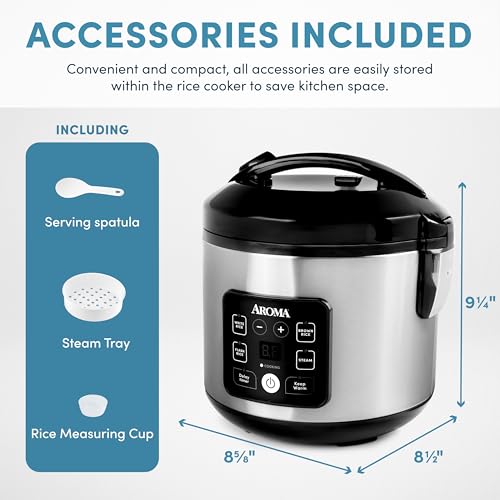
- The provided specifications do not include appliance dimensions or weight, so buyers should verify counter and storage fit before ordering.
Details
This digital cooker prepares white rice, brown rice, whole grains, steamed foods, and simple one-pot meals while reducing stovetop monitoring.
Sensor Logic controls grain cooking automatically, while the 15-hour delay timer and Flash Rice mode support both scheduled meals and faster preparation.
The removable pot has a nonstick CoreCoat ceramic finish without PFOA or PFAS. Capacity is four cups uncooked or eight cups cooked, but dimensions and weight are not provided.
The compact capacity is better suited to everyday household portions than large gatherings or high-volume batch cooking.
Best for small households and meal preppers who want versatile grain cooking, steaming, and easier cleanup in one appliance.
How to Use
Add measured grains and water to the ceramic pot, select the matching white or brown rice program, and let Sensor Logic manage the cooking cycle.
For a complete meal, place vegetables or another steamable side in the stack-in basket above the grains, or select steamer mode for stand-alone dishes.
Use the delay timer to schedule cooking up to 15 hours ahead, or choose Flash Rice when reducing preparation time matters more than advance scheduling.

Pros & Cons
Pros
- Handles both white and brown rice with dedicated settings that adjust cook time and temperature automatically.
- Compact footprint fits on crowded countertops or stores easily in a cabinet when not in use.
- Works for more than rice including oatmeal, soups, chili, and jambalaya with the same reliable results.
Cons
- The 8-cup maximum cooked capacity is too small for families larger than four people or batch cooking.
- Stainless steel exterior shows fingerprints and smudges easily during daily handling.
Details
This is a 4-cup uncooked / 8-cup cooked digital rice cooker that solves the problem of burnt, mushy, or inconsistent stovetop rice. It uses preset functions and automatic temperature control to deliver restaurant-quality results with zero guesswork.
Sensor Logic Technology adjusts heat throughout the cooking cycle to achieve fluffy texture every time. The Flash Rice function is the standout feature, cutting standard cook time by up to 50 percent for last-minute meals.
Stainless steel exterior with a 2-quart inner pot. Compact design measures small enough to store in a cabinet. Includes a steam tray, rice measuring cup, and serving spatula. All removable parts are dishwasher safe.
The 8-cup cooked capacity works well for singles, couples, and small families but runs too small for households of five or more.
Best for home cooks who eat rice regularly and want foolproof results without monitoring a pot on the stove.
How to Use
Measure rice using the included cup, rinse it under cold water, and add to the inner pot with the correct water ratio marked on the pot’s interior. Select White Rice, Brown Rice, or Flash Rice depending on your grain and timing needs.
To steam food simultaneously, place protein or vegetables in the steam tray and set it on top of the rice. The Steam function also works independently when you need steamed vegetables without cooking rice below.
For delayed cooking, press the Delay Timer button and set the number of hours ahead. The cooker will start automatically and switch to Keep Warm when done, holding rice at serving temperature until you’re ready to eat.

Pros & Cons
Pros
- The ceramic inner pot does not develop scratches or coating flakes like traditional nonstick surfaces, and buyers report it lasting years without performance loss.
- Texture customization for white and brown rice (soft, regular, hard) gives control over results whether you want separate grains for fried rice or sticky grains for sushi.
- Quick Rice mode cuts cooking time significantly when you need white rice fast, with reviewers noting minimal quality difference from the standard cycle.
- The guided touch display with clear measurement marks inside the pot eliminates guesswork for water-to-rice ratios across different grain types.
Cons
- The 10-cup capacity refers to uncooked rice, which yields about 20 servings, making this too large for singles or couples who cook small batches and want to minimize counter space.
- Steam mode requires the separate stainless basket and cannot cook rice simultaneously with steaming, which limits one-pot meal options compared to some competitors.
Details
This is a programmable rice cooker that replaces multiple appliances by handling rice, grains, oatmeal, steaming, slow cooking, and sautéing in one 10-cup unit. It solves the problem of inconsistent rice texture by using fuzzy logic technology that automatically adjusts temperature and timing based on the type and amount of food.
The dual heating system places elements on both top and bottom with temperature sensors, reducing water condensation that drips back and causes soggy spots. Fuzzy logic monitors environmental factors like humidity throughout the 7-step cooking process, which is why novice cooks get the same fluffy results as experienced users without adjusting ratios.
The ceramic nonstick inner pot measures 12.3 inches deep by 10.6 inches wide, with the full unit weighing 9.3 pounds and standing 9.2 inches tall. The ceramic surface resists scratching better than aluminum coatings and goes in the dishwasher along with the detachable inner lid and steam cap, which matters for daily use and long-term durability.
The stainless steel steamer basket only works in steam mode, not during rice cooking, so you cannot steam vegetables directly over rice like some multi-tier steamers allow. This means steaming and rice require separate cycles if you want both.
Best for families or meal preppers who cook rice multiple times per week and want texture control, programmable timing, and the flexibility to make oatmeal, quinoa, or slow-cooked soups in the same appliance.
How to Use
Measure rice using the included cup and add water to the corresponding line inside the pot based on the grain type. Select your rice variety and texture preference on the touch display, then press start. The fuzzy logic system handles all temperature adjustments automatically.
For sauté mode, press the sauté button and let the pot preheat for 2 minutes before adding oil and ingredients. Stir frequently since the heating element concentrates at the bottom. Switch to a different cooking mode after browning to complete dishes like pilaf or risotto.
Use the delay timer by selecting your cooking program first, then pressing the timer button to set when you want cooking to finish. The 24-hour keep warm activates automatically after cooking completes, maintaining serving temperature without drying out rice for up to a full day.

Save $41.96
Pros & Cons
Pros
- Its automatic Fuzzy Logic controls reduce the manual adjustments needed for reliable rice.
- The compact capacity works well for smaller households and routine meal preparation.
- Multiple menus expand its use beyond standard white rice to brown rice, oats, and baby food.
- An included measuring cup and rice spatula provide the basic tools needed to begin cooking.
Cons
- The 3-cup uncooked capacity may be insufficient for larger households or substantial batch cooking.
- The supplied specifications do not include exterior dimensions or weight, so buyers should verify countertop and storage fit separately.
Details
The CUCKOO CR-0375FW is a compact electric rice cooker that automates daily rice preparation and helps prevent undercooked, overcooked, or burnt results.
Fuzzy Logic Technology adjusts cooking time and temperature, while eight menus support white rice, brown rice, glutinous rice, oats, baby food, and other dishes.
Its 3-cup uncooked capacity yields up to 6 cups cooked. The nonstick inner pot and removable lid are designed to make serving and cleanup more manageable.
The smaller capacity is better suited to modest portions than large family gatherings, and the supplied data does not list the unit’s dimensions or weight.
Best for singles, couples, and small families seeking automated rice cooking with useful scheduling and cleaning features.
How to Use
Measure rice with the included cup, rinse as desired, add the matching amount of water, and place the nonstick inner pot securely inside the cooker.
Select the menu for white rice, brown rice, glutinous rice, oats, or another supported dish. Use quick white rice for faster preparation or the timer when cooking ahead.
After serving with the included spatula, activate the self-clean setting and remove the lid for easier washing. Avoid abrasive tools that could damage the nonstick surface.

Pros & Cons
Pros
- Its 6-cup uncooked and 12-cup cooked capacity supports family meals, entertaining, and batch preparation.
- Steam, slow cook, sauté, simmer, oatmeal, yogurt, and whole-grain functions expand its usefulness beyond rice.
- Rapid, even HeatFlow Pro heating is designed to improve consistency while using less energy.
- The handled inner pot, storage lid, and steam tray add practical serving, storage, and meal-prep options.
Cons
- The 12-cup cooked capacity may be more appliance than single-person households need for routine meals.
- The product listing does not provide dimensions or weight, so buyers cannot easily confirm counter and cabinet fit before ordering.
Details
This digital cooker prepares up to 6 cups uncooked or 12 cups cooked rice while replacing several separate tools for steaming, sautéing, simmering, slow cooking, oatmeal, yogurt, and whole grains.
HeatFlow Pro applies rapid, even heat around the pot to improve rice consistency, while the steam tray lets vegetables or proteins cook above the rice during the same cycle.
The removable pot has built-in carrying handles, a PFAS-free ceramic nonstick coating, and a matching silicone storage lid. Exact appliance dimensions and weight are not supplied.
Its family-size capacity and nine modes may be unnecessary for buyers who only prepare small servings of basic white rice.
Best for families, meal preppers, and hosts seeking a versatile rice cooker that also supports serving and leftover storage.
How to Use
Add rice and water according to the grain recipe or product instructions, place the inner pot in the cooker, and select the appropriate cooking mode.
For a more complete meal, place vegetables or proteins in the included steam tray so they cook above the rice without requiring another appliance.
After serving, allow the lift-out pot to cool as directed, cover it with the matching silicone lid, and refrigerate leftovers without transferring them to another container.
Editor’s Picks
| Category | Pick Type | Why It Makes Sense |
|---|---|---|
| Best Overall | Balanced rice cooker | Strongest mix of construction, usability, cleanup, and owner satisfaction |
| Best Value | Practical rice cooker | Keeps the core performance features while avoiding unnecessary upgrades |
| Best for Brown Rice | Use-case focused option | Prioritizes the size, controls, material, or workflow that matters most for this search |
At a Glance: Comparison Table
| Pick Type | Capacity | Controls | Best For | Trade-Off |
|---|---|---|---|---|
| Best Overall | Balanced build | Everyday size | Most homes | Not the lowest price |
| Best Value | Core materials | Practical capacity | Budget buyers | Fewer premium details |
| Best Upgrade | Heavier construction | Frequent use | Serious cooks | Higher cost |
| Best Compact | Space-saving design | Smaller batches | Small kitchens | Less capacity |
| Best Specialty | Focused feature set | Niche use | Specific needs | Less universal |
How We Evaluated These Products
We evaluated rice cooker options by starting with the product job: what the item must do well for brown rice, what trade-offs buyers usually accept, and which features are often overstated. From there, we compared visible specifications such as materials, dimensions, capacity, heat or power ratings where relevant, included accessories, warranty terms, and care instructions.
Aggregated owner feedback was used to identify repeated patterns rather than isolated anecdotes. A single dramatic review can be misleading, but repeated comments about weak motors, noisy operation, cracked plastic, confusing controls, awkward cleaning, overheating, or capacity claims that feel inflated are useful signals. We gave more weight to recent reviews because product lines, coatings, accessories, and manufacturing details can change over time.
We also considered how the product fits into a full kitchen workflow. A Rice Cooker can look excellent on a spec sheet and still be frustrating if it is too large to store, too slow to clean, incompatible with common accessories, or poorly matched to the buyer’s cooking habits. That is why this guide connects the main recommendation to related guides like best air fryer, best air fryer budget, and best air fryer for beginners.
What Actually Matters:
Capacity, wattage, and real counter footprint
Usable capacity and footprint rarely match the marketing number, so read the real dimensions. A model rated for a large batch can still cook unevenly if the basket or bowl is cramped, and a “compact” unit can still hog the counter once you account for lid clearance and cord. For brown rice, compare interior usable space and the space it claims when open, not just the headline quarts or watts. For a related option, compare best air fryer before you commit.
Controls, presets, and repeatability
Controls and repeatability separate an appliance you trust from one you fight. Check whether presets map to things you actually cook, whether the dial or panel gives fine control, and whether it remembers or resets between uses. A machine that hits the same result every time is worth more than one with a long feature list you set once and never touch again. For a related option, compare best air fryer budget before you commit.
Cleaning design and removable parts
Cleaning design makes or breaks how often the rice cooker earns its counter space. Look for removable, dishwasher-safe parts, smooth interiors without food traps, and a lid or basket that rinses without disassembly gymnastics. A powerful appliance that is a chore to wash gets used less, so treat easy teardown as a core spec rather than a bonus. For a related option, compare best air fryer for beginners before you commit.
Noise, heat, and everyday usability
Noise, heat, and everyday usability are the frictions you only notice after purchase. A loud motor or a unit that vents heat across the counter changes when and where you are willing to run it. Check cord length, how far controls sit from a wall, and whether the exterior stays touch-safe — small ergonomics decide whether a rice cooker lives on the counter or in a cupboard. For a related option, compare best air fryer for family before you commit.
Durability, warranty, and value
Durability and value show up in the parts you cannot see on the box. Weigh the warranty length, the reputation of the motor or heating element, and whether replacement baskets and seals are sold at all. For brown rice, the better buy is often the model with a proven track record and available parts over a cheaper one that fails just past the return window. For a related option, compare best air fryer for family of 4 before you commit.
Frequently Asked Questions
What should I look for in the best rice cooker?
Start with fit for your routine: capacity, materials, cleaning, storage, and compatibility. Then compare owner-review patterns for repeated praise or complaints. For best rice cooker for brown rice, avoid buying only by star rating; the right rice cooker should match brown rice and the way you actually cook.
Is a more expensive rice cooker worth it?
It can be, but only when the upgrade improves something you will notice often: durability, control, cleaning, capacity, or comfort. If the higher price only adds accessories or cosmetic finish, a value pick may be smarter. Spend more when the category is used weekly or daily.
What size rice cooker is best for brown rice?
The best size is the one that handles your normal use without making storage and cleanup annoying. Product photos can hide scale, so check exterior dimensions as well as usable capacity. For small kitchens or occasional use, a slightly smaller rice cooker is often the better long-term choice.
How long should a good rice cooker last?
A good rice cooker should last long enough to justify its price when cared for according to the manufacturer instructions. Lifespan depends on materials, heat exposure, cleaning habits, moving parts, coatings, and storage. Repeated owner complaints about early failure are more important than one isolated review.
What mistakes should I avoid when buying rice cooker?
The biggest mistake is buying the most feature-heavy option without checking whether those features solve your actual problem. Also avoid ignoring dimensions, care requirements, replacement parts, and compatibility. If maintenance sounds unrealistic for your household, choose a simpler product.
How does best rice cooker for brown rice compare with nearby options?
Nearby options can overlap, so use intent to decide. If your need is broad, start with the main rice cooker category. If your need is specific, compare related guides such as best air fryer for large family and best air fryer to avoid buying a product that is good generally but wrong for your setup.
Our Top Pick
For most shoppers, the best rice cooker is the balanced option that gets the fundamentals right before adding extras. Prioritize the product with clear specifications, enough capacity for your normal routine, materials that match your maintenance habits, and repeated owner feedback showing reliable everyday use. The shortcode above contains the product set for this page; use the decision tree below to choose the right type within that set.
- Choose the Best Overall type if you want one safe rice cooker for regular use.
- Choose the Best Value type if price matters more than premium finish.
- Choose the Best for Brown Rice type if your use case is specific and frequent.
- Choose an upgrade only if better materials, controls, capacity, or durability will matter every week.


Write Your Review
No reviews yet. Be the first to share your experience!