

The best blender to make baby food is one that purees small batches smoothly, comes apart for easy cleaning and doesn’t cost a fortune. For most families that means an immersion (hand) blender or a simple jar blender with sharp stainless steel blades, not a pricey high-end machine.
This guide walks you through what to look for, how to puree each stage of food, how to keep the process clean and safe, and where three affordable options fit. Always check feeding questions with your pediatrician. We’re a research team, not medical experts.
What a Blender Needs to Do for Baby Food
Baby food looks simple, but it asks a few specific things of a blender. Early purees for babies just starting solids need to be very smooth, with no stringy bits or hard chunks. Later stages can be thicker and lumpier as your child learns to chew. A blender that gives you control over texture covers every stage.
Small batches matter too. Steaming one sweet potato or a handful of peas gives you a cup or less of food. Big pitchers spread that thin across the blades, so you end up scraping the sides and getting uneven results. A narrow jar or an immersion blender working in a deep bowl handles small volumes better.
The last factor is cleanup. Sticky banana, avocado and oatmeal purees cling to everything. Parts that detach, and blades you can rinse right away, save a lot of daily effort.
Immersion Blender vs. Jar Blender
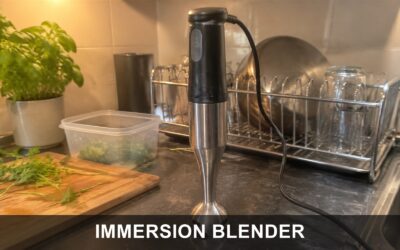
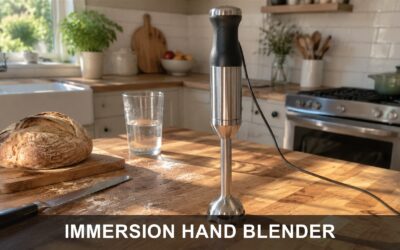
An immersion blender is a stick with blades at the bottom. You put it into a pot, bowl or measuring cup of cooked food and blend in place. It’s quick to rinse, stores in a drawer and works well for batches of one to two cups. The downside is splatter if you lift it too early, and thicker foods may need a splash of liquid to move.
A jar blender sits on a motor base. It handles larger batches and tends to give very even results once the food circulates. It takes more space, and the jar, lid, gasket and blade assembly all need washing. If you plan to batch cook and freeze a week of purees at once, the jar style pays off.
Here’s a handy option for the stick route.
The Moss & Stone Electric Hand Blender Set is a 300W immersion blender with a stainless steel shaft and blades, a whisk and a chopper attachment, and 2-speed control with an ergonomic grip. Those two speeds are useful here. Start slow so food doesn’t fly out of the bowl, then step up to smooth out the puree. The chopper attachment can also handle small amounts of soft cooked vegetables. One limit: 300W is modest, so cook produce until it’s very soft before blending.

Moss & Stone
Smooth Soups and Faster Food Prep: Moss & Stone 300W Hand Blender Set
The Moss & Stone hand blender combines a 300W motor, whisk, and 800ml chopper to handle soups, sauces, smoothies, eggs, and basic food prep with one compact set. It suits home cooks who want versatile everyday blending tools with detachable, top-rack dishwasher-safe parts.
Pros and Cons
Pros
- The 3-in-1 design covers blending, whisking, and chopping with one motor unit.
- The stainless steel shaft and blades are suited to regular kitchen food preparation.
- The ergonomic, non-slip grip supports comfortable one-hand operation.
- The motor unit wipes clean while removable parts can go on the top dishwasher rack.
Cons
- The 300W motor and two-speed control may not suit especially heavy-duty or large-batch processing.
- The product data does not specify the unit's weight, so portability cannot be assessed precisely.
Moss & Stone Smooth Soups and Faster Food Prep: Moss & Stone 300W Hand Blender Set
Moss & Stone
Smooth Soups and Faster Food Prep: Moss & Stone 300W Hand Blender Set
The Moss & Stone hand blender combines a 300W motor, whisk, and 800ml chopper to handle soups, sauces, smoothies, eggs, and basic food prep with one compact set. It suits home cooks who want versatile everyday blending tools with detachable, top-rack dishwasher-safe parts.
$23.99 at AmazonEditors' Favorite
Color: Black Size: Compact Handheld Design Dimensions: 4.5 x 4.5 x 13.5 inches Weight: 2.6235009178 pounds Product Group: Kitchen Binding: Kitchen
Shop NowHow to Make Baby Food Step by Step
The method barely changes between fruits and vegetables. Wash and peel the produce, cut it into even pieces, cook it until soft, then blend with a little liquid until smooth. Here’s how each step works in practice.
Cook Until Very Soft
Steaming keeps more of the food’s natural flavor than boiling, and it doesn’t leave you with a pot of water to manage. Carrots, sweet potatoes, squash and apples usually need about 10 to 20 minutes, depending on the size of the pieces. A fork should slide in with no resistance. Hard cooked pieces are the main reason purees come out gritty.
Add Liquid Slowly
Use the cooking water, breast milk, formula or plain water, a tablespoon at a time. It’s easy to thin a puree and hard to thicken one back up. Stop when the blender can circulate the food without you pushing it down with a spoon.
Blend, Check, Repeat
Blend for 30 to 60 seconds, stop, and scrape down the sides. Taste a little and feel the texture between your fingers. If you find lumps, blend again. Fibrous foods like green beans and spinach take longer than bananas or ripe pears.
Textures by Stage
Babies move through textures as they gain skill with eating. Guidelines differ by child and by pediatrician, so treat the following as a general outline, not a schedule.
Smooth Purees
The first stage is thin and uniform. Blend longer than you think you need to, and add liquid until the food drips off a spoon in a slow ribbon. This is where a sharp blade and a steady motor help the most.
Thicker, Slightly Textured Mixes
As your baby gets more practice, you can pulse instead of running the blender continuously. Short pulses leave tiny soft pieces behind. A blender with many speed settings makes this easier because you can go low and short.
Mashed and Chopped Foods
For older babies, you may only need to pulse once or twice, or skip the blender and mash with a fork. A chopper attachment or pulse button works here. Keep the pieces soft and small, and follow your pediatrician’s advice on which foods to offer.
If you prefer a jar and plenty of speed control, this one is worth a look.
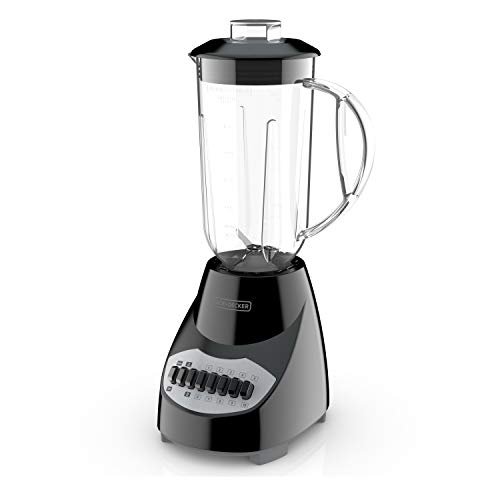
The BLACK+DECKER Crush Master Blender, model BL2010BP, offers 10 speeds with stainless steel blades. Having ten speeds means you can start gently for a thick mash and finish fast for a silky puree. It’s a full-size countertop blender, so it suits bigger batches better than a single serving of peas. Very small amounts can slide under the blades without catching, so add a bit more food or liquid when you cook in tiny quantities.
BLACK+DECKER Crush Master Blender, 10-Speeds with Stainless Steel Blades, Black, BL2010BP
BLACK+DECKER
Crush Master Blender, 10-Speeds with Stainless Steel Blades, Black, BL2010BP
$29.99 at AmazonEditors' Favorite
Color: Black Size: 550 Watts Dimensions: 7.8 x 10.8 x 12.9 inches Weight: 2.5 pounds Product Group: Kitchen Binding: Kitchen
Shop NowCleaning and Food Safety
Babies are more vulnerable to bacteria than adults, so hygiene counts. Wash hands, cutting boards and blender parts with hot soapy water before you start. Rinse the blender right after use, before banana or sweet potato dries on the blades.
Never put your fingers near the blades, even when the blender is unplugged. A spatula or long spoon is safer. For immersion blenders, keep the head fully submerged before switching it on, then lift only after the blades stop.
Cool hot food before blending. Steam can build up in a closed jar, and the lid can pop off if you blend hot liquids with the vent closed. Let the food sit a few minutes first.
Storing Homemade Purees
Cool purees quickly and put them in clean airtight containers. Many families freeze portions in ice cube trays, then move the cubes to a bag with the date written on it. General guidance is a few days in the fridge and a couple of months in the freezer, but check current recommendations from your pediatrician or a trusted health source. Thaw in the fridge, not on the counter.
Common Mistakes to Avoid
Skipping the cooking step is the big one. Raw hard vegetables won’t blend smooth in most home blenders, and they aren’t suitable for young babies anyway.
Adding too much liquid is another. A watery puree fills your baby up with less nutrition, and it’s frustrating to fix. Also watch for overfilling the jar. Most blenders work best when the jar is no more than about half full for hot or thick food.
Finally, don’t buy more blender than you need. If you only make baby food for a few months, a simple, budget-friendly model usually beats a premium one. Looking at other options? Our guides to the best hand blender, best mini blender and best cheap blender compare more models.
When to Choose a Multi-Use Model
If you want one machine that’ll keep working long after the baby stage, a combo set is worth considering. You can puree for your baby now, then make smoothies and chop vegetables for the whole family later. Our roundups of the best small blender and best stick blender can help you narrow the field, and the best blender value page covers budget picks.
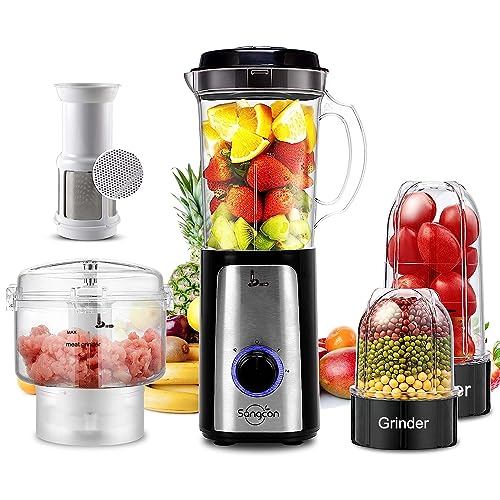
The Sangcon Blenders for Kitchen set is listed as a 5-in-1 food processor combo for smoothies. That multi-function setup makes it the most flexible of the three here. The tradeoff is more parts to wash and store, so it suits a household that will use all the attachments, not one that only needs a small puree each morning.
sangcon
Smoothies, Chopping and Grinding with the Sangcon 5-in-1 Food Processor Combo
The Sangcon 5-in-1 combo blends smoothies, chops ingredients, and grinds coffee or spices using dedicated blades and four container sizes. It suits parents, family cooks, and small-kitchen users who want several daily prep functions in one compact appliance set.
Pros and Cons
Pros
- Five functions and four vessel sizes cover blending, chopping, grinding, and individual drink preparation.
- ETL certification, a locking design, suction feet, and overheating protection support safer countertop use.
- BPA-free cups, bowl, and pitcher are removable and dishwasher safe for convenient cleanup.
- The included two-year warranty and stated 24-hour support response add useful ownership protection.
Cons
- Each processing cycle is limited to 60 seconds, so tougher or larger batches may require pauses between runs.
- Blending frozen fruit or very thick shakes may require added liquid for smoother processing.
sangcon Smoothies, Chopping and Grinding with the Sangcon 5-in-1 Food Processor Combo
sangcon
Smoothies, Chopping and Grinding with the Sangcon 5-in-1 Food Processor Combo
The Sangcon 5-in-1 combo blends smoothies, chops ingredients, and grinds coffee or spices using dedicated blades and four container sizes. It suits parents, family cooks, and small-kitchen users who want several daily prep functions in one compact appliance set.
$44.99 at AmazonEditors' Favorite
Color: Black & Silver Size: 4.7 × 4.7 × 14.2 inches (D × W × H) Dimensions: 4.7 x 4.7 x 14.2 inches Weight: 5.5 Pounds Product Group: Kitchen Binding: Kitchen
Shop NowFAQ
Can I use a regular blender to make baby food?
Yes. Any blender with sharp blades that you can clean thoroughly will work. Cook the food until soft, add a little liquid, and blend until smooth. You don’t need a blender marketed specifically for baby food.
Is an immersion blender good for baby food?
It’s a great fit for small batches. You blend right in the pot or bowl, and rinsing the shaft takes seconds. For large freezer batches, a jar blender may be faster.
Do I need to cook fruits and vegetables first?
Most vegetables and firm fruits like apples and pears should be cooked until very soft. Ripe bananas and avocados are common exceptions that blend or mash without cooking. Check with your pediatrician for guidance on your baby’s stage.
How smooth should baby food be?
For first foods, aim for a very smooth, pourable puree with no lumps. As your baby gets used to eating, you can leave more texture. Your pediatrician can tell you when to move on.
How long does homemade baby food last?
Fridge storage is usually only a few days, and frozen portions last for a couple of months. Label containers with the date, thaw in the fridge, and throw out anything that smells or looks off. Confirm current time limits with a trusted health source.

Write Your Review
No reviews yet. Be the first to share your experience!