

Masticating juicer machines press produce slowly with a rotating auger instead of shredding it against a fast spinning blade. That’s why they’re the usual choice for leafy greens, wheatgrass and other fibrous vegetables. If kale, celery and herbs are what you juice most, a slow juicer is the style built for the job.
This guide explains how these machines work, which features change how a juicer fits into your week, and where three models from the HomeWhisk product database fit. HomeWhisk is a research team, so the notes below come from product listings and how this type of juicer is built, not from hands-on use.
How masticating juicers work
A masticating juicer, also called a slow juicer or cold press juicer, feeds produce down a chute onto a slowly turning auger. The auger crushes the fibers against a screen and presses the juice out one side while the dry pulp leaves through a separate outlet. Because the motion is slow, there’s less spinning air and less friction heat than you get from a fast centrifugal machine. “Cold press” describes that gentle process. It doesn’t mean the machine is refrigerated.
Slow speed matters most with soft, leafy produce. A fast blade tends to fling spinach and kale around, while an auger can grip the leaves and squeeze them. Hard produce such as carrots and beets also works well, though it needs to be cut down to fit the chute. Very soft fruit like ripe bananas or peaches turns into puree rather than juice in most juicers, so don’t expect miracles there.
One example built around the leafy-green use case is the PSIIDAN cold press juicer. Its listing describes a slow masticating design with an LED smart touch screen, two modes and a reverse function, and it names leafy greens, kale and fibrous vegetables as the target. It’s also listed as BPA-free. If greens are your main reason for shopping, our guide to the best juicer for leafy greens goes deeper on that single job.

PSIIDAN
Cold Press Juicer for Kale, Celery & Wheatgrass: PSIIDAN Slow Masticating Horizontal Juicer with LED Touch Screen
This horizontal masticating juicer runs its auger under 100 RPM to wring leafy greens, celery, ginger and wheatgrass into juice that stays unseparated for up to 72 hours, leaving drier pulp than vertical models. It suits daily green juice drinkers who want fibrous produce handled without clogging and cleanup that ends in a rinse rather than a scrub session.
Pros and Cons
Pros
- Handles fibrous and leafy produce that typically defeats centrifugal juicers, including wheatgrass and celery.
- Drier pulp output signals more juice extracted per pound of produce.
- Reverse function clears jams without stopping to take the chamber apart.
- Matte aluminum body with thermal protection built in for repeated daily runs.
Cons
- Horizontal masticating juicers require produce to be chopped small before feeding, adding prep time compared with wide-chute centrifugal models.
- The 72-hour freshness and 30% yield figures are manufacturer claims measured against unspecified vertical juicers, not independently verified.
PSIIDAN Cold Press Juicer for Kale, Celery & Wheatgrass: PSIIDAN Slow Masticating Horizontal Juicer with LED Touch Screen
PSIIDAN
Cold Press Juicer for Kale, Celery & Wheatgrass: PSIIDAN Slow Masticating Horizontal Juicer with LED Touch Screen
This horizontal masticating juicer runs its auger under 100 RPM to wring leafy greens, celery, ginger and wheatgrass into juice that stays unseparated for up to 72 hours, leaving drier pulp than vertical models. It suits daily green juice drinkers who want fibrous produce handled without clogging and cleanup that ends in a rinse rather than a scrub session.
$99.99 at AmazonEditors' Favorite
Color: Black Size: M Dimensions: 17.56 x 6.22 x 13.82 inches Product Group: Kitchen
Shop NowWhat to look for in masticating juicer machines
Specs on slow juicers look more different than they really are. These are the points that change the day-to-day experience.
Chute size
A narrow chute means more chopping before every batch. A wide one lets you drop in larger pieces, which saves time on busy mornings. Even with a wide opening, hard produce usually still goes in as chunks, and long leafy stems feed more easily when you bunch them and push gradually. Prep time is the main complaint people have with slow juicers, so this is worth a real look.
Reverse function
Fibrous produce like celery and kale can wrap around an auger and jam it. A reverse mode runs the auger backward to loosen the clog so you can start again without taking the unit apart. It’s a small feature that gets a lot of use. Check that the listing mentions it before you buy.
Cleaning
Slow juicers have more parts to rinse than many buyers expect: bowl, auger, screen, pulp outlet and cap. Rinse right after juicing, before the pulp dries, and use a soft brush on the screen. Look at each listing to see what’s included rather than assuming a brush comes in the box.
Size and noise
Masticating juicers are often taller and slower than centrifugal ones. They tend to run quieter, but you’ll wait longer for a full glass. Measure your counter or cabinet before buying, and keep the cord length in mind.
Materials
Look for food-safe plastics and read the material notes on the listing. Some models state BPA-free parts, and that’s a useful detail when most of the juicer touches your food. If a listing doesn’t say, ask the seller before you order.
Single auger or twin gear
Most masticating juicers use one auger. Twin gear models use two interlocking gears that crush and press produce between them. In general, twin gear designs are built for heavy, daily juicing and tough greens. They usually cost far more, take up more room and have more parts to wash. For occasional juicing, a single auger is plenty.
The Tribest Greenstar GS-P501-B Pro Jumbo is the twin gear example in this group. Its listing describes it as a slow masticating, cold press juicer and juice extractor in white. It’s the most expensive of the three models here by a wide margin, so it makes the most sense for someone who already knows they’ll juice often. Budget buyers can skip ahead to the best budget juicer picks.
Tribest Greenstar GS-P501-B Pro Jumbo Slow Masticating Juicer, Twin Gear Cold Press Juicer & Juice Extractor, White

Tribest
Greenstar GS-P501-B Pro Jumbo Slow Masticating Juicer, Twin Gear Cold Press Juicer & Juice Extractor, White
$849.95 at AmazonEditors' Favorite
Color: White Size: One-Size Dimensions: 18.6 x 6.8 x 12.4 Inches Weight: 27 pounds Product Group: Kitchen Binding: Kitchen
Shop NowMatching the machine to what you juice
The produce you juice most should drive the buying decision more than any spec sheet.
Green juice and wheatgrass
Leafy greens and wheatgrass are where slow juicers earn their keep. Wheatgrass in particular is thin and stringy, and many fast juicers just spin it without extracting much. If it’s a priority, read the listing closely and check our best juicer for wheatgrass guide. For a general daily habit, the best juicer for green juice roundup is a good second read.
Carrots, beets and apples
Hard produce works with nearly any slow juicer, but it’s the type that benefits most from a wide chute. Cut it into strips or chunks, feed it steadily and let the auger do the work. Pushing harder doesn’t speed things up. It just strains the motor.
Citrus
Masticating machines can handle citrus if you peel it, but a dedicated citrus press is often easier for lemons and oranges alone. Slow juicers shine when you’re mixing greens, roots and a bit of fruit in the same batch.
Common mistakes
Feeding too fast is the big one. A slow juicer needs steady feeding. Stuff the chute and you’ll get jams, a wetter pulp and less juice in the glass. Slow down. Let the auger clear each piece first.
Another mistake is skipping the cutting. Large, hard chunks can stall the motor, and leafy stems can wrap the auger. Alternate soft and hard produce, for example a handful of kale followed by a piece of carrot, and the carrot helps push the leaves through.
Letting pulp dry on the screen is a third. Dried pulp is a pain to clean and can clog the fine holes that make the juicer work. Rinse right away. It takes a couple of minutes.
Finally, storage. Fresh juice is best the same day, so make what you’ll drink. If you’re planning a multi-day cleanse, a juice cleanse juicer guide covers the gear side, but talk to a doctor about the plan itself. HomeWhisk can’t give medical advice.
When a wide chute or lower price makes more sense
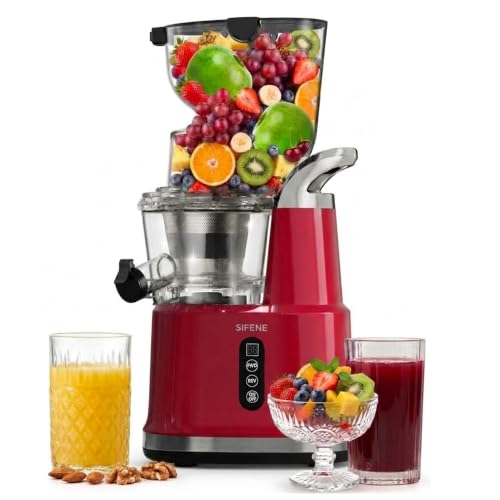
If you juice a few times a week and hate prep, a wide-chute model cuts the chopping. The SIFENE cold press juicer in red is listed with an 83mm wide chute and a slow masticating design. A wider opening means fewer cuts per batch, though you’ll still want to trim the largest items. It’s also the lowest-priced of the three here, which helps if you’re not sure slow juicing will stick.
That last point matters. Plenty of people buy a premium juicer, use it for a month and put it in a cabinet. Starting with an affordable model tells you whether you enjoy the routine. If you do, you can upgrade later. If you want to set a firm ceiling, the best juicer under $200 list is a good place to compare.
Signs it’s time to move up: you keep clearing jams, the pulp comes out wet, or you’re juicing every day and the prep time bothers you. At that point a bigger chute, a stronger build or a twin gear design starts to justify the price.
SIFENE Cold Press Juicer, 83mm Wide Chute, Slow Masticating Juicer, Red
Editors' Favorite
Color: Red Size: Standard Dimensions: 8.67 x 6.3 x 21.28 Inches Product Group: Kitchen Binding: Kitchen
Shop NowFAQ
What is a masticating juicer?
A masticating juicer is a slow juicer that crushes produce with a rotating auger and presses the juice through a screen. It’s often sold as a cold press juicer. The slow action suits leafy greens, wheatgrass and fibrous vegetables.
Is a masticating juicer better than a centrifugal one?
It depends on what you juice. Masticating machines usually handle greens better and run quieter, but they’re slower and take more cleanup. Centrifugal models are faster for quick juice from hard fruit and vegetables. Pick based on the produce you’ll use most.
Can masticating juicers handle leafy greens and kale?
Yes, that’s their strongest use. The auger grips and squeezes leaves instead of flinging them around. Bunch the leaves, feed them gradually and alternate with firmer produce such as carrot or apple to keep things moving.
How long does fresh juice last?
Fresh juice tastes best the same day. If you need to store it, use a sealed container in the refrigerator and drink it soon. Don’t leave it out on the counter for hours.
Is a twin gear juicer worth the extra cost?
For most home cooks, no. A single auger handles occasional juicing well. Twin gear designs make more sense if you juice daily and want a machine built for heavy use, and you’re comfortable paying more and cleaning more parts.








Write Your Review
No reviews yet. Be the first to share your experience!